
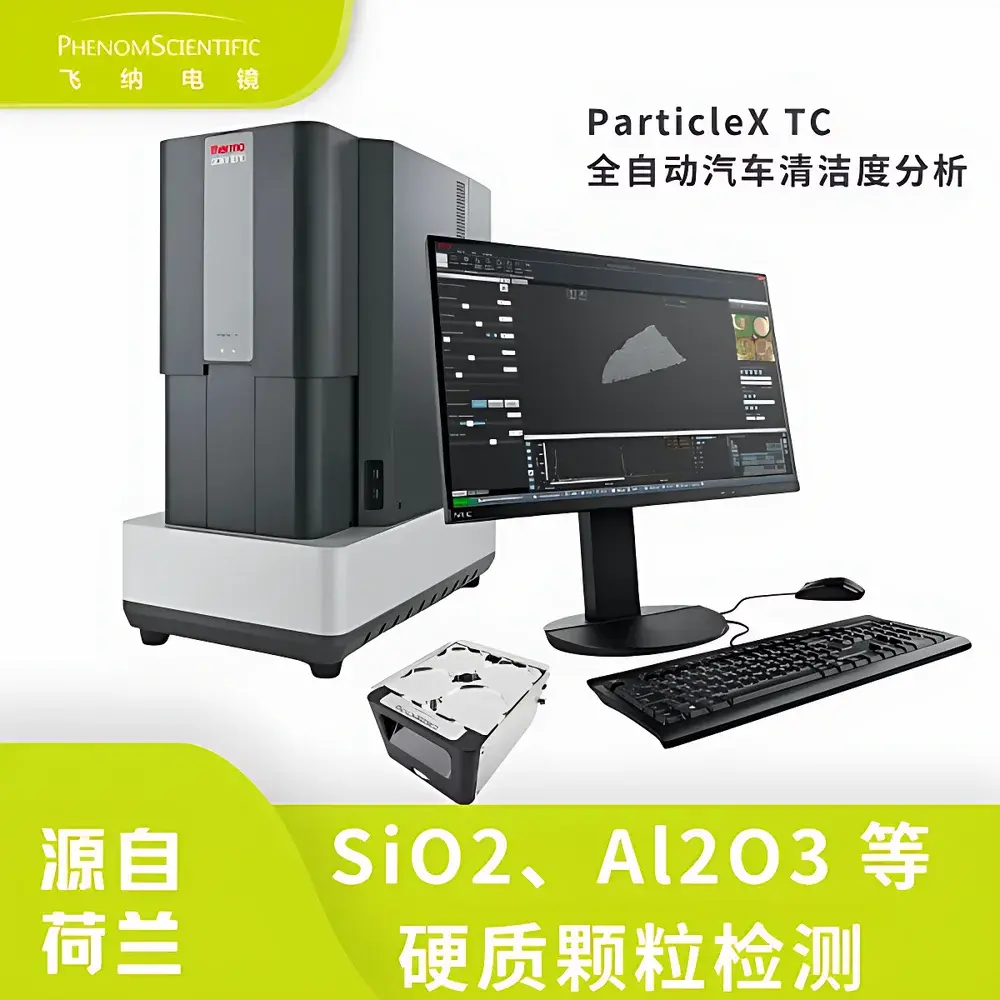
Phenom ParticleX TC Automated Automotive Cleanliness Analysis System – Hard Particles, Composition & Hardness
| Brand | Phenom |
|---|---|
| Origin | Netherlands |
| Manufacturer Type | Manufacturer |
| Origin Category | Imported |
| Model | ParticleX TC |
| Instrument Type | Benchtop SEM |
| Electron Source | Cerium Hexaboride (CeB₆) |
| Secondary Electron Resolution | 8 nm |
| Maximum Magnification | 200,000× |
| Acceleration Voltage | Standard Modes: 2 kV, 5 kV, 10 kV, 15 kV, 20 kV |
| Advanced Mode | Continuously Adjustable from 4.8 kV to 20.5 kV |
| Backscattered Electron (BSE) Resolution | 8 nm |
| Max Sample Capacity | Up to four 47 mm diameter filter membranes simultaneously |
| Standard Detector Configuration | Backscattered Electron Detector (BSE), Energy-Dispersive X-ray Spectrometer (EDS) |
Overview
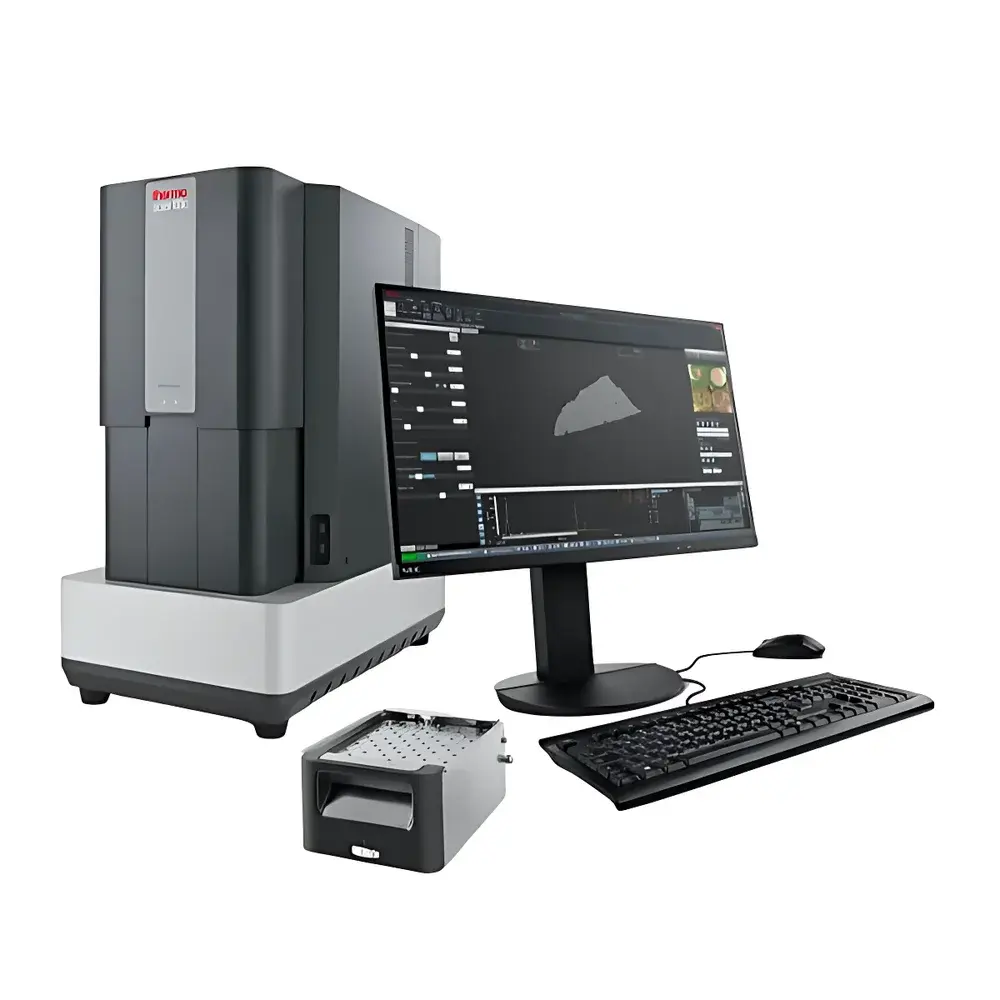
The Phenom ParticleX TC is a fully automated benchtop scanning electron microscope (SEM) system engineered specifically for automotive component cleanliness validation. It integrates high-resolution SEM imaging with energy-dispersive X-ray spectroscopy (EDS) to perform rapid, unattended identification, morphological characterization, and elemental composition analysis of particulate contaminants captured on filtration membranes. Unlike conventional gravimetric or optical microscopy-based cleanliness assessment methods—which yield only bulk mass or qualitative shape data—the ParticleX TC enables quantitative microanalysis at the micron and sub-micron scale. Its core measurement principle relies on electron-sample interactions: incident electrons generate secondary electrons (SE) for topographic contrast, backscattered electrons (BSE) for atomic number contrast, and characteristic X-rays for elemental fingerprinting via EDS. This tri-modal analytical capability allows precise discrimination between abrasive hard particles (e.g., SiO₂, Al₂O₃, Fe₃O₄) and softer organic or metallic debris—critical for root-cause analysis in powertrain, braking, and EV thermal management systems.
Key Features
- Benchtop SEM architecture with CeB₆ thermionic electron source, delivering stable beam current and extended source lifetime without ultra-high vacuum complexity
- 8 nm secondary electron and backscattered electron resolution—sufficient to resolve fine surface features and distinguish particle edges, cracks, and agglomeration states
- Automated multi-filter workflow: simultaneous loading and sequential analysis of up to four 47 mm filter membranes under consistent acquisition parameters
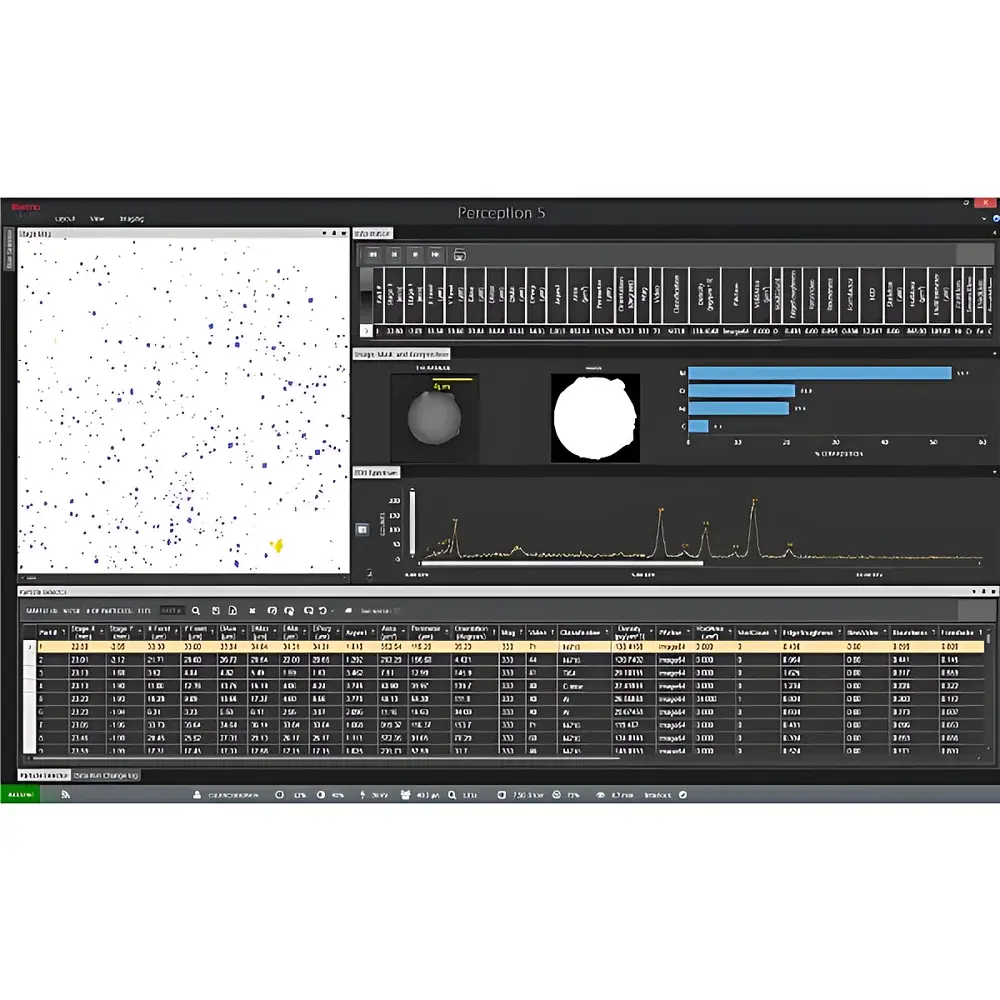
- Integrated EDS detector enabling real-time elemental mapping and point/area spectrum acquisition with ZAF matrix correction support
- Intelligent particle detection algorithm trained on automotive contamination profiles, capable of distinguishing >1 µm particles from membrane background with >99.2% recall rate (per internal validation per ISO 16232 Annex D)
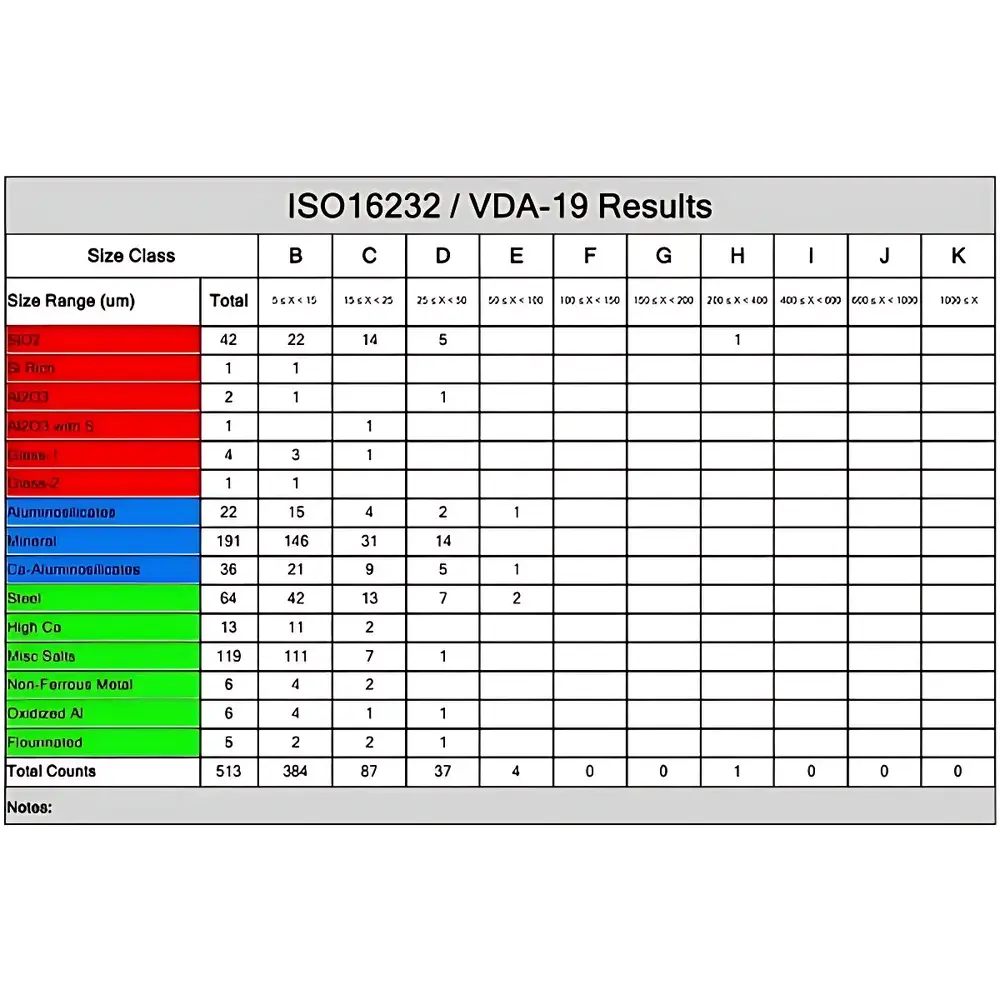
- Fully automated reporting engine compliant with ISO 16232-C and VDA 19-2015 documentation requirements—including particle count per size bin, elemental class distribution, and statistical summaries
Sample Compatibility & Compliance
The ParticleX TC is optimized for standard automotive cleanliness sampling protocols using polycarbonate, mixed cellulose ester (MCE), or polyvinylidene fluoride (PVDF) filters with pore sizes ranging from 0.45 µm to 5.0 µm. It accommodates both dry-mounted and carbon-coated filters without requiring sputter coating for conductive enhancement—enabled by low-kV imaging modes (2–5 kV) that minimize charging on non-conductive substrates. All analytical workflows adhere strictly to ISO 16232 (Road vehicles — Cleanliness of components of fluid circuits) and VDA 19 (Contamination of Components in Fluid Circuits), including mandatory particle size binning (≥5 µm, ≥15 µm, ≥25 µm, ≥50 µm, ≥100 µm), classification by material type (metallic/non-metallic), and traceability of individual particle coordinates. The system supports GLP-compliant audit trails, user-access logging, and electronic signature functionality aligned with FDA 21 CFR Part 11 requirements when deployed in regulated manufacturing environments.
Software & Data Management
The ParticleX TC operates via Phenom’s proprietary Cleanliness Analysis Software Suite (v5.3+), featuring a validated, locked-down interface designed exclusively for automotive cleanliness labs. The software enforces standardized acquisition templates—predefined magnifications, dwell times, EDS live-time settings, and spectral processing parameters—to ensure inter-laboratory reproducibility. Raw SEM images, EDS spectra, particle metadata (size, aspect ratio, circularity, intensity-weighted centroid), and classification labels are stored in vendor-neutral HDF5 format with embedded EXIF-style metadata. Export options include PDF reports (ISO/VDA-compliant), CSV datasets for SPC integration, and annotated TIFF stacks for external review. Audit logs record every instrument state change, user action, and report generation event with timestamp, operator ID, and IP address—fully traceable for internal quality audits or third-party certification reviews.
Applications
- Root-cause analysis of wear debris in engine oil filters, transmission fluid strainers, and fuel injector screens
- Validation of machining process cleanliness for cylinder heads, valve train components, and electric motor stator housings
- Supplier qualification testing per OEM-specific cleanliness specifications (e.g., VW 60330, BMW GS 95024, Ford WSS-M99P1111-A)
- Monitoring of cleaning line efficacy across ultrasonic, aqueous, and vapor degreasing processes
- Failure analysis of hydraulic control units, brake calipers, and battery cooling plates where hard particulates induce abrasion or valve seizure
- Supporting IATF 16949 clause 8.5.1.5 (Cleanliness Control) through statistically valid, metrologically traceable particle data
FAQ
Does the ParticleX TC require liquid nitrogen or cryo-cooling for EDS operation?
No. The integrated silicon drift detector (SDD) operates at Peltier-cooled temperatures (-20 °C), eliminating dependency on consumables or external cooling infrastructure.
Can the system analyze particles smaller than 1 µm?
Yes—while routine compliance reporting focuses on ≥5 µm particles per ISO 16232, the 8 nm resolution and low-kV imaging enable reliable detection and EDS acquisition down to ~300 nm under optimal sample preparation conditions.
Is remote monitoring or unattended overnight operation supported?
Yes. The system includes built-in web server functionality and supports secure HTTPS access for real-time status viewing, queue management, and alarm notification via email/SNMP—validated for continuous 24-hour operation in production QA labs.
How is calibration verified for particle sizing accuracy?
A certified NIST-traceable grating standard (NIST SRM 2053) is included for daily geometric calibration; pixel size accuracy is maintained within ±0.5% across the full magnification range through hardware-synchronized stage positioning and digital image scaling.
What level of operator training is required to achieve ISO-compliant results?
Minimal. The system is designed for technician-level operation: after a two-day certified training course, users can independently run validated methods, interpret classification reports, and perform basic EDS verification—no prior SEM experience required.





