
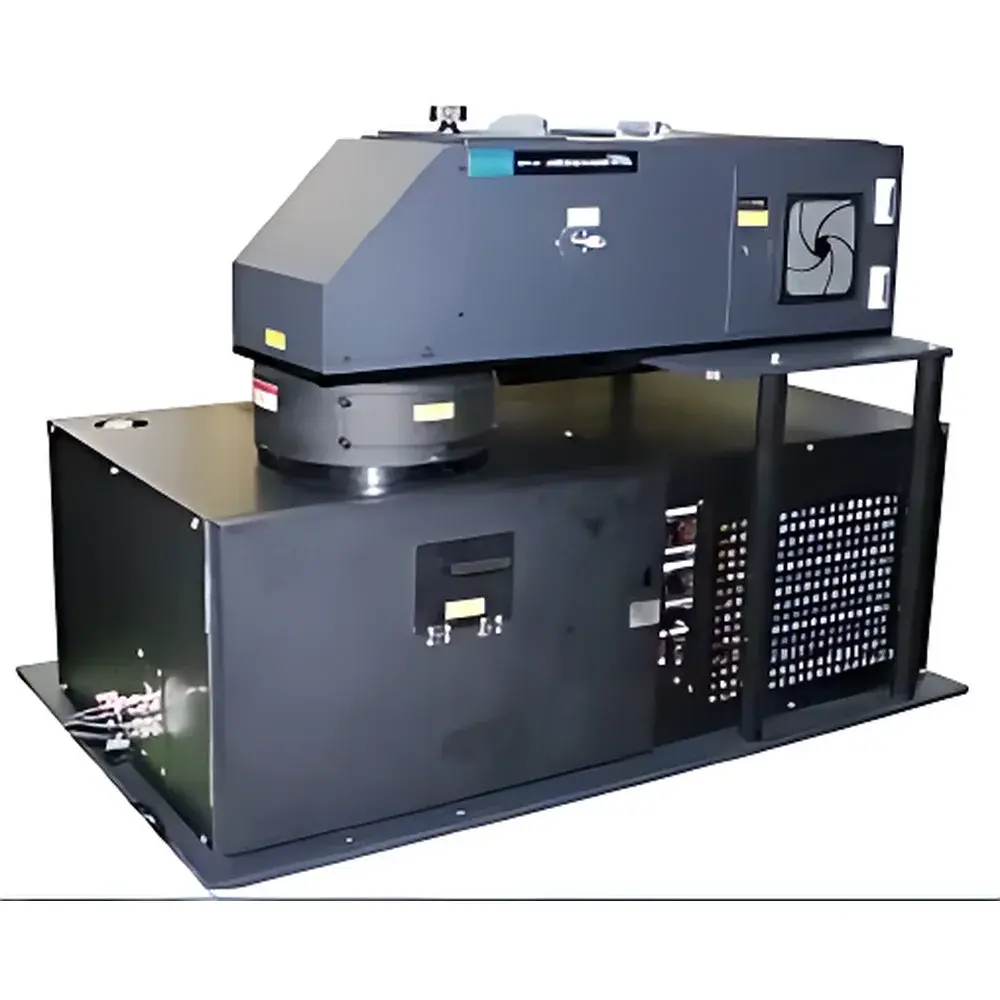
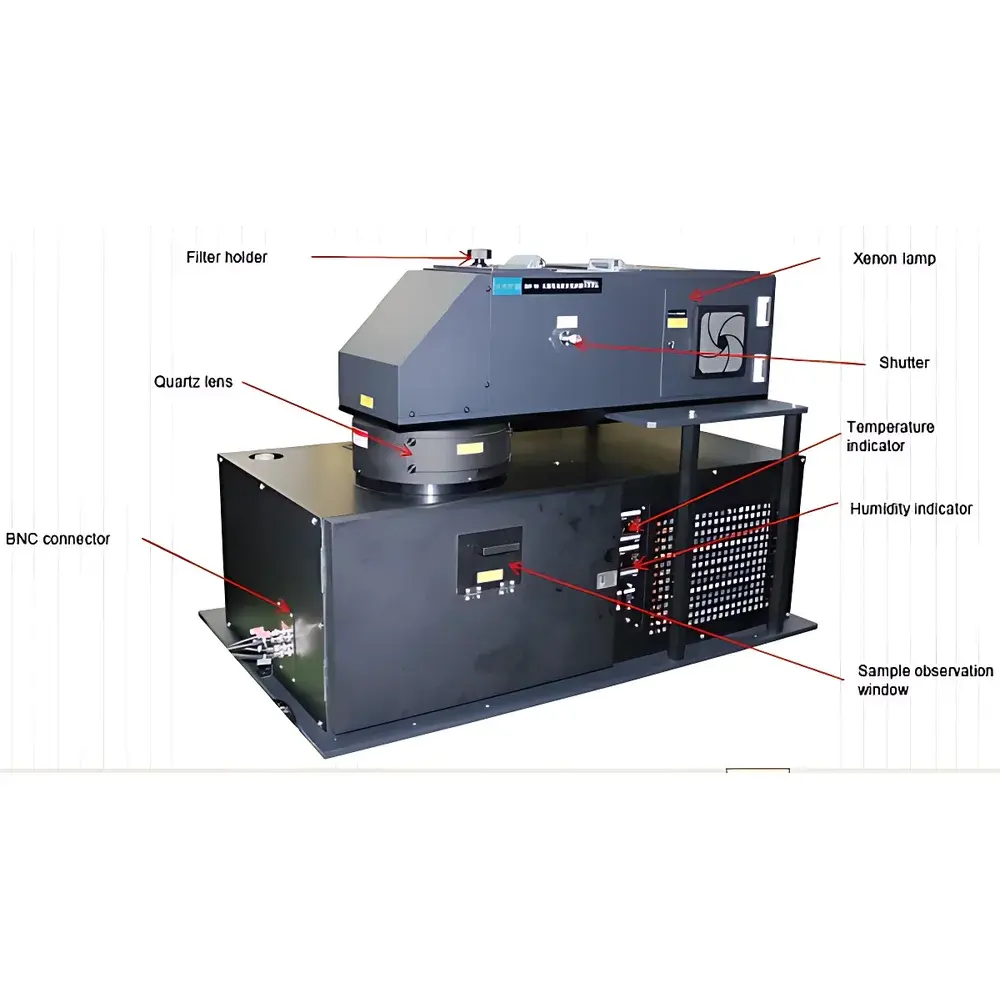
BIR-50 Solar Cell Lifetime Testing System with Class AAA Solar Simulator and Temperature-Controlled Environmental Chamber
| Origin | Japan |
|---|---|
| Manufacturer Type | Authorized Distributor |
| Origin Category | Imported |
| Model | BIR-50 |
| Price Range | USD 105,000 – 140,000 (FOB Yokohama) |
| Illumination Mode | Pulsed Operation |
Overview
The BIR-50 Solar Cell Lifetime Testing System is an integrated laboratory platform engineered for accelerated photostability and thermal degradation assessment of photovoltaic devices under controlled illumination and environmental conditions. It combines a Class AAA solar simulator—certified to IEC 60904-9:2020 and ASTM E927-22 standards—with a precision temperature-regulated environmental chamber. The system operates on pulsed illumination mode, enabling high-intensity, short-duration irradiation events that minimize sample heating while maintaining spectral match (AM1.5G), spatial uniformity (>98%), and temporal stability (<±0.5% over 10 s). This architecture supports rigorous evaluation of photochemical degradation mechanisms—including trap-state formation, interfacial delamination, and ion migration—in perovskite, organic, silicon heterojunction (HJT), and tandem solar cells. Unlike continuous-output simulators, the pulsed configuration permits synchronized acquisition of current–voltage (I–V) characteristics via external BNC-triggered instrumentation, ensuring time-resolved measurement fidelity during light-soaking or step-stress protocols.
Key Features
- Class AAA solar simulator compliant with IEC 60904-9:2020 and ASTM E927-22, featuring spectral match (A), spatial uniformity (A), and temporal stability (A)
- Integrated environmental chamber with ±0.3 °C temperature control range from −40 °C to +120 °C, programmable ramp rates, and dual-zone monitoring
- Pulsed illumination mode with adjustable pulse width (10 ms–10 s), repetition frequency (0.1–10 Hz), and peak irradiance (up to 1.5 sun equivalent)
- BNC-trigger interface compatible with industry-standard source-measure units (SMUs) and data acquisition systems for synchronized I–V sweep initiation
- Optimized optical path design minimizing stray light and thermal load on device under test (DUT), reducing measurement artifacts from self-heating
- Modular chamber access ports (4× Ø25 mm, vacuum-compatible) supporting in situ electrical feedthroughs, gas purging (N₂, dry air), and optional humidity control add-ons
Sample Compatibility & Compliance
The BIR-50 accommodates standard PV substrates up to 156 mm × 156 mm (M2 size) and flexible thin-film samples mounted on rigid carriers. Its chamber geometry supports both encapsulated and unencapsulated devices, enabling studies of edge ingress, moisture-induced degradation, and back-contact stability. All operational parameters—including irradiance calibration traceability to NMI-Japan (National Metrology Institute of Japan), temperature sensor calibration (PT100 Class A), and pulse timing accuracy (±10 µs)—are documented in the system’s Factory Acceptance Test (FAT) report. The platform supports compliance workflows aligned with IEC 61215-2 (MQT 18, UV pre-conditioning), IEC 61646 (for thin-film), and ISO 17025-accredited lab environments. Full audit trails for temperature setpoints, irradiance logs, and trigger timestamps are retained for GLP/GMP-aligned validation.
Software & Data Management
Control and data acquisition are managed through the BIR-Control Suite v3.x—a Windows-based application supporting script-driven test sequencing, real-time parameter logging (irradiance, chamber T₁/T₂, DUT backsheet temperature), and automated I–V sweep triggering. Raw data exports in CSV and HDF5 formats include metadata tags compliant with FAIR principles (Findable, Accessible, Interoperable, Reusable). The software integrates with third-party tools including Keysight PathWave, LabVIEW, and Python-based analysis pipelines via TCP/IP and SCPI command sets. Audit trail functionality meets FDA 21 CFR Part 11 requirements, with user role management, electronic signatures, and immutable event logs for critical operations such as calibration verification and test protocol execution.
Applications
- Accelerated lifetime testing of emerging PV technologies (perovskites, OPVs, quantum dot solar cells) under combined light–heat stress
- Quantification of thermal coefficient of power (TCP) and light-induced degradation (LID) kinetics
- Development and validation of encapsulation materials and barrier films against UV–moisture synergistic effects
- Correlation of in situ I–V hysteresis evolution with trap density changes measured by DLTS or CPDM
- Pre-certification screening prior to full IEC qualification campaigns, reducing reliance on external test labs
- Research into metastable phase transitions in halide perovskites under pulsed illumination and thermal cycling
FAQ
What standards does the solar simulator comply with?
The BIR-50 simulator is certified to IEC 60904-9:2020 (Class AAA) and ASTM E927-22, with full spectral irradiance data traceable to NMI-Japan.
Can the system perform simultaneous temperature ramping and pulsed illumination?
Yes—the environmental chamber and simulator operate independently under synchronized program control, enabling dynamic stress profiles such as thermal cycling under intermittent light exposure.
Is humidity control available as an option?
A modular RH control unit (range: 10–90% RH, ±2% accuracy) can be integrated via the chamber’s auxiliary port; it requires separate ordering and FAT validation.
How is irradiance calibrated and maintained?
Each unit ships with a NIST-traceable reference cell and calibration certificate; users perform routine verification using the included Si and GaAs reference diodes and the built-in auto-calibration routine.
Does the system support remote operation and monitoring?
Yes—BIR-Control Suite supports secure remote desktop access and real-time dashboard viewing via encrypted HTTPS, with configurable alarm notifications for out-of-spec conditions.




