Electronic Skin AF-30 by Wootzense™
| Origin | UK |
|---|---|
| Manufacturer Type | Authorized Distributor |
| Origin Category | Imported |
| Model | AF-30 |
| Pricing | Upon Request |
Overview
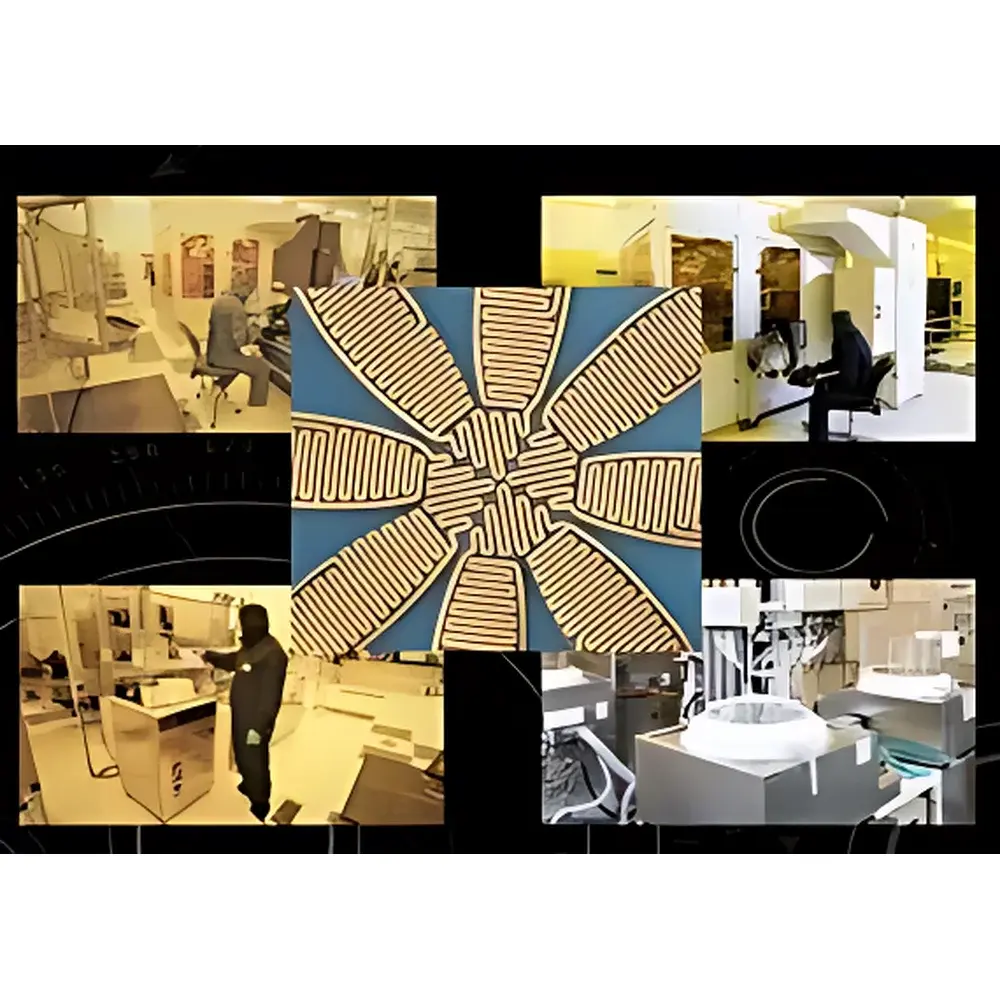
The Wootzense™ AF-30 Electronic Skin is a fully conformal, ultra-flexible tactile sensing platform engineered for high-fidelity force, pressure, temperature, and humidity perception in robotic manipulation and industrial process monitoring. Based on hybrid piezoresistive and piezoelectric transduction principles, the AF-30 integrates distributed micro-sensor arrays within a biocompatible elastomeric substrate—enabling sub-millimeter spatial resolution and real-time dynamic response across heterogeneous surfaces. Unlike rigid or segmented tactile systems, the AF-30 maintains mechanical continuity under complex deformation (bending radii 80% strain), making it suitable for direct integration onto anthropomorphic grippers, food-handling end-effectors, and adaptive packaging interfaces. Its architecture supports scalable deployment—from single-sensel characterization to synchronized arrays exceeding 10,000 discrete sensing nodes—while preserving signal integrity in electromagnetically noisy industrial environments. Designed for operational robustness in ISO Class 5 (100) and Class 6 (1,000) cleanrooms, the AF-30 complies with IEC 61000-6-2 (immunity) and IEC 61000-6-4 (emission) standards for industrial equipment.
Key Features
- Fully conformal elastomeric substrate with tunable Young’s modulus (1.07–1.78 MPa), matching soft tissue and delicate material compliance
- Dual-mode transduction: piezoresistive for static/quasi-static load mapping; piezoelectric for high-frequency impact and vibration capture (up to 150 MHz bandwidth)
- Multi-parameter sensing per node: normal force (0.00001–500 N), surface temperature (−200°C to +200°C), relative humidity (0–100% RH ±2%), and localized strain
- Scalable sensor density: up to 20 sensing elements per mm² (50 µm² sensel footprint), configurable across active areas from 50 µm² to 1 m²
- Hybrid analog/digital output interface (I²C, SPI, and 0–5 V analog) with embedded signal conditioning and noise suppression
- Integrated OverSkin™ top layer enhancing coefficient of friction (COF) for improved grip on low-adhesion substrates (e.g., glass, polished fruit skins, ceramic ware)
- Onboard AI-accelerated preprocessing: Wootzense™’s proprietary firmware applies real-time drift compensation, hysteresis correction, and thermal cross-talk mitigation
Sample Compatibility & Compliance
The AF-30 is validated for contact-based measurement on non-corrosive, non-abrasive surfaces encountered in food processing (e.g., eggshells, citrus rinds, bakery products), pharmaceutical packaging, and precision assembly lines. It withstands repeated sterilization cycles (vaporized hydrogen peroxide, ethanol wipe, UV-C at 254 nm) without performance degradation. The system meets FDA-relevant material safety requirements per USP and (biological reactivity testing), and its enclosure design conforms to IP67 ingress protection when sealed. All electronics comply with RoHS 3 and REACH Annex XVII. For GMP-regulated environments, audit-ready data logs include timestamped sensor metadata, calibration traceability (NIST-traceable reference loads), and full GLP/GMP-compliant electronic signatures via optional 21 CFR Part 11 software module.
Software & Data Management
Wootzense™ provides a Windows-native GUI (v4.2+) supporting real-time visualization of pressure maps, thermal gradients, and humidity distribution across the active surface. Data streams are recorded in HDF5 format with embedded metadata (sensor ID, firmware version, environmental context). Batch analysis tools enable spatial FFT, contact area evolution tracking, and slip-onset detection using time-domain feature extraction. Custom Python SDK (compatible with NumPy, SciPy, and PyTorch) allows integration into ROS 2 (Foxy+), LabVIEW, or MES platforms such as Siemens Opcenter Execution. Predictive alerting modules support rule-based and ML-driven anomaly detection—configurable via SMTP/HTTPS webhooks for SMS/email notifications with user-defined thresholds and escalation paths.
Applications
- Delicate object handling in automated food sorting and packing lines (e.g., detecting micro-cracks in eggs, bruise onset in soft fruits)
- Real-time quality assurance during high-speed bottling and vial capping—monitoring seal integrity via distributed pressure profiles
- Human-robot collaboration (HRC) safety layers: instantaneous contact detection and force-limited motion arbitration
- In-line monitoring of adhesive bond formation in medical device assembly (temperature + pressure co-registration)
- Research-grade mechanobiology studies requiring sub-µN force resolution on hydrogels and organoids
- Adaptive robotic polishing of optical lenses and semiconductor wafers, where feedback-controlled normal force prevents subsurface damage
FAQ
What is the maximum operating temperature for continuous use?
Continuous operation is rated from 0°C to +150°C; short-term excursions up to +180°C are permissible for ≤5 minutes.
Can the AF-30 be integrated with existing PLC-based control systems?
Yes—via Modbus TCP gateway (optional hardware add-on) or native analog voltage output compatible with standard industrial ADC modules.
Is calibration required before each use?
No. Factory calibration is NIST-traceable and stable for ≥12 months under typical industrial conditions; annual verification is recommended.
How is sensor data synchronized with external modalities (e.g., cameras, IMUs)?
Hardware-level PPS (pulse-per-second) trigger input enables sub-100 µs temporal alignment with third-party vision or inertial systems.
Does the system support functional safety certification (e.g., SIL2)?
The base AF-30 is not SIL-certified, but safety-critical deployments may utilize redundant sensor fusion architecture compliant with IEC 61508 Part 3 Annex D.
Related Products