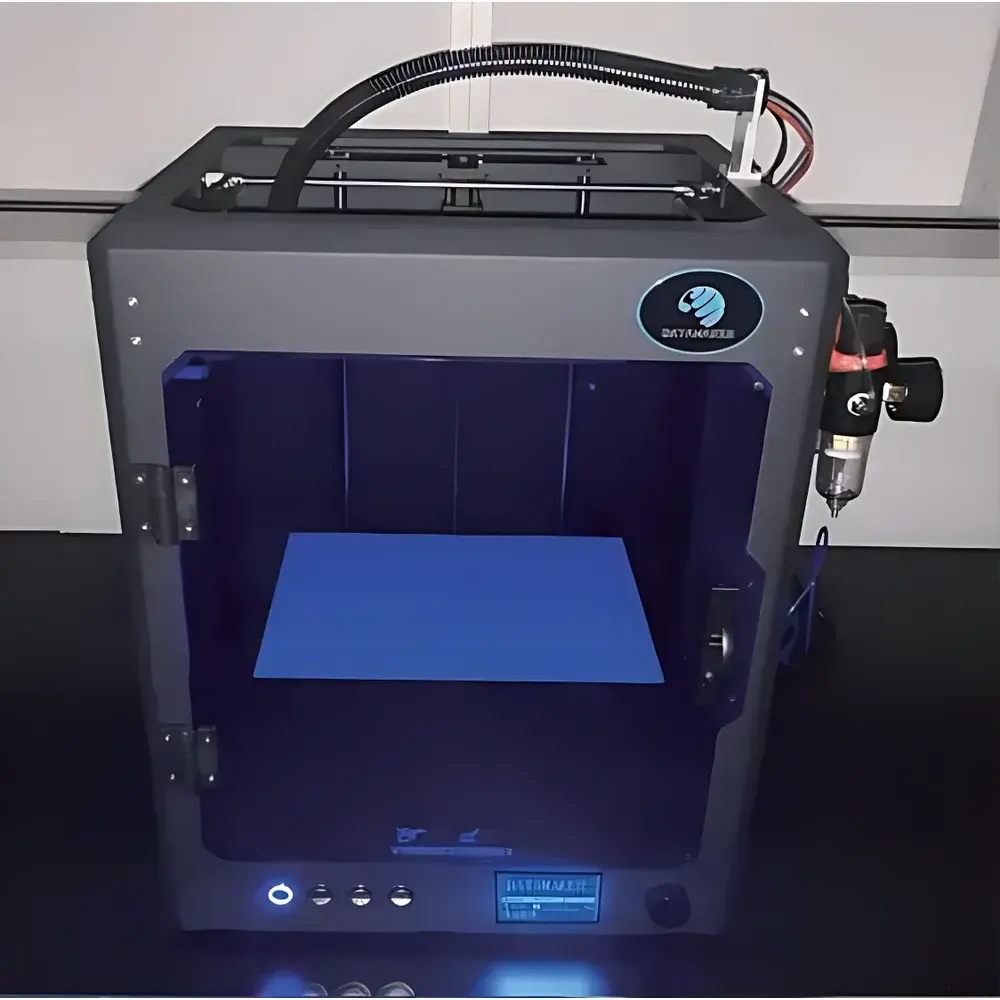
DATAMAKER CPT-250 Programmable 3D Ultrasonic Auto-Spray Coating System
| Origin | Shanghai, China |
|---|---|
| Manufacturer Type | Authorized Distributor |
| Origin Category | Domestic (PRC) |
| Model | CPT-250 |
| Pricing | Upon Request |
| Working Envelope | 300 × 280 × 300 mm (X/Y/Z) |
| Spray Distance | 200 mm |
| Nozzle Orifice Options | 0.3 mm (standard), 0.5 / 0.8 / 1.0 mm (optional) |
| Flow Rate | Up to 30 mL/min (adjustable) |
| Traverse Speed | ≤150 mm/s |
| 雾化/进样/air Pressure Range | 0–0.7 MPa (independently adjustable) |
| Power Input | AC 220 V, 50 Hz |
| Rated Power | 800 W (excl. heated stage) |
| Noise Level | <50 dB(A) |
| Positioning Accuracy | ±0.01 mm (X/Y/Z via imported linear guide rails & GT2 timing belts) |
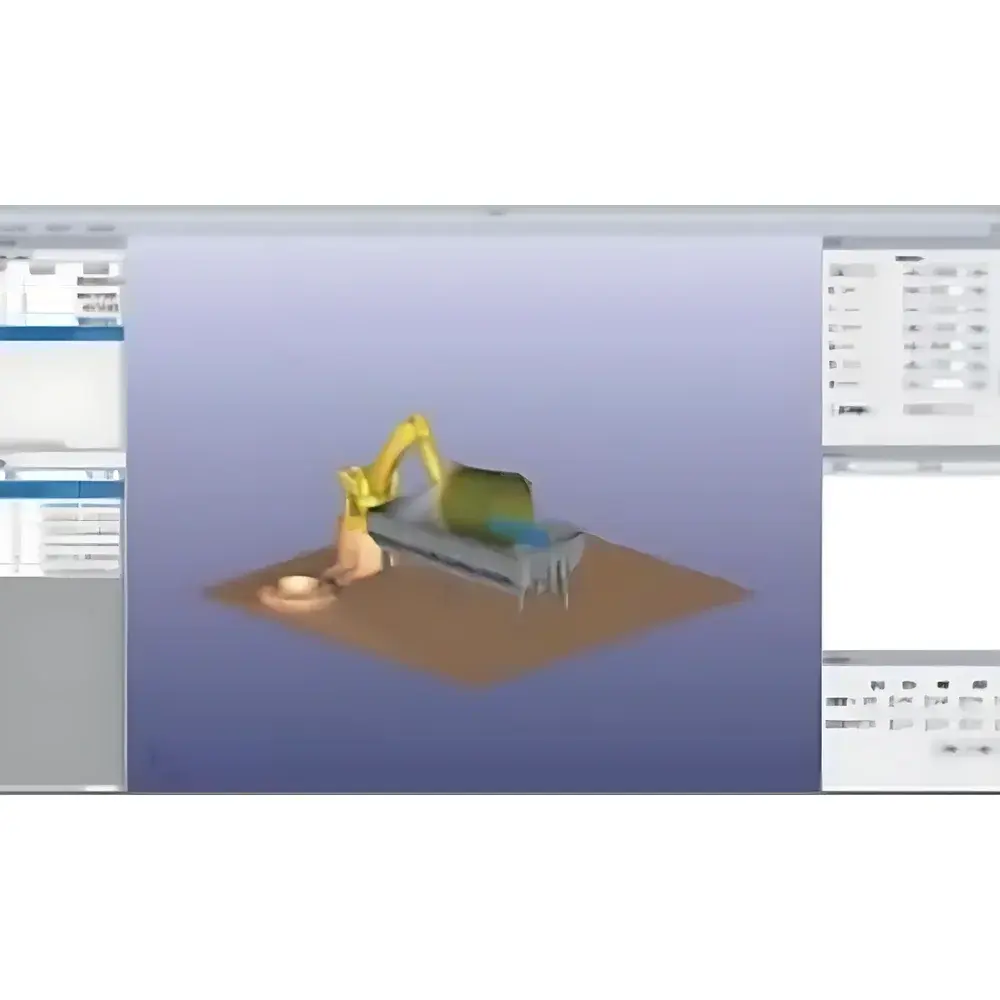
| Software Platform | DATAMAKER Open Architecture (Notepad++-editable ASCII-based script format) |
| OS Compatibility | Windows, macOS, Linux |
| Interface | USB + SD card slot |
| Coating Uniformity | ±5% RSD (typical) |
| Material Utilization Efficiency | ≥99% |
| Maximum Substrate Height Clearance | 300 mm |
Overview
The DATAMAKER CPT-250 is a precision-engineered, programmable 3D ultrasonic auto-spray coating system designed for reproducible thin-film deposition in R&D and pilot-scale manufacturing environments. Unlike conventional air-assisted or pneumatic spray systems, the CPT-250 employs high-frequency ultrasonic atomization—operating at resonant frequencies above 120 kHz—to generate monodisperse micro-droplets without requiring high gas pressure or thermal input. This principle enables stable雾化 of low-to-high-viscosity precursor solutions (0.5–500 cP), including perovskite ink formulations, metal-organic precursors, polymer dispersions, and colloidal quantum dot suspensions. The system integrates a rigid aerospace-grade aluminum frame, three-axis servo-controlled linear stages (X/Y/Z), and a thermally isolated spray head mount, allowing precise spatial control over droplet impact location, dwell time, and layer stacking sequence—critical parameters for achieving stoichiometric control and interfacial homogeneity in optoelectronic thin films.
Key Features
- Ultrasonic atomization module with adjustable frequency and amplitude—enabling consistent droplet size distribution (Dv50 ≈ 10–50 µm) across variable solution viscosities
- Programmable 3D motion platform with 300 × 280 × 300 mm travel range and ±0.01 mm repeatability (achieved via Japan-sourced linear guide rails and Gates GT2 synchronous belts)
- Modular nozzle system: interchangeable stainless-steel nozzles (0.3, 0.5, 0.8, 1.0 mm orifice) calibrated for flow rates from 5–30 mL/min
- Independent pressure regulation for雾化 gas, feed line, and auxiliary air—each controllable from 0 to 0.7 MPa with digital pressure transducers and closed-loop feedback
- Low-noise operation (<50 dB[A]) achieved through vibration-damped mounting, acoustic shielding, and brushless servo drive architecture
- Open software architecture supporting ASCII-based motion scripting—compatible with Notepad++, enabling integration into LabVIEW, Python, or MATLAB automation workflows
- Compact footprint (W650 × D720 × H1450 mm) with castor-mounted base for repositioning within Class 1000 cleanrooms or glovebox-integrated setups
Sample Compatibility & Compliance
The CPT-250 accommodates substrates up to 300 mm × 300 mm and 30 mm thick—including glass, ITO/PET, silicon wafers, flexible polymers, and ceramic carriers. Its non-contact, low-impact deposition process minimizes substrate stress and avoids shear-induced aggregation in sensitive colloidal inks. The system complies with CE machinery safety directives (2006/42/EC) and electromagnetic compatibility standards (2014/30/EU). While not certified for GMP production lines, its deterministic motion control, audit-trail-capable script logging, and parameter-lock functionality support GLP-aligned experimental documentation. All wetted components (nozzle, tubing, reservoir) are chemically resistant to common solvents (e.g., DMF, GBL, chlorobenzene, isopropanol) and compatible with USP Class VI-certified materials upon request.
Software & Data Management
The DATAMAKER control suite operates on a real-time embedded Linux kernel and supports dual operational modes: standalone SD-card execution (for ISO-classified environments) or USB-connected PC-based programming. Motion sequences are defined using human-readable coordinate scripts (G-code–like syntax), with support for nested loops, conditional delays, and Z-height compensation routines. Each run generates timestamped metadata logs (.csv), including pressure traces, position coordinates, flow rate settings, and environmental temperature readings (via optional external probe input). Raw script files are editable in Notepad++ or VS Code—enabling version-controlled protocol development and cross-lab method transfer. No proprietary runtime license is required; firmware updates are delivered via signed .bin packages verified through SHA-256 checksums.
Applications
The CPT-250 is extensively deployed in academic and industrial laboratories for scalable fabrication of functional thin films. Primary use cases include: perovskite photovoltaic absorber layer deposition (e.g., MAPbI₃, FAPbBr₃); hole/electron transport layer coating (NiOₓ, PEDOT:PSS, SnO₂); solid-state electrolyte films for all-solid-state batteries; anti-reflective and hydrophobic nanocoatings on optical substrates; and patterned biopolymer deposition for biosensor development. Its ability to maintain film thickness uniformity (±5% RSD over 100 cm²) and material utilization efficiency (>99%) makes it particularly suitable for expensive precursors—reducing consumable costs during formulation optimization and technology transfer.
FAQ
Can the CPT-250 be integrated into a nitrogen-filled glovebox?
Yes—the system features front-accessible fluid and electrical interfaces with CF-40 vacuum flange options; custom inert-gas purge kits and sealed cable glands are available upon request.
What is the minimum achievable film thickness and resolution?
Thickness resolution is governed by solution concentration and spray dwell time; sub-50 nm average thicknesses have been validated using ellipsometry for spin-coating–compatible inks, with lateral feature resolution limited by droplet spread (~150 µm full-width at half-maximum under standard conditions).
Is heating capability included for substrate temperature control?
The base model excludes integrated heating, but the aluminum platform is engineered with M4 threaded holes and thermal isolation grooves to accept third-party heated stages (up to 200 °C) with PID controllers and K-type thermocouple inputs.
Does the system support multi-nozzle configurations for parallel processing?
The mechanical frame supports dual-nozzle mounting (custom bracket required); however, firmware-level synchronization of independent fluid channels is not natively implemented—external PLC coordination is recommended for true parallel operation.
How is calibration traceability maintained for quantitative film thickness prediction?
Users perform empirical calibration using reference substrates and profilometry/XRF; the software allows embedding thickness-vs.-dwell-time lookup tables into motion scripts to enable closed-loop thickness targeting without real-time metrology.