
HI-TECH SF-61DX2 Stopped-Flow Spectrophotometer
| Origin | UK |
|---|---|
| Manufacturer Type | Authorized Distributor |
| Origin Category | Imported |
| Model | SF-61DX2 |
| Price Range | USD 68,000 – 136,000 |
Overview
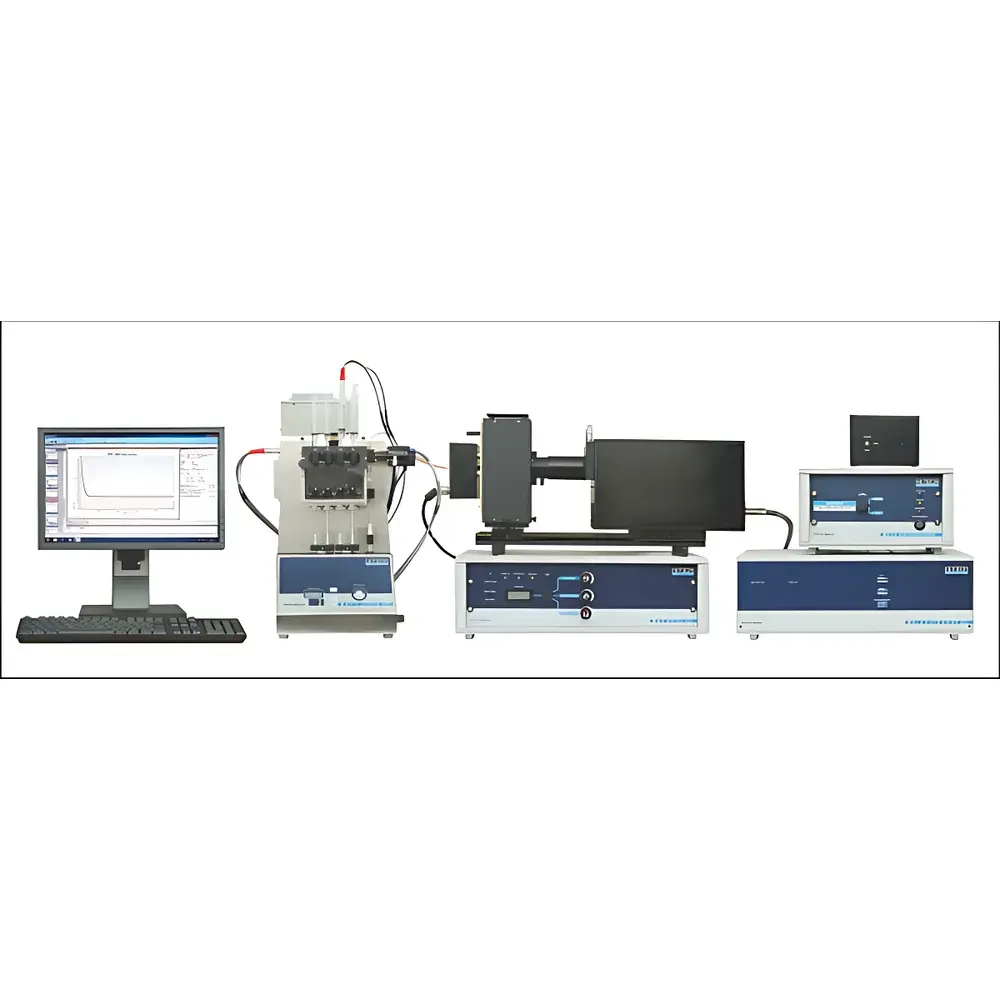
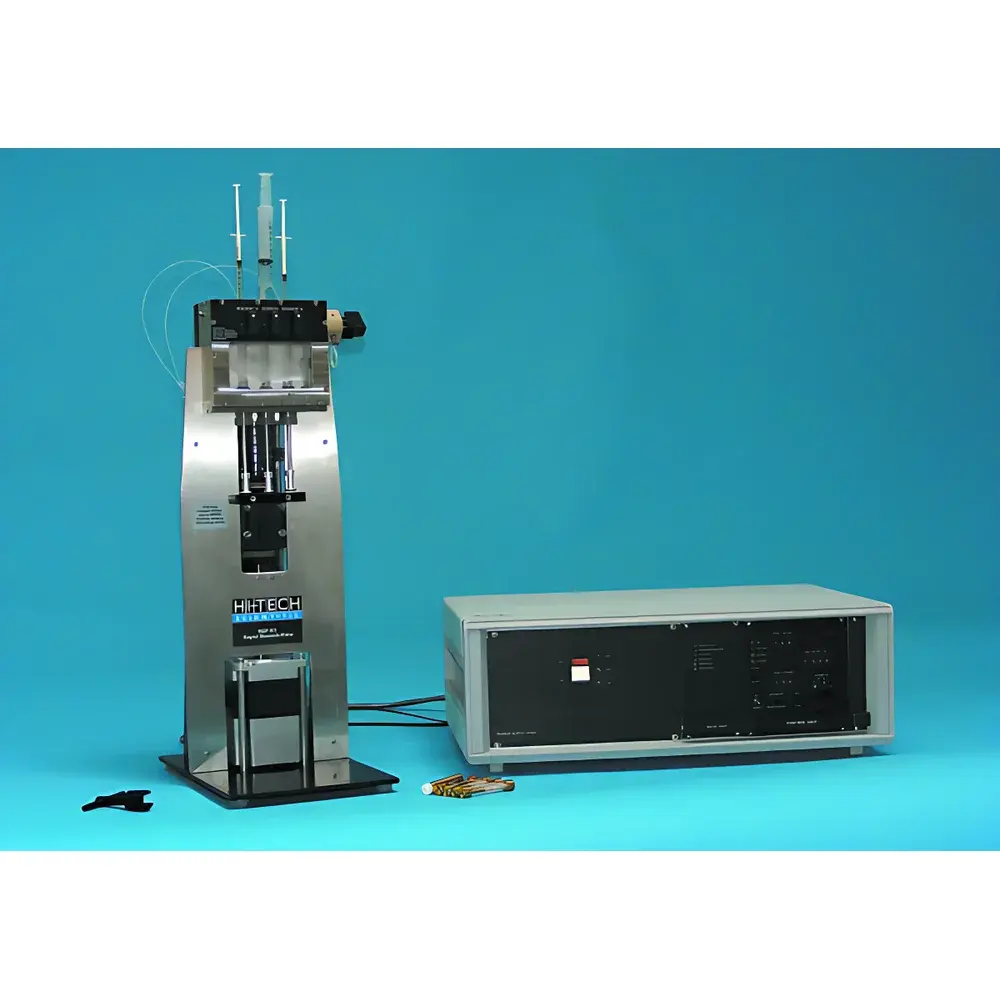
The HI-TECH SF-61DX2 Stopped-Flow Spectrophotometer is a precision-engineered rapid kinetic instrument designed for the quantitative study of fast biochemical reactions occurring on millisecond timescales. Based on the classical stopped-flow principle—where two or more reactant solutions are rapidly mixed under controlled laminar flow conditions and the reaction progress is monitored immediately after mixing—the SF-61DX2 enables real-time detection of transient intermediates, conformational changes, ligand binding events, and enzyme catalytic cycles. Since its introduction in the early 1970s, HI-TECH’s stopped-flow platforms have been adopted by leading academic laboratories, pharmaceutical R&D groups, and biophysical core facilities worldwide due to their mechanical robustness, low dead-time performance, and adaptability to diverse optical detection modalities. The SF-61DX2 integrates a rigid stainless-steel manifold architecture with ceramic stop/vent valves, eliminating flexible tubing and minimizing dispersion, back-pressure fluctuations, and carryover—critical for reproducible sub-2-ms mixing and high-fidelity kinetic trace acquisition.
Key Features
- Sub-2 ms dead time achievable with single- or double-mixing configurations; <1 ms dead time attainable in low-volume observation cells (e.g., microcuvettes)
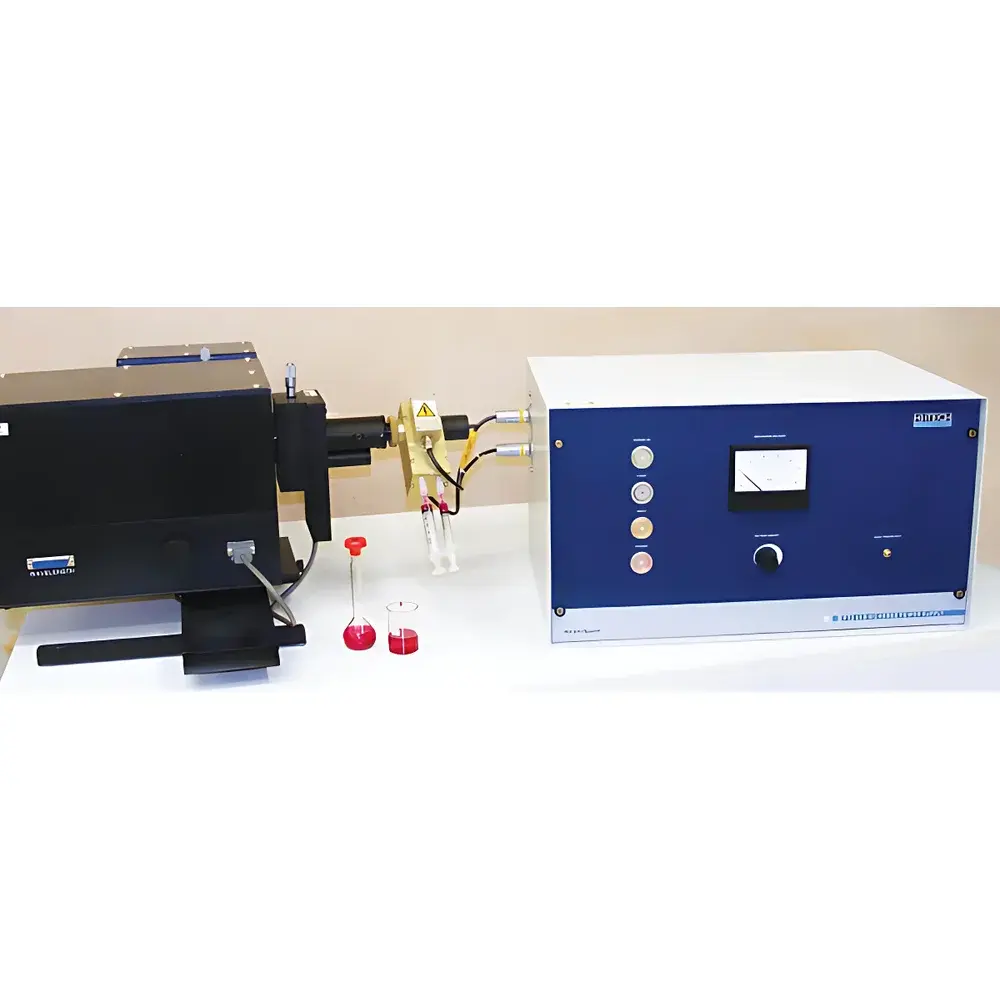
- Modular optical detection system supporting absorbance, fluorescence (including FRET and anisotropy), and optional conductivity or quench-flow modules
- Stable, high-intensity xenon arc lamp standard; interchangeable light sources available (e.g., LEDs, lasers) for wavelength-specific excitation
- High-throughput diode array detector (DAD) option enabling full UV-Vis spectral acquisition at ≤1.5 ms per scan; linear and logarithmic time bases supported
- Air-driven syringe actuation with positive-stop injection mechanism ensures precise volume delivery and minimal reagent consumption
- Stepper-motor-controlled dual-injection module enables programmable multi-shot experiments without refill between acquisitions
- One-click switching between single- and double-mixing modes—no hardware reconfiguration required
- Oxygen-sensitive applications supported via integrated inert-gas purging capability and anaerobic cell compatibility
Sample Compatibility & Compliance
The SF-61DX2 accommodates a broad range of biological and chemical samples—including purified proteins, nucleic acids, liposomes, synthetic peptides, and small-molecule inhibitors—across pH 2–12 and solvent systems compatible with stainless steel and ceramic wetted materials (e.g., aqueous buffers, glycerol/water mixtures, low-concentration organic co-solvents). Its modular flow path design conforms to GLP-compliant workflows when paired with Kinetic Studio’s audit-trail-enabled data logging. While not intrinsically FDA 21 CFR Part 11 certified, the system supports electronic record integrity through timestamped raw-data export (ASCII, CSV, binary), user-access controls, and metadata tagging—enabling alignment with ISO/IEC 17025, ASTM E2500, and USP analytical instrument qualification frameworks.
Software & Data Management
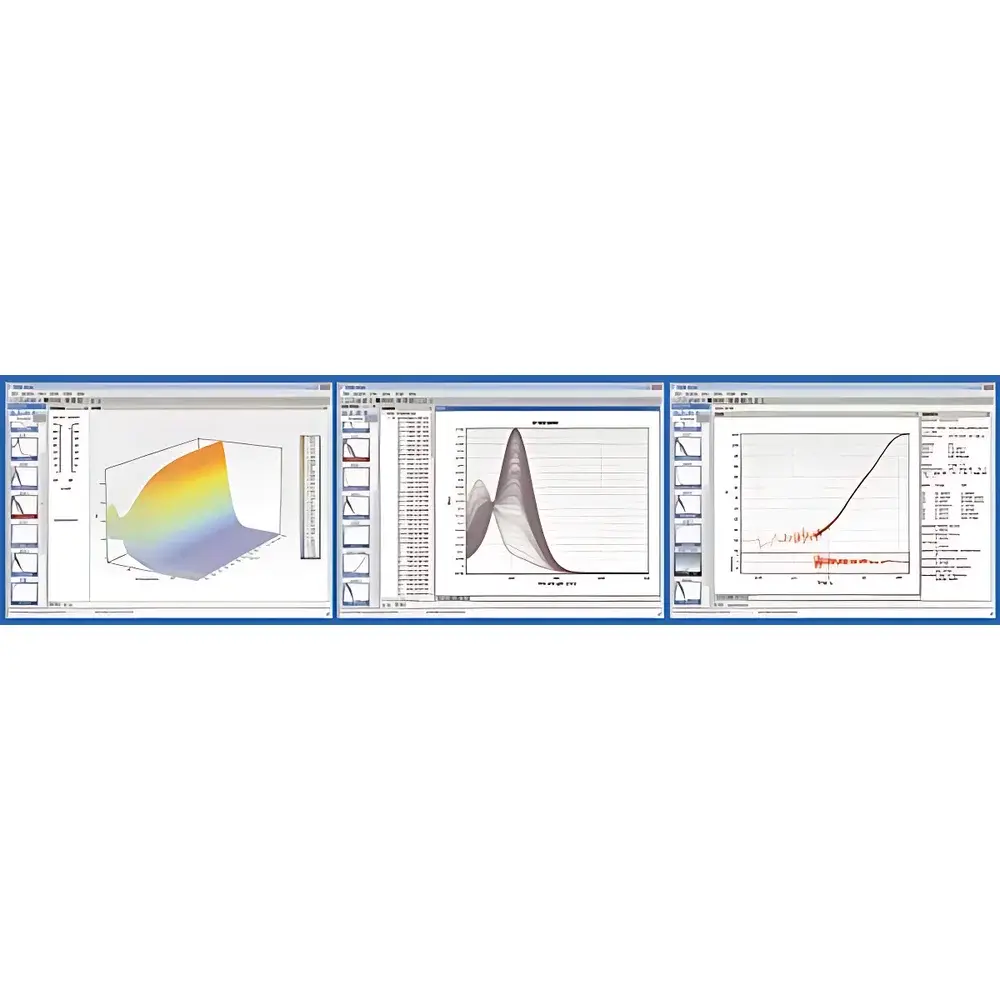
Kinetic Studio is the native Windows-based control and analysis suite (compatible with Windows 7, 8, and 10 x64), developed exclusively for HI-TECH stopped-flow instrumentation. It provides synchronized hardware control, real-time visualization, and post-acquisition modeling—including global fitting of multi-wavelength datasets, singular value decomposition (SVD), exponential decay convolution, and distance-constrained FRET analysis. All raw intensity vs. time traces are stored with full experimental metadata (mixing ratios, temperature, dwell time, lamp status, cell pathlength). Export formats include HDF5, MATLAB .mat, and industry-standard ASCII for interoperability with third-party tools such as OriginLab, Prism, or Python-based biokinetic libraries (e.g., PyStopFlow, KineticsKit). Automated calibration routines for photometric zero and wavelength accuracy support routine IQ/OQ validation.
Applications
- Protein folding/unfolding kinetics (e.g., chevron plots, phi-value analysis)
- Enzyme mechanism studies: pre-steady-state burst kinetics, acylation/deacylation rates, allosteric transitions
- Nucleic acid hybridization and G-quadruplex formation dynamics
- Ligand-binding thermodynamics and residence time determination (kon/koff)
- Membrane protein reconstitution kinetics and detergent exchange monitoring
- Redox-coupled conformational changes in metalloproteins and respiratory chain complexes
- Time-resolved fluorescence anisotropy for rotational diffusion and complex stoichiometry
FAQ
What is the minimum dead time achievable with the SF-61DX2?
The system achieves ≤1.8 ms dead time in standard 2-mm pathlength quartz cells using optimized syringe velocities and low-viscosity buffers; sub-1 ms performance is possible with micro-volume observation cells (<5 µL) and high-pressure actuation.
Can the SF-61DX2 operate under anaerobic conditions?
Yes—integrated gas-purged sample lines, oxygen-scavenging reagents, and sealed cuvette holders allow sustained operation below 1 ppm O₂ when used with appropriate accessories and protocol modifications.
Is Kinetic Studio compliant with 21 CFR Part 11 requirements?
Kinetic Studio does not include built-in electronic signature or audit trail features required for full Part 11 compliance; however, it exports timestamped, immutable raw data files suitable for integration into validated LIMS or ELN environments meeting those standards.
What optical detection modes are natively supported?
Standard configurations include single-wavelength absorbance and fluorescence; optional upgrades include dual-channel fluorescence (FRET), time-resolved anisotropy, diode array spectroscopy (190–750 nm), and external trigger synchronization for pump-probe or T-jump coupling.
How is temperature control implemented?
The SF-61DX2 supports external Peltier-cooled or water-jacketed observation cells (–10 °C to +80 °C); precise thermal management requires integration with compatible third-party circulators (e.g., Julabo, Huber) and cell-specific adapters.
Related Products




