
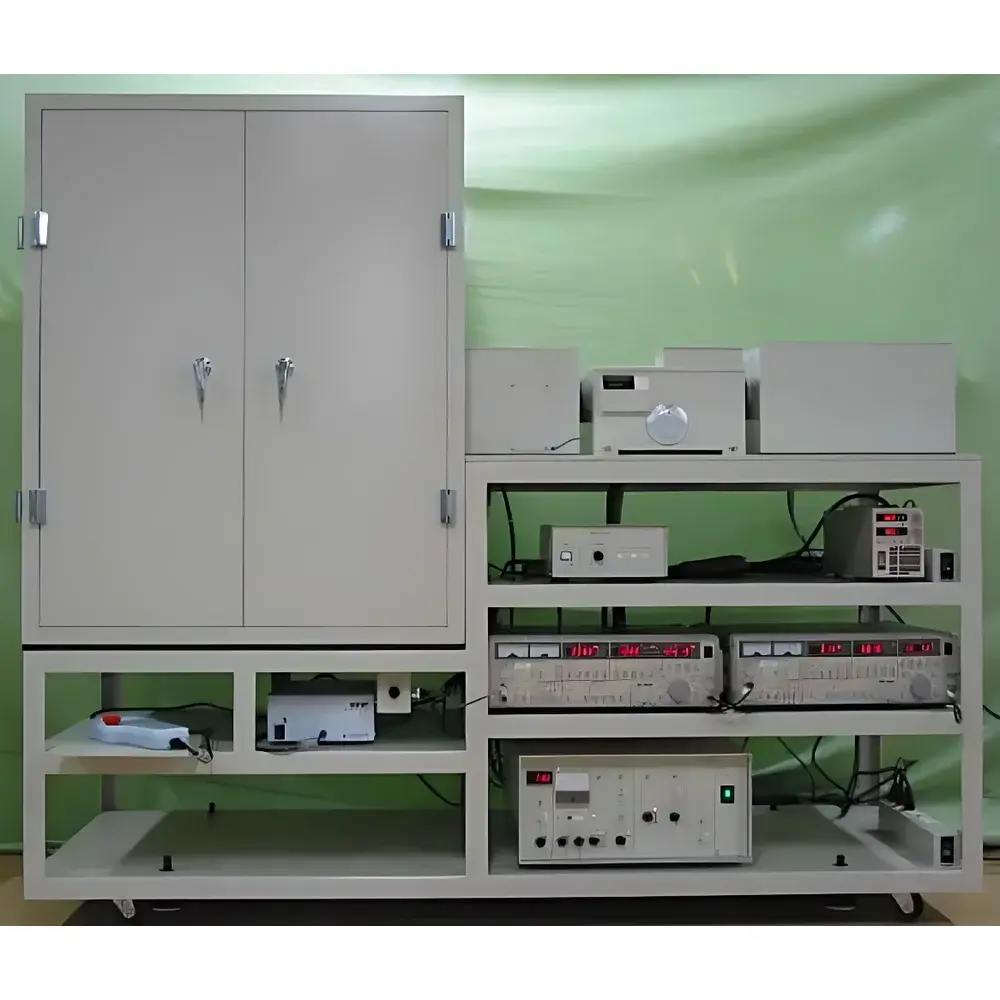
Subband Gap Optical Absorption Measurement System SBA-25B
| Key | Origin: Japan |
|---|---|
| Manufacturer Type | Authorized Distributor |
| Origin Category | Imported |
| Model | SBA-25B |
| Price | USD 7,000 (FOB Yokohama) |
| Wavelength Range | 500–2100 nm (0.6–2.5 eV) |
| Illumination Area | 6 × 6 mm² |
| Radiant Intensity Accuracy | ±5% |
| In-Plane Irradiance Uniformity | ≤±10% |
| Intensity Stability | ≤±5% over 1 h |
| Irradiance Range | 100 nW/cm² to 5 mW/cm² |
| Wavelength Purity | ~24 nm (slit width: 4 mm) |
| Optical Configuration | Czerny–Turner monochromator, f/4.3, linear dispersion: 6 nm/mm (600 grooves/mm) |
| Wavelength Accuracy | ±0.2 nm |
| Chopper Frequency | 0.1–100 Hz |
| Detection Limit (Photocurrent) | 100 fA (1 × 10⁻¹³ A) |
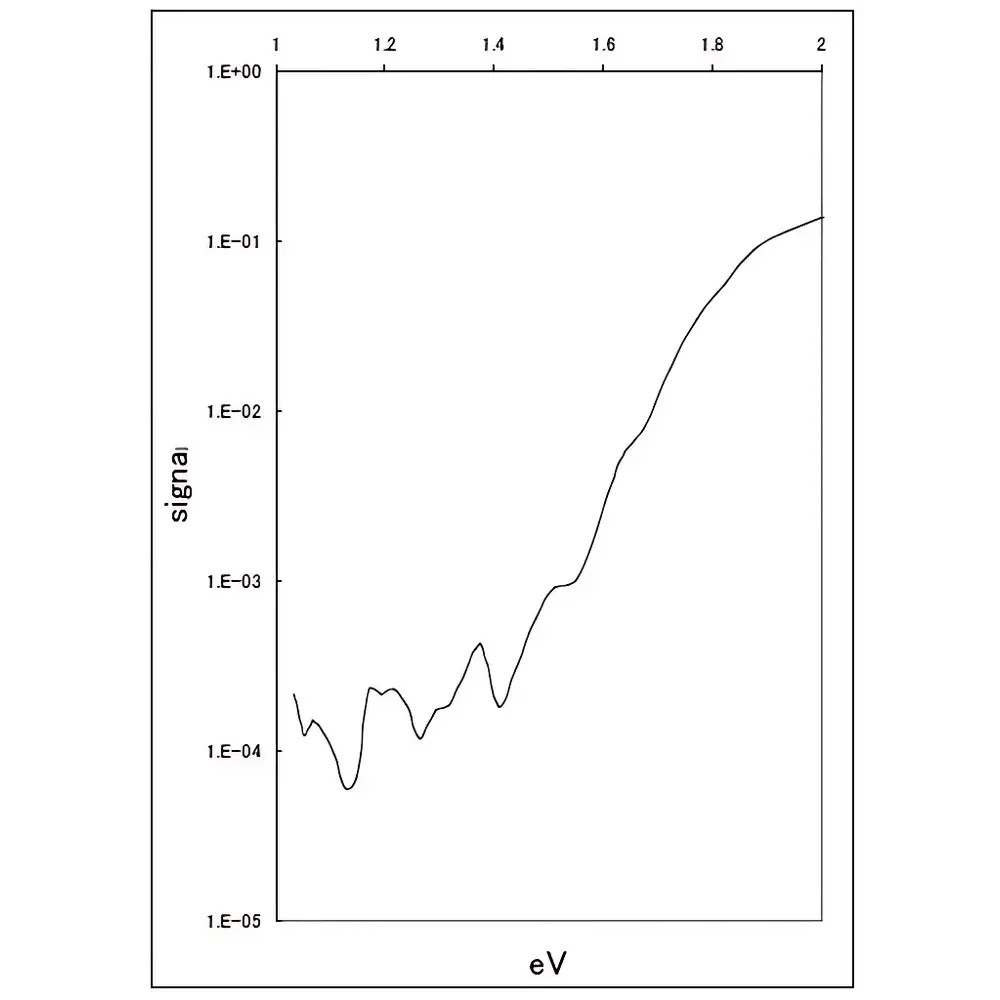
| Absorption Coefficient Dynamic Range | 6 decades |
| Bias Voltage Options | 9 V / 18 V / 27 V (programmable) |
| Dimensions (W×D×H) | 1650 × 700 × 1530 mm (excl. support frame) |
| Power Supply | 220 V AC, 8 A (via step-down transformer) |
Overview
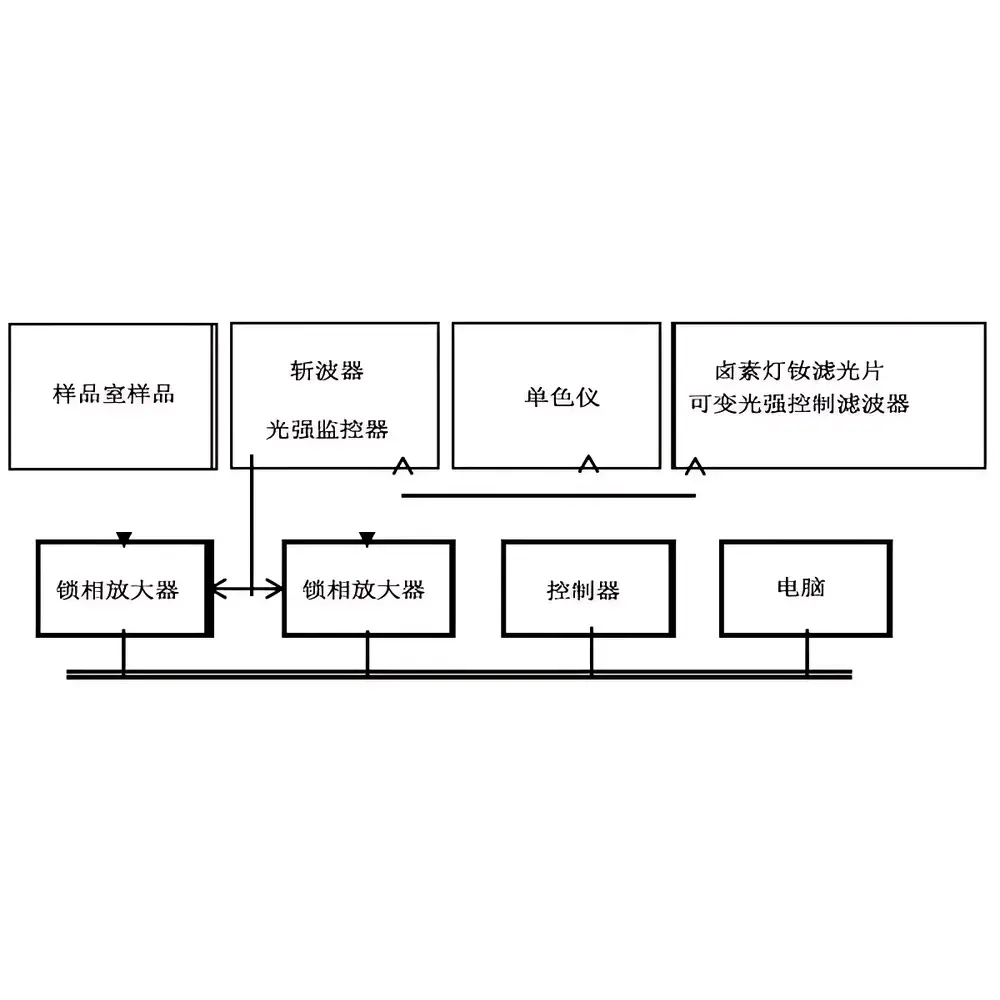
The Subband Gap Optical Absorption Measurement System SBA-25B is a precision-engineered instrumentation platform designed for quantitative characterization of sub-bandgap optical absorption in semiconductors, thin-film photovoltaics, amorphous and microcrystalline silicon, perovskites, and emerging low-dimensional materials. It implements the Constant Photocurrent Method (CPM), a well-established technique standardized in ASTM E2485–22 and widely adopted in R&D laboratories for evaluating defect-state density, Urbach energy, and tail-state absorption below the fundamental band edge. Unlike conventional spectrophotometry, CPM measures photocurrent under monochromatic illumination while actively maintaining constant carrier generation rate—enabling direct extraction of absorption coefficient α(ℏω) with high sensitivity in the critical 0.6–2.5 eV spectral window (500–2100 nm). The system integrates a stabilized halogen broadband source, a high-fidelity Czerny–Turner monochromator, a synchronous mechanical chopper, real-time irradiance monitoring via calibrated photodiode, and a dual-stage lock-in detection architecture optimized for femtoampere-level current resolution.
Key Features
- Real-time, closed-loop irradiance control using a feedback loop between a calibrated Si/InGaAs photodetector and motorized neutral density (ND) filter wheel—ensuring intensity stability ≤±5% over extended measurement sessions.
- Dual-stage signal conditioning: low-noise current preamplifier (gain up to 1 × 10⁹ V/A) coupled with a digital lock-in amplifier (SR830-class performance) delivering 100 fA minimum detectable photocurrent (1 σ, 1 s time constant).
- High-spectral-fidelity monochromator: Czerny–Turner design with 600 grooves/mm grating, f/4.3 optics, and 6 nm/mm linear dispersion; wavelength accuracy ±0.2 nm verified against NIST-traceable emission lines.
- Uniform illumination field: 6 × 6 mm² spot size with ≤±10% in-plane irradiance homogeneity, validated by calibrated CCD-based beam profiler mapping.
- Programmable DC-biased illumination: three selectable bias voltages (9 V, 18 V, 27 V) applied directly to sample electrodes, supporting both open-circuit and controlled-voltage CPM protocols.
- Full hardware synchronization: chopper reference output, monochromator encoder signal, and lock-in trigger are phase-locked to eliminate timing jitter and harmonic artifacts.
Sample Compatibility & Compliance
The SBA-25B accommodates standard semiconductor wafer formats (up to 150 mm diameter), glass/ITO substrates, flexible organic films, and encapsulated device stacks. Sample stage is manually adjustable in X/Y/Z with micrometer-driven tilt compensation. All optical and electrical interfaces comply with IEC 61000-4 electromagnetic compatibility standards. Data acquisition workflows support GLP-compliant audit trails when integrated with optional timestamped logging software. The system meets essential safety requirements per IEC 61010-1 (Measurement Category II, Pollution Degree 2) and is compatible with inert-atmosphere glovebox integration (N₂ or Ar purged chamber adapters available upon request).
Software & Data Management
Control and analysis are performed via Windows-based SBA-Control Suite v3.2, a modular application developed in LabVIEW™ with source-code access for customization. The suite supports automated wavelength sweeps, multi-bias CPM mapping, real-time irradiance compensation plots, and export of α(ℏω) spectra in HDF5 and ASCII formats. All raw lock-in outputs (X, Y, R, θ), photodiode voltage, chopper frequency, and ND filter position are logged synchronously at user-defined sampling rates (max 1 kHz). Audit-ready features include electronic signatures, version-controlled method templates, and metadata embedding (operator ID, calibration date, instrument serial number). Optional FDA 21 CFR Part 11 compliance package provides role-based access control, electronic signature validation, and immutable audit logs.
Applications
- Quantitative determination of Urbach energy and exponential absorption tail in hydrogenated amorphous silicon (a-Si:H) and nanocrystalline silicon (nc-Si).
- Defect-state density profiling in perovskite solar cell absorbers (e.g., MAPbI₃, CsFA mixed cations) under varying thermal history or post-deposition treatments.
- Sub-gap absorption analysis of organic photovoltaic blends (e.g., PM6:Y6) to correlate morphology evolution with charge-transfer state absorption.
- Validation of passivation quality in silicon heterojunction (SHJ) and TOPCon devices via defect-related sub-bandgap response.
- Research-grade calibration of quantum efficiency (QE) systems requiring traceable sub-bandgap responsivity references.
FAQ
What is the primary measurement principle used by the SBA-25B?
The system operates on the Constant Photocurrent Method (CPM), where monochromatic light intensity is dynamically adjusted to maintain a fixed photocurrent across the measured wavelength range—enabling direct calculation of the absorption coefficient α(ℏω).
Can the SBA-25B be used under inert atmosphere or vacuum?
Yes—the optical head and sample stage are modular and can be mounted inside N₂-purged gloveboxes or vacuum chambers (≤10⁻³ mbar); custom flange kits and viewport-compatible optics are available.
Is calibration traceable to national standards?
Radiometric calibration is performed using NIST-traceable silicon and InGaAs photodiodes; wavelength calibration employs Hg/Ar spectral lamps with certified line positions per NIST SRM 2034.
Does the system support automated data reporting compliant with ISO/IEC 17025?
When configured with the optional Compliance Pack, all measurement records include full uncertainty budgets, calibration certificates, and chain-of-custody metadata required for accredited testing labs.
What sample electrical configurations are supported?
Two-terminal (front/back electrode) and three-terminal (gate-biased) configurations are supported; the bias module delivers stable DC voltage with ripple <10 µV RMS and programmable slew rate.



