
IDS-20 Ice Detection Sensor System by Austrian Manufacturer
| Origin | Austria |
|---|---|
| Manufacturer Type | Authorized Distributor |
| Origin Category | Imported |
| Model | IDS-20 |
| Pricing | Upon Request |
| Ice Thickness Range | 0.01–80 mm |
| Operating Temperature | −40 °C to +60 °C |
| IP Rating | IP66 |
| Power Supply | 10–28 VDC (sensor), 24 VAC/DC (heating) |
| Output Interfaces | SDI-12, RS-485 (Modbus), 3 relay outputs (rain / ice / failure) |
| Meteorological Parameters Measured | Air temperature (−40 to +60 °C), Relative humidity (0–100% RH), Dew point (−20 to +20 °C), Frost point (−20 to +20 °C) |
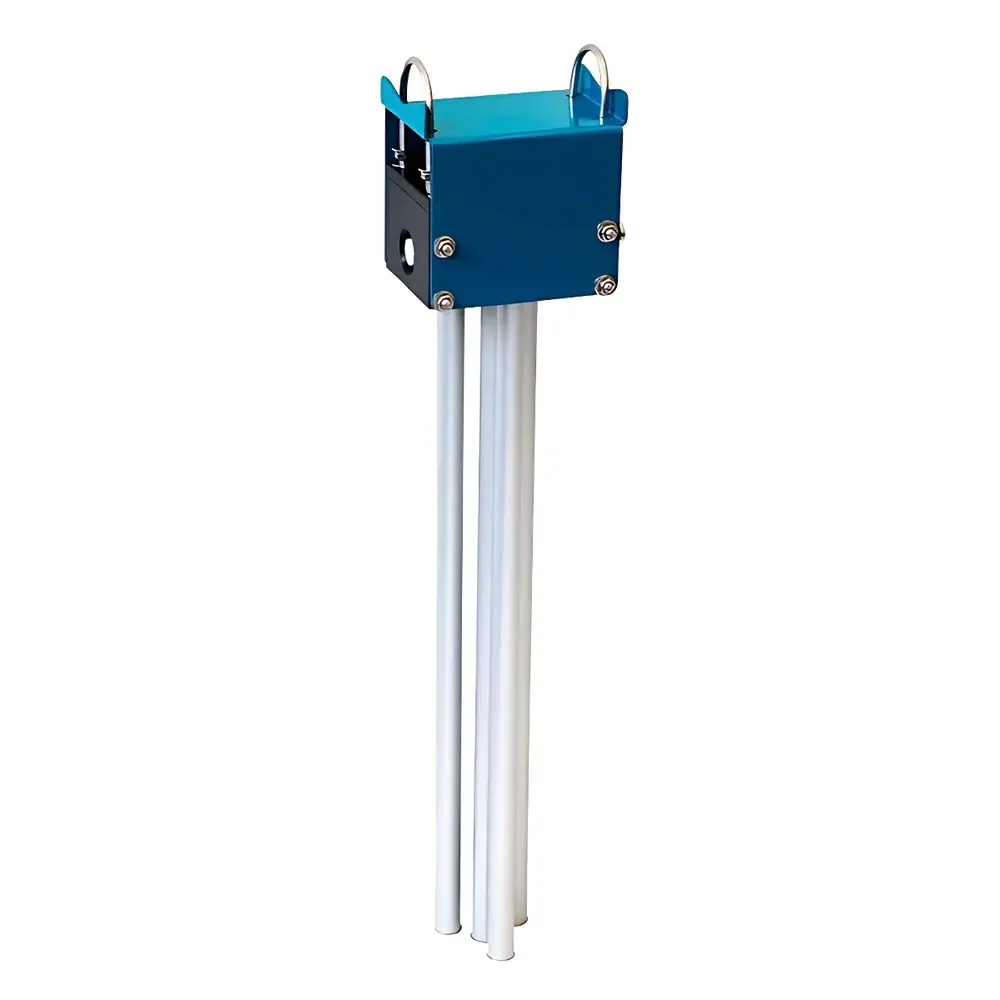
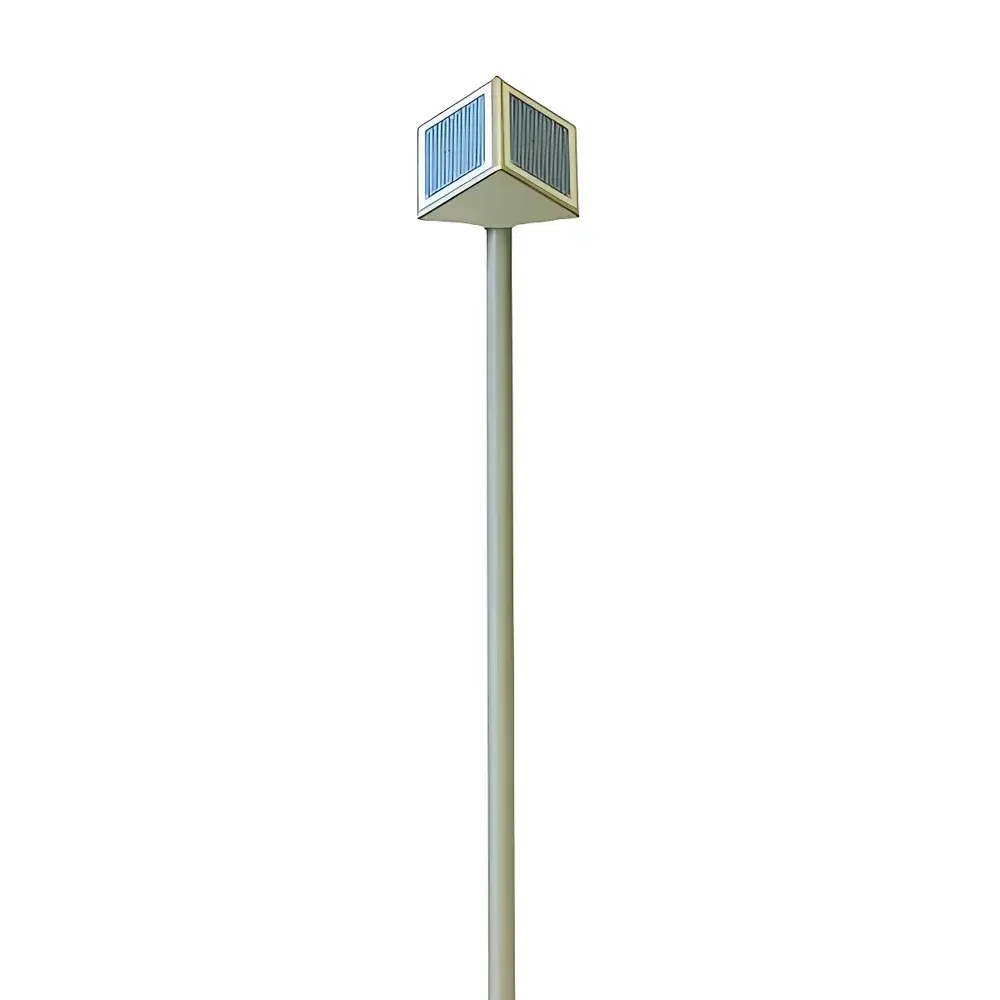
| Sensor Types | Cube Sensor (5 mm & 1 mm variants), Rod Sensor (80 mm range) |
| Weight | 0.7–3.6 kg (system-dependent) |
| Enclosure Dimensions | Up to 318 × 208 × 132 mm (controller) |
Overview
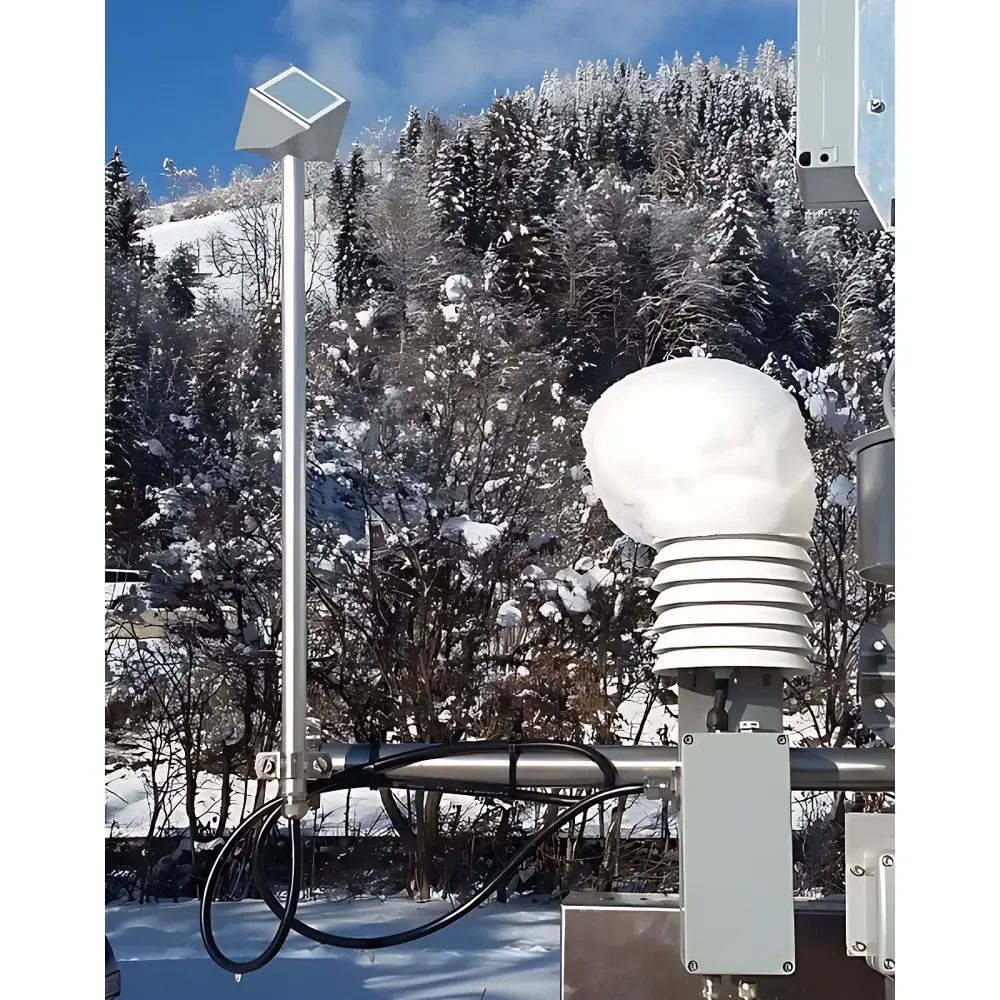
The IDS-20 Ice Detection Sensor System is an engineered solution for real-time, physics-based icing and freezing rain monitoring in critical infrastructure environments. Unlike optical or thermal threshold-based detectors, the IDS-20 employs multi-frequency complex impedance spectroscopy to discriminate between ambient air, liquid water, and solid ice layers adhering to its sensing surface. This principle relies on the distinct dielectric permittivity and conductivity signatures of each phase across a defined frequency spectrum — enabling quantitative, non-intrusive measurement of ice accretion thickness from 0.01 mm up to 80 mm. The system integrates co-located meteorological sensing (air temperature, relative humidity, dew point, frost point) to perform continuous plausibility validation: raw impedance-derived ice signals are cross-referenced against thermodynamic boundary conditions required for ice nucleation and growth. This dual-sensor architecture significantly reduces false positives caused by condensation, frost, or wet snow — a known limitation in legacy icing detection systems.
Key Features
- Multi-phase discrimination: Simultaneous detection and differentiation of dry air, supercooled water droplets, wet snow, slush, and solid ice via frequency-domain impedance analysis
- Three sensor form factors: Compact cube sensors (5 mm and 1 mm thickness ranges) for precision surface monitoring; elongated rod sensor (1–80 mm range) for structural icing on cables, blades, or masts
- Integrated environmental validation: Onboard air temperature (−40 °C to +60 °C), RH (0–100%), dew/frost point calculation ensures metrological traceability and physical consistency
- Maintenance-free operation: No moving parts, no consumables, no calibration drift — designed for unattended deployment in remote or harsh locations
- Robust industrial interface suite: SDI-12 and RS-485 (Modbus RTU) for seamless integration into SCADA, CMS, or weather station networks; three configurable relay outputs (ice presence, rain detection, system fault)
- Active de-icing compatibility: Integrated 24 VAC/DC heating circuit with current-limited control (max. 7 A), synchronized with icing state to prevent thermal shock or energy waste
- Comprehensive surge protection: Built-in lightning and overvoltage protection compliant with IEC 61000-4-5 Level 4, suitable for overhead line, wind turbine nacelle, and aviation ground support installations
Sample Compatibility & Compliance
The IDS-20 is certified for permanent outdoor mounting on metallic and non-metallic substrates including aluminum towers, composite wind turbine blades, steel transmission pylons, aircraft hangar roofs, and roadside gantries. Its IP66-rated enclosure meets IEC 60529 requirements for dust-tightness and resistance to powerful water jets. Electrical safety complies with EN 61000-6-2 (immunity) and EN 61000-6-4 (emissions). While not a medical or pharmaceutical device, its data integrity architecture supports GLP-aligned logging practices: all measurements include timestamps, sensor health flags, and environmental context metadata — facilitating audit-ready records for infrastructure risk management frameworks. The system does not require FDA 21 CFR Part 11 compliance but provides tamper-evident digital logs compatible with third-party validation protocols.
Software & Data Management
Data output follows open, vendor-neutral protocols: SDI-12 enables plug-and-play integration with Campbell Scientific, Onset HOBO, or Vaisala weather stations; Modbus RTU over RS-485 allows direct connection to PLCs and industrial HMIs without proprietary middleware. Each measurement packet includes ice thickness (mm), air temperature (°C), RH (%), dew point (°C), frost point (°C), sensor status (OK/warning/failure), and internal heater state. Optional firmware updates support time-synchronized multi-sensor arrays for spatial icing profiling. Raw impedance spectra are not exposed — only validated, physically consistent derived parameters are transmitted, minimizing downstream interpretation errors. Local data buffering (up to 30 days at 10-minute intervals) ensures continuity during network outages.
Applications
- Airport runway and apron icing surveillance — integrated with NOTAM alerting and de-icing dispatch systems
- Wind turbine blade leading-edge monitoring — triggering pitch adjustment or localized heating before aerodynamic degradation occurs
- Overhead power transmission lines — correlating ice load accumulation with mechanical stress models for predictive maintenance scheduling
- Telecom tower and broadcast antenna icing assessment — preventing signal attenuation and structural loading risks
- Roadway bridge and elevated highway monitoring — feeding real-time data to intelligent transportation systems (ITS) for dynamic signage and salt-spread rate optimization
- Research-grade atmospheric icing studies — supporting validation of numerical weather prediction (NWP) models and icing climatology databases
FAQ
How does the IDS-20 distinguish between frost and glaze ice?
It analyzes the temporal evolution of complex impedance magnitude and phase angle across multiple frequencies. Frost exhibits high porosity and low density, resulting in characteristic dispersion patterns distinct from dense, conductive glaze ice.
Can the IDS-20 be installed on curved or non-horizontal surfaces?
Yes — the rod and cube sensors are mechanically agnostic; orientation is compensated algorithmically using internal thermal and impedance baselines.
Is heater activation automatic or user-configurable?
Heater control is fully programmable via Modbus register: users may set temperature thresholds, duty cycles, or link activation directly to ice thickness or frost-point violation events.
What is the minimum detectable ice layer thickness, and under what conditions?
0.01 mm is achievable on flat, clean surfaces at stable sub-zero temperatures with low wind speed (< 2 m/s); performance is validated per ISO 12100 Annex A for functional safety of detection systems.
Does the system support NTP time synchronization?
No — timekeeping relies on internal RTC with ±2 ppm accuracy; external time sync must be handled at the host controller level via Modbus or SDI-12 command sequence.
Related Products







