
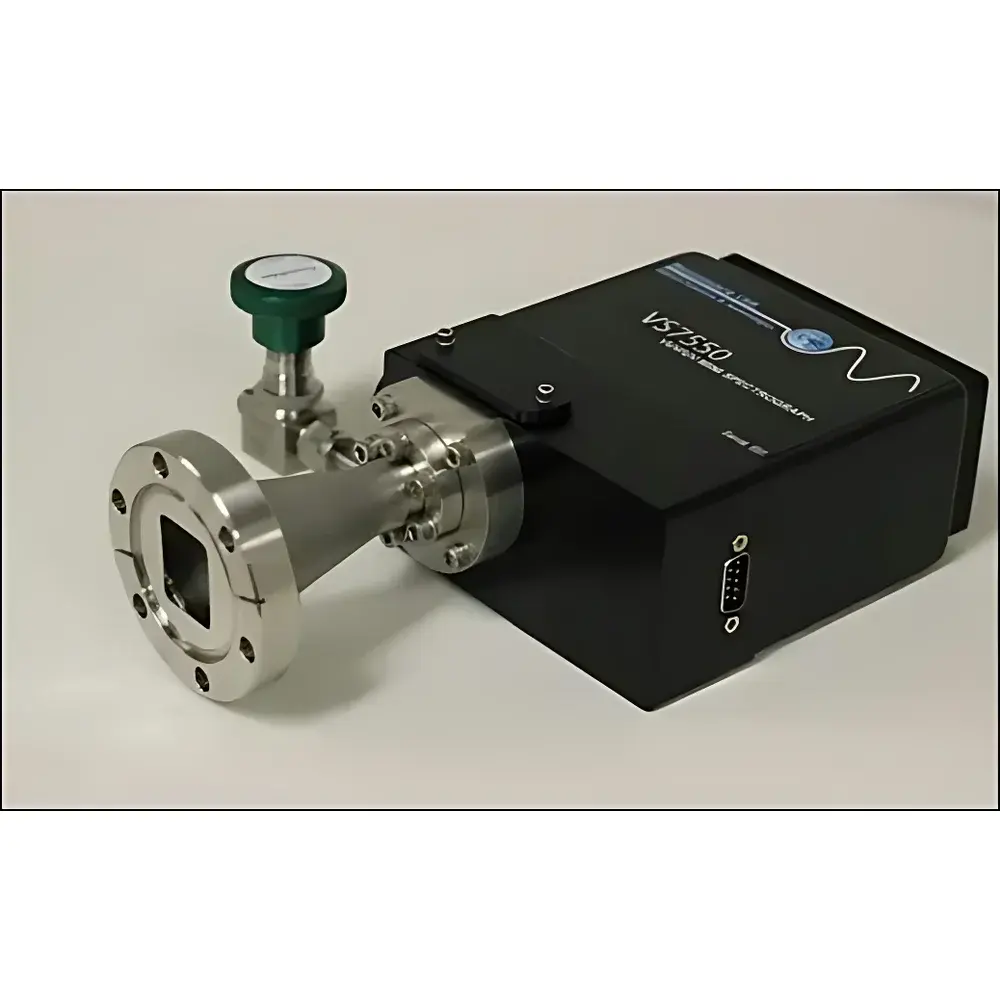
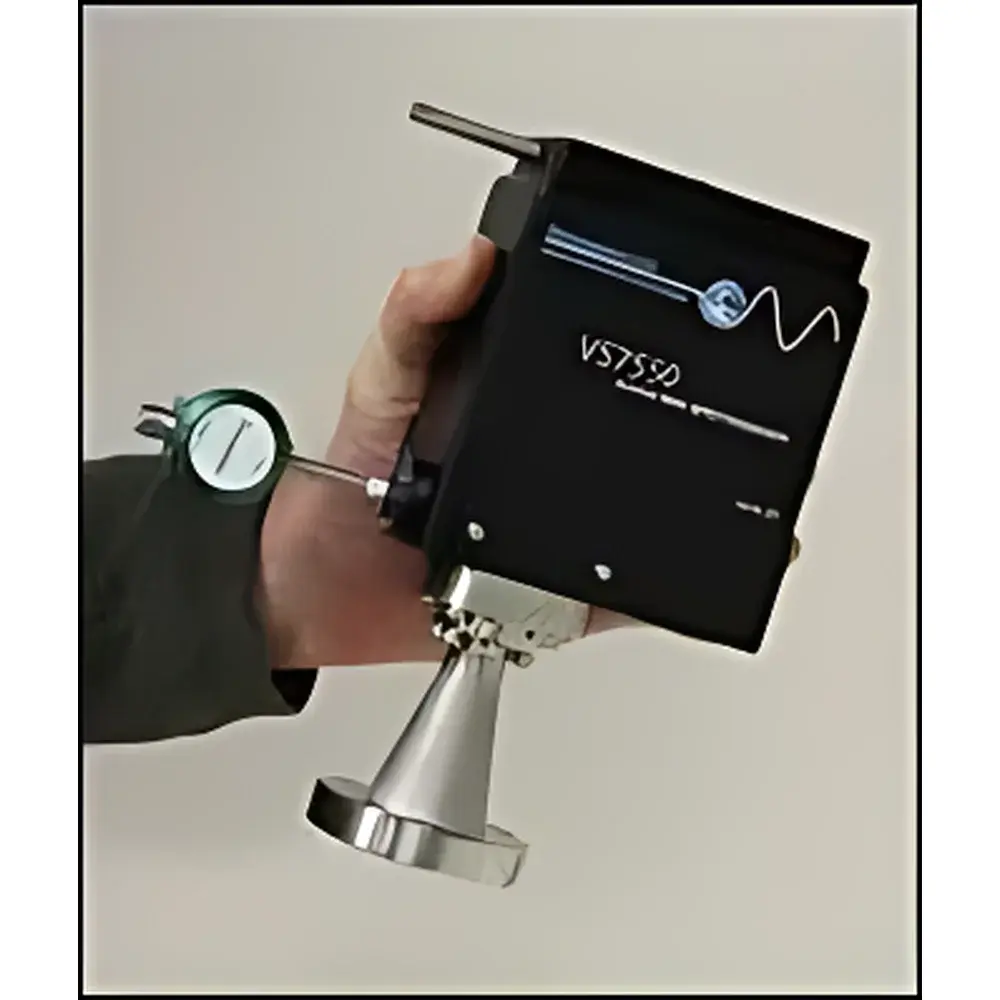
Resonance VS7550 Vacuum Ultraviolet–Near Infrared Miniature Czerny–Turner Spectrometer
| Origin | Canada |
|---|---|
| Manufacturer Type | Authorized Distributor |
| Origin Category | Imported |
| Model | VS7550 |
| Price Range | USD 0–4,999 |
| Optical Design | Single-Beam |
| Detector Type | Photodiode Array (PDA) |
| Wavelength Range | 104 nm – 1030 nm |
| Automation Level | Motorized Wavelength Scanning |
| Spectral Bandwidth | Not Applicable (Fixed by Grating & Slit) |
| Wavelength Accuracy | ±0.35 nm |
| Stray Light | ≤0.01% T |
Overview
The Resonance VS7550 is a compact, high-performance vacuum ultraviolet (VUV) to near-infrared (NIR) spectrometer engineered for precision spectral acquisition in demanding research and industrial environments. Based on the Czerny–Turner optical architecture, it delivers broad spectral coverage (104–1030 nm) with exceptional throughput and resolution—enabled by its f/3.2 input optics and user-selectable diffraction gratings. Unlike conventional UV-Vis spectrophotometers limited by atmospheric oxygen absorption below ~190 nm, the VS7550 integrates an ultra-high vacuum (UHV)-compatible MgF₂ window and laminar-flow purging system, permitting stable, low-noise operation down to 104 nm—a critical capability for characterizing atomic transitions, excited-state dynamics, and photoionization cross-sections. Its miniature footprint (<150 mm × 100 mm × 80 mm), integrated USB 2.0 interface, and 5–10 m cable support benchtop, synchrotron beamline, or portable field deployment without external controllers or power supplies.
Key Features
- Motorized slit width control (25–400 µm) for dynamic trade-off between resolution and signal-to-noise ratio
- Computer-controlled grating rotation enabling full spectral coverage across multiple orders; compatible with gratings from 600 to 4200 grooves/mm
- Laminar-flow nitrogen or argon purge system maintaining <1 ppm O₂/H₂O at the detector path, essential for VUV stability
- UHV-compatible flange (CF-35 or KF-25 optional) with bakeable MgF₂ window; window removable under vacuum for cleaning or replacement
- Phosphor-coated photodiode array detector optimized for quantum efficiency from 100 nm to 1000 nm, eliminating need for separate VUV/NIR detectors
- Firmware-level dark exposure compensation and real-time background subtraction for quantitative trace analysis
- USB-powered operation with embedded microcontroller; no external power supply or cooling required
Sample Compatibility & Compliance
The VS7550 supports direct coupling to gas-phase reaction cells, plasma sources, laser ablation chambers, and synchrotron beamlines via standard vacuum interfaces. Its spectral fidelity meets requirements for ASTM E275 (UV-Vis spectrophotometer performance verification), ISO 17025-compliant calibration workflows, and GLP/GMP documentation when used with NIST-traceable calibration lamps (e.g., Hg/Ne/Ar lines at 104.8, 121.6, 154.8, 253.7, 546.1 nm). The instrument’s firmware logs all operational parameters—including slit position, grating angle, integration time, and purge gas flow rate—with timestamped audit trails suitable for FDA 21 CFR Part 11 compliance when paired with validated laboratory information management systems (LIMS).
Software & Data Management
Control and acquisition are managed through Resonance’s cross-platform SpectraView software (Windows/macOS/Linux), supporting scripting via Python API for automated measurement sequences. Raw data are exported in HDF5 format with embedded metadata (wavelength calibration coefficients, slit geometry, detector gain settings), ensuring full traceability. Spectral stitching across grating orders is performed using overlapping reference lines with sub-pixel interpolation, minimizing discontinuities. Calibration routines include multi-point wavelength validation and photometric linearity assessment per ISO 6581. Optional add-ons provide real-time spectral deconvolution, peak fitting (Voigt profiles), and spectral library matching against NIST Atomic Spectra Database.
Applications
- Vacuum ultraviolet absorption spectroscopy of atomic hydrogen, helium, and molecular nitrogen in fusion plasma diagnostics
- In situ monitoring of radical species (e.g., OH*, CH*, NO*) in combustion and atmospheric chemistry studies
- Characterization of optical coatings, thin-film solar absorbers, and EUV lithography materials
- Time-resolved photoelectron spectroscopy support via pump-probe delay synchronization
- Calibration transfer between synchrotron beamlines and laboratory-scale VUV sources
- Quantitative gas-phase quantification (e.g., O₃, SO₂, ClO) using differential optical absorption spectroscopy (DOAS)
FAQ
What vacuum level is required for stable operation below 120 nm?
A base pressure of ≤5×10⁻⁶ mbar is recommended; the laminar purge system enables operation down to 104 nm even at 1×10⁻³ mbar with continuous gas flow.
Can the VS7550 be integrated into a UHV chamber with in-situ bake-out capability?
Yes—the CF-35 UHV flange option supports bake-out to 150°C; the MgF₂ window is mounted on a removable kinematic stage for safe extraction during chamber maintenance.
Is NIST-traceable calibration included with the instrument?
A factory-installed Hg/Ne/Ar pen-ray lamp with certificate of calibration (NIST-traceable wavelengths ±0.005 nm) is provided; optional annual recalibration services are available.
Does the software support automated grating change sequencing?
No—the VS7550 uses a single fixed grating per configuration; however, motorized grating rotation enables seamless scanning across its entire dispersion range without mechanical swapping.
What is the minimum integration time for transient signal capture?
Hardware-limited minimum exposure is 1 ms; software-triggered burst acquisition supports up to 1 kHz frame rate with on-board buffer for transient event capture.






