
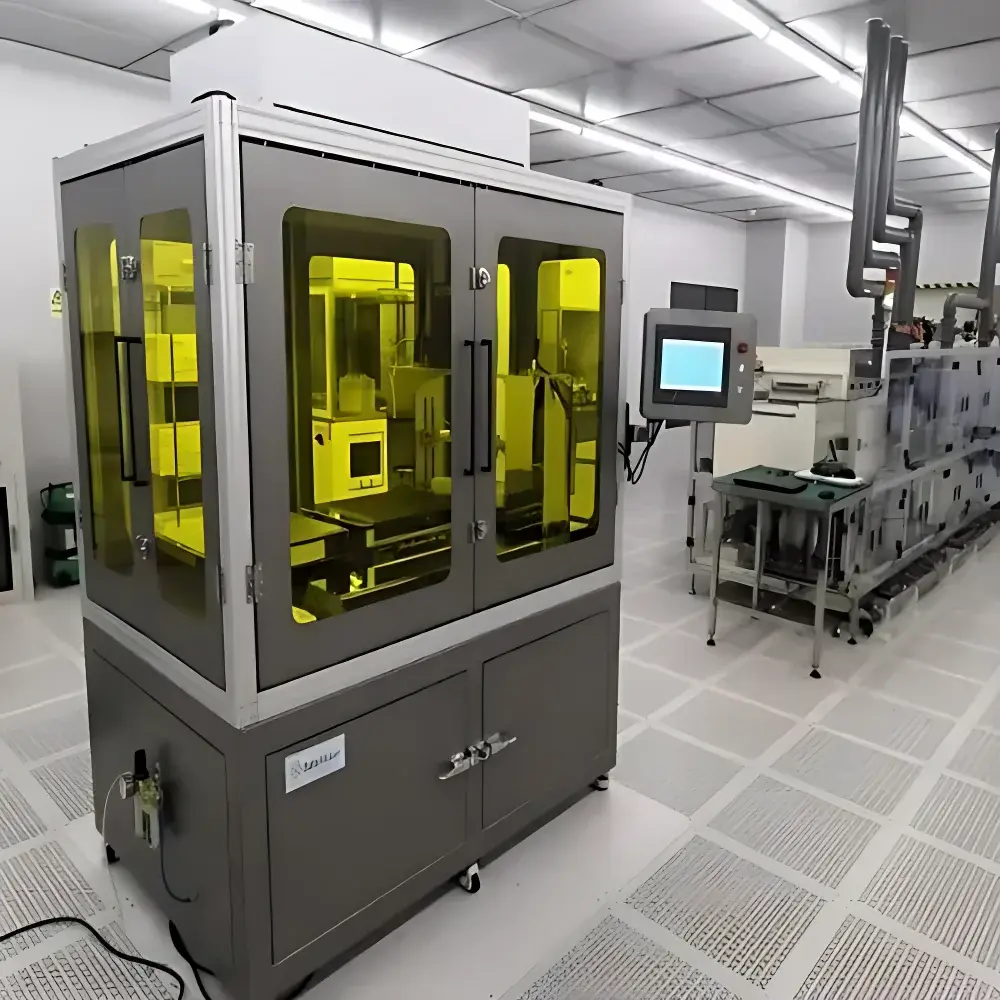
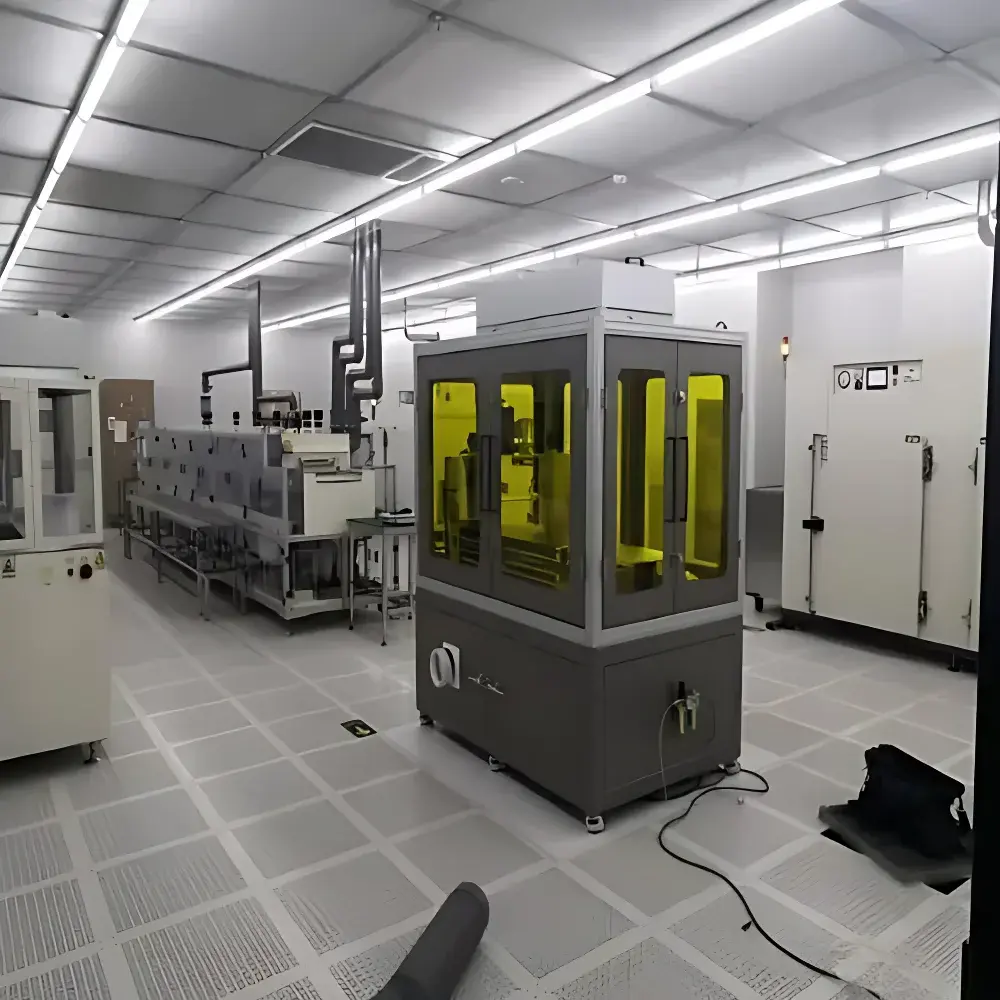
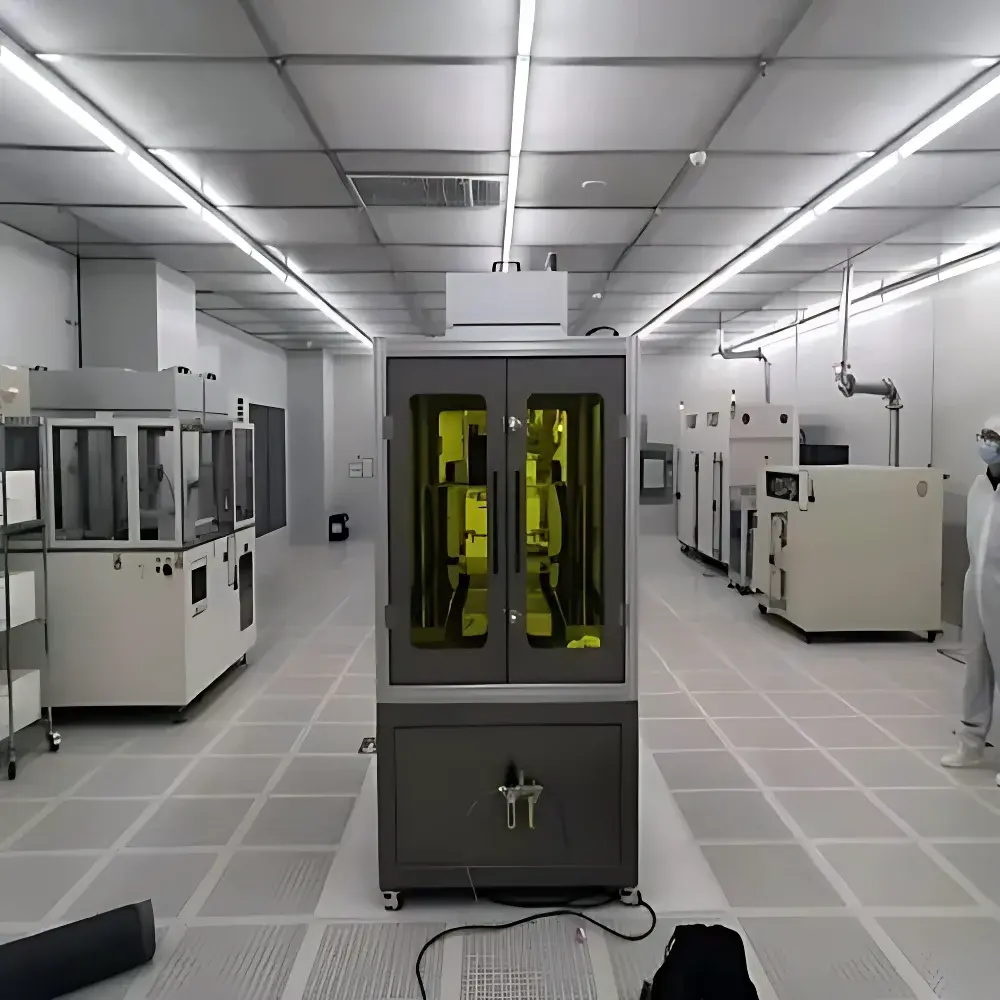
Slodie DT-3747 Benchtop Slot Die Coater
| Origin | Shanghai, China |
|---|---|
| Manufacturer Type | Authorized Distributor |
| Origin Category | Domestic (China) |
| Model | DT-3747 |
| Pricing | Available Upon Request |
| Coating Width | 200 mm (standard), up to 500 mm (customizable) |
| Wet Film Thickness | 10–200 µm |
| Dry Film Thickness | 0.5–10 µm |
| Solid Content | 10–50% |
| Viscosity Range | 1–200,000 cP |
| Coating Speed | 0–100 mm/s |
| Dispense Rate | 0.1–60 mL/min |
| Reservoir Capacity | 50 mL |
| Slot Nozzle Gap | 0.05 / 0.08 / 0.1 mm (interchangeable precision shims) |
| Z-Axis Height Adjustment | Fine range 0–10 mm (0.001 mm resolution), coarse range 0–50 mm |
| Substrate Platform | 370 mm × 470 mm |
| Effective Coating Area | 370 mm × 370 mm |
| Stage Flatness | ±1.5 µm |
| Nozzle Levelness | ±2 µm |
| Optional Integrated Hot Plate | 200 °C max, ±2 °C stability |
| Power Supply | AC 220 V, 50 Hz |
Overview
The Slodie DT-3747 is a precision-engineered benchtop slot die coater designed for controlled, scalable thin-film deposition in R&D, pilot-line, and pre-production environments. It operates on the principle of precision metered extrusion: a pressurized fluid—ranging from low-viscosity photoresists to highly structured polymer melts—is forced through a narrow, precisely defined gap between upper and lower tooling plates (nozzle assembly), forming a continuous meniscus that contacts the moving substrate. This contactless, non-impinging coating method ensures minimal shear-induced degradation, high thickness uniformity, and exceptional repeatability across diverse material systems. Unlike spin coating or blade coating, slot die technology decouples coating thickness from fluid rheology via independent control of volumetric flow rate and substrate velocity—enabling deterministic film thickness prediction (t = Q / (w·v), where t = wet thickness, Q = volumetric flow, w = coating width, v = line speed). The DT-3747 integrates closed-loop motion control, real-time process monitoring, and modular hardware architecture to support both rapid prototyping and process transfer toward manufacturing.
Key Features
- Precision nozzle assembly with interchangeable stainless-steel shims (0.05 / 0.08 / 0.1 mm) enabling strict control over meniscus geometry and edge definition;
- Z-axis height adjustment with dual-range actuation: coarse travel (0–50 mm) and ultra-fine positioning (0–10 mm at 1 µm resolution), ensuring sub-micron gap reproducibility;
- High-stability vacuum-chuck platform (370 × 470 mm) with optional integrated heating stage (up to 200 °C, ±2 °C thermal uniformity) for solvent evaporation kinetics control and in-situ annealing;
- Digital servo-controlled X-axis motion system with programmable acceleration/deceleration profiles, supporting edge-defined coating contours and repeatable start/stop transitions;
- Integrated syringe pump delivery with pulseless flow output (0.1–60 mL/min), inline filtration, and reservoir volume monitoring (50 mL capacity);
- Pre-coating simulation module for parametric estimation—calculating required flow rate, line speed, and expected wet/dry thickness based on solid content, viscosity, and target dry film thickness—reducing material waste by up to 95% in early-stage trials;
- Modular expansion interface supporting optional air knife drying, optical alignment microscope, dual-pump dispensing, and custom-width nozzle manifolds (up to 500 mm).
Sample Compatibility & Compliance
The DT-3747 accommodates rigid and flexible substrates including glass (LCD, OLED, smart glass), stainless steel foils, PET/PEN films, silicon wafers, and ceramic carriers. Its chemically inert wetted path—comprising PTFE-lined tubing, stainless-steel pump barrels, and passivated nozzle surfaces—ensures compatibility with aggressive solvents (e.g., NMP, DMF, chlorobenzene) and corrosive precursors used in perovskite (PVK), organic photovoltaic (OPV), and solid-state battery electrolyte formulations. The system supports GLP-compliant operation through audit-trail-enabled software logging (timestamped parameter sets, sensor readings, error events), aligning with ISO 9001 quality management frameworks and serving as a validated platform for ASTM D7247 (coating thickness uniformity) and IEC 61215 (PV module qualification) pre-screening protocols.
Software & Data Management
The embedded control interface provides full recipe-based operation: users define and store multi-step coating sequences—including ramp-up/ramp-down phases, dwell times, and conditional triggers—via intuitive graphical workflow configuration. All operational parameters (flow rate, speed, temperature, Z-height, vacuum status) are continuously logged at ≥10 Hz sampling frequency and exported in CSV or HDF5 format for post-processing. The system supports OPC UA connectivity for integration into MES/SCADA environments and includes configurable alarm thresholds with email/SNMP notification. Audit trails meet FDA 21 CFR Part 11 requirements when paired with network-authenticated user accounts and electronic signature modules (available as optional add-on).
Applications
- Lithium-ion battery electrode and separator coating (aqueous & solvent-based slurries);
- Photolithography: resist coating on TFT-LCD and micro-LED glass substrates;
- Optoelectronic thin films: charge transport layers (HTL/ETL), emissive layers, and encapsulation barriers for OLED and QLED displays;
- Perovskite and organic solar cells: scalable deposition of MAPbI₃, spiro-OMeTAD, PTB7-Th, and non-fullerene acceptors;
- Functional coatings: anti-reflective, hard-coat, polarizer, and light-diffusing layers for automotive HUDs and AR/VR optics;
- Flexible electronics: printed sensors, RF antennas, and conductive polymer traces on roll-to-roll compatible substrates;
- Advanced glass: electrochromic, thermochromic, and PDLC layers for smart architectural glazing and museum display protection.
FAQ
What substrate sizes and types can the DT-3747 accommodate?
The standard platform accepts substrates up to 370 mm × 470 mm. Custom fixtures support irregular shapes, curved surfaces, and roll-fed configurations with edge-guidance modules.
Is the system suitable for high-viscosity pastes (>100,000 cP)?
Yes—equipped with positive-displacement syringe pumps and low-shear nozzle geometry, the DT-3747 reliably processes viscoelastic pastes including LiFePO₄ cathode slurries and silver nanoparticle inks without clogging or flow instability.
Can coating uniformity be validated in real time?
While the DT-3747 does not include an integrated metrology sensor, it provides synchronized trigger outputs for external in-line tools such as laser profilometers, OCT scanners, or ellipsometers—enabling spatially resolved thickness mapping during coating.
How is process scalability ensured from lab to pilot line?
All critical parameters (gap height, flow rate, speed, temperature) are dimensionally consistent with industrial-scale slot die coaters. Process maps generated on the DT-3747 directly inform scale-up factors for web speed, pump displacement, and thermal budget in roll-to-roll production.
Does the system support automated cleaning cycles?
Yes—the software includes programmable solvent purge routines with configurable flow duration, pressure limits, and waste collection alerts, minimizing cross-contamination between material families.





