
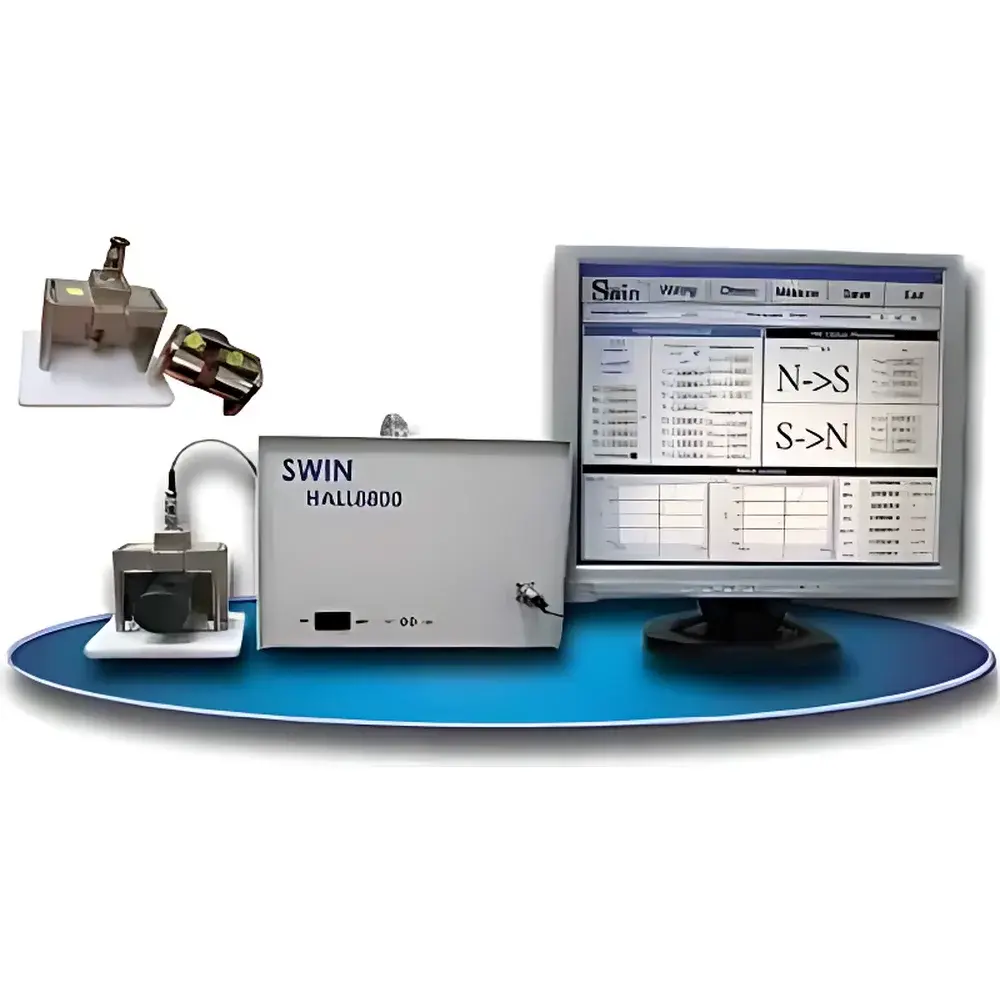
SWIN Hall8800 Hall Effect Measurement System – Room Temperature & Liquid Nitrogen Cryogenic (77 K) Configuration
| Brand | SWIN |
|---|---|
| Origin | Taiwan |
| Model | Hall8800 |
| Max Sample Size | 15 mm × 15 mm (customizable) |
| Measurement Temperatures | 300 K (ambient), optional 77 K (LN₂-cooled) |
| Magnetic Flux Density | 0.68 T ±1% |
| Magnet Stability | ±2% over 1 year |
| Field Uniformity | ±1% over 20 mm diameter |
| Pole Gap | 20 mm |
| Input Voltage Range | 1 µV to 300 V |
| Hall Voltage Range | 10 µV to 2000 mV |
| Resistivity Range | 10⁻⁵ to 10⁷ Ω·cm |
| Carrier Mobility Range | 1 to 10⁷ cm²/(V·s) |
| Carrier Density Range | 10⁷ to 10²¹ cm⁻³ |
| Compatible Materials | Si, SiGe, SiC, ZnO, GaAs, InGaAs, InP, GaN, ITO (n-type & p-type) |
Overview
The SWIN Hall8800 Hall Effect Measurement System is a precision-engineered platform designed for quantitative characterization of charge transport properties in semiconductor thin films and bulk materials. Based on the classical Hall effect principle—where a transverse voltage develops across a current-carrying conductor under a perpendicular magnetic field—the system enables simultaneous extraction of sheet resistance, carrier concentration, mobility, Hall coefficient, and resistivity. Its dual-temperature capability supports measurements at ambient conditions (300 K) and cryogenic operation down to 77 K using standard liquid nitrogen dewar integration, facilitating temperature-dependent studies critical for band structure analysis, defect characterization, and process optimization in compound semiconductors and wide-bandgap materials.
Key Features
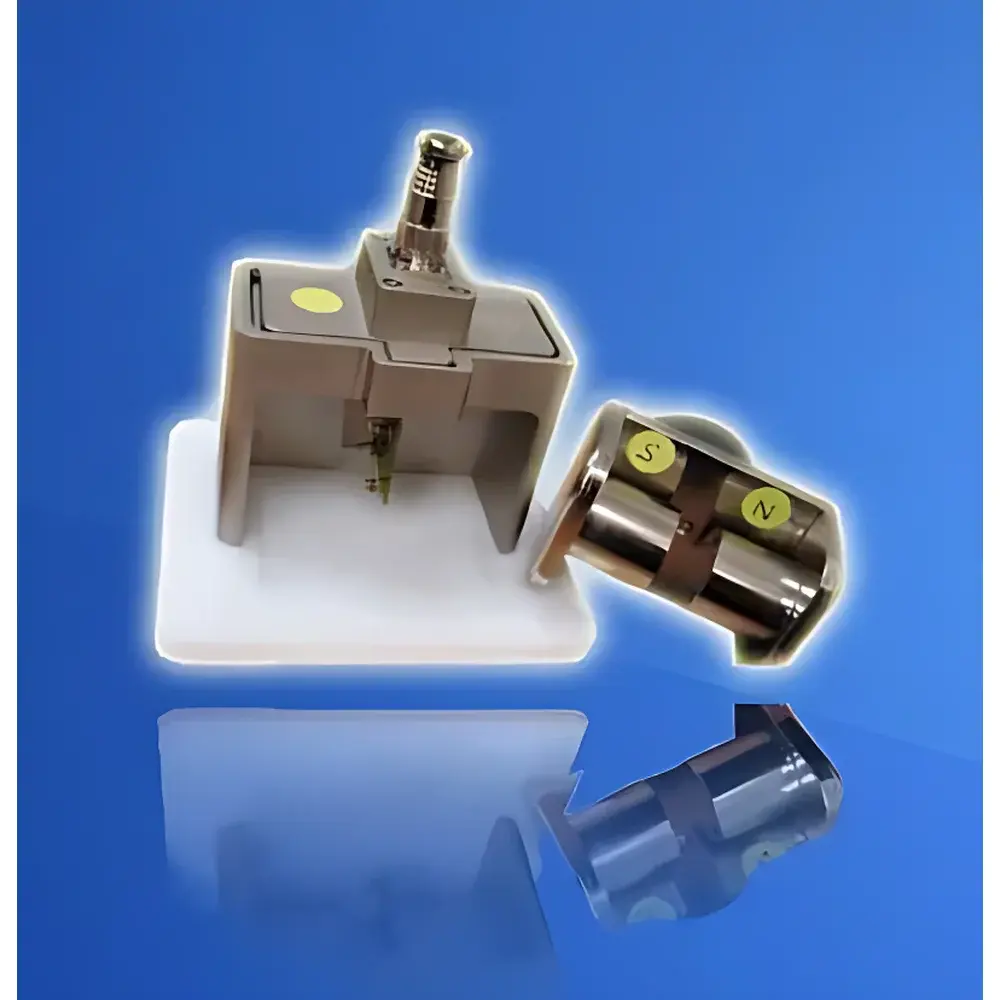
- Integrated permanent magnet assembly delivering a stable, calibrated flux density of 0.68 T ±1%, with long-term field stability maintained within ±2% over one year.
- High-uniformity magnetic field profile (±1% variation across a 20 mm diameter central region), ensuring spatial consistency essential for reproducible Hall voltage acquisition on small-area samples.
- Adjustable pole gap of 20 mm accommodates standard sample holders and cryostat inserts while preserving optimal field geometry and thermal isolation during LN₂ operation.
- Ultra-low-noise signal conditioning architecture supporting input sensitivity from 1 µV to 300 V and Hall voltage detection from 10 µV to 2000 mV—enabling accurate measurement across highly conductive metals and highly resistive oxides alike.
- Modular probe station design compatible with both four-point probe resistivity mapping and van der Pauw/Hall configuration wiring, minimizing contact resistance artifacts and enabling standardized ASTM F76 and ISO 14129-compliant test protocols.
- Thermally shielded sample stage with integrated temperature monitoring (PT100 sensor) and optional LN₂ cooling interface, allowing controlled thermal cycling between 77 K and 300 K without mechanical realignment.
Sample Compatibility & Compliance
The Hall8800 supports planar semiconductor specimens up to 15 mm × 15 mm (custom configurations available), including epitaxial wafers, sputtered or evaporated thin films, and solution-processed layers. It is validated for n-type and p-type materials such as silicon (Si), silicon carbide (SiC), gallium arsenide (GaAs), indium phosphide (InP), gallium nitride (GaN), zinc oxide (ZnO), indium tin oxide (ITO), and heterostructures like SiGe and InGaAs. All electrical measurements comply with internationally recognized standards including ASTM F76 (Standard Test Method for Measuring Resistivity of Silicon Wafers), ASTM F1529 (Standard Guide for Hall Effect Measurements), and ISO 14129 (Electrical characterization of semiconductor materials). The system’s hardware architecture and data logging framework support GLP/GMP-aligned workflows, with optional audit trail logging and user access control for regulated environments.
Software & Data Management
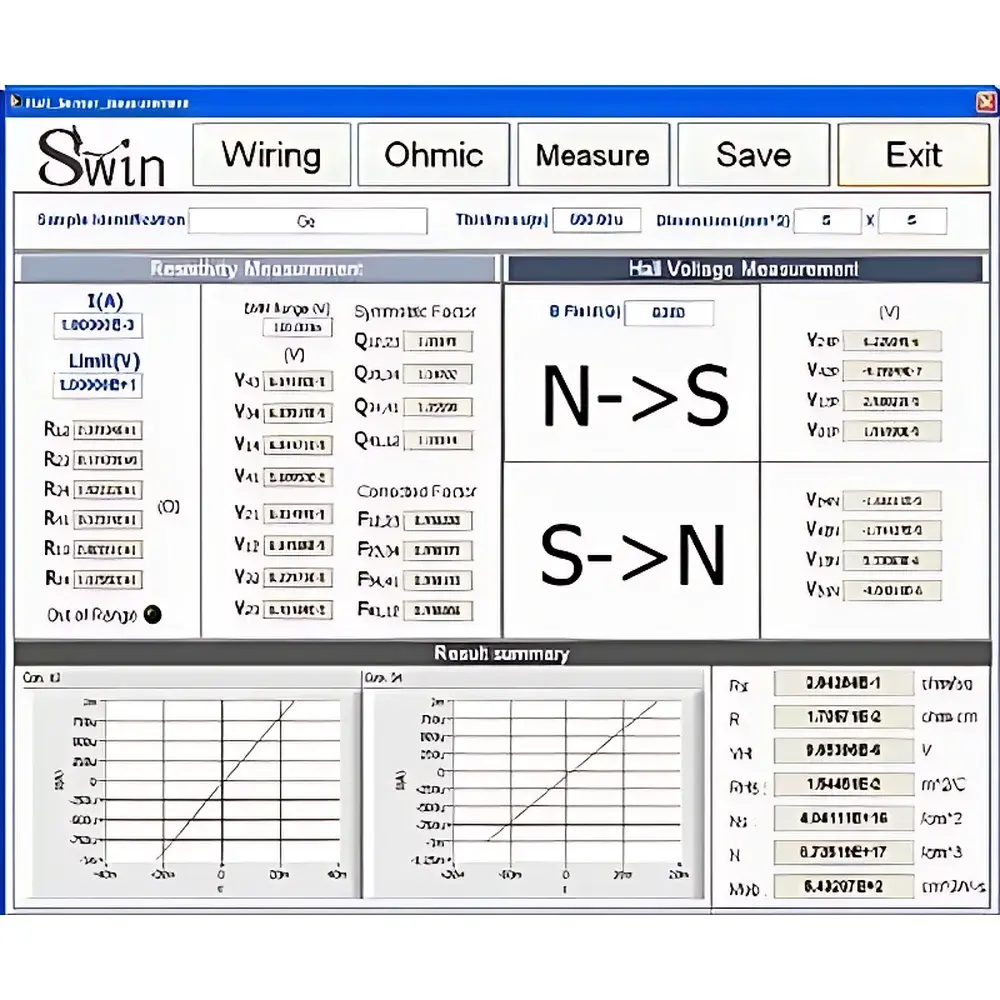
The Hall8800 is operated via SWIN’s proprietary HallSoft v3.2 software suite, which provides full instrument control, real-time signal visualization, automated parameter calculation (e.g., carrier type, sheet resistance, mobility), and export-ready reporting. Data files are saved in ASCII-based .csv format with embedded metadata (timestamp, temperature, magnetic field value, sample ID, operator name), ensuring traceability and compatibility with third-party analysis tools (MATLAB, Python, Origin). The software includes built-in validation routines for van der Pauw symmetry checks and contact resistance diagnostics. For laboratories subject to regulatory oversight, an optional 21 CFR Part 11-compliant module is available, offering electronic signatures, role-based permissions, and immutable audit logs.
Applications
- Process development and QC of semiconductor fabrication lines—monitoring dopant activation, annealing efficacy, and film uniformity.
- Research into emerging materials such as perovskite photovoltaics, 2D transition metal dichalcogenides (TMDs), and transparent conducting oxides (TCOs).
- Temperature-dependent mobility analysis to distinguish scattering mechanisms (phonon vs. ionized impurity scattering) in high-electron-mobility transistors (HEMTs).
- Characterization of thermoelectric materials where Seebeck coefficient and Hall data jointly inform power factor optimization.
- Validation of TCAD simulation parameters—including doping profiles and interface trap densities—through direct experimental correlation.
FAQ
What sample geometries are supported?
The standard configuration accepts square or rectangular samples up to 15 mm × 15 mm. Custom fixtures for circular wafers (up to 2-inch diameter) and irregular shapes are available upon request.
Can the system measure both n-type and p-type semiconductors?
Yes—the Hall voltage polarity detection and sign-sensitive carrier concentration algorithm automatically identify majority carrier type and compute corresponding Hall coefficient and mobility values.
Is liquid nitrogen handling integrated or external?
The system uses an externally supplied LN₂ dewar connected via vacuum-jacketed transfer line; no internal cryocooler is included, preserving thermal stability and minimizing vibration coupling.
How is calibration performed?
Magnetic field calibration is traceable to NIST-certified Hall probes. Electrical channel calibration is performed using precision voltage and resistance standards (Fluke 752A divider, Keysight B2902B SMU), with full calibration certificates provided.
Does the system support automated temperature sweeps?
Yes—HallSoft v3.2 enables programmed temperature ramping between 77 K and 300 K in 1 K increments, with synchronized acquisition of all electrical parameters at each setpoint.



