
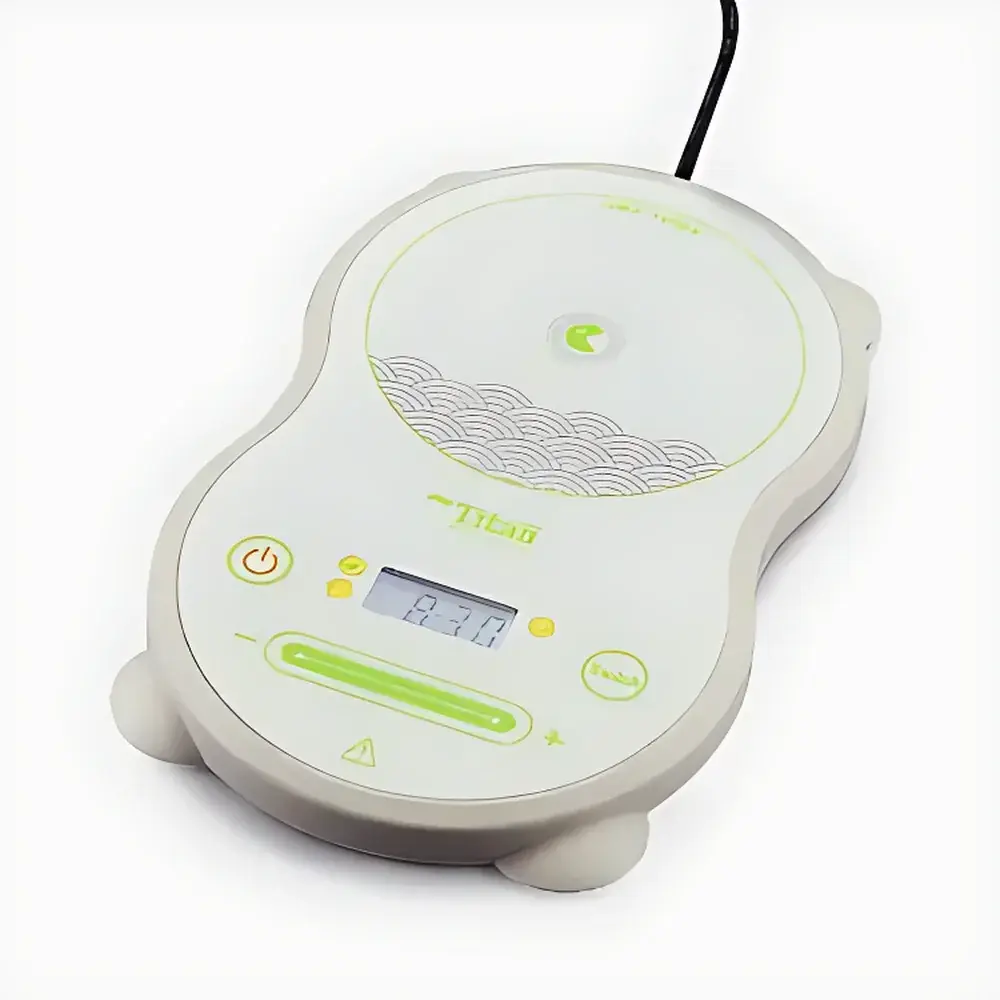
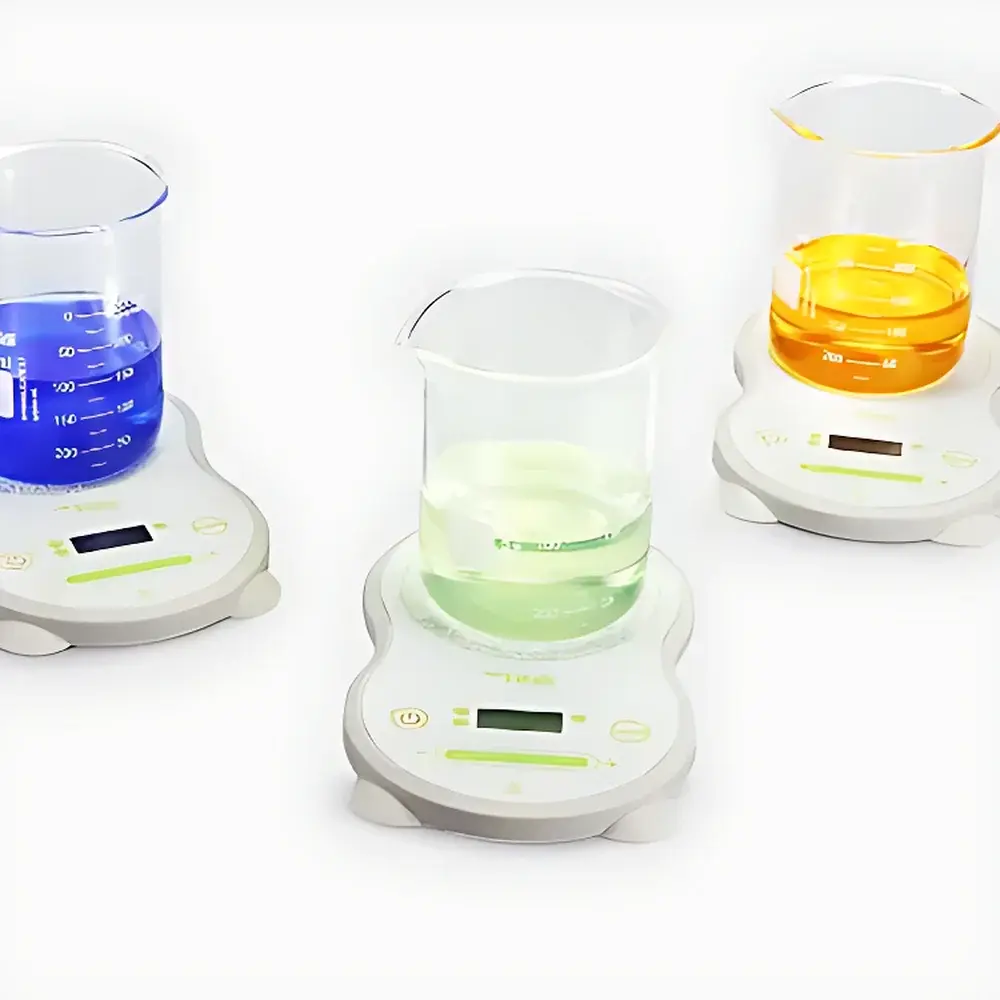
Titan UMS-1000S Ultra-Thin Magnetic Stirrer
| Brand | Titan |
|---|---|
| Origin | Shanghai, China |
| Manufacturer Type | Direct Manufacturer |
| Product Category | Domestic (China-Made) |
| Model | UMS-1000S |
| Instrument Type | Magnetic Stirrer |
| Maximum Stirring Volume | 1 L |
| Speed Range | 20–1500 rpm |
| Temperature Control Range | −10 to 70 °C |
Overview
The Titan UMS-1000S Ultra-Thin Magnetic Stirrer is an engineered solution for precision liquid mixing in compact laboratory workspaces. Designed around a high-efficiency planar coil architecture, it operates on the principle of rotating magnetic fields generated by precisely phased electromagnetic windings beneath the ceramic top plate. Unlike conventional stirrers relying on mechanical motor shafts or gear-driven rotors, the UMS-1000S eliminates physical contact between drive components and the stirring environment—ensuring zero mechanical wear, silent operation, and long-term stability under continuous use. Its ultra-low profile (12 mm total height) enables seamless integration beneath fume hoods, inside cold rooms, or within multi-tiered benchtop setups where vertical clearance is constrained. The device supports both clockwise and counterclockwise rotation modes—a critical capability for achieving homogeneous suspension of non-Newtonian fluids, preventing vortex formation in low-viscosity solvents, and enhancing particle dispersion in colloidal preparations.
Key Features
- Ultra-thin form factor (12 mm height) optimized for space-constrained environments including biosafety cabinets and environmental chambers
- Wear-free planar magnetic coil system with thermally stable ferrite core and copper winding—designed for >50,000 hours MTBF (Mean Time Between Failures)
- High-resolution LCD display showing real-time speed (rpm), elapsed time, and active direction mode (CW/CCW)
- Dual-direction control: programmable clockwise/counterclockwise alternation or fixed-direction operation for tailored shear profile generation
- Integrated Peltier-based temperature regulation module enabling precise thermal management from −10 °C to +70 °C, calibrated to ±0.3 °C accuracy across the full range
- Ceramic-coated stainless steel top plate (Al₂O₃ layer, 96% purity) offering chemical resistance to common acids, bases, and organic solvents
Sample Compatibility & Compliance
The UMS-1000S accommodates standard laboratory glassware up to 1 L volume, including beakers (50–1000 mL), Erlenmeyer flasks, and jacketed reaction vessels. Compatible with all commercially available magnetic stir bars—including PTFE-coated, glass-coated, and elliptical geometries—up to 40 mm length. The unit complies with IEC 61010-1:2010 for electrical safety in laboratory equipment and meets EMC requirements per CISPR 11 Group 1, Class B. It supports GLP-compliant workflows through traceable parameter logging when paired with optional RS-232/USB data export. While not certified for sterile applications, its smooth, non-porous surface facilitates ISO 14644-1 Class 5 cleanroom-compatible cleaning protocols using 70% ethanol or isopropanol.
Software & Data Management
The UMS-1000S operates as a standalone instrument but integrates with third-party laboratory information management systems (LIMS) via ASCII protocol over RS-232 or virtual COM port (USB). Optional Titan StirControl™ software (v2.1+) provides remote configuration of multi-step protocols—including ramped speed profiles, bidirectional cycling sequences, and temperature-synchronized timing events. All operational parameters are timestamped and stored locally in non-volatile memory (1000-event capacity), supporting audit trails required under FDA 21 CFR Part 11 when used in regulated QC/QA environments. Export formats include CSV and XML for downstream analysis in MATLAB, Python (pandas), or LabArchives.
Applications
- Buffer and reagent preparation in molecular biology labs requiring consistent ionic strength and pH homogeneity
- Cell culture media conditioning under controlled hypothermic conditions (e.g., −5 °C to +10 °C for cryopreservation buffer equilibration)
- Synthesis of metal–organic frameworks (MOFs) and nanoparticle dispersions where directional shear minimizes agglomeration
- Accelerated solvent extraction (ASE) pre-conditioning steps involving viscous plant extracts
- Calibration standard preparation for spectrophotometric and titrimetric assays demanding sub-1% coefficient of variation (CV) in concentration uniformity
FAQ
Does the UMS-1000S support external temperature probe input for feedback-controlled heating/cooling?
No—the integrated Peltier module operates in open-loop mode with factory-calibrated thermal response curves. For closed-loop applications, users must pair the unit with an external PID controller and PT100 sensor.
What is the maximum allowable ambient operating temperature?
The device is rated for continuous operation at ambient temperatures between 5 °C and 35 °C, with relative humidity ≤80% non-condensing.
Is the ceramic top plate resistant to hydrofluoric acid (HF)?
No—alumina ceramics are susceptible to HF etching. Avoid direct contact with HF solutions or vapor-phase exposure.
Can the UMS-1000S be mounted vertically or inverted?
No—operation is strictly horizontal only. Inclination beyond ±2° disrupts magnetic coupling efficiency and may trigger automatic shutdown.
How often does the unit require recalibration?
Speed calibration is factory-set and drift-resistant; no routine recalibration is specified. Temperature calibration verification is recommended annually using NIST-traceable reference thermometers.



