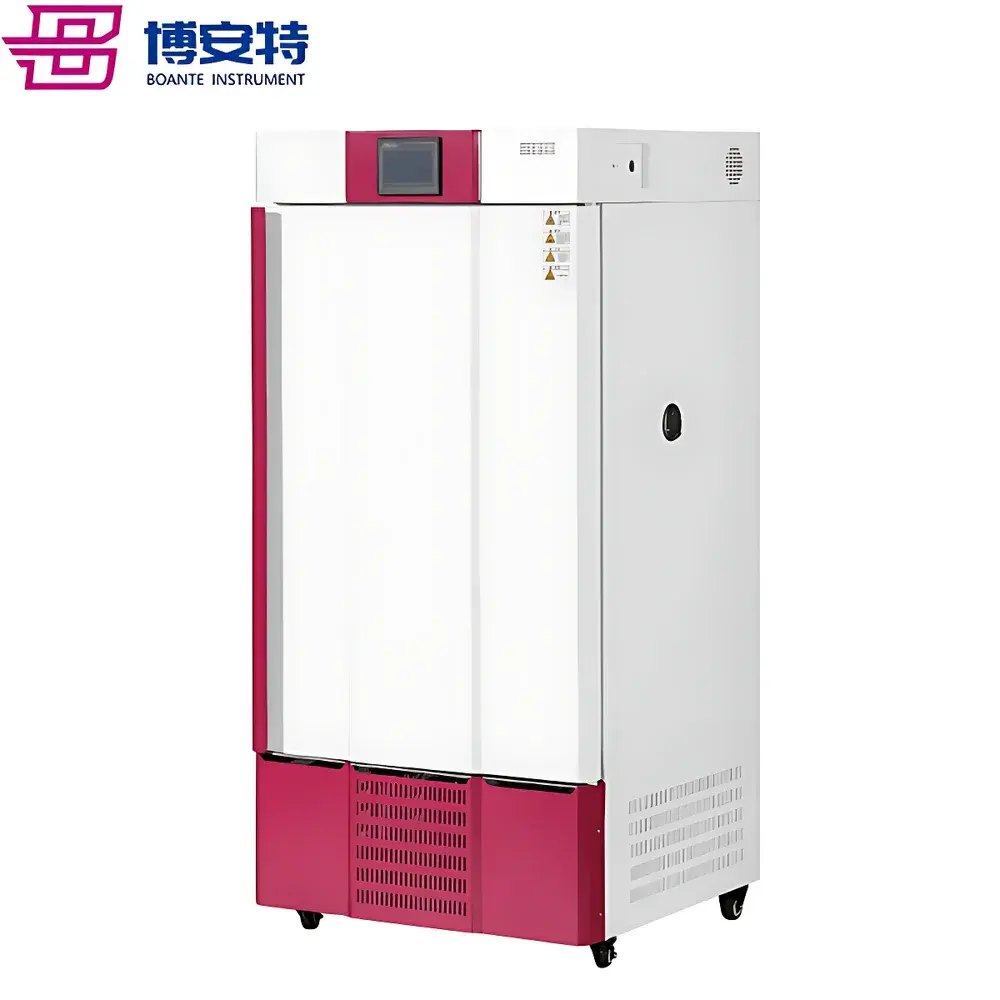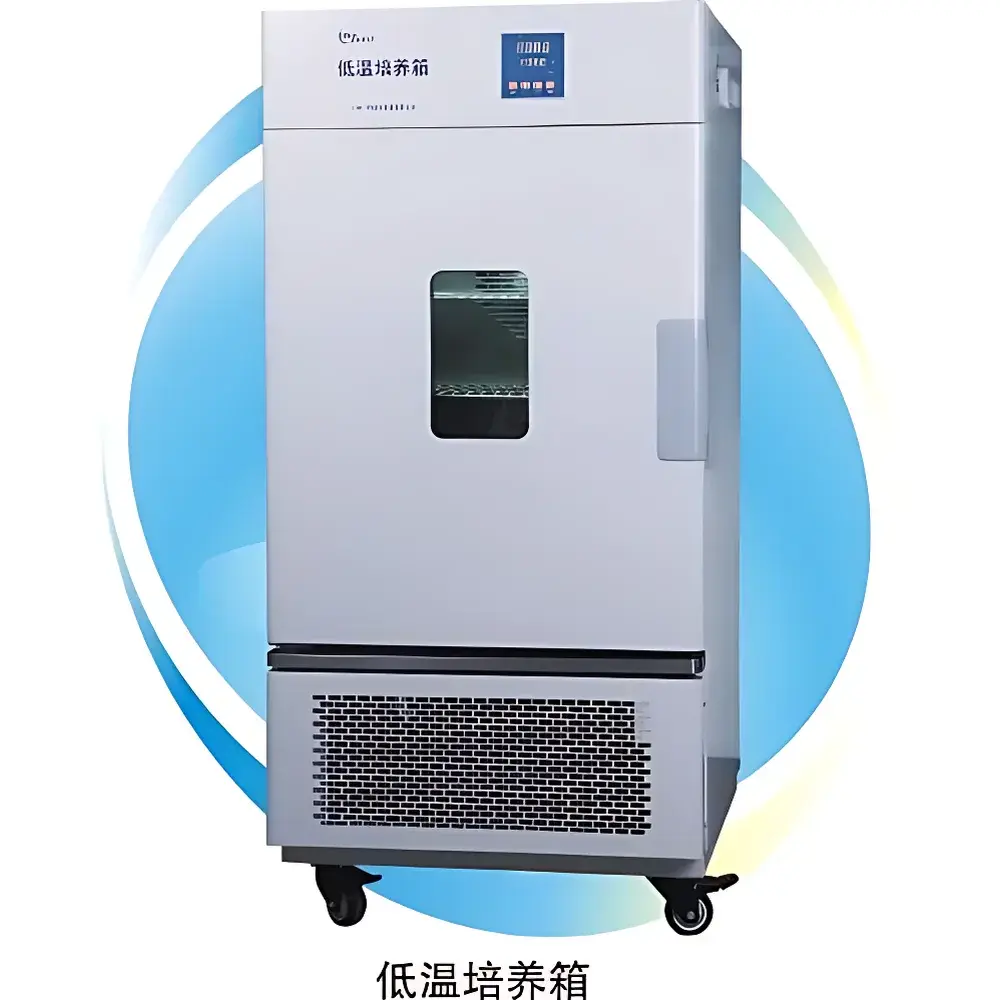
Yiheng LRH Series Low-Temperature Biochemical Incubator
| Brand | Yiheng |
|---|---|
| Model | LRH-100CL / LRH-100CA / LRH-100CB / LRH-150CL / LRH-150CA / LRH-150CB / LRH-250CL / LRH-250CA / LRH-250CB |
| Temperature Range | –40 °C to +65 °C (model-dependent) |
| Temperature Resolution | 0.1 °C |
| Temperature Uniformity | ±0.5 °C (at high temp), ±1.0 °C (at low temp) |
| Ambient Operating Range | +5 °C to +35 °C |
| Inner Chamber Dimensions (W×D×H, mm) | 500×400×600 (LRH-100), 550×400×680 (LRH-150), 600×500×830 (LRH-250) |
| External Dimensions (W×D×H, mm) | 650×770×1320 (LRH-100), 700×800×1430 (LRH-150), 750×900×1580 (LRH-250) |
| Standard Shelves | 3 adjustable stainless-steel shelves |
| Refrigerant | R134a (non-ozone-depleting) |
| Optional Features | Independent over-temperature alarm, RS485 interface, thermal printer port, 25 mm access port (left side) |
Overview
The Yiheng LRH Series Low-Temperature Biochemical Incubator is an engineered environmental control system designed for precise, stable, and reproducible temperature management across a broad operational range—from cryogenic storage conditions at –40 °C up to standard incubation temperatures of +65 °C. Unlike conventional microbiological or CO2 incubators, the LRH series integrates refrigeration-grade thermodynamic architecture with biochemical application requirements, enabling dual-mode functionality: long-term sample preservation (e.g., enzyme stocks, serum, antibiotics) and active low-temperature cultivation (e.g., psychrophilic microorganisms, cold-adapted cell lines). Its core thermal regulation relies on a cascade-capable vapor-compression cycle using R134a refrigerant—compliant with Montreal Protocol phase-out schedules—and features a high-efficiency international-brand hermetic compressor coupled with a low-noise axial circulation fan. This configuration ensures rapid cooldown (≥40% faster than legacy units), minimal thermal gradient across the chamber (<±1.0 °C at –40 °C), and sustained stability under variable ambient loads (5–35 °C).
Key Features
- Mirror-polished 304 stainless-steel interior chamber with seamless, radius-rounded corners for enhanced cleanability and corrosion resistance—critical for GLP-compliant biobanking and repeated sterilization cycles.
- Microprocessor-based PID temperature controller with real-time digital display, 0.1 °C resolution, and auto-tuning capability to minimize overshoot during setpoint transitions.
- Energy-optimized refrigeration loop utilizing R134a refrigerant—zero ozone depletion potential (ODP = 0), low global warming potential (GWP = 1430), and fully compatible with ISO 50001 energy management frameworks.
- Dedicated 25 mm diameter access port on the left chamber wall, fitted with silicone gasket and plug, enabling continuous external monitoring (e.g., thermocouple insertion, humidity sensor feedthrough) without compromising chamber integrity.
- Independent mechanical over-temperature cut-off circuit—hardwired and electrically isolated from the main controller—provides fail-safe protection per IEC 61010-1 safety standards.
- Modular shelf system: three adjustable, load-rated stainless-steel trays with reinforced support brackets; tray positions configurable without tools for optimal volumetric utilization.
Sample Compatibility & Compliance
The LRH series accommodates diverse biological and chemical specimens requiring strict thermal containment—including lyophilized reagents, heat-labile enzymes, primary human sera, antibiotic stock solutions, and cryotolerant bacterial cultures (e.g., Pseudomonas fluorescens, Arthrobacter spp.). Chamber geometry and airflow dynamics are validated per ASTM E2876–22 (“Standard Practice for Performance Verification of Environmental Chambers”) to ensure uniform temperature distribution across all shelf levels. Units meet CE marking requirements under the EU Machinery Directive 2006/42/EC and Electromagnetic Compatibility Directive 2014/30/EU. Optional configurations support 21 CFR Part 11–compliant data logging when paired with validated RS485-to-USB gateways and audit-trail-enabled software—enabling traceable temperature records for FDA-regulated stability studies (ICH Q5C) and pharmacopeial storage compliance (USP ).
Software & Data Management
While the base unit operates via embedded firmware, optional connectivity modules enable integration into centralized laboratory infrastructure. The RS485 serial interface supports Modbus RTU protocol for bidirectional communication with SCADA systems or LIMS platforms. When equipped with the thermal printer option, time-stamped temperature logs (with UTC timestamping and user-defined interval settings) are generated on continuous-feed paper—satisfying internal QA documentation requirements. For electronic record retention, third-party compliant software (e.g., LabArchives ELN, Thermo Fisher SampleManager) can ingest CSV-formatted output via ASCII command sets. All firmware revisions undergo regression testing against ISO/IEC 17025 calibration traceability chains, and device-specific calibration certificates (including as-found/as-left data) are available upon request.
Applications
- Long-term storage of temperature-sensitive biologics: monoclonal antibodies, viral vectors, and recombinant proteins at –20 °C or –40 °C.
- Cold-acclimation studies in plant physiology and microbial ecology, including growth rate quantification under sub-zero non-freezing conditions.
- Stability testing of pharmaceutical intermediates per ICH Q1A(R2) guidelines across defined temperature zones (e.g., “cold” condition: 5 ± 3 °C).
- Controlled degradation assays for polymer-based drug delivery systems where hydrolysis kinetics are thermally accelerated below room temperature.
- Pre-incubation conditioning of cryopreserved cell vials prior to controlled-rate freezing protocols.
- Environmental simulation for materials science: thermal aging of elastomers and adhesives under low-temperature oxidative stress.
FAQ
What refrigerant is used, and is it compliant with current environmental regulations?
The LRH series uses R134a—a chlorine-free hydrofluorocarbon refrigerant with zero ozone depletion potential (ODP = 0) and full compliance with the Kigali Amendment to the Montreal Protocol.
Can the incubator maintain ±0.5 °C uniformity at –40 °C?
At –40 °C, chamber uniformity is specified at ±1.0 °C per ASTM E2876–22; tighter tolerances require optional chamber mapping validation with NIST-traceable sensors.
Is the 25 mm access port suitable for continuous probe insertion during operation?
Yes—the port includes a removable silicone gasket that maintains thermal seal integrity while allowing passive or active sensor feedthrough without significant heat leak.
Does the over-temperature alarm support remote notification?
The standard hardware alarm triggers local audible/visual alerts only; remote signaling requires integration via the RS485 interface and external PLC logic.
Are calibration reports provided with shipment?
Factory calibration certificates (per ISO/IEC 17025) are included; on-site IQ/OQ documentation packages and annual recalibration services are available under separate service agreement.