
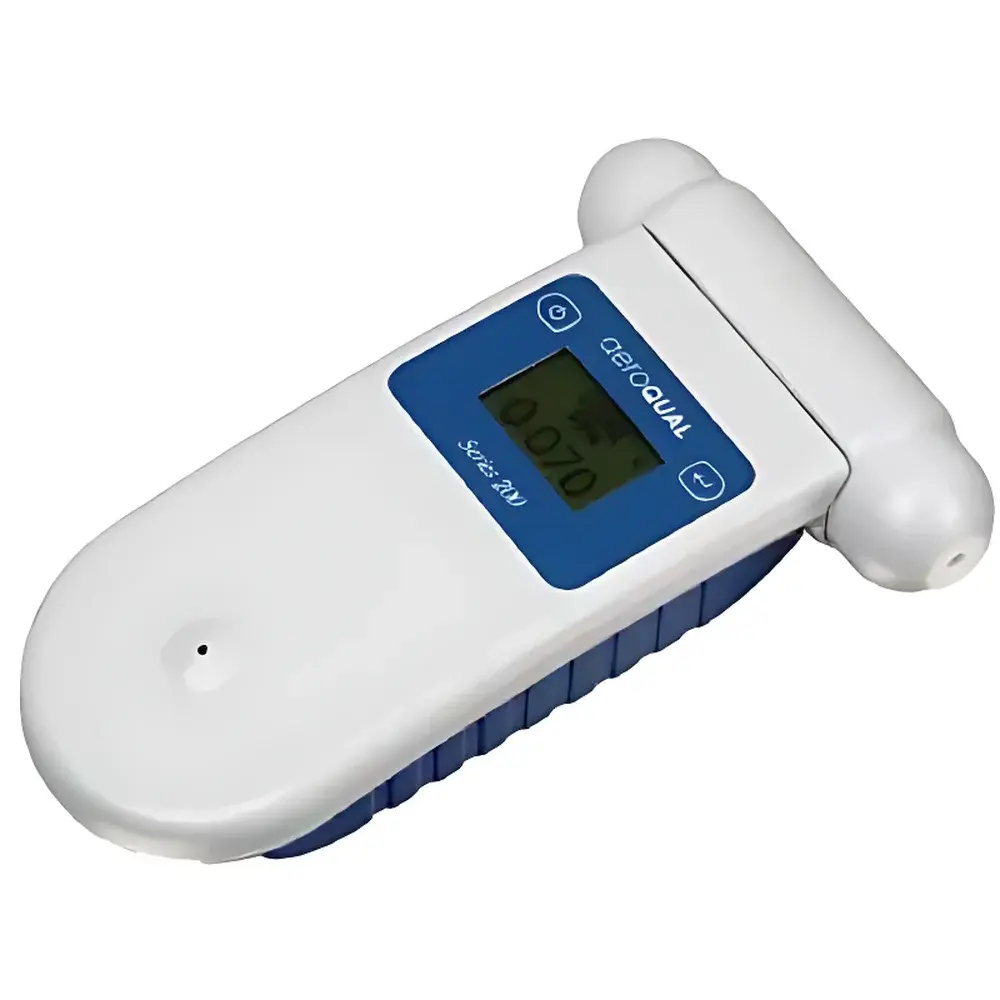
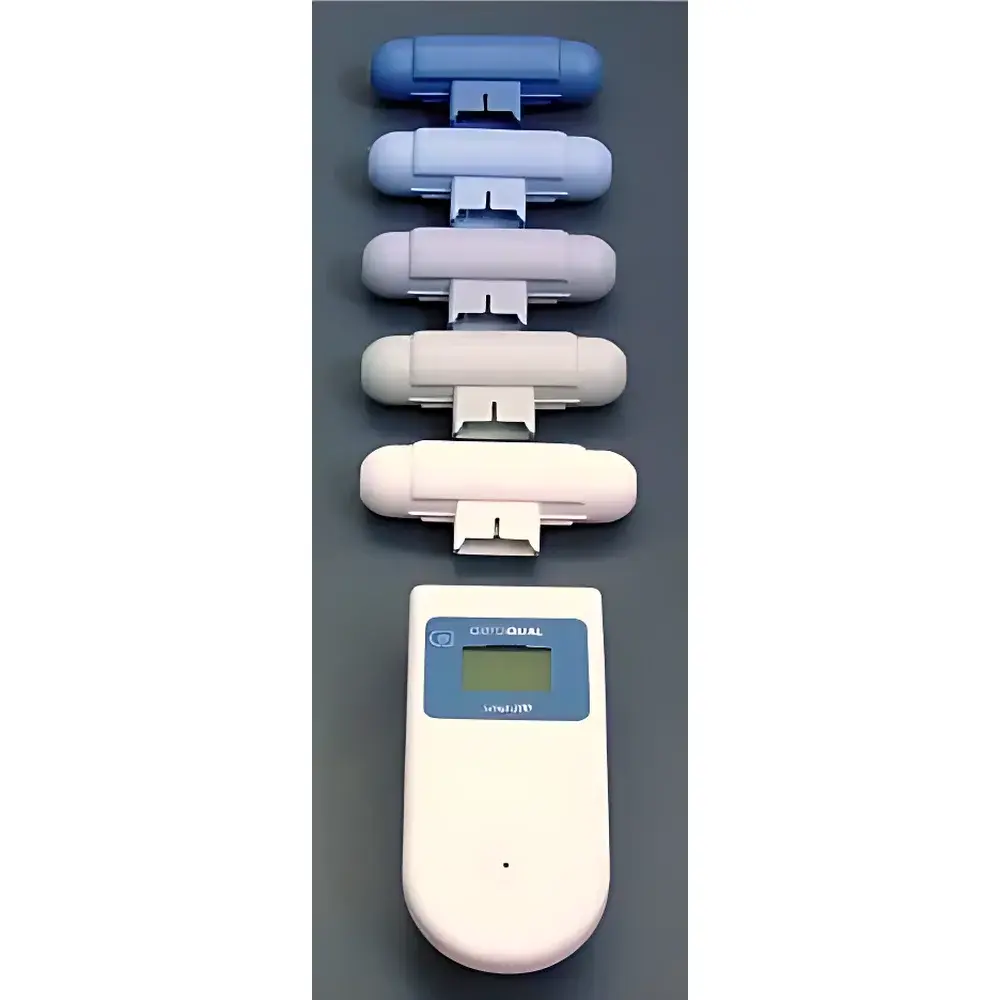
Aeroqual AQL200 Portable Ozone Analyzer
| Brand | Aeroqual |
|---|---|
| Origin | New Zealand |
| Instrument Type | Portable |
| Measurement Range (Low) | 0–0.5 ppm |
| Detection Limit (Low) | 1 ppb |
| Response Time (Low) | < 95 s |
| Measurement Range (High) | 0–10.00 ppm |
| Resolution (High) | 0.01 ppm |
| Response Time (High) | < 35 s |
| Leakage Probe Range | 0–50.00 ppm (up to 100 ppm) |
| Resolution (Leak) | 0.01 ppm |
| Response Time (Leak) | < 10 s |
| Sensor Technology | GSS (Gas Sensitive Semiconductor) with Built-in Compensation Algorithm |
| Operating Environment | –5 to 50 °C, 5–95% RH (non-condensing) |
| Sampling Method | Active pump-assisted aspiration |
| Optional Multi-gas Modules | VOC, CO, NH₃ |
Overview
The Aeroqual AQL200 Portable Ozone Analyzer is a field-deployable, electrochemical gas sensing platform engineered for accurate, real-time quantification of ozone (O₃) across three distinct operational ranges—low-concentration ambient monitoring, high-range occupational exposure assessment, and rapid leak detection. Unlike passive diffusion-based instruments, the AQL200 employs active pump-assisted aspiration to ensure representative sample delivery to the sensor head, minimizing ozone decomposition during transit—a critical factor given ozone’s reactivity and short half-life in ambient air. At its core, the analyzer integrates Aeroqual’s proprietary Gas Sensitive Semiconductor (GSS) sensor architecture, which incorporates on-board temperature and humidity compensation algorithms to correct for environmental drift and enhance long-term signal stability. This compensation logic is embedded at firmware level and does not require user calibration intervention under normal operating conditions, supporting consistent performance across variable field environments from urban air quality stations to industrial hygiene surveys.
Key Features
- Triple-range modular probe system: Selectable low-range (0–0.5 ppm, 1 ppb resolution), high-range (0–10.00 ppm, 0.01 ppm resolution), or ultra-fast leak-detection probe (0–50 ppm, extendable to 100 ppm, <10 s response)
- Active sampling pump ensures consistent flow rate and mitigates ozone wall loss in tubing—critical for maintaining measurement integrity below 50 ppb
- GSS sensor with factory-applied compensation model for temperature (–5 to 50 °C) and relative humidity (5–95% RH, non-condensing)
- Intuitive OLED display with dual-unit capability (ppm/ppb) and configurable alarm thresholds (TWA, STEL, ceiling limits)
- Hot-swappable sensor cartridges enable rapid field replacement without recalibration; each module includes serialized calibration certificate traceable to NIST-standard reference gases
- IP65-rated enclosure suitable for outdoor deployment and industrial settings; battery life exceeds 16 hours continuous operation on lithium-ion pack
Sample Compatibility & Compliance
The AQL200 is validated for use in ambient air, indoor workplace environments, and ozone-generating equipment enclosures (e.g., UV ozone generators, water treatment systems). It complies with ISO 16000-25:2016 for indoor air ozone measurement methodology and meets the technical requirements outlined in OSHA Technical Manual TED 1-0.15.A for personal exposure monitoring. While not certified for Class I Div 1 hazardous locations, it is routinely deployed in non-explosive zones per NEC Article 500 guidelines. Data logging output conforms to ASTM D6196-22 Annex A1 for portable gas monitor reporting structure. Sensor modules are manufactured under ISO 9001:2015 quality management systems, and factory calibration certificates include uncertainty budgets per ISO/IEC 17025:2017 Clause 7.6.2.
Software & Data Management
Instrument data is accessible via Aeroqual’s free LogBox Desktop software (Windows/macOS) and mobile LogBox Connect app (iOS/Android), enabling configuration, real-time telemetry, and post-processing of time-stamped concentration logs. All stored measurements include metadata: GPS coordinates (when enabled), ambient T/RH, pump status, sensor ID, and firmware version. Export formats include CSV, PDF summary reports, and XML compliant with EPA AirData schema v3.2. Audit trails—including parameter changes, calibration events, and firmware updates—are retained onboard and exportable for GLP/GMP-aligned documentation. The device supports optional 21 CFR Part 11-compliant user access control when paired with Aeroqual’s enterprise CloudLink subscription service.
Applications
- Ambient air quality monitoring networks requiring sub-ppb ozone sensitivity near urban traffic corridors or background sites
- Occupational health assessments in laboratories using ozone-based sterilization, semiconductor cleanrooms, or UV photolysis reactors
- Pre-commissioning verification and routine leak testing of ozone generators, ozonators, and corona discharge units
- Indoor air quality investigations in schools, hospitals, and HVAC maintenance where ozone off-gassing from air purifiers is suspected
- Research-grade field studies correlating ozone exposure with vegetation biomarkers or particulate oxidative potential
- Regulatory compliance support for local agencies implementing WHO Air Quality Guidelines (AQG) 2021 ozone thresholds (100 µg/m³ / 51 ppb 8-h mean)
FAQ
Does the AQL200 require daily zero/span calibration?
No—factory-calibrated GSS sensors maintain stability for up to 6 months under typical field conditions. Zero adjustment is only recommended after exposure to extreme humidity (>95% RH) or sensor contamination; span checks using certified 0.2 ppm O₃ standard gas are advised quarterly.
Can the same instrument measure ozone and VOCs simultaneously?
Yes—via optional multi-gas expansion module. The AQL200 chassis supports hot-swappable sensor bays; ozone, VOC (PID), CO, and NH₃ probes operate independently with shared power, display, and data logging infrastructure.
Is the leakage probe suitable for quantitative regulatory reporting?
The 0–50 ppm probe is optimized for rapid qualitative screening and localization. For compliance-grade reporting (e.g., OSHA PEL verification), the high-range 0–10 ppm probe with documented ±2% FS accuracy is recommended.
How is sensor drift corrected over time?
The GSS firmware applies dynamic compensation using real-time T/RH inputs and a preloaded aging model derived from accelerated lifetime testing. No manual drift correction is required within the first 12 months of operation.
What is the warranty coverage for sensor modules?
All GSS sensor cartridges carry an 18-month limited warranty covering material defects and performance deviation exceeding ±5% of full scale under specified operating conditions.
Related Products







