
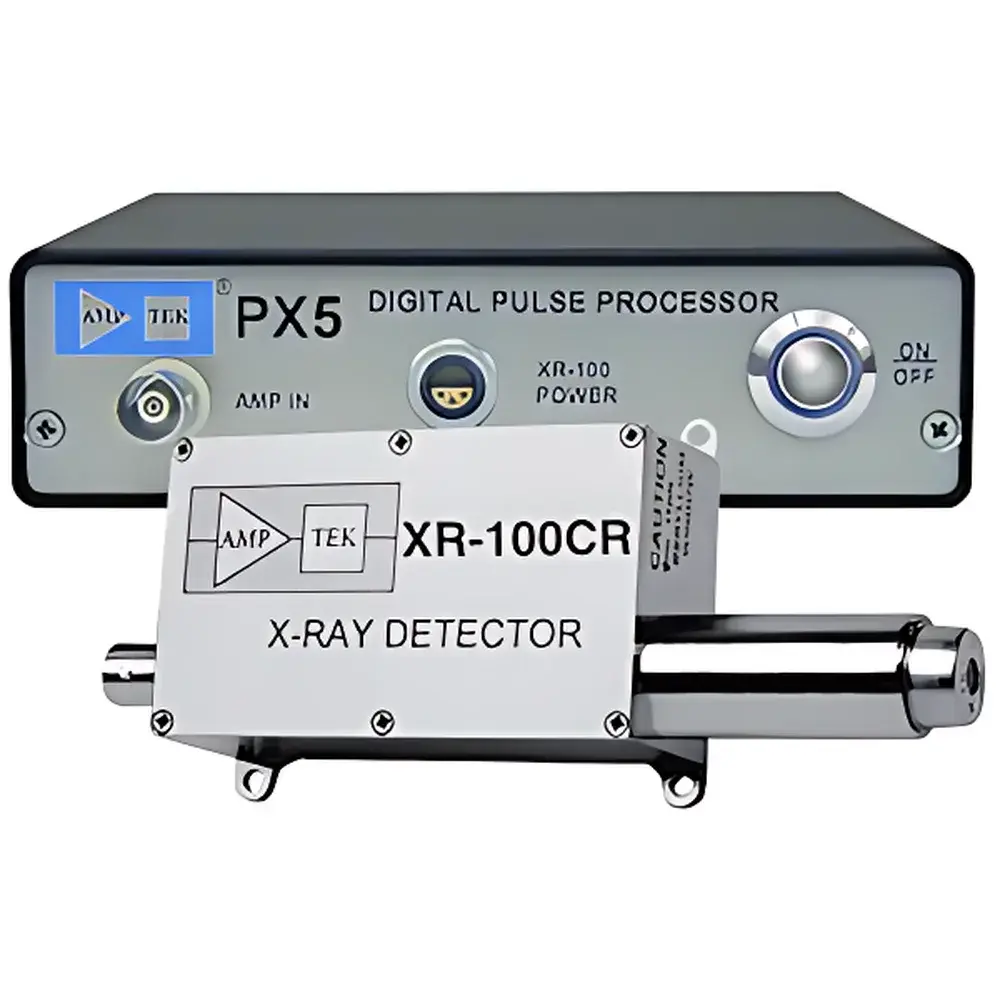
Amptek XR-100CR Silicon PIN X-ray Detector
| Brand | Amptek |
|---|---|
| Origin | USA |
| Manufacturer Type | Authorized Distributor |
| Product Category | Imported |
| Model | XR-100CR |
| Pricing | Upon Request |
Overview
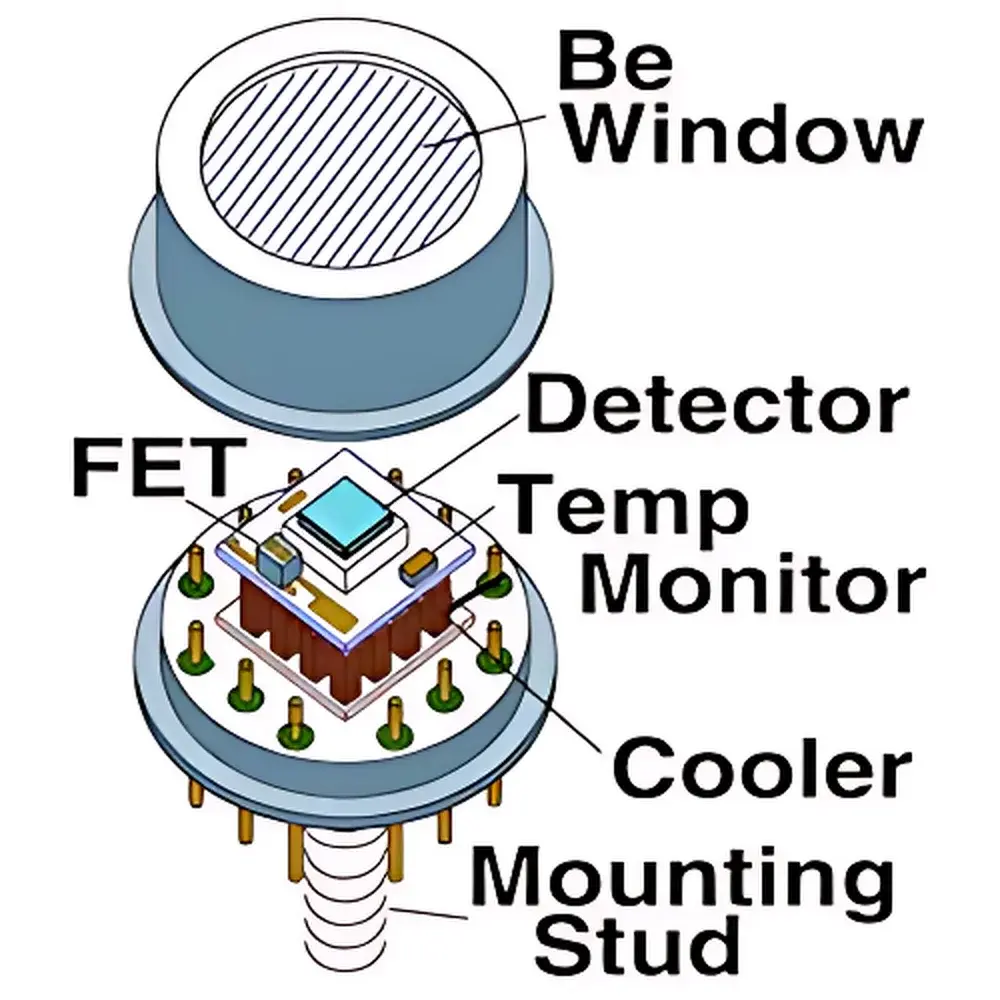
The Amptek XR-100CR is a high-performance, thermoelectrically cooled silicon PIN photodiode X-ray detector engineered for precision energy-dispersive X-ray spectroscopy (EDS/XRF) in laboratory, field, and space-constrained applications. Unlike traditional liquid-nitrogen-cooled detectors, the XR-100CR employs a two-stage Peltier cooler to maintain the detector die at approximately −55 °C—enabling low leakage current, high bias voltage operation (100–200 V), and optimal charge collection efficiency. Its fundamental detection principle relies on the photoelectric absorption of incident X-ray photons in high-purity silicon, generating electron-hole pairs at a rate of ~276 e-h pairs per keV (3.62 eV per pair). The resulting charge pulse is integrated by a custom-designed, low-noise charge-sensitive preamplifier with active feedback reset—eliminating conventional reset transistors and associated electronic noise. This architecture delivers an energy resolution of 139–230 eV FWHM at the 5.9 keV Mn-Kα line of 55Fe, depending on shaping time and detector geometry. The detector’s hermetically sealed TO-8 package features a thin beryllium entrance window (12.5 or 25 µm), enabling efficient transmission of soft X-rays down to ~1 keV while maintaining vacuum compatibility (down to 10−8 Torr). Its compact footprint (7.6 × 4.4 × 2.9 cm), sub-1 W total power consumption, and integrated temperature monitoring diode make it suitable for portable, OEM, and planetary exploration systems—including flight heritage on NASA’s Mars Pathfinder mission.
Key Features
- Silicon PIN photodiode detector with active area options from 6 to 25 mm² and 300–500 µm thickness
- Two-stage thermoelectric cooling system achieving stable −55 °C detector operating temperature without cryogens
- Integrated temperature sensor with real-time readout via PX5 digital processor (in Kelvin) or analog output (770 mV = −50 °C on PX2CR)
- Ultra-thin Be window (12.5 or 25 µm) optimized for soft X-ray transmission and vacuum sealing
- Multilayer collimator built into detector housing to suppress edge effects and improve peak-to-background ratio
- Custom charge-sensitive preamplifier with active feedback reset—no reset transistor, reduced electronic noise
- High gain stability (<20 ppm/°C) and low intrinsic background (<3 × 10⁻³ cps in 2–150 keV range for 7 mm²/300 µm configuration)
- Compact, ruggedized TO-8 metal can housing with EMI shielding and grounding provisions
Sample Compatibility & Compliance
The XR-100CR operates across ambient temperatures from 0 to +40 °C and supports both atmospheric and high-vacuum environments (10−8 Torr). It is compatible with solid, powdered, and thin-film samples typical in XRF, PIXE, and EDX analysis. For vacuum integration, two configurations are supported: (i) full in-vacuum mounting with CF flange feedthroughs and thermal management via mounting holes; or (ii) external placement using optional vacuum extension modules (e.g., EXV9). The detector complies with UL 61010-1:2004 and CAN/CSA-C22.2 No. 61010-1:2004 safety standards (TUV Certificate #CU 72072412 01). While not inherently GLP/GMP-certified, its stable performance, traceable temperature monitoring, and digital pulse processing via PX5 enable compliance with FDA 21 CFR Part 11 when deployed in validated analytical workflows requiring audit trails and data integrity controls.
Software & Data Management
The XR-100CR is designed for seamless integration with Amptek’s PX5 digital pulse processor—a single-board module providing programmable shaping times (0.2–100 µs), multi-channel scaling (MCA), and all required detector bias, preamp, and cooler supplies. PX5 enables rapid system stabilization (<60 s warm-up) and supports USB or RS-232 communication. Raw spectral data is exported in standard formats (e.g., .spe, .csv) for post-processing in third-party platforms such as PyMCA, AXIL, or commercial XRF-FP quantitative software. Temperature telemetry, count rate, and pulse height histograms are accessible via PX5’s embedded firmware API. For OEM developers, Amptek provides comprehensive SDK documentation, register-level control specifications, and timing diagrams—facilitating integration into custom DAQ architectures compliant with IEC 61508 or DO-178C where applicable.
Applications
- Energy-dispersive X-ray fluorescence (EDXRF) for elemental analysis in geology, metallurgy, and environmental science
- RoHS and WEEE compliance screening in electronics manufacturing and recycling facilities
- Portable and handheld XRF analyzers for field-based mining, archaeology, and art conservation
- OEM integration into particle-induced X-ray emission (PIXE), Mössbauer spectrometers, and nuclear medicine instrumentation
- In-line process monitoring in semiconductor fabrication and battery material production
- Space-qualified radiation detection—flight-proven on NASA Mars Pathfinder for in-situ soil and rock composition analysis
- Low-energy X-ray astronomy calibration and laboratory plasma diagnostics
- Radioactive waste characterization and contaminated site remediation (e.g., landfill surveys)
FAQ
What cooling method does the XR-100CR use, and why is it advantageous over liquid nitrogen?
The XR-100CR uses a two-stage thermoelectric (Peltier) cooler to stabilize the Si-PIN diode at ~−55 °C. This eliminates logistical constraints, boil-off losses, and thermal cycling stress associated with LN2, while enabling continuous, maintenance-free operation in portable and embedded systems.
Can the XR-100CR operate in vacuum, and what modifications are required?
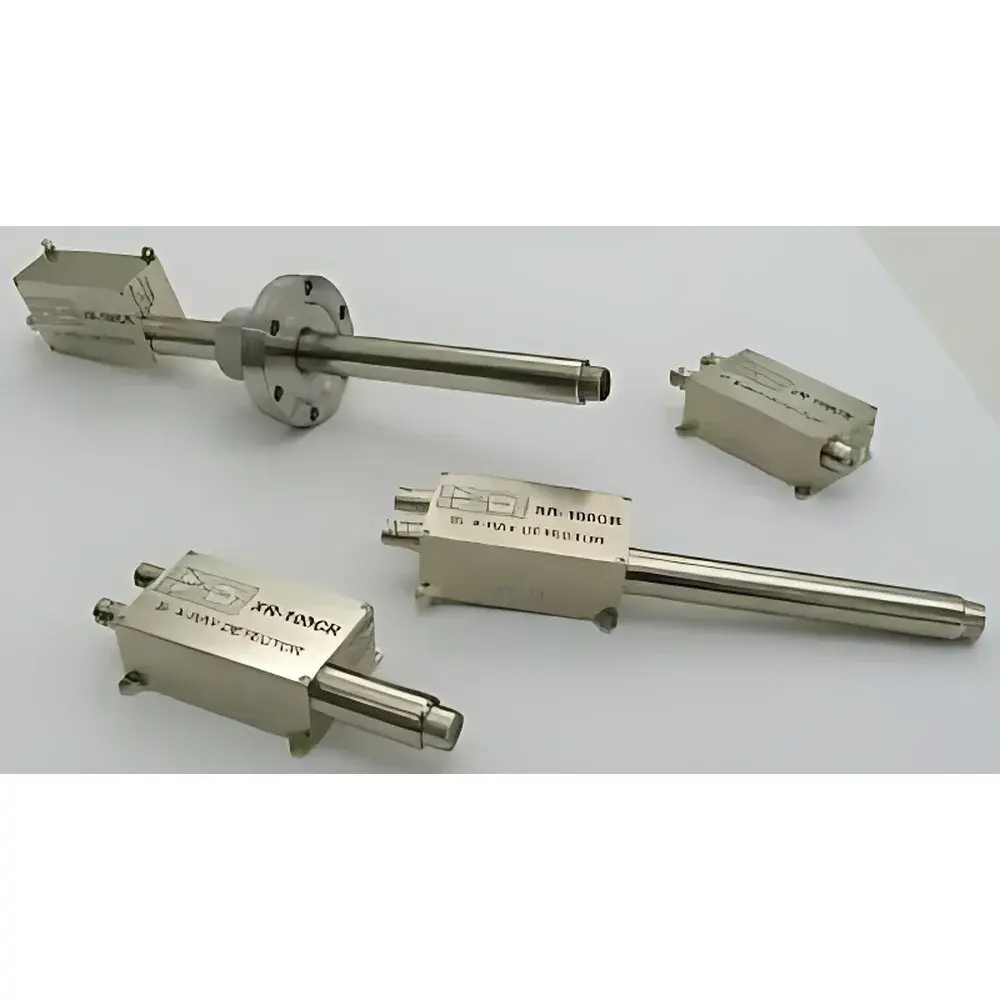
Yes—it is rated for operation from 10−8 Torr to ambient pressure. In-vacuum installation requires thermal anchoring via the four mounting holes and CF-flange-compatible feedthroughs (e.g., 9DVF). Alternatively, the EXV9 vacuum extension kit allows external mounting with a standard CF window.
How does the active feedback reset mechanism improve energy resolution?
By injecting precise charge pulses directly into the input FET through the high-voltage bias line—and leveraging detector capacitance—the system avoids reset transistor shot noise and baseline shift, contributing directly to sub-140 eV FWHM resolution at 5.9 keV.
Is the XR-100CR compatible with existing XRF hardware platforms?
Yes—standard BNC output and 6-pin LEMO interface (ERA.1S.306.CLL) ensure plug-and-play compatibility with Amptek’s Mini-X X-ray tube, MP1 development platform, and third-party MCA systems supporting ±9 V preamp supply and TTL-compatible reset signals.
What is the expected operational lifetime under typical lab conditions?
With proper thermal management and bias voltage regulation, the XR-100CR exhibits a service life of 5–10 years. Long-term storage (>10 years) is viable in dry nitrogen or desiccated environments at room temperature.
Related Products





