
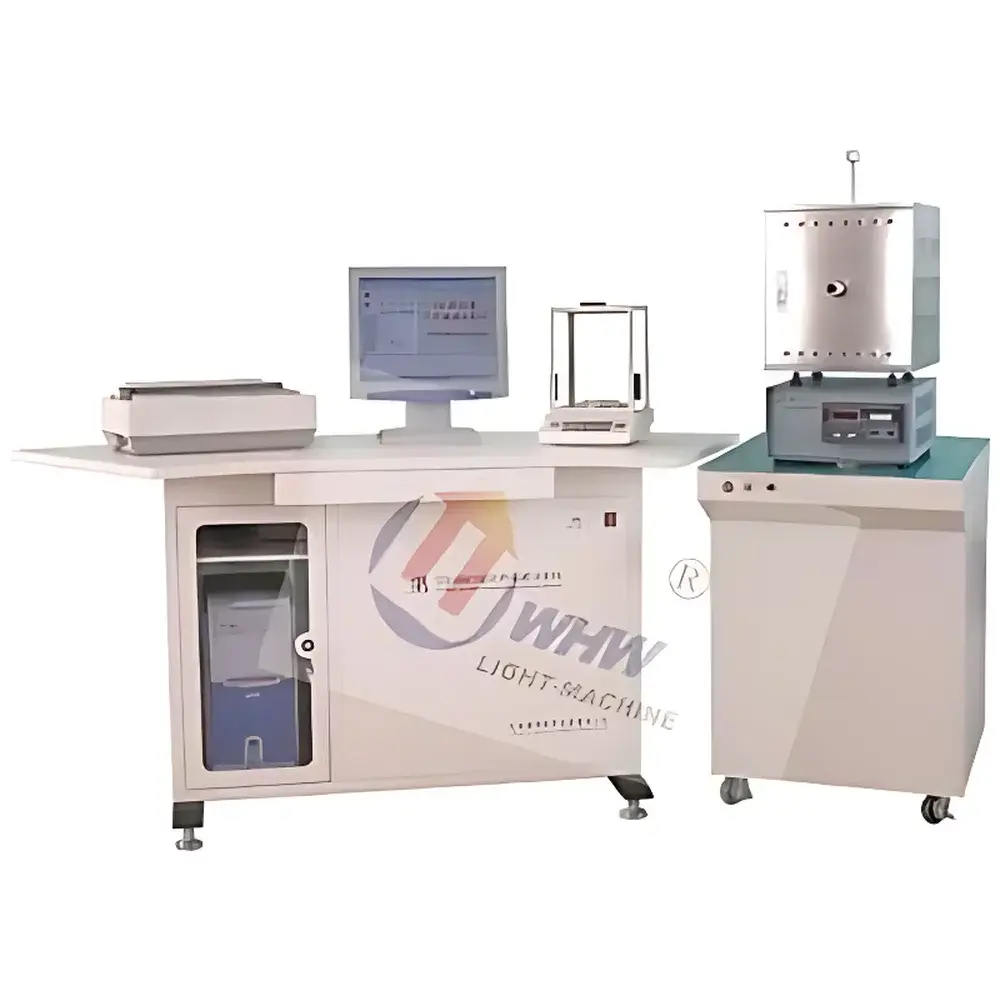
MC017-CS-8510 Tube-Type Infrared Carbon-Sulfur Analyzer
| Origin | Shanghai, China |
|---|---|
| Manufacturer Type | Authorized Distributor |
| Origin Category | Domestic (PRC) |
| Model | MC017-CS-8510 |
| Pricing | Available Upon Request |
| Carbon Range | 0.001–6.0000 wt% (expandable to 99.999%) |
| Sulfur Range | 0.0005–0.3500 wt% (expandable to 99.999%) |
| Analysis Time | 25–60 s (typ. 35 s) |
| Balance Capacity | 0–300 g |
| Balance Resolution | 0.001 g |
| Operating Temp. | 10–30 °C |
| Relative Humidity | <75% RH |
| Power Supply | AC 220 V ±5%, 50 Hz ±2%, Grounded |
Overview
The MC017-CS-8510 Tube-Type Infrared Carbon-Sulfur Analyzer is a high-performance elemental combustion analyzer engineered for precise quantification of total carbon (C) and sulfur (S) content in solid inorganic and metallurgical samples. It operates on the principle of high-temperature combustion followed by non-dispersive infrared (NDIR) spectroscopic detection. Samples are combusted quantitatively at up to 1,500 °C in a WI-H85 stainless-steel tubular furnace under controlled oxygen flow, converting carbon and sulfur into CO₂ and SO₂ gases, respectively. These gaseous oxidation products are swept through a gas-handling system—including dust filtration, moisture removal, and pressure stabilization—before entering dual-channel NDIR cells optimized for CO₂ (4.26 µm) and SO₂ (7.35 µm) absorption bands. The instrument delivers trace-level sensitivity and wide dynamic range without requiring external calibration gases for routine operation, making it suitable for QC laboratories in ferrous and non-ferrous metallurgy, cement production, mineral processing, catalyst development, and geochemical research.
Key Features
- High-stability, low-noise dual-channel infrared detectors with temperature-compensated signal processing for improved baseline reproducibility
- Modular hardware architecture enabling field-serviceable subsystems: combustion module, gas purification train, optical detection unit, and electronic control board
- Seamless integration with analytical balances via RS232 or USB interface; automatic sample weight import eliminates manual entry errors
- Intuitive Chinese-language GUI with real-time graphical display of combustion profiles—including CO₂ and SO₂ evolution curves synchronized with time
- Comprehensive software suite supporting statistical evaluation (RSD, confidence intervals), channel-specific calibration curve management, breakpoint correction for heterogeneous samples, drift compensation, and full system diagnostics
- Stainless-steel high-pressure tubular furnace with digital PID temperature controller (0–1500 °C, ±1 °C stability)
- Imported solenoid valves rated for >1 million cycles, ensuring long-term gas routing integrity and leak-free pneumatic sequencing
- Aluminum alloy cyclonic dust separator with replaceable ceramic filter elements, minimizing particulate carryover to optical cells
Sample Compatibility & Compliance
The MC017-CS-8510 accommodates a broad spectrum of solid matrices including carbon steels, cast irons, superalloys, aluminum and copper-based alloys, limestone, clinker, fly ash, refractory ceramics, and heterogeneous catalyst supports. Sample mass ranges from 0.1 to 1.0 g (dependent on expected C/S concentration), introduced manually into pre-weighed ceramic crucibles. The system complies with fundamental requirements of ISO 15350:2022 (Steel — Determination of total carbon content — Infrared absorption method after combustion) and ASTM E1019 (Standard Test Methods for Determination of Carbon, Sulfur, Nitrogen, and Oxygen in Steel, Iron, Nickel, and Cobalt Alloys). While not inherently 21 CFR Part 11 compliant out-of-the-box, audit trail logging, user access levels, and electronic signature support can be enabled via optional firmware modules aligned with GLP/GMP documentation workflows.
Software & Data Management
The embedded Windows-based analysis software provides full lifecycle data handling—from method setup and calibration validation to report generation and export. All measurement events—including balance weight timestamps, furnace temperature logs, detector voltage traces, gas flow rates, and final concentration outputs—are stored in a relational SQLite database with immutable records. Export formats include CSV, PDF (with customizable templates), and XML for LIMS integration. Calibration verification routines include multi-point linearity checks, blank subtraction protocols, and certified reference material (CRM) tracking with pass/fail thresholds per ISO/IEC 17025 clause 7.7. Software updates are delivered via encrypted USB dongle or secure HTTPS portal, with version-controlled release notes and backward-compatible data migration.
Applications
This analyzer serves as a primary tool in incoming raw material inspection for steel mills, quality release testing in foundry QC labs, compositional verification of refractory linings in cement kilns, sulfur speciation screening in desulfurization catalysts, and regulatory compliance testing for ASTM A743/A744 (cast stainless steels) and ISO 9303 (copper alloys). Its extended upper detection limit (up to 99.999 wt%) also supports specialized applications such as carbon black purity assessment and sulfur-rich pyrite characterization in mining QA/QC. Routine analysis of low-sulfur stainless grades (<0.005 wt% S) benefits from its sub-ppm detection capability and minimized memory effect through optimized gas flush cycles.
FAQ
What combustion temperature does the WI-H85 furnace achieve, and how is temperature stability maintained?
The WI-H85 stainless-steel tubular furnace reaches a maximum operating temperature of 1,500 °C, regulated via digital PID control with thermocouple feedback. Temperature uniformity across the 120 mm hot zone is ±1 °C under steady-state conditions.
Is the system compatible with international CRM standards such as NIST SRM or BCS certified materials?
Yes—the calibration protocol supports direct use of NIST SRM 1261a (low-alloy steel), BCS 466-1 (stainless steel), and IRMM 016 (nickel-chromium alloy) for both carbon and sulfur channels.
Can the analyzer be integrated into an existing LIMS environment?
Native support for ASTM E1384-compliant HL7 and ASTM E2500-07 data exchange protocols is available; custom API endpoints can be provisioned upon request.
What maintenance intervals are recommended for the dust separator and IR cells?
The cyclonic dust separator requires cleaning after every 50–100 analyses depending on sample matrix; IR cell windows should be inspected quarterly and cleaned using spectroscopic-grade methanol when transmittance drops below 92%.
Does the system meet electromagnetic compatibility (EMC) requirements for industrial laboratory deployment?
It conforms to IEC 61326-1:2013 Class A emission limits and immunity performance per EN 61326-2-1:2013 for laboratory use in non-residential environments.



