
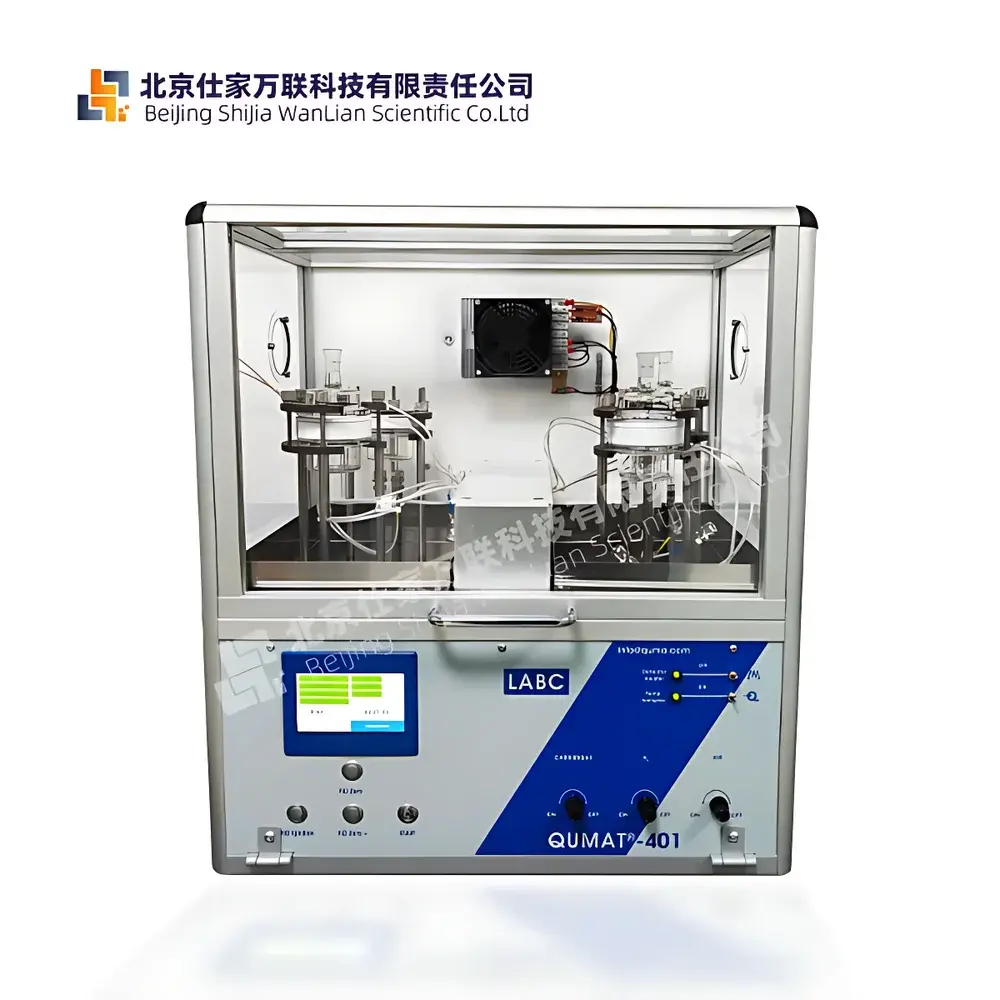
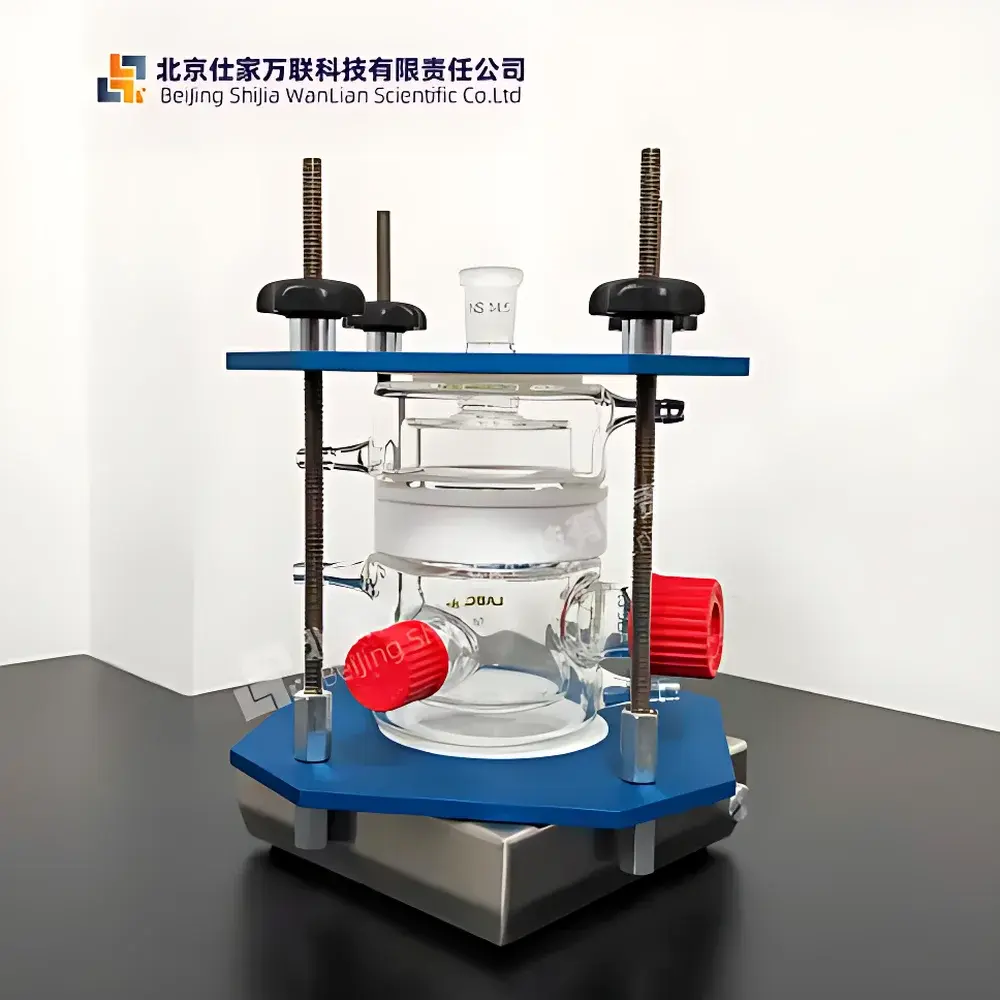
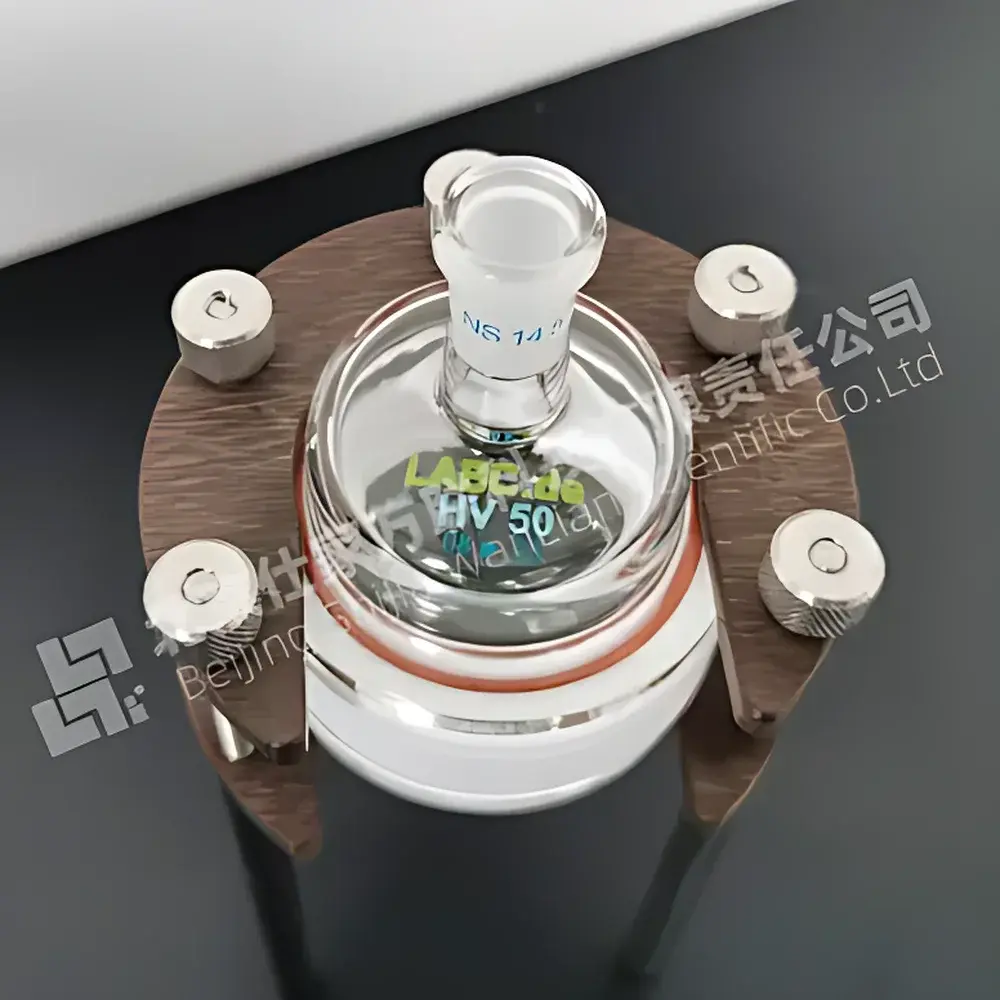
LABC Qumat®-Q410-EPC Chemical Permeation Testing System
| Brand | LABC |
|---|---|
| Origin | Germany |
| Model | Qumat®-Q410-EPC |
| Standard Compliance | EN 16523-1:2015-04, EN 16523-2:2019-03, ASTM F739-2020, ISO 6529:2003, GB/T 23462-2009, GB 28881-2012 |
| Detection Principle | Open-loop gas-phase collection with FID (Flame Ionization Detector) and optional FPD (Flame Photometric Detector) |
| Measurement Capacity | 3 parallel NW50 permeation cells |
| Temperature Control | Yes |
| Collection Modes | Open-loop (gas-phase) and closed-loop (liquid-phase, NW50-LIQUID) |
| Sensor Options | Conductivity, pH, redox electrodes |
| Compatible Analytes | VOCs, sulfur/phosphorus-containing organics, HCl, HF, HCl(g), HF(g) |
| Carrier Gases Required | Nitrogen (carrier), Hydrogen (FID fuel), Air (oxidizer), Calibration Gas (100 ppm isobutane in N₂) |
Overview
The LABC Qumat®-Q410-EPC Chemical Permeation Testing System is a precision-engineered platform designed for quantitative evaluation of chemical breakthrough through protective barrier materials—primarily gloves and garments—under standardized regulatory conditions. It operates on the fundamental principle of controlled, time-resolved permeation measurement: a test chemical is applied to the outer surface of a specimen, while its transport across the material is continuously monitored on the inner (skin-facing) side using validated analytical detection methods. The system implements two complementary collection architectures: an open-loop gas-phase configuration employing cryo-cooled or ambient gas-trapping media coupled with flame ionization detection (FID), and a closed-loop liquid-phase configuration (NW50-LIQUID) utilizing conductivity, pH, or redox sensing for aqueous-soluble or ionizable compounds. This dual-mode capability ensures rigorous alignment with both EN 16523-1:2015-04 (for volatile organics) and EN 16523-2:2019-03 (for non-volatile and ionic species), as well as ASTM F739-2020 and ISO 6529:2003.
Key Features
- Triple-position permeation cell holder supporting simultaneous testing of three NW50 cells under identical environmental conditions—enhancing throughput and inter-test reproducibility.
- FID-based detection with high sensitivity for volatile organic compounds (VOCs), calibrated using certified 100 ppm isobutane in nitrogen; optional FPD module available for selective quantification of organosulfur and organophosphorus agents at trace levels.
- Modular thermal management system enabling precise temperature control (±0.5 °C) across all cell positions—critical for simulating real-world occupational exposure scenarios and complying with EN 16523’s requirement for standardized test temperatures (e.g., 23 °C ± 1 °C).
- NW50-LIQUID liquid-phase cell variant featuring a sealed, thermostatically regulated collection chamber with magnetic stirring and integrated electrochemical sensors (conductivity, pH, redox)—validated for corrosive analytes including hydrochloric acid, hydrofluoric acid, hydrogen chloride gas, and hydrogen fluoride gas.
- Automated data acquisition architecture compliant with GLP and GMP documentation requirements: timestamped raw sensor outputs, audit-trail-enabled software logging, and exportable datasets compatible with LIMS integration.
Sample Compatibility & Compliance
The Qumat®-Q410-EPC accommodates flat-sheet specimens (typically 10–15 cm²) cut from commercial chemical protective gloves, coveralls, aprons, and sleeve liners. Its modular cell design permits direct adaptation to ISO 6529-compliant sample mounting fixtures and EN 16523-defined diffusion area specifications. Regulatory validation includes full alignment with EN 16523-1:2015-04 (determination of breakthrough time for volatile chemicals via gas-phase analysis) and EN 16523-2:2019-03 (determination of cumulative permeation for non-volatile and low-volatility substances using liquid collection). Additional conformance extends to ASTM F739-2020 (standard test method for measuring resistance of materials to permeation by liquids and gases), ISO 6529:2003 (rubber and plastics—determination of resistance to permeation by liquids), and Chinese national standards GB/T 23462-2009 and GB 28881-2012. All hardware and firmware meet DIN EN ISO 9001:2015 quality management system requirements.
Software & Data Management
The system is operated via LABC’s proprietary PermeationSuite™ software—developed in accordance with FDA 21 CFR Part 11 principles for electronic records and signatures. It provides real-time visualization of breakthrough curves, automated calculation of normalized breakthrough time (BT50), cumulative permeation mass, and permeation rate (µg/cm²/min). Data processing workflows include baseline correction, peak integration, calibration curve fitting (multi-point linear/non-linear), and statistical reporting per EN 16523 Annex C. Raw data exports are supported in CSV, Excel (.xlsx), and PDF report formats—with embedded metadata (operator ID, test date, environmental parameters, instrument serial number). Audit trails record all user actions—including parameter changes, data edits, and report generation—with immutable timestamps.
Applications
- Regulatory certification of PPE against EU Type Approval requirements (EU Regulation 2016/425).
- Comparative evaluation of glove material performance across chemical families: aliphatic/aromatic hydrocarbons, ketones, esters, chlorinated solvents, strong acids/bases, and fluorinated compounds.
- R&D support for polymer formulation optimization—correlating molecular weight, crosslink density, and plasticizer content with permeation kinetics.
- Quality assurance in manufacturing facilities producing laminated or coated barrier fabrics.
- Occupational hygiene assessment for workplace-specific chemical exposure risk modeling.
FAQ
What gases are required for FID operation?
Hydrogen (fuel), compressed air (oxidizer), and high-purity nitrogen (carrier gas) are mandatory. A certified calibration standard—100 ppm isobutane in nitrogen—is required for initial detector response calibration and periodic verification.
Can the system measure permeation of hydrofluoric acid (HF)?
Yes—using the NW50-LIQUID cell with corrosion-resistant wetted-path components (e.g., PTFE, ETFE, and Hastelloy C-276) and either conductivity or pH sensing, enabling safe and accurate quantification of HF permeation under closed-loop conditions.
Is the software compliant with 21 CFR Part 11?
PermeationSuite™ implements role-based access control, electronic signatures, and full audit trail functionality—including user login/logout events, data modifications, and report approvals—as defined in FDA 21 CFR Part 11 Subpart B.
How many samples can be tested concurrently?
Three independent NW50 permeation cells operate in parallel; each cell supports one specimen. For liquid-phase testing (NW50-LIQUID), only one position is active at a time due to sensor integration constraints.
Does the system support custom method development?
Yes—LABC provides application engineering support for method adaptation, including custom temperature ramp profiles, variable flow rates, multi-analyte calibration sequences, and integration with third-party chromatographic or spectroscopic detectors upon request.



