
Shibayama SS Density Gradient Tube System
| Brand | Shibayama |
|---|---|
| Origin | Japan |
| Manufacturer Type | Authorized Distributor |
| Origin Category | Imported |
| Model | SS |
| Instrument Type | Density Gradient Tube |
| Form Factor | Benchtop Laboratory System |
| Sample Type | Solid Materials (films, sheets, granules, fibers) |
| Density Range | 0.8–2.2 g/cm³ |
| Density Accuracy | ±0.0002 g/cm³ (A-grade reference floats) |
| Temperature Control Range | 5.0–40.0 °C |
| Repeatability | Excellent |
| Resolution | ±0.0002 g/cm³ (A-grade floats) |
| Minimum Sample Volume | 1–2 mL |
| Standards Compliance | JIS K 6712:1980, JIS K 0061:1992, ASTM D1505-22, ISO 1183-1:2019 |
Overview
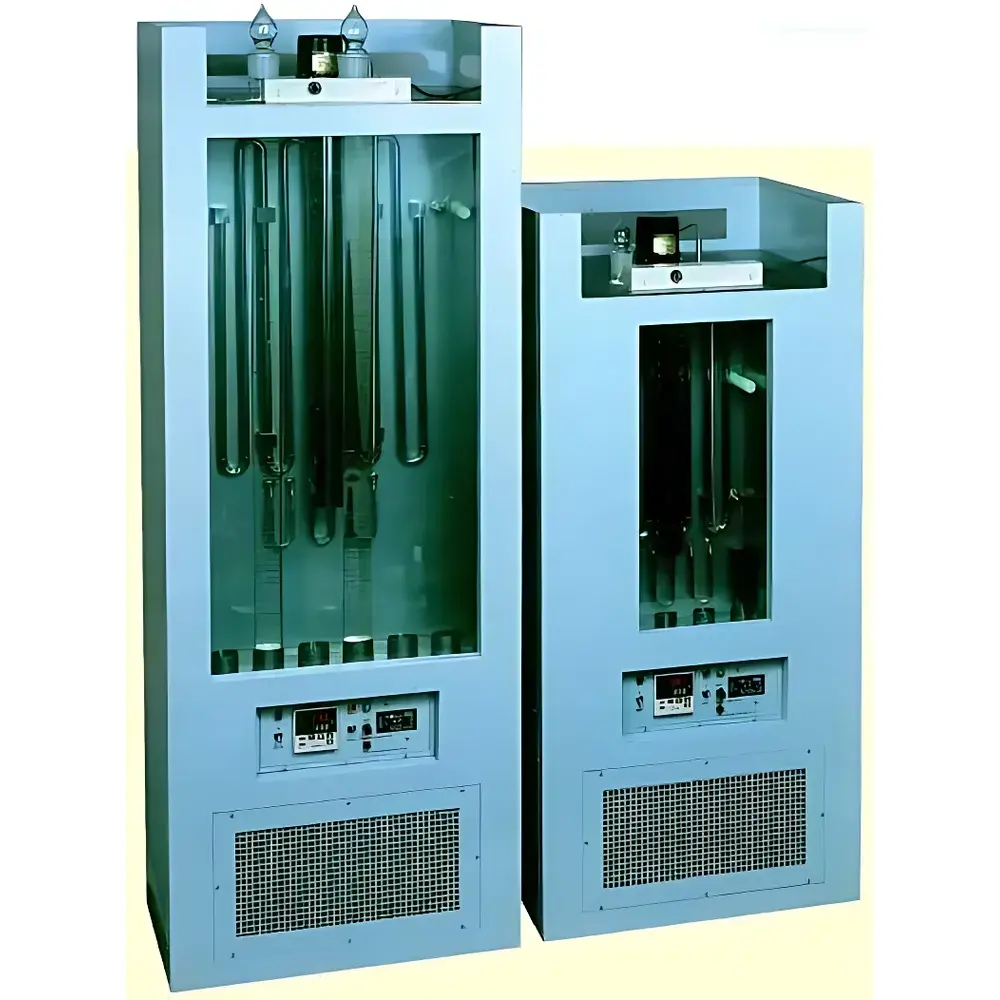
The Shibayama SS Density Gradient Tube System is a precision benchtop instrument engineered for the accurate determination of solid material density using the density gradient column method—a hydrostatic equilibrium technique grounded in Archimedean principles. Unlike buoyancy-based digital densitometers or pycnometers, this system relies on the stable, linear vertical density gradient established within a thermostatically controlled column filled with immiscible liquid mixtures. When introduced into the column, a solid sample (e.g., polymer film, fiber segment, or granule) migrates under gravity until it reaches the level where its density matches that of the surrounding fluid—its neutral buoyancy point. This position is optically measured against calibrated reference floats, enabling traceable, high-resolution density assignment. Designed for metrological rigor and long-term stability, the SS system integrates temperature-controlled environment management, automated gradient formation, and certified reference float calibration—making it suitable for ISO/IEC 17025-compliant laboratories and regulated quality control environments.
Key Features
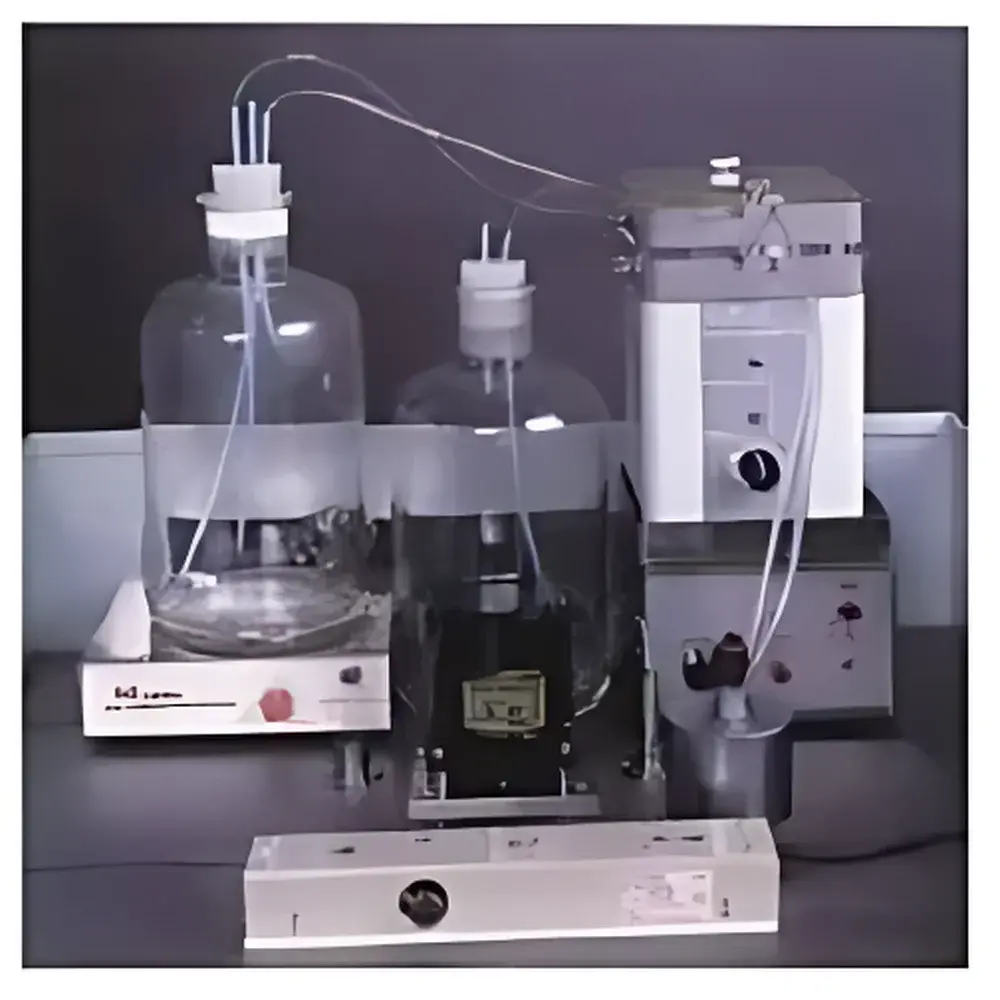
- Automated density gradient generation: Integrated peristaltic pump and controller enable reproducible, linear gradient formation—eliminating manual layering errors and reducing operator dependency.
- Thermostatically stabilized column: Precision temperature control (5.0–40.0 °C, ±0.1 °C stability) housed in an insulated chamber with built-in refrigerated recirculation ensures minimal thermal convection and gradient drift over extended measurement cycles.
- A-grade certified reference floats: Manufactured and calibrated to ±0.0002 g/cm³ uncertainty (traceable to NMIJ/JNLA standards); each float supplied with individual calibration certificate compliant with ISO/IEC 17025 requirements.
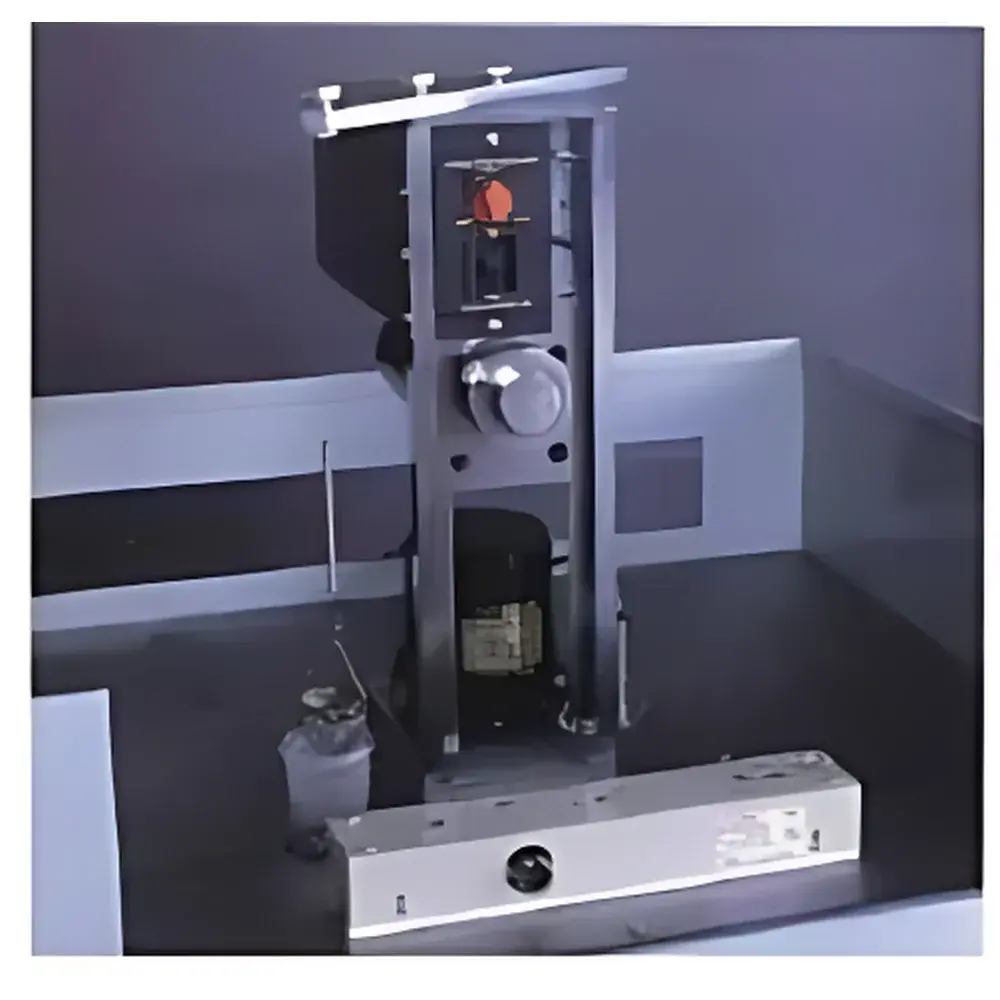
- Motorized sample positioning system: Programmable vertical traverse mechanism enables consistent, vibration-free sample insertion and retrieval at constant speed—minimizing disturbance to the gradient profile and extending usable column life by 2–3× versus manual rod-based methods.
- Benchtop modular architecture: Compact footprint (W × D × H: 600 × 450 × 1200 mm), CE-marked electrical safety, and corrosion-resistant column housing compatible with common gradient liquids (e.g., aqueous cesium chloride, bromoform–acetone, tetrabromoethane–dichloromethane).
Sample Compatibility & Compliance
The SS system accommodates diverse solid geometries—including thin films (≥10 µm thickness), molded plaques (≤25 mm × 25 mm), granules (≥1 mm diameter), and staple-length fibers (≥5 mm)—without requiring shape modification or mass normalization. It complies with multiple international standard test methods: ASTM D1505-22 (Standard Test Method for Density of Plastics by the Density-Gradient Technique), ISO 1183-1:2019 (Plastics — Methods of Determination of Density — Part 1: Immersion Method, Liquid Pyknometer Method and Titration Method), JIS K 6712:1980 (Testing Methods for Polyethylene), and JIS K 0061:1992 (General Rules for Density Gradient Column Method). All calibration services—including annual float recalibration and column verification—are documented with full traceability to Japanese National Metrology Institute (NMIJ) reference materials and issued as ISO/IEC 17025-accredited certificates.
Software & Data Management
While the SS system operates primarily as a manual optical readout platform, optional digital imaging module (SS-Vision Kit) provides CCD-based column profiling with sub-pixel float position detection and automated density interpolation. Raw positional data (mm from column base) and temperature logs are exportable via USB to CSV or Excel-compatible formats. The system supports audit trail functionality when integrated with laboratory information management systems (LIMS) through RS-232 or Ethernet interfaces—enabling alignment with FDA 21 CFR Part 11 requirements for electronic records and signatures where validated software packages are deployed. Calibration history, operator ID, ambient conditions, and gradient preparation timestamps are retained per measurement session.
Applications
- Density profiling of ultra-high-molecular-weight polyethylene (UHMWPE) and crosslinked polyolefins for crystallinity estimation and batch consistency assessment.
- Fiber density characterization of natural (cotton, wool) and synthetic (polyester, aramid, PTFE) fibers to support textile blending calculations and identification protocols.
- Resin quality assurance in compounding and injection molding operations—detecting filler dispersion anomalies, copolymer composition shifts, or thermal degradation effects.
- Regulatory testing for automotive plastics (e.g., PP-TPO blends), medical-grade polymers (ISO 10993-12), and packaging resins (ASTM D4292) where density serves as a critical release parameter.
- Academic research in polymer physics, including phase separation studies in block copolymers and density mapping of gradient copolymer films.
FAQ
What standards does the SS system comply with?
ASTM D1505-22, ISO 1183-1:2019, JIS K 6712:1980, and JIS K 0061:1992.
Is the system suitable for GMP/GLP-regulated environments?
Yes—when used with accredited calibration services, documented SOPs, and optional LIMS-integrated data capture, it meets core requirements for traceability, audit readiness, and instrument qualification (IQ/OQ/PQ).
Can the gradient column be reused across multiple measurement sessions?
Yes—the automated gradient formation and motorized sample handling extend column usability to ≥72 hours under continuous temperature control, verified by periodic float position checks.
What maintenance is required?
Annual recalibration of A-grade floats, biannual verification of temperature uniformity across the column height, and quarterly cleaning of pump tubing and column seals using isopropanol and deionized water.
Does Shibayama provide training and technical support?
Yes—on-site installation qualification, operator training (including gradient preparation, float handling, and optical reading techniques), and remote troubleshooting are available globally through authorized distributors.



