
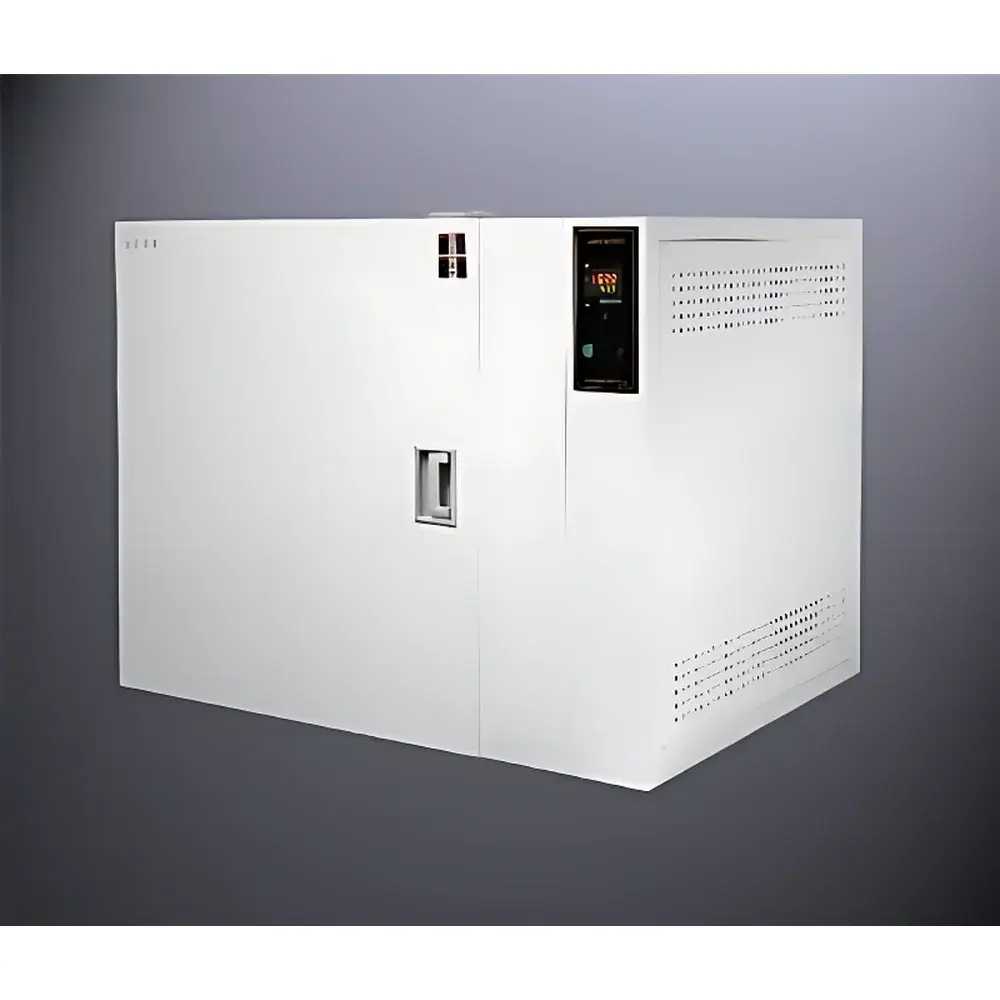
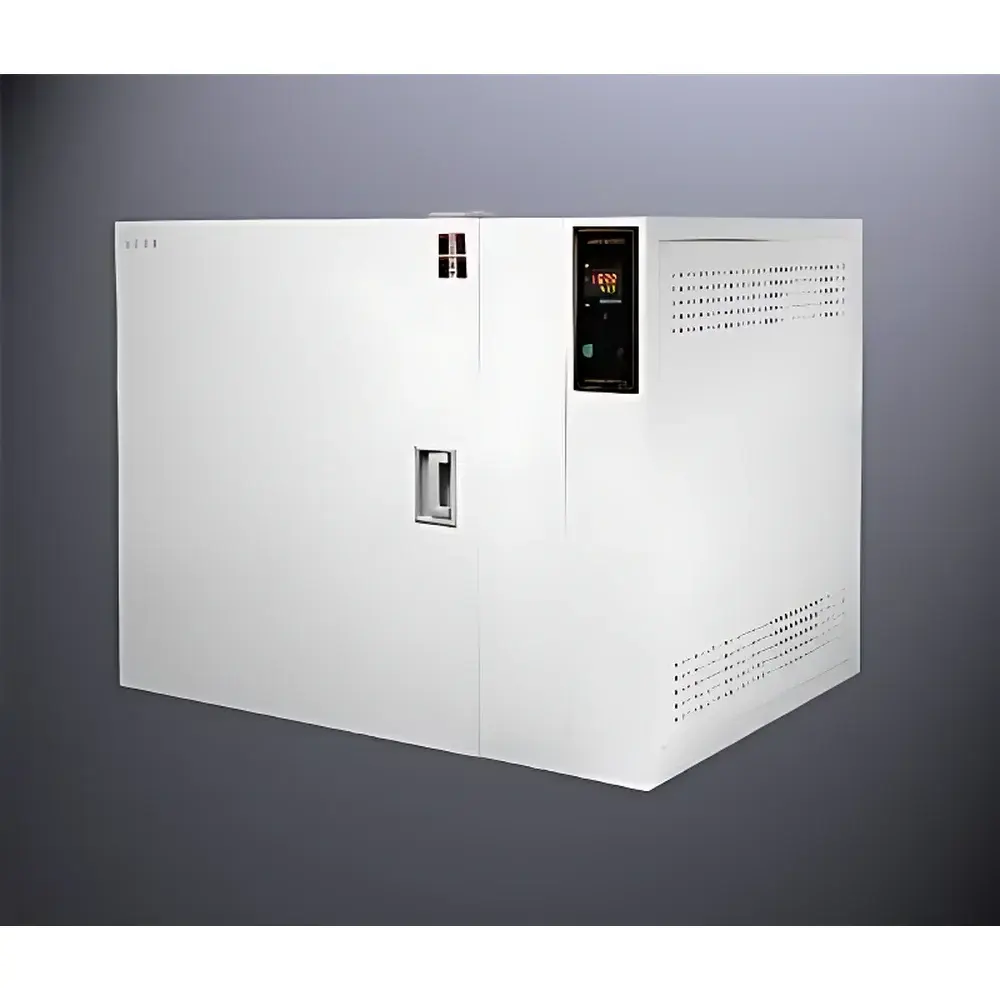
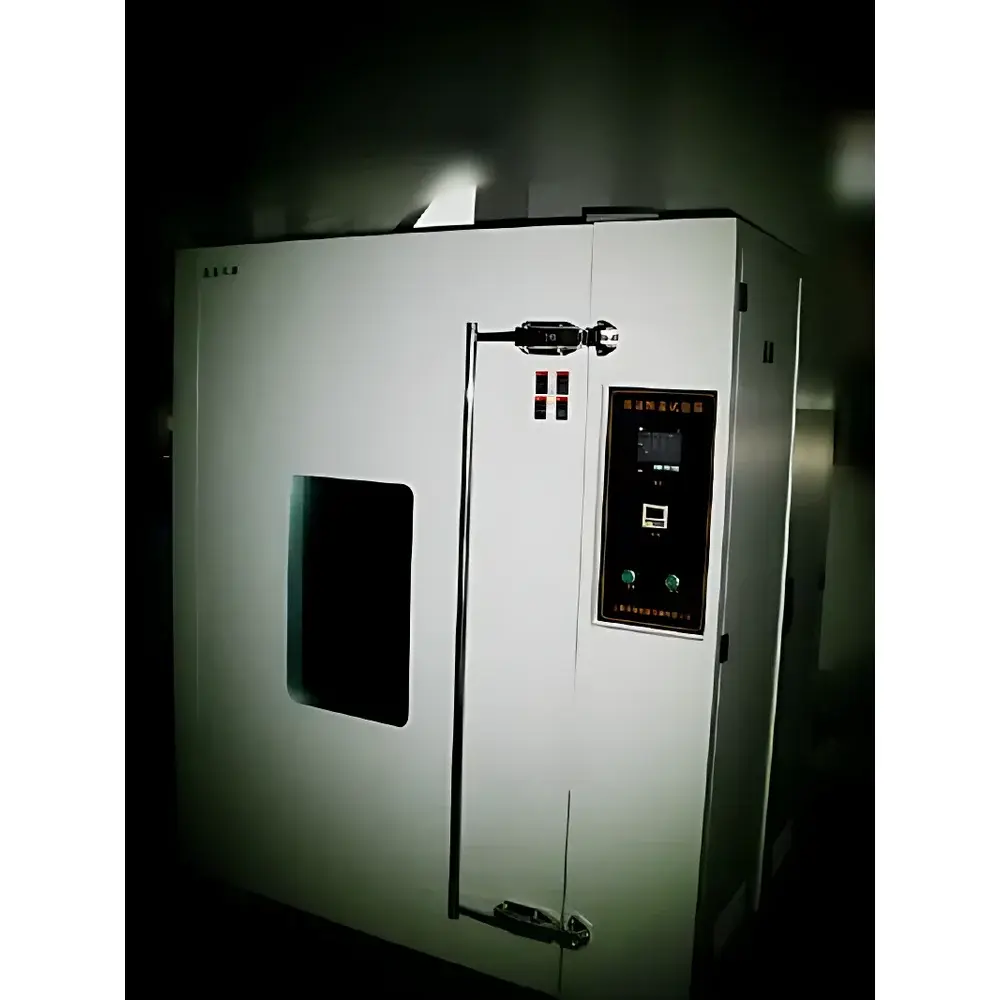
Suying PH-Series Precision High-Temperature Aging Ovens
| Brand | Suying |
|---|---|
| Model | PH-100 / PH-250 / PH-500 / PH-1000 |
| Temperature Range | RT+10°C to 250°C |
| Temperature Uniformity | ≤2.0°C |
| Temperature Fluctuation | ≤±0.5°C |
| Temperature Deviation | ≤±2.0°C |
| Heating Time (RT → 250°C) | ≤90 min |
| Temperature Sensor | PT100 Platinum Resistance Thermometer |
| Controller | Imported Intelligent PID Microprocessor-Based Temperature Controller |
| Power Supply | AC220V±10% 50Hz (PH-100/PH-250) |
| Operating Ambient Temperature | +5°C to +35°C |
| Internal Chamber Dimensions (W×D×H, mm) | 400×500×500 |
| Construction | Stainless Steel Interior (TIG-welded), Cold-Rolled Steel Exterior with Powder-Coated Finish |
| Door Seal | High-Temperature Silicone Gasket |
| Safety | Independent Over-Temperature Cut-Off Protection with Audible/Visual Alarm |
| Compliance | GB/T 2423, ISO 188, ASTM D3012, ASTM D5423 |
Overview
The Suying PH-Series Precision High-Temperature Aging Ovens are engineered for rigorous thermal stability testing, accelerated aging studies, and controlled drying applications in R&D laboratories, quality control environments, and manufacturing validation facilities. Designed around a robust convection-based heating architecture, these ovens utilize forced-air circulation driven by high-temperature-rated centrifugal fans and optimized duct geometry to ensure uniform thermal distribution across the entire working chamber. The core measurement principle relies on closed-loop feedback control of resistive heating elements via a microprocessor-based PID algorithm, continuously adjusting power output based on real-time input from calibrated PT100 platinum resistance sensors. This architecture enables stable operation at temperatures up to 250°C with minimal thermal drift—critical for evaluating material degradation kinetics, polymer cross-linking behavior, or coating curing profiles under standardized test conditions.
Key Features
- Stainless steel interior chamber fabricated using full TIG (tungsten inert gas) welding—ensuring structural integrity, corrosion resistance, and ease of cleaning under repeated thermal cycling.
- High-efficiency forced-air circulation system with rear-mounted, continuous-duty fan capable of sustained operation at 250°C; airflow pattern validated to achieve ≤2.0°C temperature uniformity across the full chamber volume.
- Imported intelligent PID temperature controller featuring digital display, programmable ramp/soak profiles, auto-tuning capability, and deviation alarm thresholds configurable by user.
- Dual-stage thermal protection: primary control loop backed by an independent mechanical over-temperature safety cut-off switch—compliant with IEC 61000-4-2 requirements for fail-safe operation.
- High-performance silicone door gasket rated for continuous use at 250°C, minimizing heat loss and maintaining chamber integrity during long-duration aging cycles.
- Electrostatically applied powder-coated carbon steel exterior with reinforced corner joints—designed for durability in shared lab environments and routine maintenance accessibility.
Sample Compatibility & Compliance
The PH-Series accommodates a broad range of sample types including polymer specimens, elastomer test plaques, electronic components, pharmaceutical excipients, and coated substrates. Chamber dimensions scale across four models (PH-100 to PH-1000), supporting both small-batch qualification runs and larger-scale stability studies. All units are factory-calibrated and documented to meet international standards governing thermal testing protocols: GB/T 2423 (China’s environmental testing standard for electrical and electronic products), ISO 188 (rubber—accelerated ageing and heat resistance), ASTM D3012 (standard test method for thermal oxidative degradation of rubber compounds), and ASTM D5423 (standard specification for laboratory ovens used in plastics testing). Units are suitable for GLP-compliant workflows when paired with external data loggers meeting FDA 21 CFR Part 11 audit-trail requirements.
Software & Data Management
While the base configuration features a standalone microprocessor controller with local setpoint and monitoring functions, optional RS485 communication interface (Modbus RTU protocol) enables integration into centralized laboratory information management systems (LIMS) or SCADA platforms. Third-party software packages—including Suying’s OEM-configurable PC-based logging suite—support time-stamped temperature recording, alarm event logging, and export to CSV or PDF formats. All data files retain embedded metadata (operator ID, chamber ID, calibration certificate number) to support traceability in regulated environments. Firmware updates are delivered via secure USB interface and include version-controlled change logs aligned with ISO/IEC 17025 documentation practices.
Applications
- Accelerated thermal aging of polymers, adhesives, and composites per ASTM D3012 and ISO 188 protocols.
- Pre-conditioning of test specimens prior to tensile, hardness, or dielectric testing in accordance with IEC 60243 and ASTM D638.
- Moisture removal from hygroscopic materials without thermal decomposition—optimized for pharmaceutical active ingredients and ceramic precursors.
- Stability chamber qualification (IQ/OQ) for storage validation of medical devices and diagnostic reagents.
- Heat treatment simulation for solder paste aging, PCB substrate stress evaluation, and conformal coating performance assessment.
- Calibration reference environment for secondary temperature sensors and thermocouple wire verification.
FAQ
What is the maximum allowable ambient temperature for continuous operation?
The unit must be installed in an environment maintained between +5°C and +35°C, with adequate ventilation clearance (≥100 mm on all sides) to ensure proper heat dissipation from the rear cooling fins and fan assembly.
Is third-party calibration certification available?
Yes—NIST-traceable calibration certificates (including as-found/as-left data for chamber uniformity and sensor accuracy) can be ordered at time of purchase or scheduled annually through authorized Suying service partners.
Can the oven be operated under inert atmosphere conditions?
Standard models are not equipped with gas inlet/outlet ports or pressure-rated seals; however, custom configurations with nitrogen purge capability and Class II explosion-proof components are available upon engineering review.
How frequently should the temperature sensor be verified?
Per ISO/IEC 17025 recommendations, PT100 sensor verification should occur at least quarterly using a calibrated dry-block calibrator or precision liquid bath, with results documented in the instrument’s metrology log.
Does the controller support multi-step temperature programming?
Yes—the PID controller supports up to 32 programmable segments with independent ramp rates, soak durations, and cycle repeats, enabling complex aging profiles such as thermal cycling per IEC 60068-2-14.



