
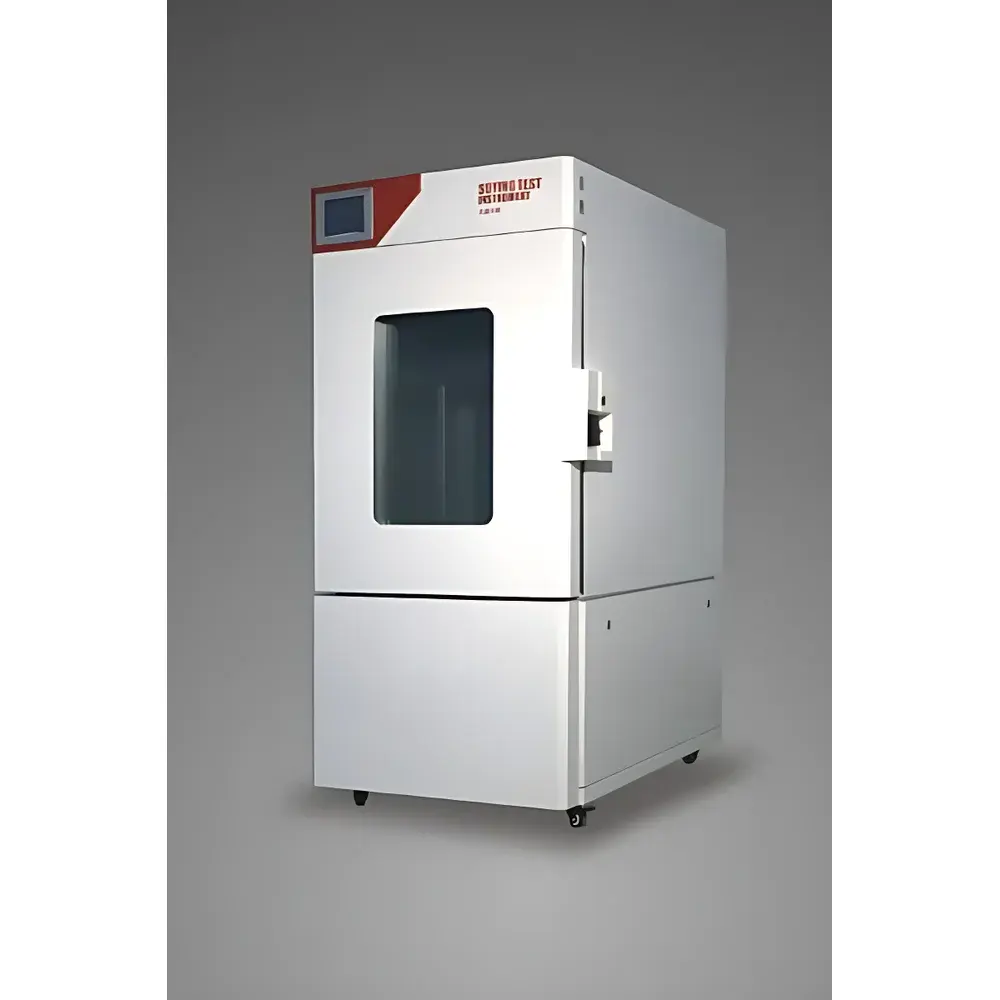
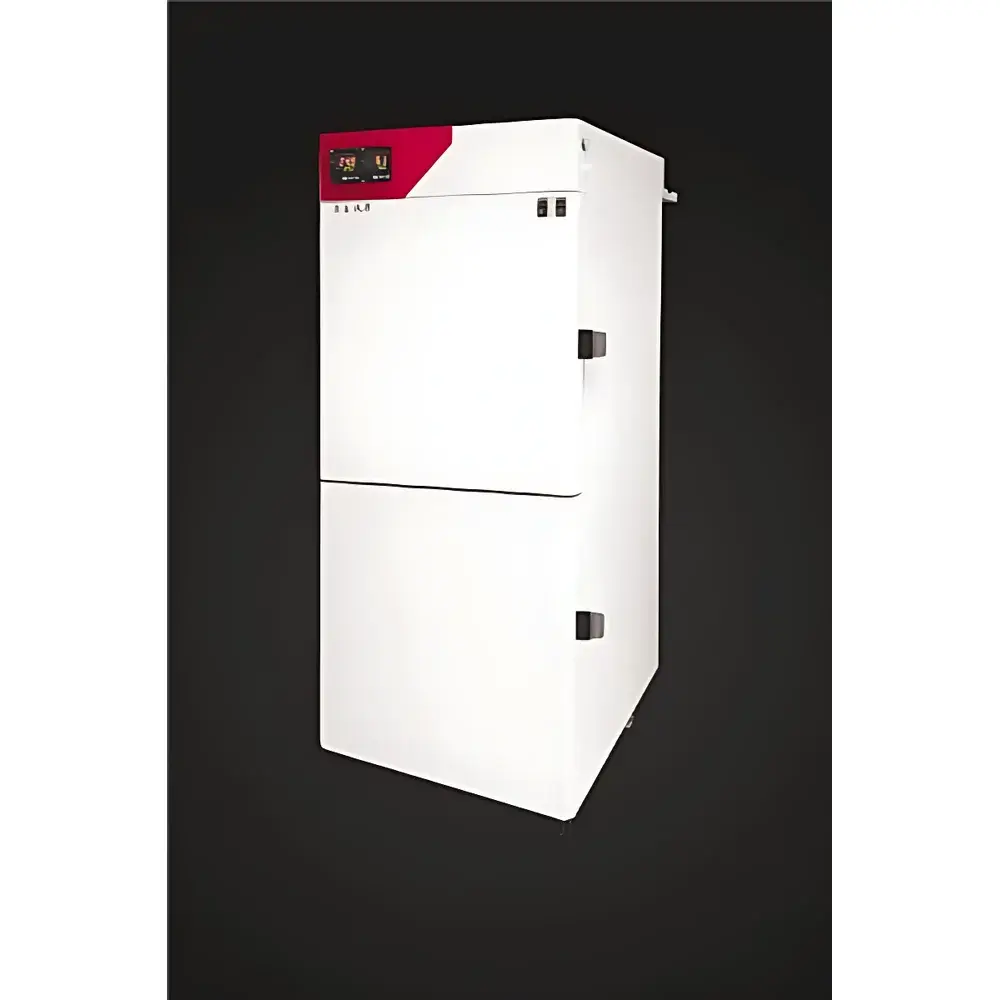

SuYing YP-SD Series Drug Stability Testing Chamber
| Brand | SuYing |
|---|---|
| Origin | Shanghai, China |
| Model Variants | YP-SD, YP-SDP, YP-GSP (150 L, 250 L, 500 L, 1000 L) |
| Temperature Range | 0–65°C (dark), 10–65°C (with illumination) |
| Temperature Uniformity | ±0.5°C |
| Humidity Range | 30–95% RH |
| Humidity Uniformity | ±0.5% RH |
| Illuminance Range | 0–6000 lx (adjustable) |
| Illuminance Accuracy | ≤ ±500 lx |
| Control Resolution | 0.1°C / 0.1% RH |
| Refrigeration System | Hermetic Danfoss compressor (R404A/R23 refrigerant), air-cooled condenser, finned evaporator |
| Internal Construction | Mirror-finish SUS304B stainless steel |
| Compliance | Chinese Pharmacopoeia (2010 Edition) Stability Testing Guidelines, GB/T 10586–2018 Environmental Test Chambers |
Overview
The SuYing YP-SD Series Drug Stability Testing Chamber is an engineered environmental simulation system designed to meet the rigorous requirements of pharmaceutical stability testing as defined by the World Health Organization (WHO), the International Council for Harmonisation (ICH), and the Chinese Pharmacopoeia (2010 Edition). It provides precise, long-term control of temperature, relative humidity, and photometric conditions—critical parameters for conducting ICH Q1A(R2)-compliant accelerated, long-term, intermediate, and photostability studies. The chamber operates on a balanced heating–humidifying–cooling principle, ensuring thermodynamic equilibrium without thermal overshoot or moisture lag. Its architecture supports continuous operation over extended durations (e.g., 6-month accelerated trials at 40°C/75% RH or 24-month long-term storage at 25°C/60% RH), with traceable environmental profiles required under GLP and GMP frameworks.
Key Features
- Multi-zone environmental fidelity: Independent illumination and humidity chambers (in YP-GSD/YP-TSD configurations) enable concurrent dark/humid, light/humid, and dark/dry test conditions—essential for ICH Q1B photostability assessment and Q5C biologics comparability studies.
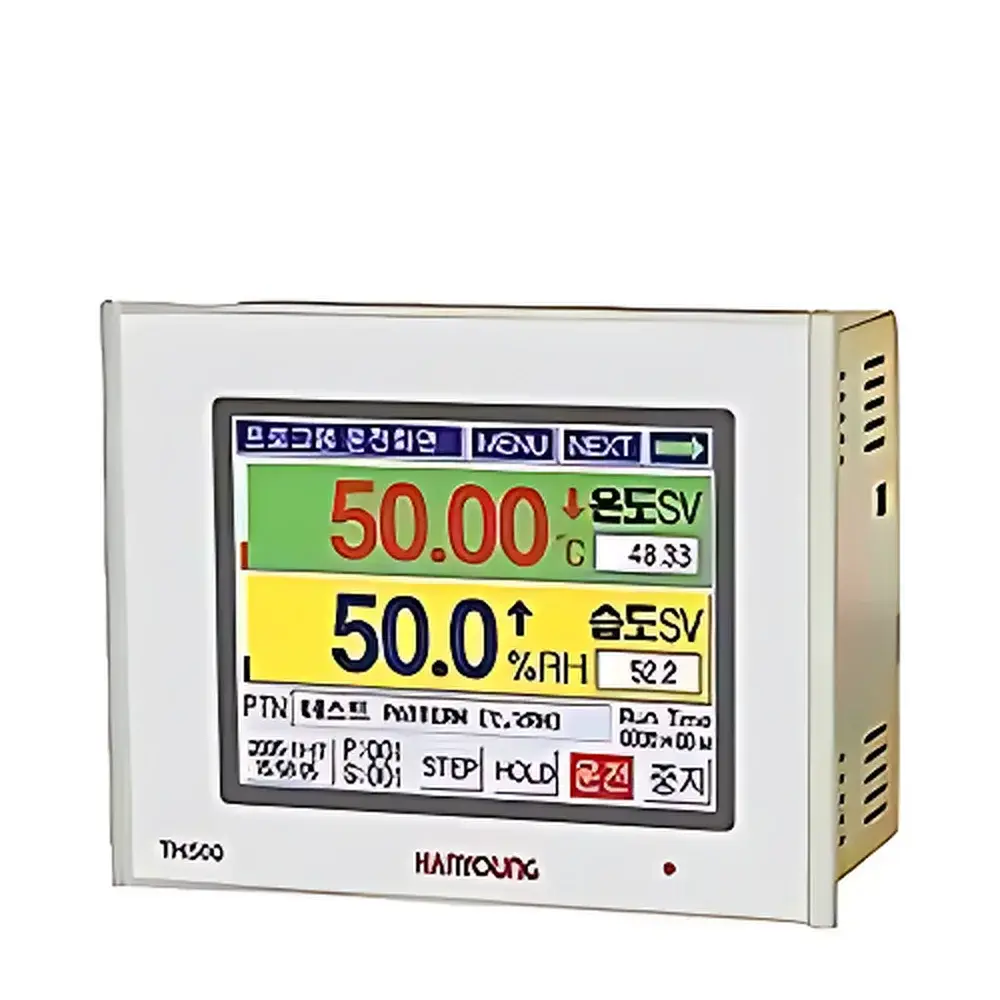
- Precision climate control: Equipped with a high-stability Pt100 platinum resistance sensor and Fuji microprocessor-based controller featuring PID auto-tuning, real-time humidity deviation correction, and remote alarm notification via Ethernet or RS485 interface.
- Optimized thermal-hygrometric uniformity: A proprietary tangential airflow system—validated per ISO 16770 Annex B—ensures spatial uniformity of ±0.5°C and ±0.5% RH across the full working volume, confirmed by 9-point mapping per ICH Q1A(R2) Annex 2.
- Robust mechanical construction: Interior chamber fabricated from electropolished SUS304B stainless steel (acid- and corrosion-resistant); double-layer vacuum-insulated tempered glass viewing window; magnetic door seal with low-thermal-conductivity silicone gasket.
- Regulatory-grade safety architecture: Integrated protections include compressor overheat cutoff, refrigerant pressure monitoring, water-level sensing for humidifier reservoirs, independent overtemperature limiters, and short-circuit/fuse protection compliant with IEC 61010-1.
Sample Compatibility & Compliance
The YP-SD series accommodates diverse pharmaceutical dosage forms—including tablets, capsules, injectables in vials, lyophilized powders, ointments, and primary packaging materials—on adjustable stainless-steel shelves with removable trays (standard: 2 units). All models are validated for compliance with Chinese Pharmacopoeia Volume IV, General Chapter 9001 “Stability Testing of Drugs”, GB/T 10586–2018 “Environmental Test Chambers”, and aligned with ASTM E2052–22 “Standard Practice for Calibration of Temperature-Humidity Chambers”. Optional IQ/OQ documentation packages support FDA 21 CFR Part 11-compliant electronic records, including audit trails for setpoint changes, alarm events, and calibration logs.
Software & Data Management
Control firmware supports up to 24 programmable test cycles with ramp-soak profiles, event-triggered data logging (minimum 1-second interval), and CSV export via USB or network interface. Optional SuYing StabilityLink™ software enables centralized multi-chamber monitoring, automated report generation (per ICH Q5C template), and integration with LIMS platforms via OPC UA. All logged environmental data include timestamps synchronized to NTP servers, with cryptographic hash integrity verification to satisfy ALCOA+ principles (Attributable, Legible, Contemporaneous, Original, Accurate, Complete, Consistent, Enduring, Available).
Applications
- ICH Q1A(R2) accelerated stability testing (40°C/75% RH, 6 months)
- ICH Q1B photostability testing (Option A: UV + visible; Option B: cool white fluorescent)
- Long-term storage validation (25°C/60% RH, 12–36 months)
- Intermediate condition assessment (30°C/65% RH)
- Excipient compatibility screening under controlled hygroscopic stress
- Package integrity evaluation under cyclic humidity exposure
- Biological product shelf-life modeling (per Q5C guidance)
FAQ
What regulatory standards does the YP-SD chamber comply with?
It conforms to the Chinese Pharmacopoeia (2010 Edition) Stability Testing Guidelines, GB/T 10586–2018, and aligns with ICH Q1A(R2), Q1B, and Q5C requirements. Optional validation documentation supports FDA 21 CFR Part 11 and EU Annex 11 readiness.
Can the chamber perform simultaneous light and humidity stress tests?
Yes—the YP-SDP and YP-GSP variants integrate full-spectrum LED or fluorescent illumination (0–6000 lx, ±500 lx accuracy) with active humidity control, enabling concurrent photolytic–hygroscopic stress per ICH Q1B Option A.
Is temperature/humidity mapping included in factory acceptance testing?
Each unit undergoes 9-point spatial uniformity mapping at three load conditions (empty, 50% load, full load) per ISO 16770 Annex B, with final reports supplied as part of commissioning documentation.
What refrigerant is used, and is it environmentally compliant?
R404A (GWP = 3922) or R23 (GWP = 14800) is employed per model configuration; both are approved under current Chinese industrial refrigerant regulations. R404A replacement options (e.g., R449A) are available upon request for future regulatory alignment.
How is data integrity ensured during long-term studies?
The controller maintains local non-volatile memory with battery backup, generates tamper-evident digital signatures for all logged entries, and supports external NAS or cloud-based archival with role-based access control—fully satisfying ALCOA+ and 21 CFR Part 11 electronic record requirements.





