
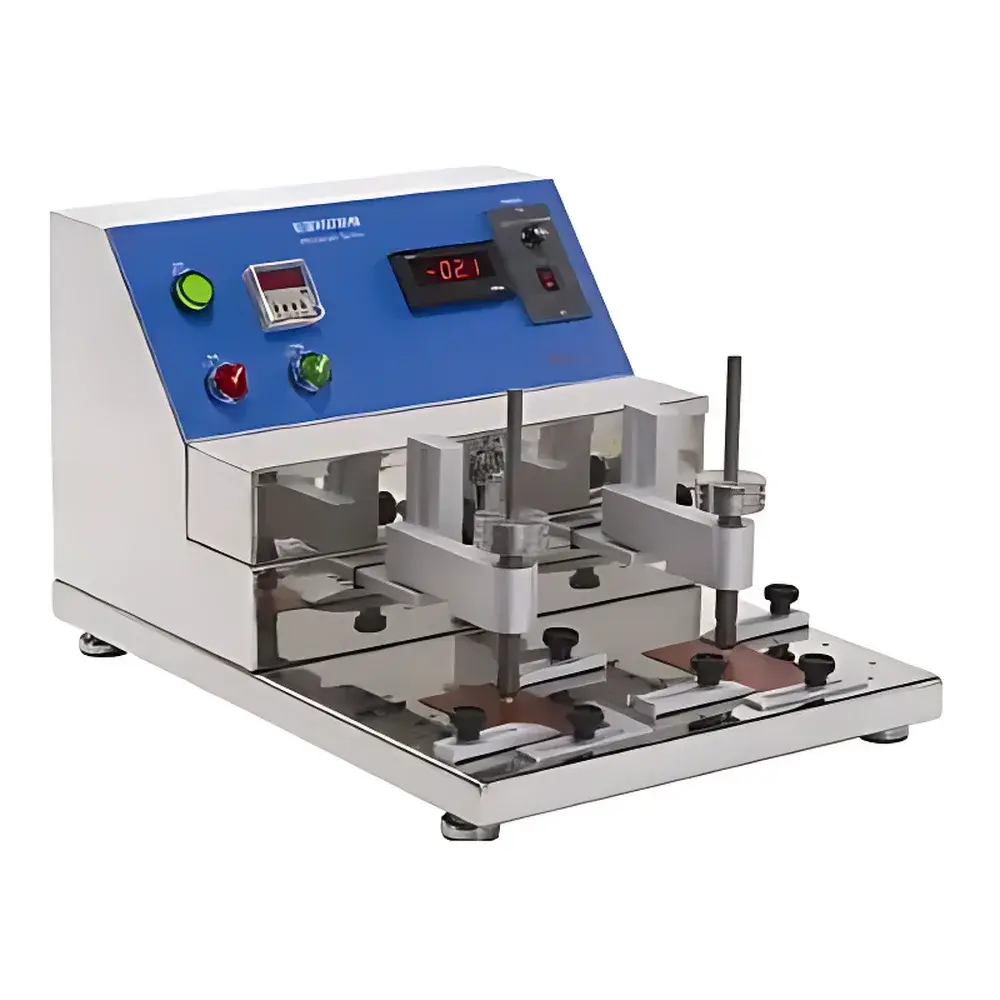
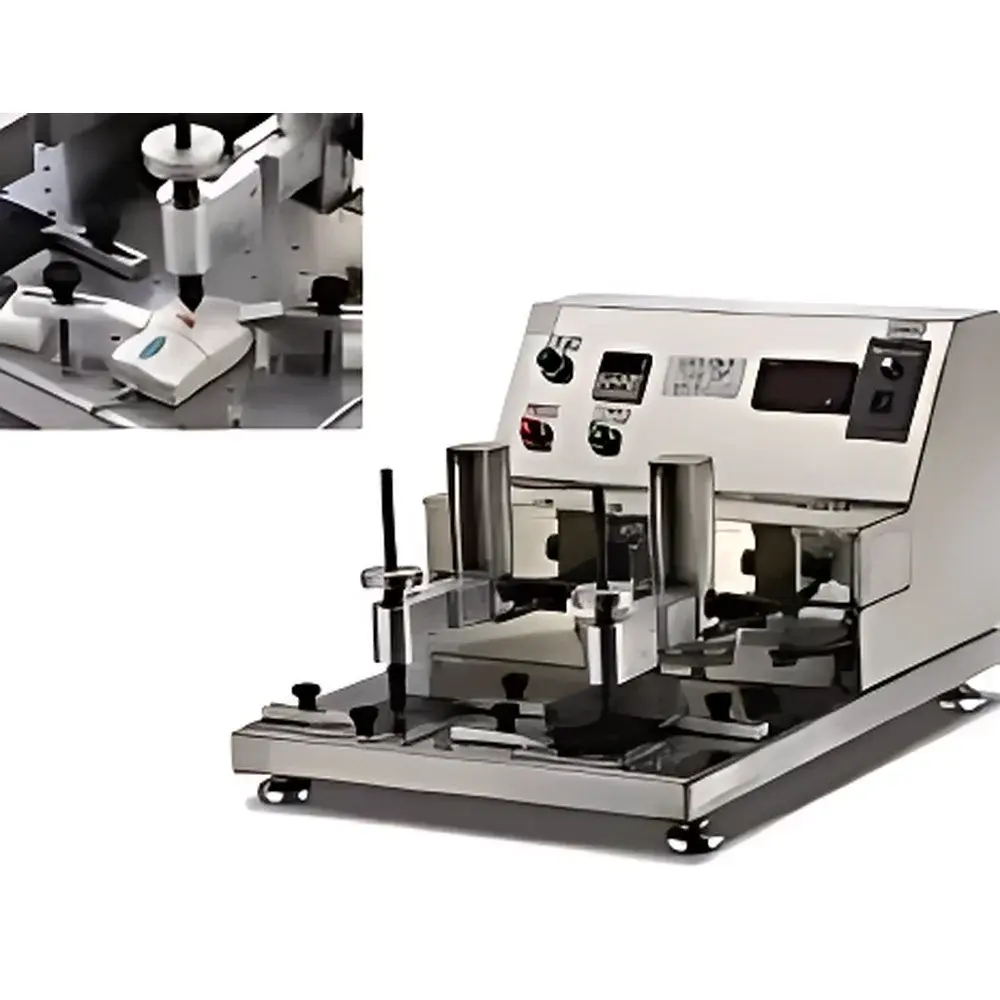
Abrasion Tester 339 by PREMA
| Origin | Taiwan |
|---|---|
| Manufacturer Type | Authorized Distributor |
| Origin Category | Manufactured in Taiwan |
| Model | Abrasion Tester 339 |
| Pricing | Available Upon Request |
Overview
The Abrasion Tester 339 by PREMA is a precision-engineered tribological testing instrument designed to quantify surface wear resistance under controlled mechanical stress. Based on the oscillating (reciprocating) abrasion principle—where a standardized abrasive medium (e.g., wool felt, rubber wheel, or steel wool) moves linearly across a stationary test specimen under defined load, stroke length, and frequency—the system replicates real-world wear mechanisms such as scuffing, scratching, and material loss due to repeated contact. Developed over six decades and refined through iterative industrial validation, this tester serves as a benchmark for accelerated wear evaluation in R&D labs, QC departments, and certification facilities. Its modular architecture supports interchangeable test modules—including Taber-style rotary, Martindale-type fabric, and linear reciprocating configurations—enabling compliance with multiple international wear-test methodologies without hardware replacement.
Key Features
- Floating grinding head design ensures uniform normal force distribution across the entire contact interface, minimizing edge effects and improving repeatability across heterogeneous substrates.
- Microprocessor-based control system with programmable parameters: stroke length (1–100 mm), oscillation frequency (10–120 cycles/min), applied load (50–1000 g via calibrated weights), and total cycle count (up to 999,999).
- Integrated real-time calculation engine computes dynamic friction coefficient (µ) using synchronized load-cell feedback and displacement tracking—displayed live on high-contrast LCD interface with data logging capability.
- Compliance-ready firmware supports audit trails and user-access levels, aligning with GLP and GMP documentation requirements for regulated industries.
- Rugged aluminum alloy frame with vibration-dampening base ensures mechanical stability during extended testing sessions, critical for low-noise signal acquisition in high-resolution wear depth analysis.
Sample Compatibility & Compliance
The Abrasion Tester 339 accommodates flat, rigid specimens up to 150 × 150 mm and thicknesses from 0.5 mm to 25 mm, including non-metallic substrates (injection-molded plastics, coated PC/ABS housings, printed electronics, laminated packaging films) and metallic surfaces (anodized aluminum, magnesium alloys, electroplated steel, powder-coated sheet metal). It meets the mechanical execution requirements of ASTM D4060 (Taber abraser), ISO 5470-1 (rubber abrasion), ISO 1518-1 (paint film resistance), TAPPI T476 (paper surface durability), DIN 53109 (coating scratch resistance), JIS K 5600-5-4 (Japanese paint standards), EN 13329 (laminate flooring), and SAE J2527 (automotive interior materials). Test reports generated are compatible with internal quality management systems and external third-party certification submissions.
Software & Data Management
While the base model operates via embedded firmware, optional USB-to-PC connectivity enables raw parameter export (CSV format) for post-processing in MATLAB, Excel, or LIMS platforms. The system logs timestamped test records—including load profile, cycle count, friction coefficient trend, and operator ID—for traceability. Firmware version 2.3+ includes configurable pass/fail thresholds and automatic report generation aligned with ISO/IEC 17025 documentation guidelines. All data storage adheres to FDA 21 CFR Part 11 principles when used with validated PC software, supporting electronic signatures and immutable audit logs required in pharmaceutical and medical device manufacturing environments.
Applications
This tester is routinely deployed in: (1) Consumer electronics—evaluating scratch resistance of AR-coated displays, anodized smartphone frames, and ink adhesion on plastic casings; (2) Automotive OEMs—validating wear endurance of interior trim finishes, dashboard overlays, and gear-shift knobs per SAE J2527; (3) Flooring manufacturers—assessing abrasion class ratings (AC1–AC6) for LVT and engineered wood per EN 13329; (4) Coatings R&D—quantifying pigment dispersion stability and binder crosslink density through wear-induced gloss loss; (5) Medical device suppliers—verifying durability of silicone tubing coatings and polymer catheter surfaces under simulated handling conditions.
FAQ
What standards does the Abrasion Tester 339 directly support?
It natively executes test protocols referenced in ASTM D4060, ISO 5470-1, ISO 1518-1, TAPPI T476, DIN 53109, JIS K 5600-5-4, EN 13329, and SAE J2527.
Can it measure wear depth or mass loss?
No—it is a comparative performance tester that quantifies visual degradation (e.g., haze, gloss change, coating failure) or functional failure (e.g., conductor breakage on flexible circuits); gravimetric or profilometric measurement requires complementary instrumentation.
Is calibration traceable to national standards?
Yes—load cells and displacement sensors are factory-calibrated against NIST-traceable references, with calibration certificates provided upon request.
Does PREMA offer application support for method development?
Yes—PREMA’s technical team provides protocol optimization services, including fixture selection, parameter tuning, and correlation studies against field performance data.
What maintenance intervals are recommended?
Biannual inspection of drive belt tension, guide rail lubrication, and abrasive medium alignment is advised; full metrological recalibration every 12 months or after 10,000 cycles.



