
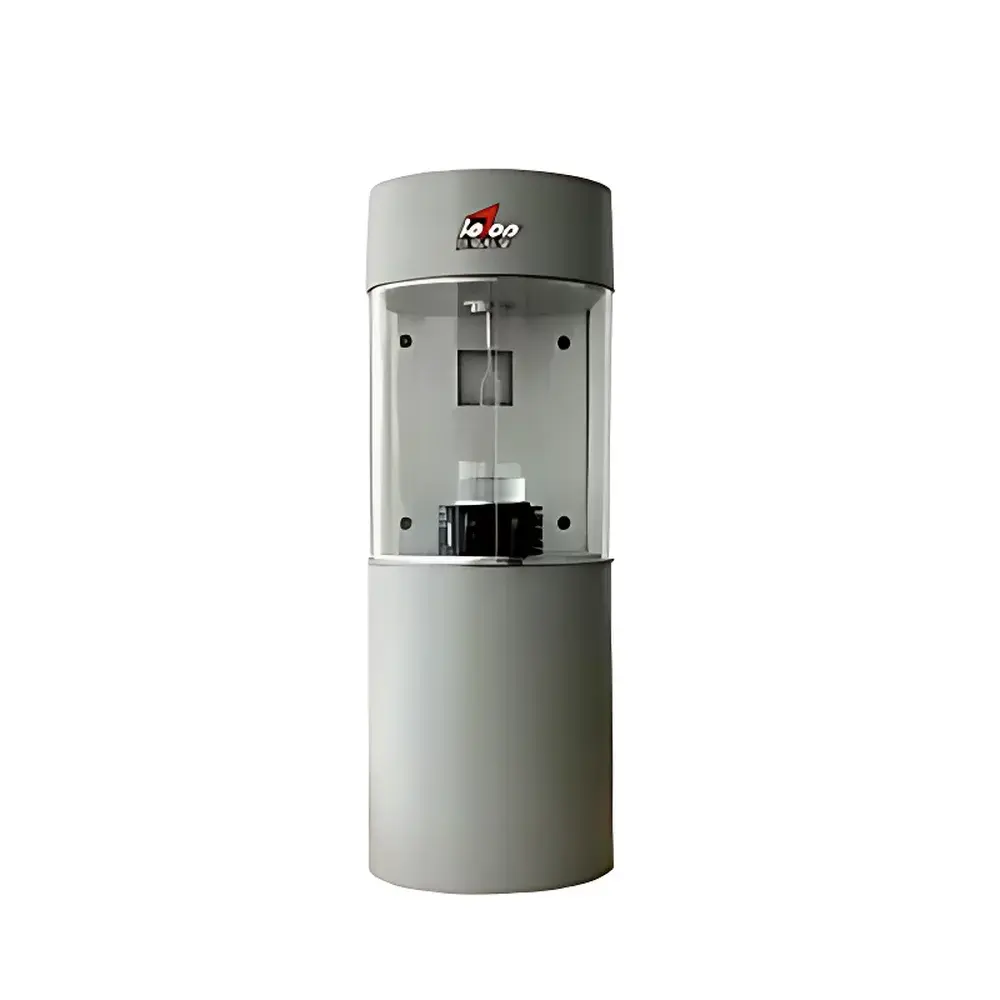
Betop Scientific KF100 Automated Surface and Interfacial Tensiometer
| Brand | Betop Scientific |
|---|---|
| Origin | Guangdong, China |
| Manufacturer Type | Direct Manufacturer |
| Country of Origin | China |
| Model | KF100 |
| Price Range | USD 25,000–28,000 (FOB) |
| Measurement Range | 0–999 mN/m |
| Resolution | 0.01 mN/m |
| Accuracy | ±0.01 mN/m |
| Temperature Control Range | −10 °C to 130 °C (customizable up to 300 °C with optional high-temp module) |
| Temperature Display Precision | ±0.1 °C |
| Measurement Method | Du Noüy Ring Method |
| Balance Capacity | 210 g |
| Balance Sensitivity | ±0.1 mg |
| Data Acquisition Rate | 50 Hz |
| Sample Stage Travel | 100 mm vertical stroke |
| Stage Positioning | Software-controlled continuous-speed adjustment with preset position recall |
| Lighting | Integrated white LED coaxial illumination |
| Dimensions | 270 × 244 × 678 mm (L × W × H) |
| Weight | 25 kg |
| Power Supply | 220 V AC, 50/60 Hz |
| Interface | RS-232 |
Overview
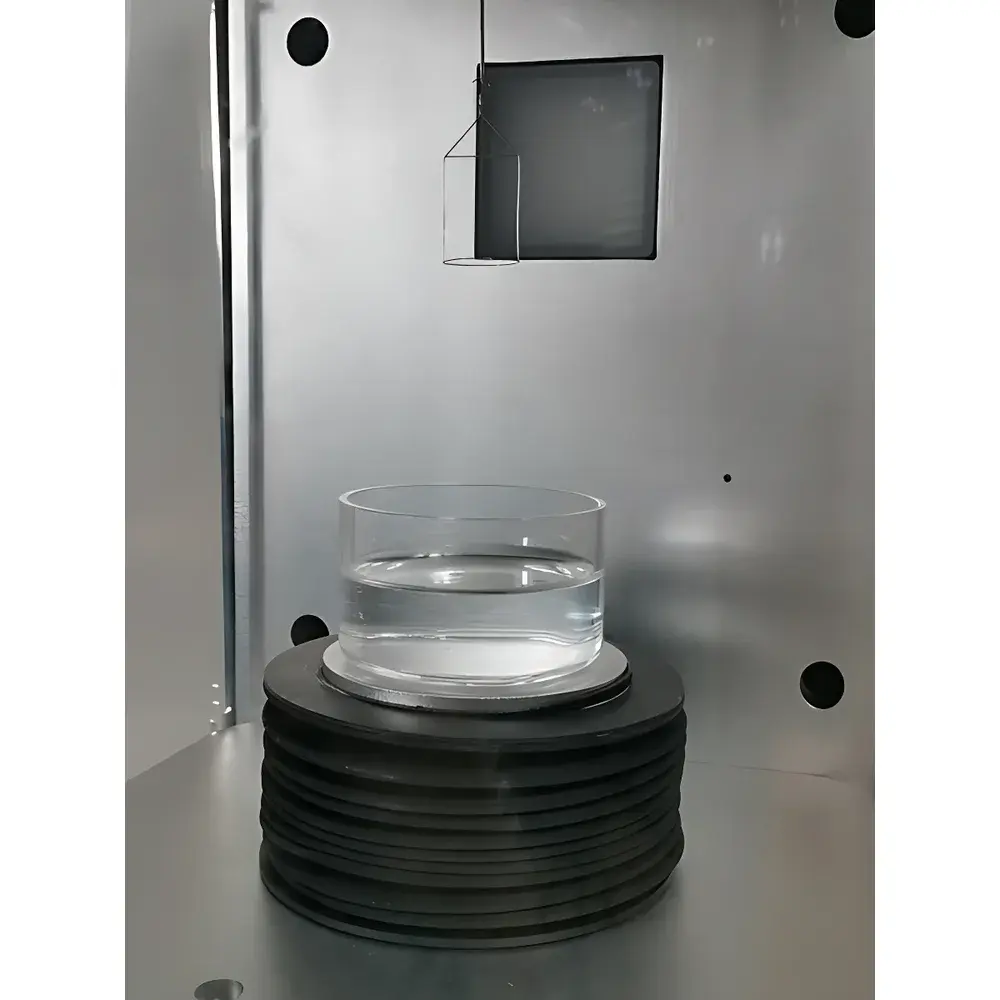
The Betop Scientific KF100 Automated Surface and Interfacial Tensiometer is an engineering-grade instrument designed for precise, repeatable quantification of surface tension (γLV) and interfacial tension (γLV) between immiscible liquid phases—most commonly air–liquid or oil–water systems. It operates on the classical Du Noüy ring method, a gravimetric technique standardized under ISO 304, ASTM D133, ASTM D971, and DIN EN 14210. In this method, a platinum–iridium ring is immersed in and then slowly withdrawn from the test liquid; the maximum force required to detach the ring from the interface is measured via a high-stability microbalance and converted to surface or interfacial tension using the Harkins–Jordan correction factor. The KF100 integrates a German-made analytical balance with active damping and auto-protection circuitry, ensuring long-term stability and resistance to mechanical drift—even during extended thermal ramping cycles.
Key Features
- High-resolution tensiometric measurement with 0.01 mN/m resolution and certified accuracy of ±0.01 mN/m across the full 0–999 mN/m range.
- Thermally regulated sample stage with programmable control from −10 °C to 130 °C (standard); optional high-temperature modules extend operational limits to 300 °C for specialized polymer melt or high-boiling solvent studies.
- 50 Hz real-time data acquisition enables dynamic surface tension profiling—capturing rapid adsorption kinetics of surfactants with temporal resolution down to 20 ms per point.
- Precision servo-driven vertical stage with 100 mm travel range, software-defined speed control (0.099–500 mm/min), and memory-based position recall for reproducible immersion depth and meniscus alignment.
- Integrated coaxial white LED illumination system enhances optical contrast at the liquid–ring interface, facilitating accurate meniscus detection—critical for low-tension systems (<5 mN/m) and viscous or volatile samples.
- Modular architecture supports future integration with contact angle, density, and colloidal stability modules via shared TENTION software platform and RS-232 interface.
Sample Compatibility & Compliance
The KF100 accommodates a broad spectrum of sample types—including aqueous surfactant solutions, hydrocarbon mixtures, polymer melts, ionic liquids, and biological fluids—within standard vial geometries (diameter ≥25 mm, depth ≥20 mm). Its open-access design allows direct handling of aggressive solvents (e.g., chloroform, THF) and high-viscosity formulations (up to ~1000 mPa·s) without cross-contamination risk. All measurement protocols adhere strictly to internationally recognized standards: ASTM D971 (oil–water interfacial tension), ISO 1409 (polymer dispersions), ISO 4311 (CMC determination), OECD 115 (chemical safety assessment), and DIN EN 14370 (surfactant quality control). Instrument validation reports include traceable calibration against certified reference liquids (e.g., ultra-pure water at 20 °C: γ = 72.75 mN/m; diiodomethane: γ = 50.80 mN/m), fulfilling GLP audit requirements for QC laboratories.
Software & Data Management
The KF100 is operated exclusively through TENTION software—a Windows-based application engineered for scientific rigor and regulatory compliance. Version SW31 delivers full automation of ring calibration, zero-point compensation, temperature ramping, and multi-cycle tension measurement with built-in Harkins–Jordan correction tables. Raw force–distance curves are stored in ASCII-compatible format with embedded metadata (timestamp, temperature, operator ID, method parameters). Audit trails log all user actions—including parameter edits and result overrides—in accordance with FDA 21 CFR Part 11 requirements when configured with electronic signature and role-based access control. Export options include CSV, PDF reports with embedded uncertainty calculations (k = 2), and direct linkage to LIMS via ODBC drivers.
Applications
- Quantitative CMC determination for anionic, nonionic, and zwitterionic surfactants per ISO 4311.
- Wettability assessment of pharmaceutical excipients, APIs, and tablet coatings via surface energy component analysis (Owens–Wendt, van Oss approaches).
- Monitoring oxidative degradation of lubricating oils and transformer fluids through time-resolved interfacial tension decline.
- Optimization of paint, ink, and coating formulations by correlating surface tension hysteresis with substrate adhesion performance.
- Evaluation of cleaning efficacy in food processing tanks using surface tension shifts induced by residual organic films.
- Stability screening of nanoemulsions and Pickering dispersions via interfacial rheology coupling (with optional oscillatory extension kit).
- Regulatory submission support for cosmetic ingredient safety dossiers (EC No. 1223/2009, Annex I) and REACH registration packages.
FAQ
What standards does the KF100 comply with for surface tension measurement?
The instrument implements methods aligned with ISO 304, ASTM D133, ASTM D971, DIN EN 14210, and OECD 115—with automated corrections and reporting templates preconfigured for each standard.
Can the KF100 measure interfacial tension between two immiscible liquids?
Yes—using the Du Noüy ring method, it measures oil–water, polymer–solvent, and molten salt–metal interfaces with equal precision, provided density contrast exceeds 50 kg/m³.
Is temperature control validated across the full operating range?
Calibration certificates include NIST-traceable verification at −10 °C, 25 °C, 60 °C, and 130 °C using dual-sensor PT100 probes with ±0.1 °C uncertainty.
How is data integrity ensured for regulated environments?
TENTION software supports 21 CFR Part 11 compliance through electronic signatures, immutable audit logs, and password-protected method locking—configurable per laboratory SOPs.
What maintenance is required for long-term accuracy?
Annual recalibration of the microbalance and thermal sensor is recommended; platinum ring cleaning follows ASTM D133 guidelines using chromic acid or piranha solution—no consumables beyond standard lab reagents are needed.



