
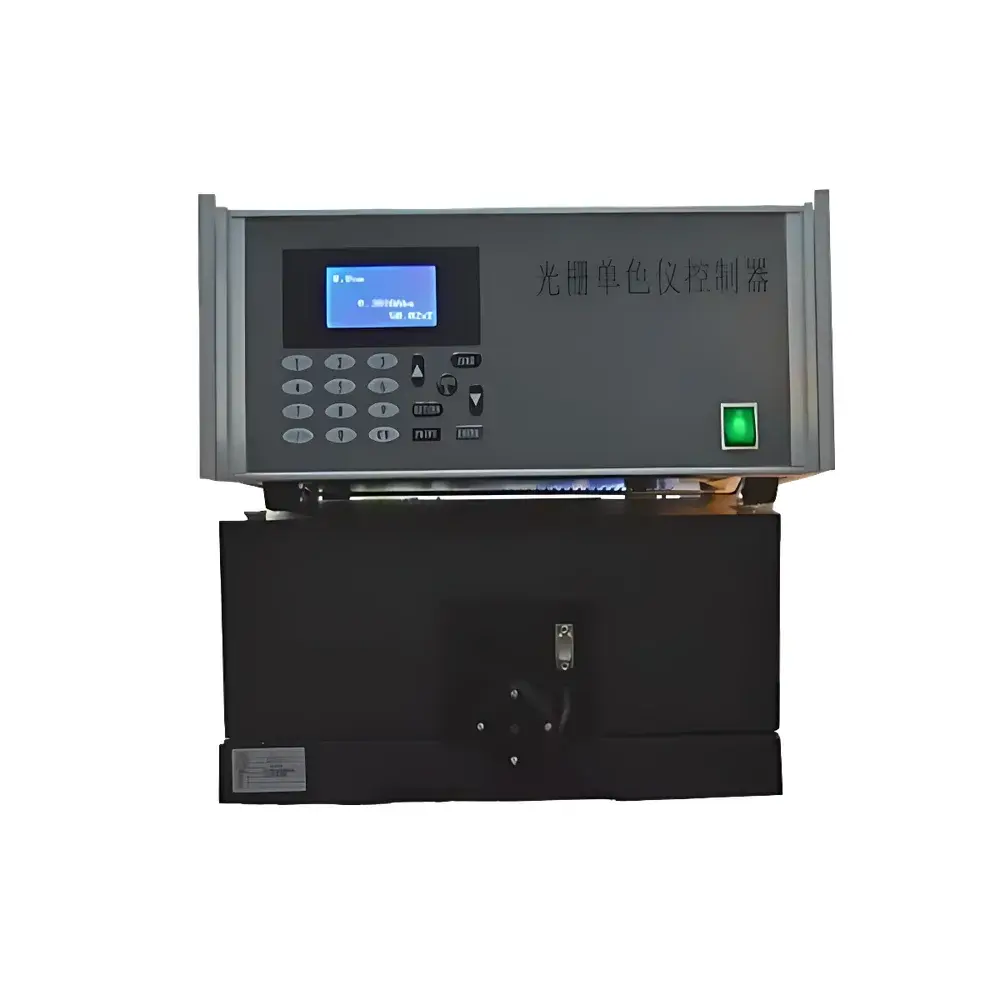
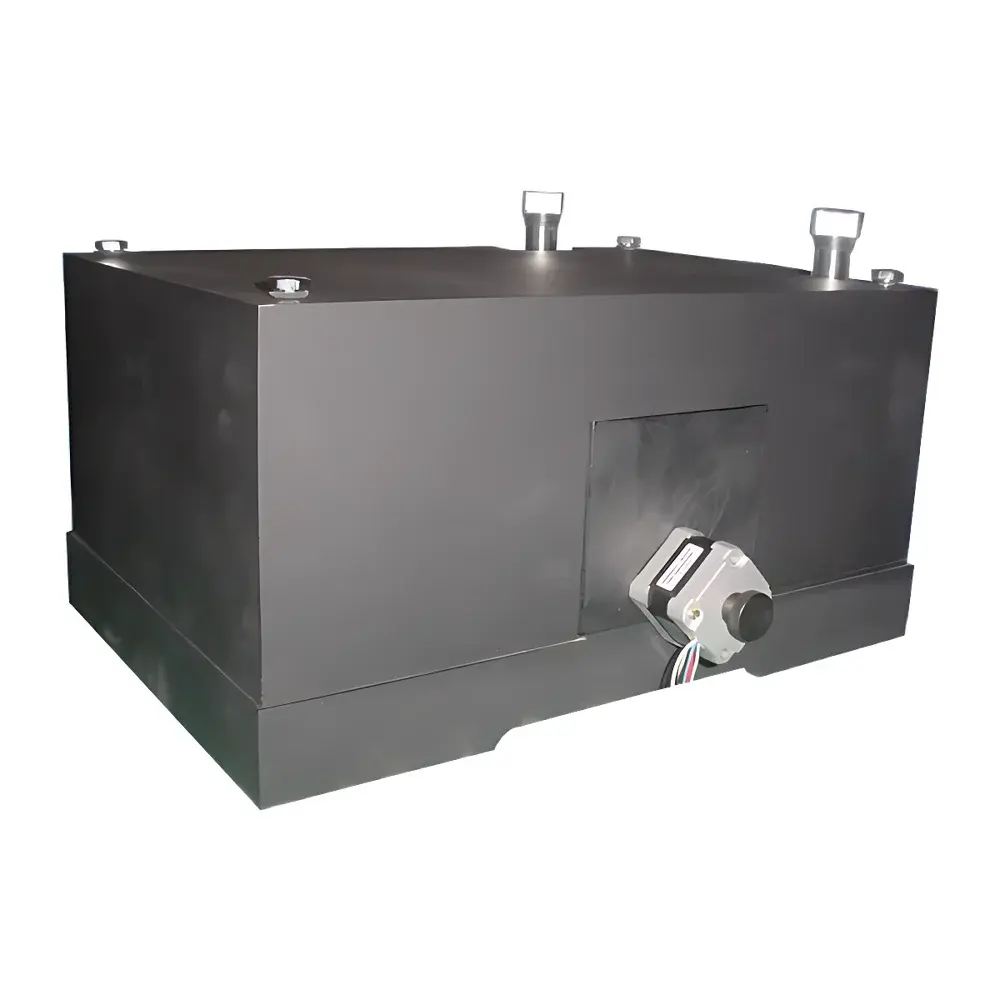
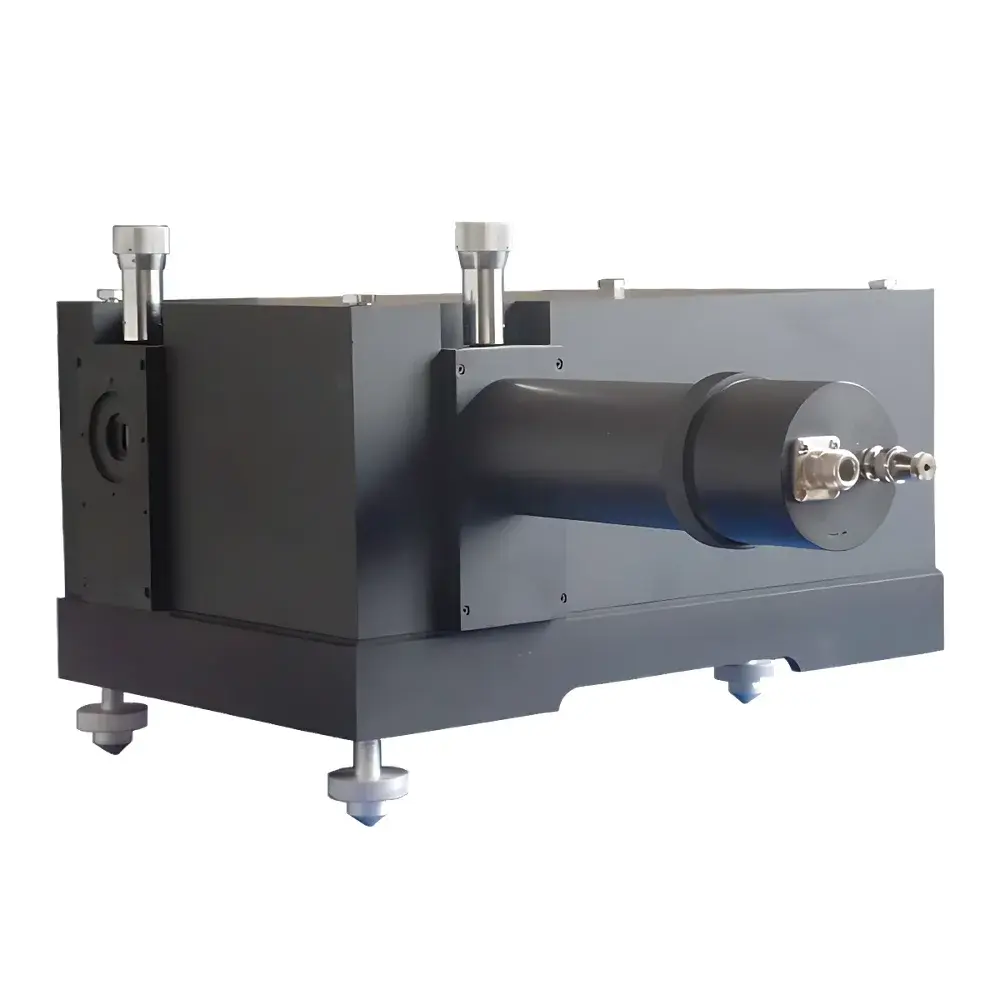
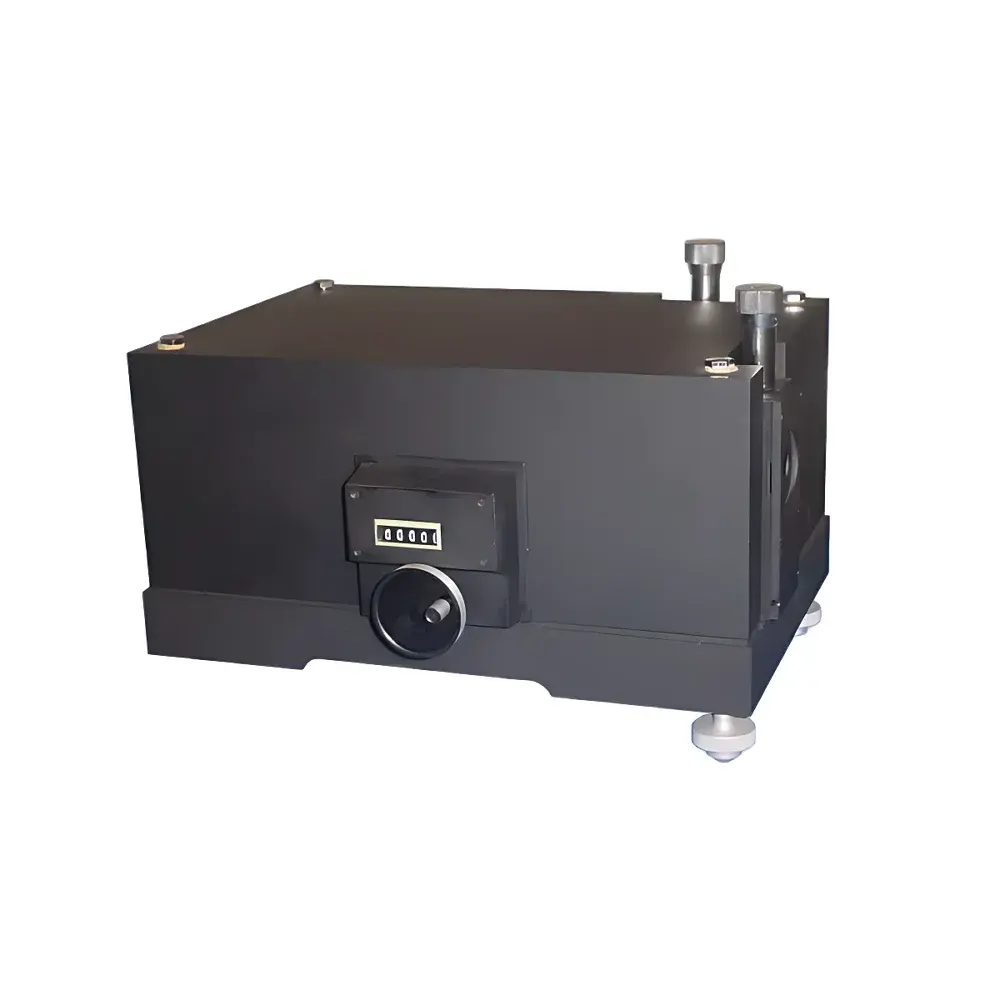
Laman Optics LMS300A3 Automated Triple-Grating Monochromator
| Brand | Laman Optics |
|---|---|
| Origin | Guangdong, China |
| Manufacturer Type | Authorized Distributor |
| Country of Origin | China |
| Model | LMS300A3 |
| Application System | Universal |
| Number of Gratings | 3 |
| Wavelength Range | 200–1400 nm |
| Wavelength Accuracy | ±0.4 nm (200–900 nm), ±2.0 nm (900–1400 nm) |
| Wavelength Repeatability | ±0.2 nm (200–900 nm), ±1.0 nm (900–1400 nm) |
| Grating Options | 1200 L/mm (Grating 1), 600 L/mm (Grating 2), Custom Third Grating (e.g., 300 L/mm or 2400 L/mm) |
| Slit Width Adjustment | 0–2 mm (continuous, 0.01 mm resolution), Slit Height: 15 mm |
| Focal Length | 302.5 mm |
| Stray Light | ≤0.3% T |
| Dimensions | 436 × 267.5 × 190 mm |
| Weight | 20 kg |
Overview
The Laman Optics LMS300A3 Automated Triple-Grating Monochromator is a precision optical instrument engineered for high-fidelity wavelength selection in spectroscopic applications spanning the ultraviolet (UV), visible (VIS), and near-infrared (NIR) spectral regions. Based on Czerny–Turner optical architecture, it employs three interchangeable diffraction gratings mounted on a motorized turret to enable seamless spectral coverage from 200 nm to 1400 nm without manual realignment. The monochromator operates by dispersing broadband light via angular diffraction, isolating narrow spectral bands through adjustable entrance and exit slits, and delivering collimated, wavelength-pure output to downstream detectors or sample interfaces. Its 302.5 mm focal length ensures optimal balance between resolution, throughput, and optical aberration control. Designed for integration into OEM systems, research spectrometers, and custom photoluminescence or absorption setups, the LMS300A3 supports both scanning and fixed-wavelength operation under computer control.
Key Features
- Triple-grating turret with automated, software-selectable grating switching—enables optimized dispersion across UV-VIS-NIR without mechanical recalibration
- Wavelength accuracy of ±0.4 nm in the 200–900 nm range and ±2.0 nm in the 900–1400 nm range, verified against NIST-traceable calibration sources
- High-resolution slit mechanism: 0–2 mm continuous adjustment with 0.01 mm digital readout and 15 mm vertical aperture height for improved signal-to-noise ratio
- Low stray light performance: ≤0.3% transmittance at 546.1 nm when measured with a mercury lamp source and 10 nm bandwidth—critical for quantitative absorbance and fluorescence measurements
- Rugged aluminum alloy housing with precision-machined optical mounts and thermal-stabilized drive electronics for long-term operational stability
- RS-232 and USB 2.0 interfaces support direct integration with LabVIEW, Python (PyVISA), MATLAB, and third-party DAQ platforms
Sample Compatibility & Compliance
The LMS300A3 is compatible with standard 1/4″ and 1/2″ optical mounts and accepts input beam diameters up to 12 mm. It interfaces natively with fiber-coupled light sources (SMA905), integrating sphere outputs, and free-space excitation paths. No sample-specific hardware is required—the monochromator functions as a standalone spectral filter module. In terms of regulatory alignment, its mechanical design and firmware architecture conform to IEC 61000-6-3 (EMC emissions) and IEC 61010-1 (safety requirements for electrical equipment). While not certified for GMP or FDA-regulated environments out-of-the-box, its deterministic wavelength positioning, audit-ready motion logs, and non-volatile parameter storage support validation workflows compliant with ISO/IEC 17025 and ASTM E275 for spectrophotometer verification.
Software & Data Management
The monochromator ships with LamanControl Suite—a cross-platform application supporting Windows, Linux, and macOS. It provides real-time wavelength scanning, grating auto-selection based on target λ, slit synchronization, and multi-point calibration routines using reference emission lines (e.g., Hg, Ne, Xe lamps). All motor position data, grating ID, slit width, and timestamped scan metadata are exported in CSV and HDF5 formats. For regulated environments, optional firmware upgrade enables 21 CFR Part 11-compliant user access control, electronic signatures, and immutable audit trails—meeting GLP/GMP documentation requirements for QC laboratories performing UV-Vis method validation per USP and EP 2.2.25.
Applications
- Photoluminescence excitation (PLE) spectroscopy requiring tunable, narrowband UV excitation
- Custom Raman spectrometer front-ends where rejection of Rayleigh scatter demands low stray light and precise grating selection
- LED and laser diode spectral characterization—including peak wavelength, FWHM, and side-mode suppression ratio (SMSR)
- Thin-film optical density mapping in semiconductor metrology and solar cell R&D
- Time-resolved fluorescence decay analysis using gated detection synchronized to monochromator stepping
- Calibration transfer between reference and field-deployable spectrometers via inter-laboratory wavelength standardization protocols
FAQ
Can the LMS300A3 be operated in manual mode without software?
Yes—front-panel push buttons and an OLED display allow basic wavelength setting, grating selection, and slit adjustment independent of PC control.
Is the third grating included by default or configured per order?
The third grating is configurable at time of order; standard configurations include 300 L/mm (for high-throughput NIR), 2400 L/mm (for UV high-resolution), or blazed variants optimized for specific wavelength bands.
Does the monochromator support external trigger synchronization?
Yes—TTL-compatible trigger input/output ports enable hardware-level synchronization with pulsed lasers, lock-in amplifiers, or CCD shutter controllers.
What maintenance is required for long-term wavelength accuracy?
Annual verification using a mercury-argon spectral lamp is recommended; no routine optical alignment is needed due to kinematic grating mounting and zero-backlash stepper drive design.
Can the LMS300A3 be integrated into vacuum or purged environments?
Standard units are air-operated; optional nitrogen-purged or vacuum-compatible versions (with fused silica windows and stainless-steel housing) are available upon request.





