
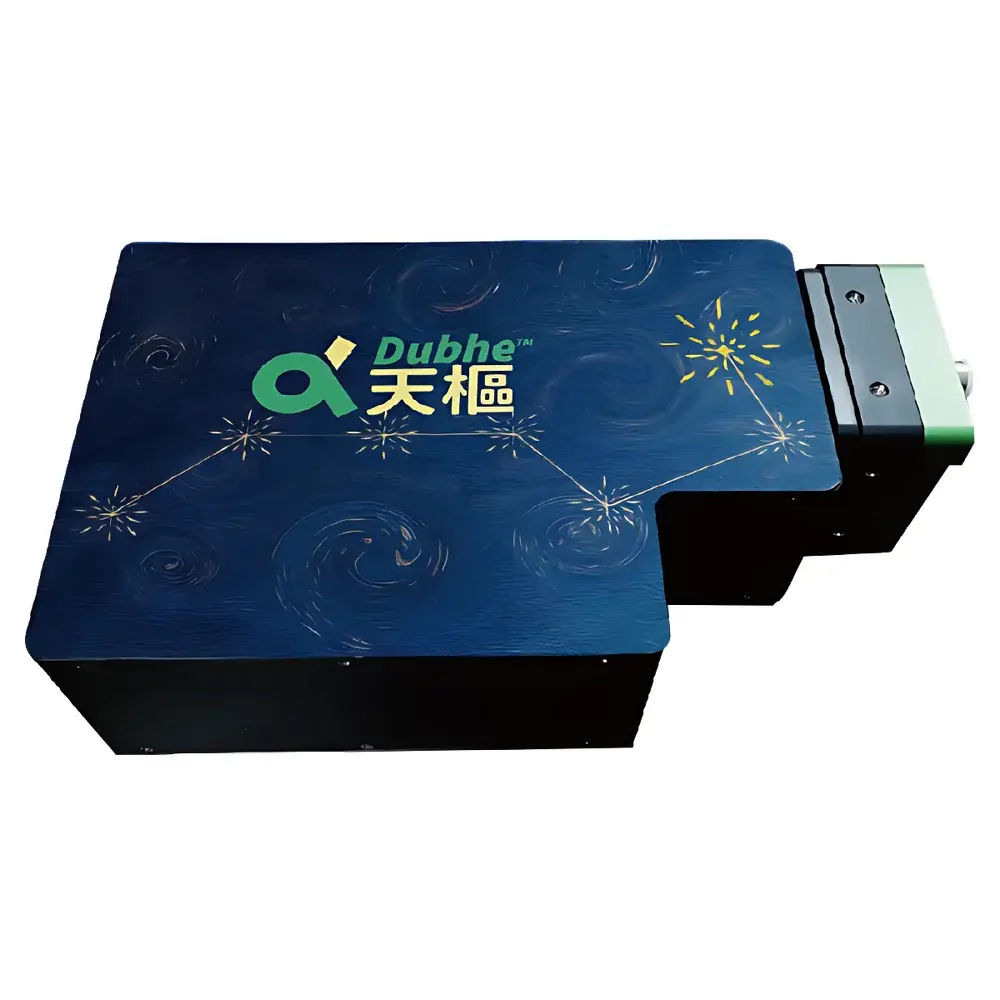
DB1080F OCT Spectrometer – Laman Optics Swept-Source Optical Coherence Tomography System
| Brand | Laman Optics |
|---|---|
| Model | DB1080F |
| Wavelength Range | 800–880 nm |
| Optical Resolution | 0.04 nm |
| Scan Rate | 20 kHz / 80 kHz (dual-mode camera module) |
| Optical Architecture | Transmission-based grating spectrometer with patented alignment and structural integration |
| Customization | Available for transmission-grating OCT platform integration |
| Origin | Guangdong, China |
| Supplier Type | Authorized Distributor |
Overview
The DB1080F OCT Spectrometer is a high-performance swept-source optical coherence tomography (SS-OCT) detection module engineered for research-grade biomedical imaging and precision optical metrology. Unlike time-domain or spectral-domain OCT systems relying on broadband interferometry, the DB1080F implements a swept-wavelength architecture synchronized with a high-speed line-scan camera to enable real-time, depth-resolved cross-sectional imaging with axial resolution governed by instantaneous linewidth and sweep linearity. Its core optical path employs a transmission diffraction grating configuration—optimized for minimal polarization-dependent loss and thermal drift—ensuring stable spectral fidelity across extended acquisition sessions. Designed for integration into OEM OCT platforms or custom lab-built systems, the DB1080F delivers calibrated spectral data streams compatible with standard PCIe or Camera Link interfaces, supporting both 20 kHz and 80 kHz sweep rates to accommodate trade-offs between imaging depth range and axial sampling density.
Key Features
- High-resolution spectral detection with ≤0.04 nm optical resolution at 850 nm center wavelength, enabling sub-micron axial resolution in biological tissue when coupled with appropriate source coherence length.
- Transmission-based optical layout minimizes internal reflections and stray light, improving signal-to-noise ratio (SNR) and reducing ghost artifact formation in layered sample analysis.
- Dual-speed camera module supports selectable 20 kHz and 80 kHz line rates—facilitating flexible configuration for either deep-tissue penetration (lower rate, higher sensitivity) or high-frame-rate volumetric acquisition (higher rate, reduced integration time).
- Patented mechanical alignment mechanism ensures long-term stability of grating angle and detector positioning under ambient temperature fluctuations (±0.5 °C), critical for longitudinal studies requiring reproducible spectral calibration.
- Modular mechanical housing conforms to standard 3U rack-mount dimensions (482.6 mm width × 132.5 mm height), allowing seamless integration into existing optical tables or industrial inspection enclosures.
- Firmware-upgradable FPGA controller enables future support for advanced triggering protocols—including external TTL sync, asynchronous reset, and multi-channel interleaved acquisition modes.
Sample Compatibility & Compliance
The DB1080F is optimized for use with low-coherence near-infrared light sources operating within the 800–880 nm window—commonly employed in ophthalmic retinal imaging, dermatological subsurface mapping, and polymer composite layer characterization. Its spectral response has been validated against NIST-traceable tungsten-halogen and laser-line reference standards. While not certified as a medical device under FDA 510(k) or CE IVD directives, the system complies with IEC 61000-6-3 (EMC emission limits) and IEC 61000-6-2 (immunity requirements) for laboratory equipment. Data output formats adhere to HDF5 and binary raw frame conventions, facilitating interoperability with MATLAB, Python (NumPy/SciPy), and LabVIEW-based analysis pipelines used in academic and industrial R&D environments.
Software & Data Management
Laman Optics provides a vendor-neutral SDK (C/C++ and Python bindings) for direct hardware control and spectral frame streaming. The SDK includes functions for real-time dark-current subtraction, pixel-wise nonlinearity correction, and wavelength calibration via built-in reference channel monitoring. All acquired spectra are timestamped with microsecond precision using onboard GPS-disciplined oscillator (optional add-on). Audit trails—including firmware version, calibration date, exposure settings, and user-defined metadata—are embedded in HDF5 file headers to satisfy GLP-compliant documentation requirements. No proprietary closed-format files are generated; raw spectral vectors are stored as IEEE 754 double-precision arrays without compression, preserving full dynamic range for post-acquisition deconvolution or dispersion compensation algorithms.
Applications
- Ophthalmology research: Retinal layer segmentation and choroidal thickness quantification in preclinical models.
- Materials science: Non-destructive evaluation of multilayer thin-film coatings, adhesive bond integrity, and fiber-reinforced polymer delamination.
- Pharmaceutical development: Real-time monitoring of tablet coating uniformity and dissolution front propagation during in vitro release testing.
- Microfluidics: In-channel flow velocity profiling and particle size distribution mapping in transparent PDMS devices.
- Endoscopic probe development: Core detection engine for miniaturized SS-OCT catheters requiring compact, low-power spectral acquisition modules.
FAQ
Is the DB1080F suitable for clinical diagnostic use?
No—it is intended exclusively for research, development, and industrial quality assurance applications. It lacks regulatory clearance for human diagnostic use.
Does the system include a built-in light source?
No. The DB1080F is a spectrometer-only module and requires external swept-wavelength laser source and interferometric sample arm optics.
Can the wavelength calibration be performed in-house?
Yes. The SDK includes a step-by-step calibration routine using standard gas absorption cells (e.g., water vapor lines near 820 nm) or tunable diode laser references.
What is the maximum recommended optical input power?
The detector array is rated for continuous-wave input up to 10 mW average power; exceeding this may induce thermal saturation or accelerated aging of the CMOS sensor.
Is remote firmware update supported over Ethernet?
Yes—via secure SSH session with signed binary verification; updates preserve all user calibration coefficients and do not require factory recalibration.
Related Products






