
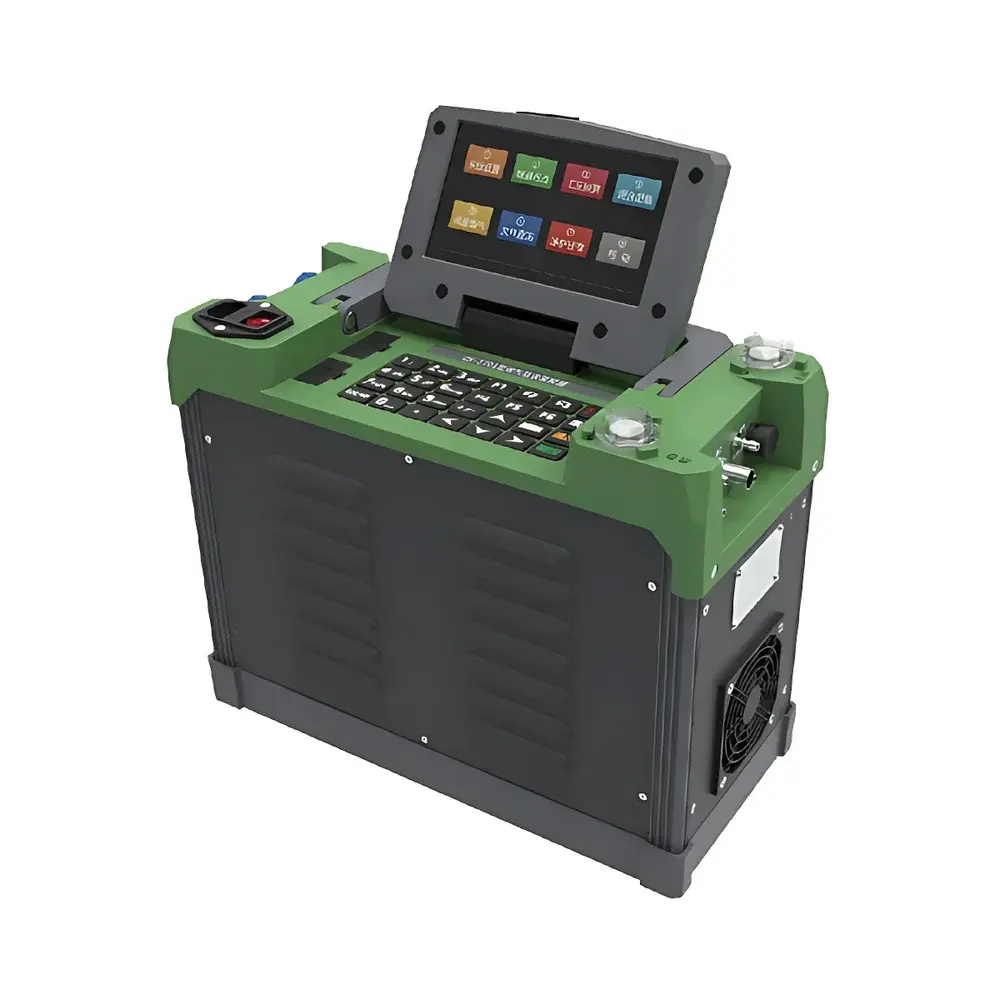
Junray ZR-3701 Flue Gas Total Mercury Sampler
| Brand | Junray |
|---|---|
| Origin | Shandong, China |
| Manufacturer Type | Direct Manufacturer |
| Product Category | Domestic (China-Made) |
| Model | ZR-3701 |
| Sampling Flow Rate | 10–60 L/min |
| Flow Accuracy | ±2.5% |
| Sampling Temperature Range | 0–500 °C |
| Sampled Mercury Species | Particulate-bound and Gaseous Total Mercury |
| Data Storage Capacity | >50,000 records (onboard flash + SD/USB expansion) |
| Pump Max Flow | 100 L/min |
| Integrated Isokinetic Control | Yes |
| Bluetooth Connectivity | Yes |
| Optional Moisture Measurement | Compatible with Capacitive Resistive Humidity Sensor (e.g., ZR-D15A) |
| Heating Control Capability | Yes (for external probe conditioning) |
Overview
The Junray ZR-3701 Flue Gas Total Mercury Sampler is a field-deployable, microprocessor-controlled sampling system engineered for regulatory-compliant collection of total mercury (HgT) from industrial flue gas streams. It quantitatively captures both particulate-bound mercury (Hgp) and gaseous elemental/oxidized mercury (Hg0/Hg2+) using EPA Method 29–compliant isokinetic sampling principles. Designed for continuous operation under harsh stack conditions—including high temperature, high dust loading, and variable moisture content—the instrument integrates real-time flow control, automatic temperature/pressure compensation, and onboard volumetric integration to deliver traceable, audit-ready sample volume calculations per ISO 19734:2020 and HJ 543–2010 (China) requirements.
Key Features
- Isokinetic sampling control via dynamic pitot tube feedback and closed-loop electronic mass flow regulation—ensures representative sampling across fluctuating flue gas velocities (0.5–30 m/s).
- Wide-range operating temperature capability (0–500 °C), supported by integrated PID-controlled heating zones for probe, filter holder, and impinger sections to prevent mercury adsorption or condensation.
- 7.0-inch high-brightness, sunlight-readable TFT display with multi-angle tilt and dual-mode input (capacitive touch + sealed industrial keypad) optimized for gloved operation in cold ambient environments (−20 °C to 50 °C).
- Automatic moisture management: integrated water separator with level-sensing drainage and optional capacitive-resistive humidity sensor (ZR-D15A) for concurrent moisture content determination.
- Robust pneumatic architecture: high-efficiency, low-noise diaphragm pump rated to 100 L/min peak flow; flow stability maintained within ±2.5% of setpoint across full 10–60 L/min range.
- Comprehensive system diagnostics: automated leak detection (pressure decay test), real-time gas path integrity monitoring, and fault logging with descriptive error codes for rapid field troubleshooting.
- Extended data retention: on-device flash memory (>50,000 records), plus expandable storage via SD card or USB drive—supports CSV export and timestamped metadata embedding (GPS optional via Bluetooth tethering).
Sample Compatibility & Compliance
The ZR-3701 supports standardized sampling trains per EPA Method 29, ASTM D6784-22 (Ontario Hydro), and Chinese standard HJ 543–2010. It accommodates quartz fiber filters (for Hgp) followed by dual KCl-coated silica gel impingers (for Hg2+) and gold-coated sand traps (for Hg0). All wet chemistry components are chemically inert and certified mercury-free. The system meets IP54 ingress protection rating, CE marking for electromagnetic compatibility (EMC Directive 2014/30/EU), and conforms to GLP documentation requirements through built-in audit trail functionality—including operator ID, calibration history, and configuration change logs.
Software & Data Management
Field data acquisition and post-processing are managed via embedded firmware with version-tracked calibration parameters and user-accessible configuration templates. Raw data includes time-stamped flow, temperature, pressure, differential pressure (ΔP across pitot), and calculated isokinetic ratio. Bluetooth 4.2 enables secure wireless pairing with certified thermal printers (e.g., Zebra ZQ520) and mobile tablets running Junray’s PC-based DataLink v3.2 software—supporting batch export to LIMS, PDF report generation with digital signature fields, and compliance with FDA 21 CFR Part 11 when deployed with validated user access controls and electronic audit trails.
Applications
- Regulatory stack testing at coal-fired power plants, waste incinerators, cement kilns, and non-ferrous metal smelters.
- Performance verification of mercury control technologies (e.g., activated carbon injection, SCR/Hg oxidation catalysts).
- Source apportionment studies requiring speciated mercury profiles across multiple emission points.
- Method validation and interlaboratory comparison programs under CNAS (China National Accreditation Service) or ILAC frameworks.
- Long-term monitoring campaigns where battery-backed operation and auto-restart after power interruption ensure uninterrupted data continuity.
FAQ
Does the ZR-3701 comply with U.S. EPA Method 29?
Yes—it implements all critical procedural requirements including isokinetic sampling control, temperature-maintained sampling train, and gravimetric/filter-based capture protocols as specified in EPA Method 29, Appendix A.
Can it operate without external power for extended periods?
The unit supports 12 V DC input and is compatible with portable lithium-iron-phosphate (LiFePO4) power stations; runtime exceeds 6 hours at 40 L/min with heated probe enabled.
How is calibration traceability maintained?
All flow sensors are calibrated against NIST-traceable primary standards; calibration certificates include uncertainty budgets and are stored internally with date/time stamps and technician IDs.
Is remote firmware update supported?
Firmware updates are performed via USB or SD card using signed binary packages; no internet connectivity is required during field deployment.
What maintenance intervals are recommended for field use?
Filter cartridges and impinger seals require replacement after each sampling run; pump diaphragms and O-rings are rated for ≥500 hours of continuous operation and documented in the onboard maintenance scheduler.
Related Products







