
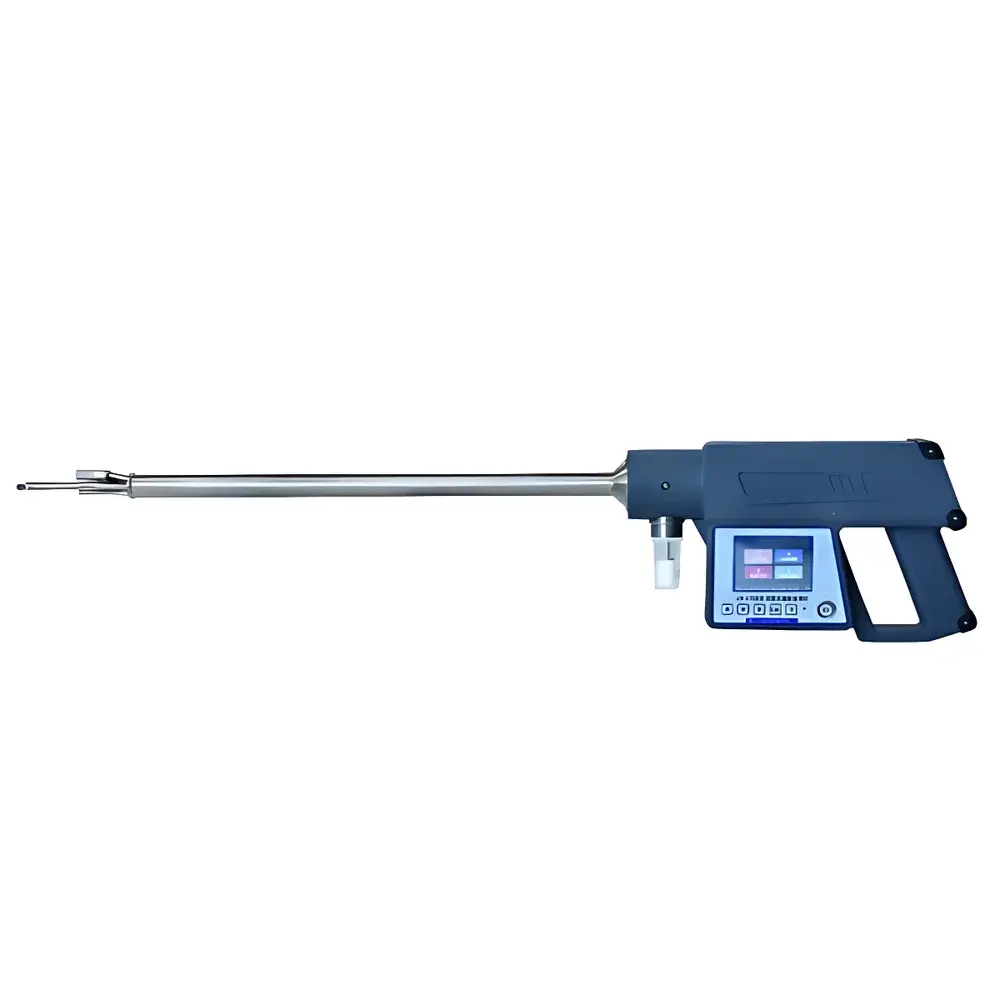
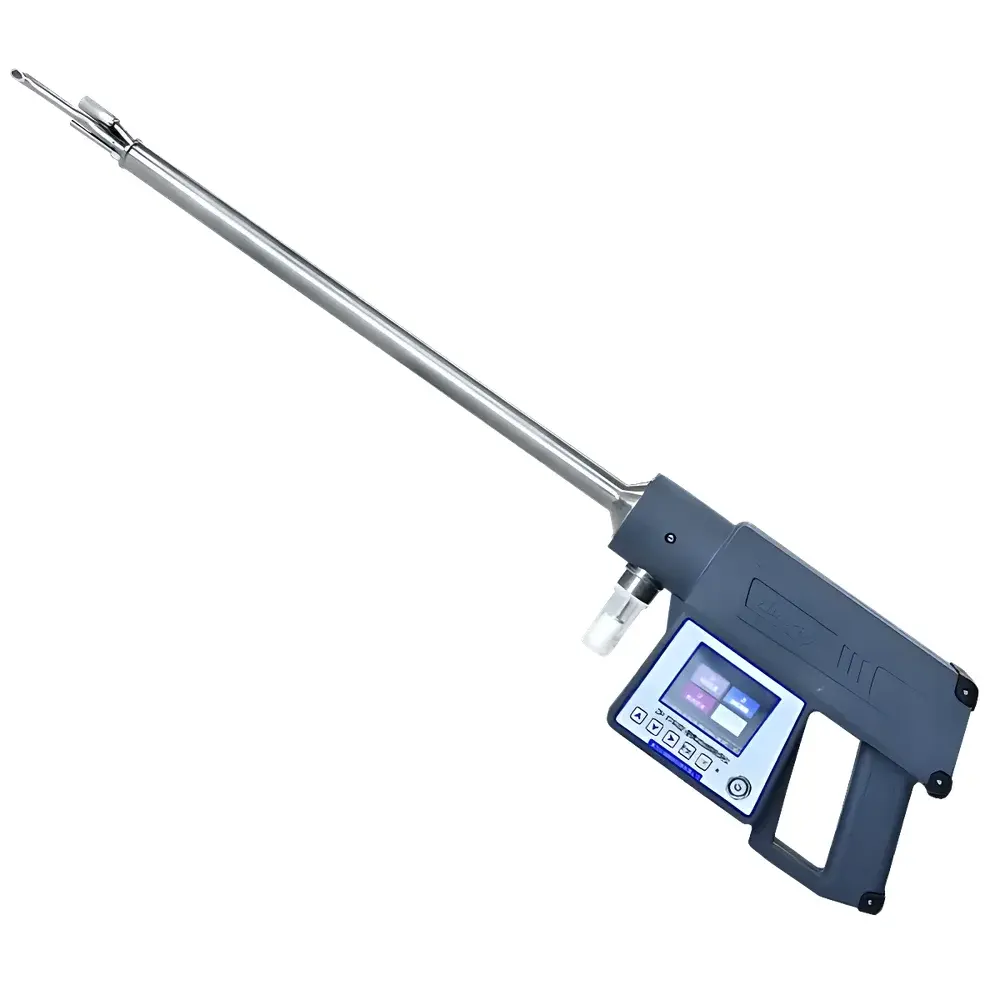
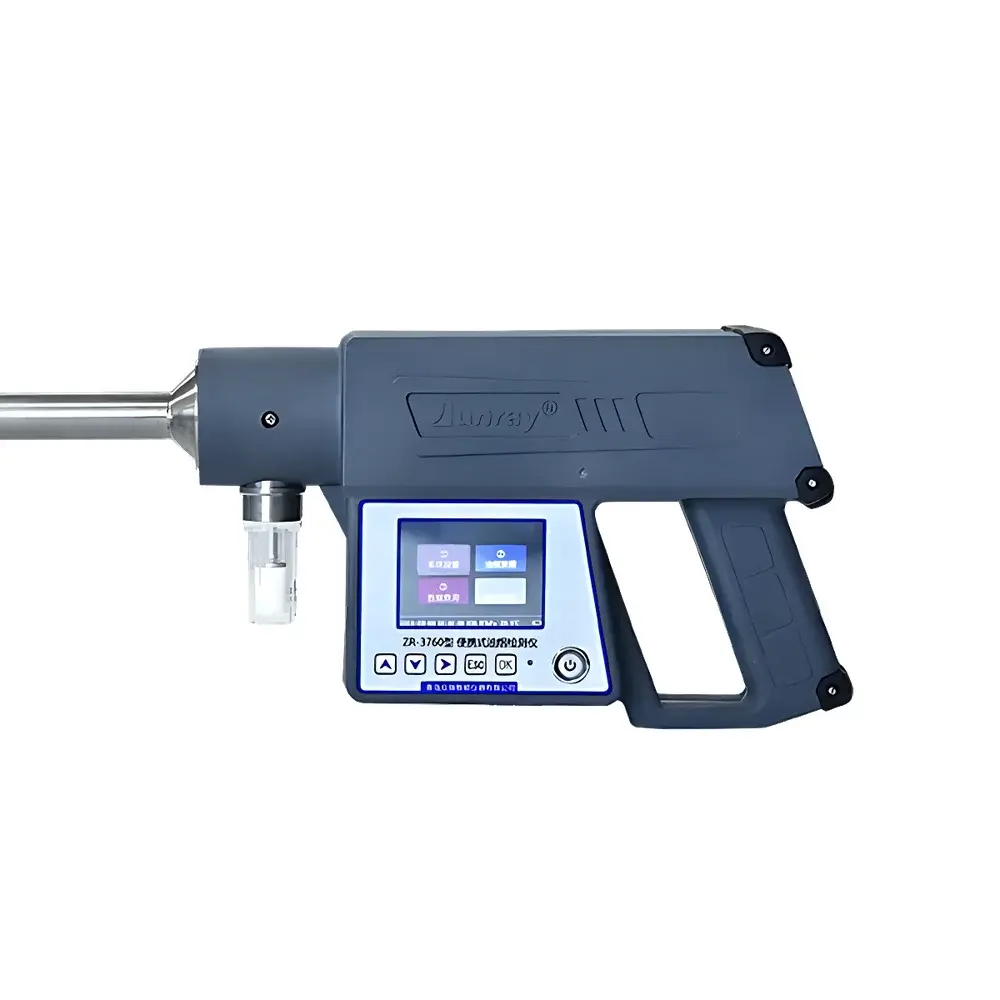
Junray ZR-3760 Portable Oil Fume Concentration Analyzer
| Brand | Junray |
|---|---|
| Origin | Shandong, China |
| Manufacturer Type | Direct Manufacturer |
| Country of Origin | China |
| Model | ZR-3760 |
| Portability | Portable |
| Application Field | Food Service Industry |
| Measurement Principle | Laser Light Scattering with Heated Sampling Line |
| Compliance Standard | SZDB/Z 254–2017 |
Overview
The Junray ZR-3760 Portable Oil Fume Concentration Analyzer is an integrated, real-time field instrument engineered for rapid and reliable quantification of cooking oil fume (COF) mass concentration in exhaust ducts of commercial food service establishments. It operates on the principle of laser light scattering—where aerosolized oil droplets in the sampled gas stream interact with a collimated laser beam, generating scattered light intensity proportional to particle concentration and size distribution within the detectable range. To ensure measurement integrity under high-humidity, low-temperature, and condensable vapor conditions typical of kitchen exhaust streams, the ZR-3760 incorporates a fully heated sampling line (maintained at ≥120 °C) and heated probe tip, preventing condensation-induced bias and wall deposition losses. Sample aspiration is controlled via a precision constant-flow pump, delivering stable volumetric flow rates independent of backpressure fluctuations across variable duct configurations. The analyzer provides direct digital readout in mg/m³ (dry flue gas basis), traceable to gravimetric calibration protocols aligned with SZDB/Z 254–2017.
Key Features
- Integrated heated sampling system (probe, line, and filter housing) maintained at ≥120 °C to suppress condensation and preserve aerosol integrity during transport
- Real-time laser scattering detection with built-in temperature and pressure compensation for dry-standard volume correction
- Constant-flow sampling pump with automatic backpressure regulation (flow stability ±2% over 5–20 kPa differential)
- Rugged, IP54-rated portable chassis with internal rechargeable Li-ion battery supporting ≥4 hours of continuous operation
- Onboard data logging (≥10,000 records) with timestamp, flow rate, temperature, pressure, and concentration values
- Self-diagnostic routines including laser power monitoring, photodetector response verification, and flow sensor calibration status check
Sample Compatibility & Compliance
The ZR-3760 is validated for use with exhaust streams from frying, grilling, steaming, and wok-based cooking operations where oil fume aerosols range from ~0.1–10 µm in aerodynamic diameter. It meets the technical requirements of SZDB/Z 254–2017 “Emission Control Specification for Cooking Oil Fumes in Catering Industry”, including mandatory provisions for heated sampling, isokinetic velocity matching (via optional pitot tube accessory), and reporting in standardized dry flue gas conditions (101.325 kPa, 273.15 K). While not certified to ISO 12103-1 or ASTM D2984 for reference dusts, its optical response has been empirically correlated to gravimetric filter-based measurements per SZDB/Z 254–2017 Annex B procedures. Instrument design adheres to IEC 61000-6-2/6-4 for electromagnetic compatibility and GB/T 18204.1–2013 for environmental air quality instrumentation general requirements.
Software & Data Management
Data acquisition and configuration are managed via the proprietary Junray AirPro Connect desktop software (Windows 10/11 compatible), enabling firmware updates, calibration coefficient management, and batch export of CSV-formatted datasets. Each measurement record includes embedded metadata: GPS coordinates (optional external module), operator ID, duct cross-sectional area input, and sampling duration. Audit trails comply with GLP-aligned documentation practices—software logs all parameter changes, calibration events, and user logins with timestamps. Raw scattering signal waveforms are retained for post-acquisition reprocessing if required for QA/QC review. Exported data conforms to China’s Ministry of Ecology and Environment (MEE) prescribed formats for regulatory submission under local environmental supervision frameworks.
Applications
- Regulatory compliance monitoring for catering enterprises subject to SZDB/Z 254–2017 enforcement in Shenzhen and other municipalities adopting this standard
- Pre-commissioning verification and periodic performance audits of electrostatic precipitators (ESPs) and wet scrubbers in kitchen exhaust treatment systems
- Source apportionment studies correlating cooking methods, oil types, and temperature profiles with real-time emission intensities
- Occupational hygiene assessments in commercial kitchen environments to evaluate staff exposure against GBZ 2.1–2019 occupational exposure limits
- Field validation of CFD-simulated dispersion models for rooftop exhaust plumes in urban mixed-use developments
FAQ
Does the ZR-3760 require annual factory recalibration?
No—field calibration is performed using NIST-traceable zero air and polydisperse oil aerosol reference standards per SZDB/Z 254–2017 Section 7.3. Full recalibration is recommended every 12 months or after 500 operating hours, whichever occurs first.
Can it measure油烟 in high-moisture exhaust streams without drift?
Yes—the heated sampling path eliminates water condensation artifacts; however, sustained exposure to >95% RH may necessitate more frequent optical window cleaning per maintenance schedule.
Is isokinetic sampling mandatory for compliant measurements?
Per SZDB/Z 254–2017 Clause 5.2.2, isokinetic sampling is required for duct velocities exceeding 5 m/s; the ZR-3760 supports integration with optional pitot-static probes and velocity calculation modules to meet this requirement.
What data security protocols does the onboard memory employ?
Internal flash storage uses write-protected sectors for calibration constants and implements timestamped immutable logging—no user-deletable or modifiable records are permitted per audit trail integrity requirements.
Does the instrument support third-party LIMS integration?
Yes—CSV exports include MEE-defined field headers; API access is available via RS232/USB CDC virtual COM port for custom middleware ingestion into laboratory information management systems.
Related Products







