
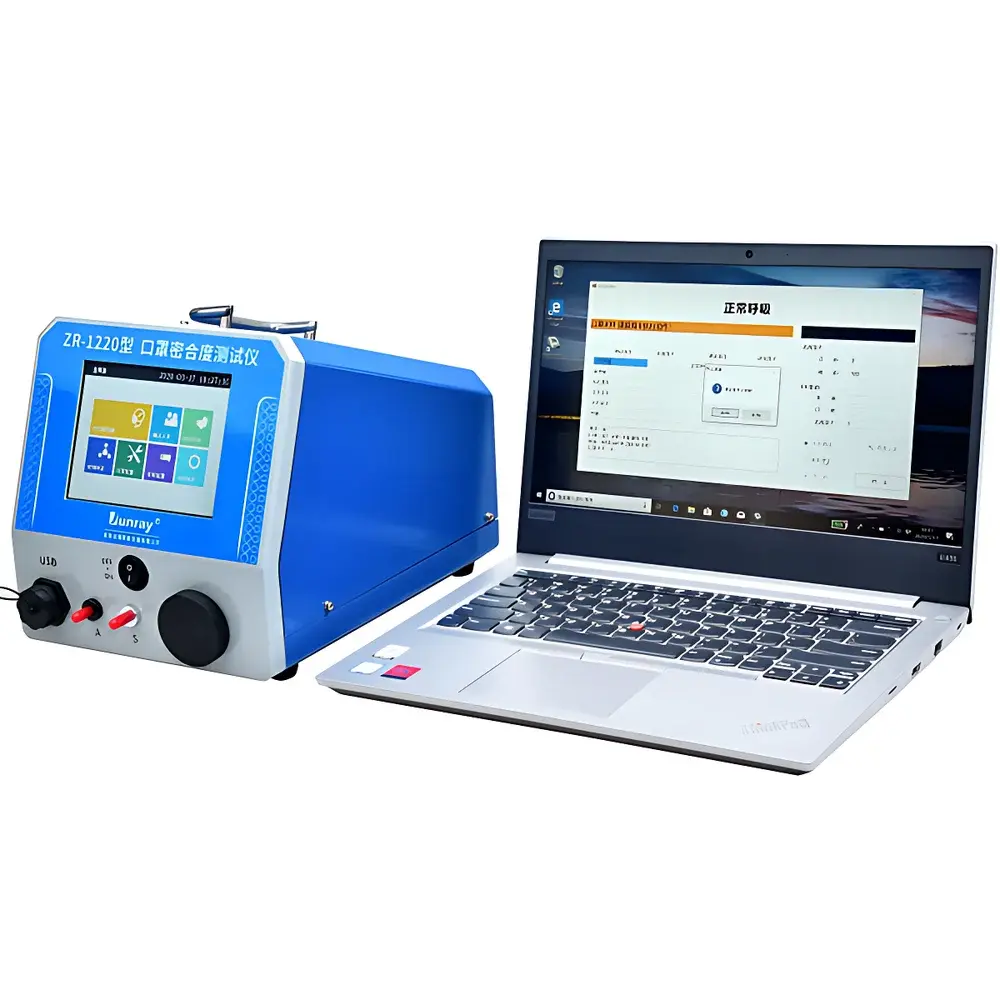
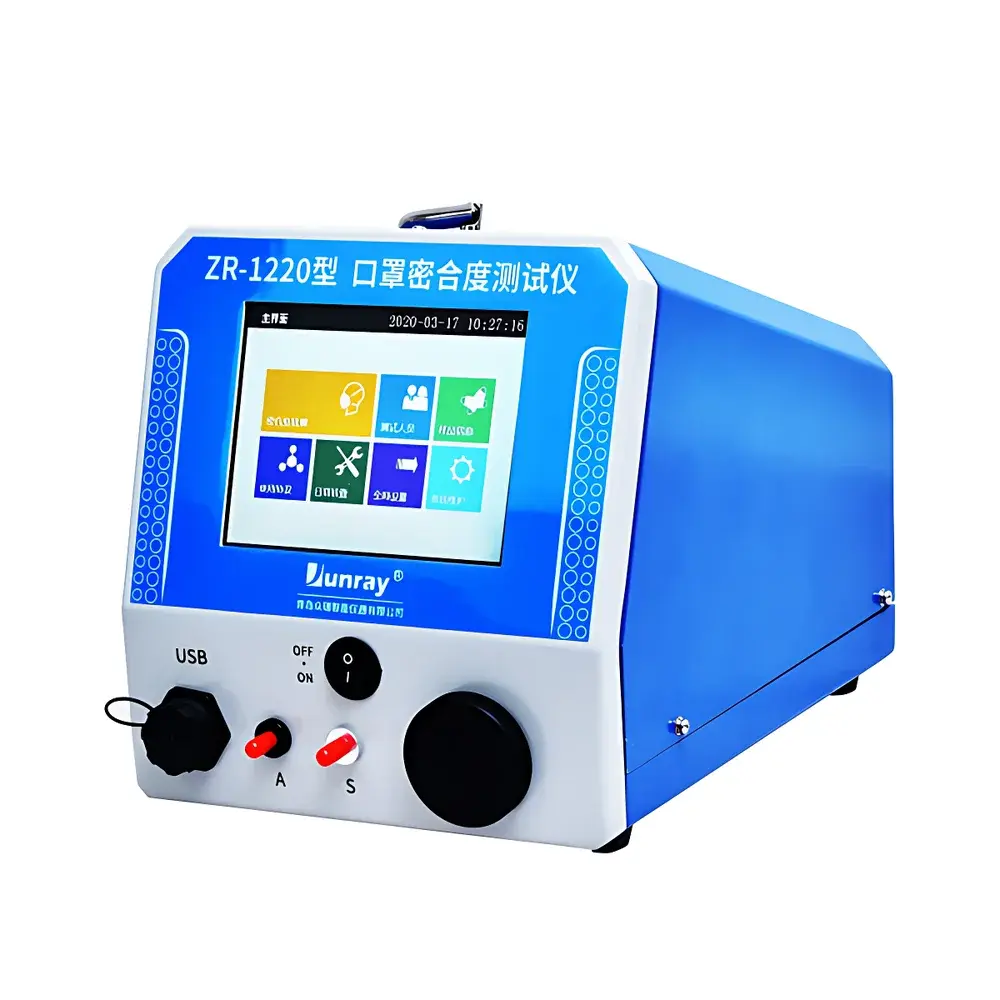
Junray ZR-1220 Respirator Fit Testing System
| Brand | Junray |
|---|---|
| Origin | Shandong, China |
| Manufacturer Type | Direct Manufacturer |
| Country of Origin | China |
| Model | ZR-1220 |
| Pricing | Available Upon Request |
Overview
The Junray ZR-1220 Respirator Fit Testing System is a dedicated, quantitative fit testing instrument engineered for objective assessment of facepiece-to-face seal integrity in N95 respirators, surgical masks, and other tight-fitting respiratory protective devices. It operates on the principle of condensation nucleus counting (CNC), utilizing a calibrated aerosol challenge (typically ambient or generated NaCl or corn oil particles) and real-time particle concentration measurement upstream and downstream of the respirator to calculate the fit factor (FF) — defined as the ratio of ambient particle concentration to that inside the mask. This method complies with the fundamental physical basis of OSHA 29 CFR 1910.134 Appendix A (qualitative and quantitative protocols) and aligns with the quantitative fit test requirements specified in GB 19083–2010 “Technical Requirements for Medical Protective Masks” — particularly Clause 6.6 on “Leakage Test”. The system is designed for use in quality control laboratories, PPE certification bodies, occupational health & safety departments, and medical device R&D facilities where regulatory traceability and repeatable, operator-independent results are mandatory.
Key Features
- Condensation nucleus counter (CNC)-based detection technology ensures high sensitivity and low detection limit (< 0.01 µm particle diameter), enabling accurate quantification of sub-micron leakage pathways.
- Automated measurement chamber purge cycle with integrated HEPA-filtered air supply minimizes carryover between tests and maintains baseline stability.
- Intelligent pneumatic manifold with solenoid-controlled dual-channel airflow routing enables seamless switching between ambient sampling and mask interior sampling without manual valve manipulation.
- 7-inch capacitive touchscreen interface with full Chinese language support, including on-screen keyboard for test subject ID entry, operator notes, and customizable test protocol naming.
- Embedded industrial-grade controller with 8 GB internal flash storage supports local retention of raw time-series particle counts, calculated fit factors, pass/fail status, timestamped metadata, and operator logs — all retained for ≥100,000 test records.
- Multi-standard compliance architecture: pre-configured test templates for OSHA-defined pass thresholds (FF ≥ 100 for half-mask, FF ≥ 500 for full-facepiece), GB 19083–2010 (FF ≥ 100), and user-definable criteria via parameterized logic rules.
Sample Compatibility & Compliance
The ZR-1220 accommodates all standard disposable and reusable respirators with rigid or flexible facepieces, including cup-style, fold-flat, duckbill, and elastomeric half/full-face designs. It does not require mask modification or adapter installation — subjects wear the respirator in its as-used configuration. The system meets mechanical and electrical safety requirements per GB/T 2099.1 and IEC 61010-1. Its measurement methodology is traceable to national particle metrology standards maintained by the National Institute of Metrology (NIM), China. Data integrity and audit readiness are ensured through GLP-compliant operation: all test events generate immutable records with digital signatures, timestamps, and change history — supporting FDA 21 CFR Part 11 and ISO/IEC 17025 documentation requirements when deployed in accredited testing labs.
Software & Data Management
The ZR-1220 includes PC-based FitTest Manager software (Windows 10/11 compatible) for centralized data aggregation, statistical analysis (e.g., mean FF, standard deviation, pass rate per model/batch), and report generation. Export formats include CSV (for LIMS integration), PDF (with embedded QR codes linking to raw data), and XML (for enterprise ERP/MES systems). Software enforces role-based access control (admin/operator/auditor), supports electronic signatures, and maintains full audit trails for all configuration changes, report exports, and user logins. Historical data search filters include date range, subject ID, respirator model, test standard applied, and pass/fail outcome — enabling rapid root-cause analysis during nonconformance investigations.
Applications
- Manufacturers conducting type testing and batch release verification per GB 19083–2010 and ISO 16900-3.
- National and provincial labor protection product quality supervision and inspection institutes performing statutory conformity assessments.
- Hospital infection control units validating staff respirator selection and fit training programs.
- Occupational hygiene laboratories supporting workplace respiratory protection program audits under GBZ 158 and OSHA HCS guidelines.
- Academic and government research institutions studying facial anthropometry effects on seal performance across demographic cohorts.
FAQ
Does the ZR-1220 require external aerosol generation equipment?
No — it operates using ambient particulate matter as the challenge agent; optional built-in or external aerosol generators (e.g., TSI 8026) can be connected for controlled challenge testing under ISO 16900-3 Annex B.
Is calibration certificate included with shipment?
Yes — each unit ships with a factory calibration report traceable to NIM reference standards, valid for 12 months from date of issue.
Can test data be exported to a laboratory information management system (LIMS)?
Yes — via CSV export with configurable field mapping, or through optional OPC UA or REST API integration modules.
What is the maximum number of test subjects supported in a single session?
The system stores unlimited subject profiles locally; session size is limited only by operator workflow — typical throughput is 12–15 subjects per hour with trained personnel.
Does the software support multi-language UI beyond Chinese?
Currently English and Chinese interfaces are fully supported; additional language packs (Spanish, French, Arabic) are available upon request for international deployment.
Related Products




