

Junray ZR-3211H Portable UV Differential Optical Absorption Spectroscopy (DOAS) Flue Gas Analyzer – Hot-Wet Method
| Brand | Junray |
|---|---|
| Origin | Shandong, China |
| Manufacturer Type | Direct Manufacturer |
| Product Category | Domestic |
| Model | ZR-3211H (Hot-Wet Method) |
| Instrument Type | Portable Flue Gas Analyzer |
| Measurement Accuracy | ±5% FS |
| Repeatability | ≤2.0% |
| Response Time | ≤90 s |
| Drift | <5% over 1 h |
| Measured Gases | O₂, SO₂, NO, NO₂, NH₃, CO, H₂S, CO₂ |
Overview
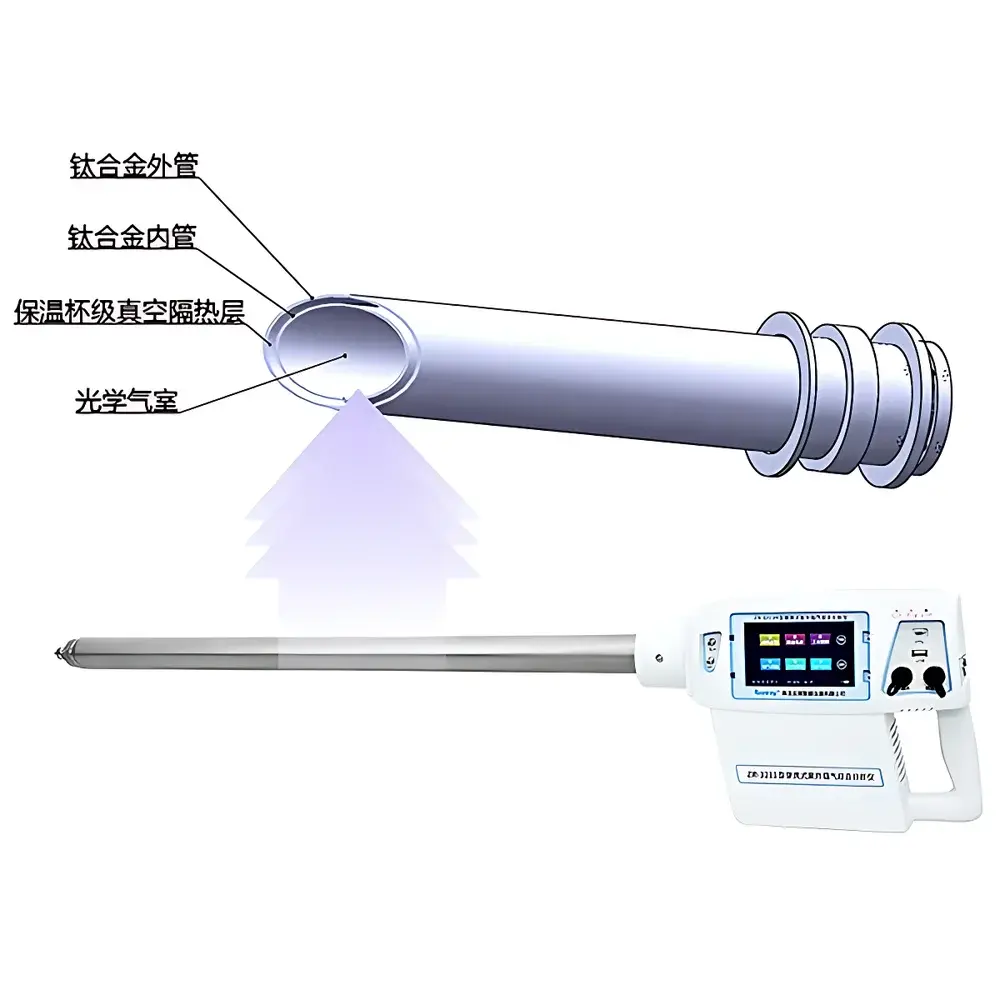
The Junray ZR-3211H is a portable, hot-wet flue gas analyzer engineered for regulatory-compliant, field-deployable measurement of key combustion emissions from stationary sources. It employs ultraviolet differential optical absorption spectroscopy (UV-DOAS) as its primary analytical principle—enabling simultaneous, interference-resistant quantification of SO₂, NO, NO₂, and NH₃ directly in the undiluted, moisture-saturated gas stream. Unlike cold-dry extraction methods, the ZR-3211H maintains the entire optical path—including sampling probe, heated gas cell, and flow manifold—at elevated temperatures (typically >180 °C), eliminating condensation and preventing analyte loss due to aqueous-phase partitioning or chemical conversion (e.g., NO₂ hydrolysis or NH₃ dissolution). This thermal integrity ensures metrological fidelity under high-humidity, low-concentration conditions typical of modern low-NOₓ burners, wet scrubbers, and biomass-fired boilers. The instrument complies with HJ 1131–2020 and HJ 1132–2020—the Chinese national standards governing portable UV absorption-based determination of SO₂ and nitrogen oxides in fixed-source exhaust—and aligns with the technical requirements defined in HJ 1045–2019 for multi-gas UV absorption systems.
Key Features
- Hot-wet UV-DOAS optical module: Full-path heating (>180 °C) of probe, gas cell, and transfer line prevents water condensation and preserves reactive nitrogen species and ammonia integrity.
- Integrated titanium-alloy vacuum-insulated sampling tube: Minimizes thermal loss while maintaining structural rigidity and corrosion resistance in aggressive flue environments.
- Multi-sensor expandability: Standard UV-DOAS core supplemented by electrochemical (O₂, CO, H₂S) and NDIR (CO₂) sensors—each calibrated traceably to NIST-traceable reference gases.
- Onboard parametric compensation: Real-time integration of pitot tube-derived flue gas velocity, thermocouple-measured temperature (0–600 °C), and capacitive-resistive humidity sensing enables automatic dry-base concentration correction per HJ/T 397–2007 and ISO 12141.
- Self-contained power and purge: Rechargeable Li-ion battery supports ≥4 hours of continuous operation; automated post-measurement purge cycle clears residual gas from optical cell and sensor chambers.
- Field-ready interface: High-contrast sunlight-readable display with configurable data views—including mg/m³, ppm, %O₂, excess air coefficient (λ), and normalized emission rates (e.g., kg/h or t/a)—exportable via USB or Bluetooth to certified thermal printers.
Sample Compatibility & Compliance
The ZR-3211H is validated for use across diverse industrial exhaust streams, including coal-, oil-, gas-, and biomass-fired boilers; waste incinerators; cement kilns; and chemical process heaters. Its hot-wet architecture ensures reliable performance in flue gas with moisture content up to 40% v/v and particulate loadings ≤100 mg/m³ (as filtered by integrated sintered metal pre-filter). All measurements adhere to internationally recognized metrological frameworks: calibration traceability follows JJG 968–2002 (Verification Regulation for Flue Gas Analyzers); uncertainty budgets conform to ISO/IEC 17025 principles; and operational protocols satisfy GLP-aligned field audit requirements under China’s Ministry of Ecology and Environment (MEE) monitoring programs. Documentation includes full type evaluation reports per JF 1362–2012 and compliance certificates referencing DB37/T 2704–2015 and DB37/T 2705–2015.
Software & Data Management
The embedded firmware implements dual-mode data handling: real-time acquisition with timestamped spectral logging (raw absorbance vs. wavelength) and processed concentration outputs stored in CSV-compatible binary format. All data entries include metadata tags—operator ID, GPS coordinates (via optional external module), ambient pressure, and calibration verification status—to support chain-of-custody integrity. Exported files are compatible with MEE-mandated reporting platforms (e.g., National Emission Permit Management Information Platform) and third-party QA/QC software such as EPA’s CEMS Data Validator. Audit trails record all configuration changes, zero/span events, and firmware updates—meeting documentation rigor equivalent to FDA 21 CFR Part 11 for electronic records where applicable.
Applications
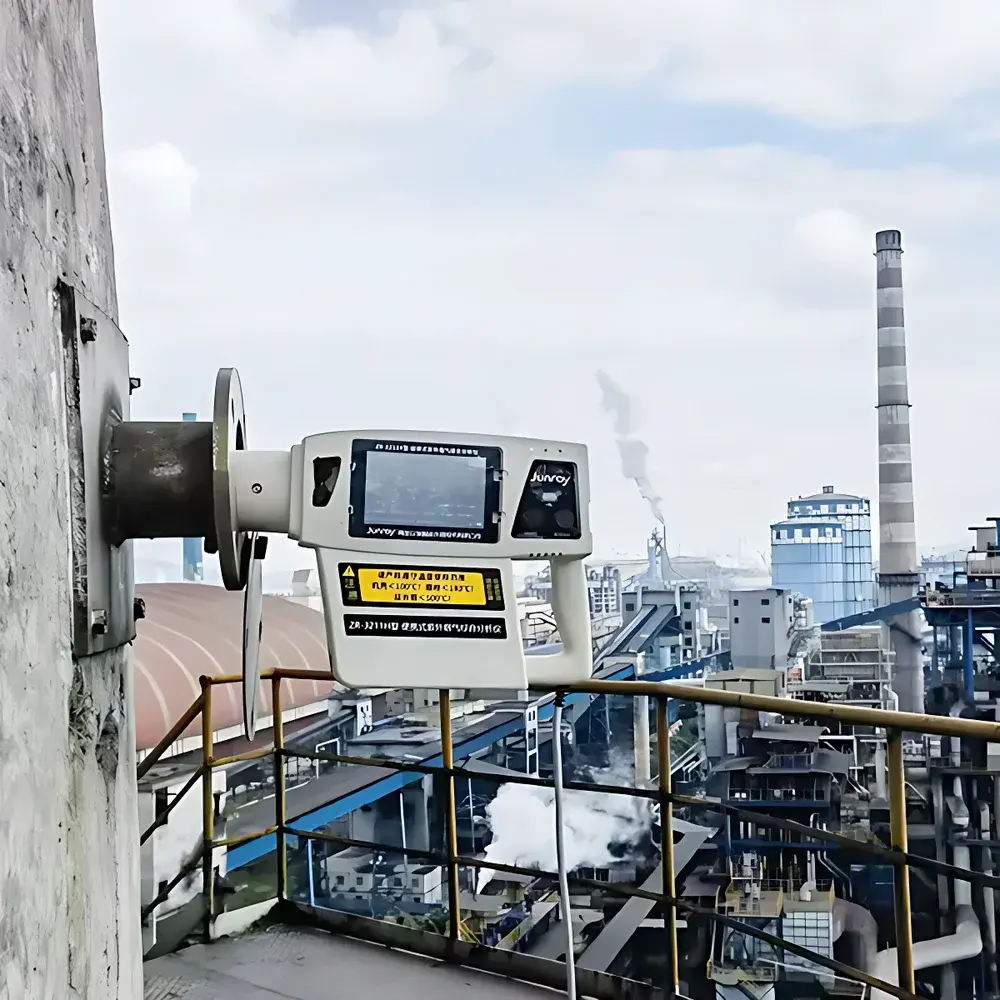
- Regulatory stack testing: Routine compliance verification against GB 13233–2011 (coal-fired power plant emission limits) and local emission standards requiring hot-wet methodology.
- Performance validation: Assessment of DeNOₓ system efficiency (SCR/SNCR), desulfurization unit effectiveness, and ammonia slip in selective catalytic reduction ducts.
- Method comparison studies: Cross-validation of CEMS (Continuous Emission Monitoring Systems) against portable reference methods per HJ/T 397–2007 Annex D.
- Process optimization: In-situ tuning of combustion air ratios, fuel staging, and reagent injection rates based on real-time O₂–NOx–SO₂ co-monitoring.
- Research & development: Kinetic studies of flue gas chemistry under variable temperature/humidity regimes, supporting catalyst and sorbent development.
FAQ
Does the ZR-3211H require external drying or conditioning of the sample gas before analysis?
No. The instrument operates exclusively in hot-wet mode: all critical components—including the optical cell and sampling path—are actively heated to prevent condensation. No permeation dryers, chiller units, or Nafion membranes are used or required.
How is measurement traceability maintained for UV-DOAS channels?
Each UV-DOAS channel is calibrated using certified reference gas mixtures (SO₂, NO, NO₂, NH₃) traceable to NIM (National Institute of Metrology, China) and cross-verified against independent spectrophotometric standards per GB/T 37186–2018.
Can the ZR-3211H be used for unattended long-term monitoring?
It is designed for manual, operator-conducted stack tests—not permanent installation. For continuous monitoring, Junray offers complementary CEMS solutions compliant with HJ 75–2017 and HJ 76–2017.
What maintenance intervals are recommended for field operation?
Optical window cleaning and sensor zero/span verification are advised before each daily deployment; full system calibration is recommended every 90 days or after 200 operating hours, whichever occurs first.
Is the device certified for intrinsically safe operation in explosive atmospheres?
No. The ZR-3211H is rated for general industrial environments (IP54 enclosure). Use in Zone 1/2 hazardous areas requires additional explosion-proof enclosures or purging systems not supplied by default.







