
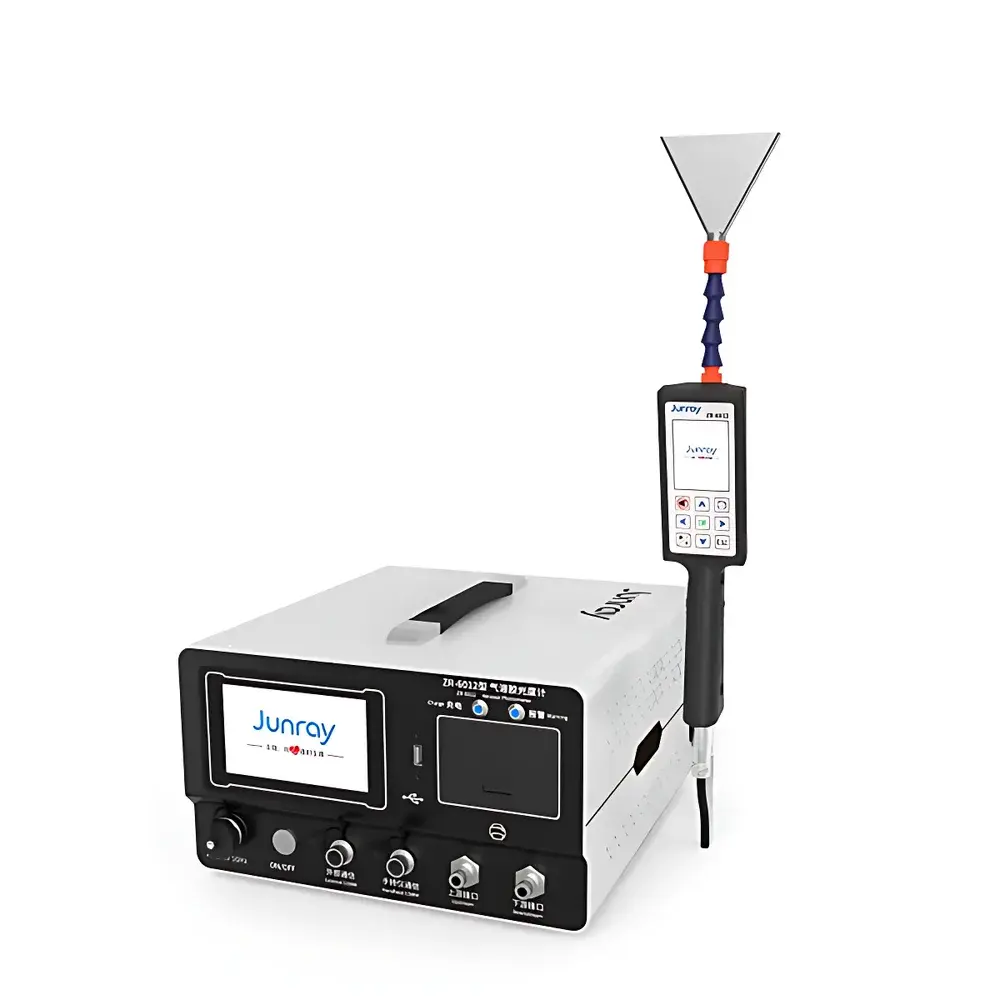
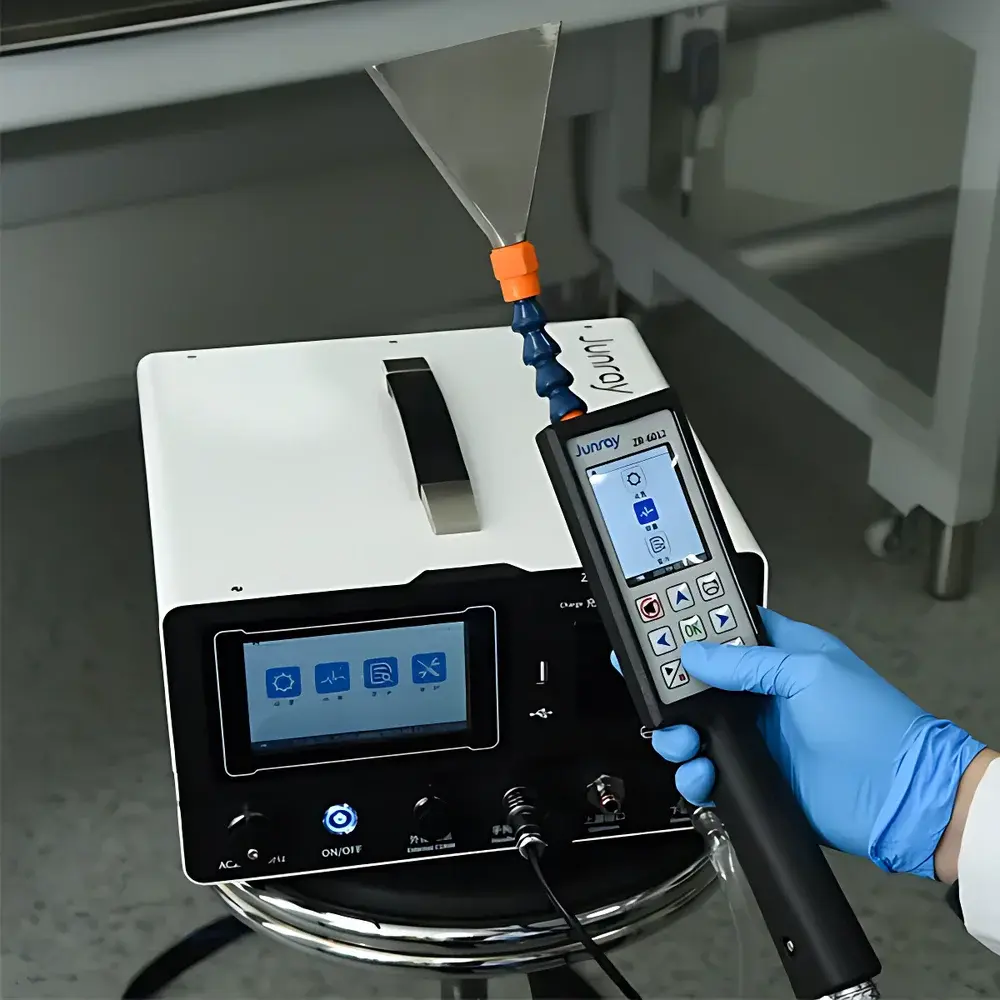
Junray ZR-6012 Aerosol Photometer for HEPA Filter Leak Testing
| Brand | Junray |
|---|---|
| Origin | Shandong, China |
| Manufacturer Type | Direct Manufacturer |
| Product Category | Domestic |
| Model | ZR-6012 |
| Instrument Type | Aerosol Photometer |
| Detection Principle | Mie Scattering |
| Concentration Range | 0.0001–700 μg/L |
| Compliance | JJF 1800–2020, ISO 14644-3:2005, GB 50073–2013, GB 50591–2010, YY 0569–2005, JJF 1815–2020, NSF/ANSI 49–2019 |
Overview
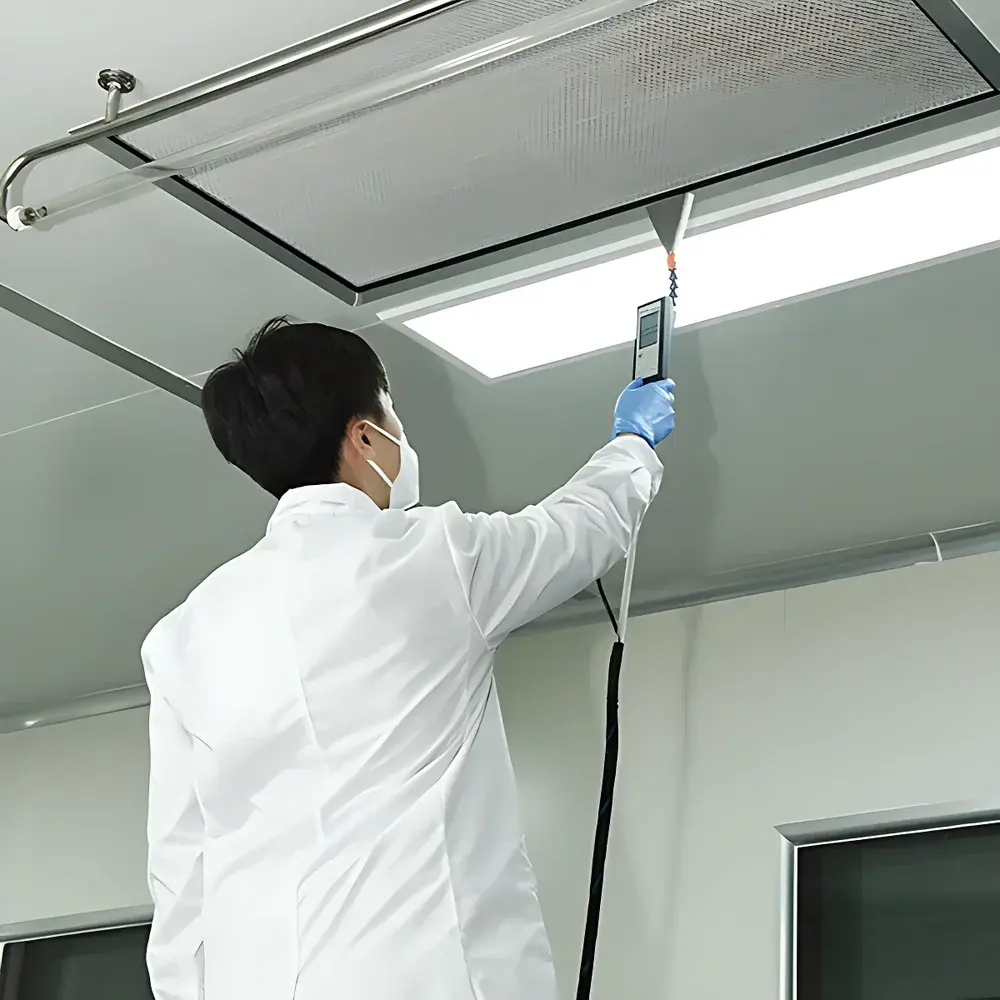
The Junray ZR-6012 Aerosol Photometer is a precision-engineered instrument designed specifically for quantitative leak testing of high-efficiency particulate air (HEPA) and ultra-low penetration air (ULPA) filters in cleanroom environments, pharmaceutical production facilities, biosafety laboratories, and healthcare infrastructure. It operates on the physical principle of Mie scattering—where monochromatic light (typically from a near-infrared or visible LED source) interacts with aerosol particles introduced upstream of the filter (e.g., PAO, DOP, or equivalent challenge agents), generating scattered light intensity proportional to particle mass concentration. The photometer measures downstream aerosol concentration in real time during scanning, enabling calculation of local and integrated leakage ratios per ISO 14644-3:2005 and EU GMP Annex 1 requirements. Its compact form factor, integrated sampling pump, and calibrated optical path ensure high reproducibility across field-deployed applications without requiring external optical benches or laboratory-grade stabilization.
Key Features
- Three-tier user access control (Operator, Supervisor, Administrator) with full audit trail logging compliant with ALCOA+ principles and FDA 21 CFR Part 11 data integrity expectations.
- Detection range spanning 0.0001 to 700 μg/L, supporting both low-level background monitoring and high-concentration challenge validation protocols.
- 7-inch high-resolution capacitive touchscreen interface with intuitive workflow navigation, multilingual UI support (English, Chinese), and context-sensitive help prompts.
- Configurable aerosol type selection (PAO, DOP, OPA, DOS, or custom calibration factors) to accommodate regional regulatory preferences and historical validation records.
- Internal storage capacity ≥100,000 data points with automatic timestamping, location tagging (via optional GPS module), and dual export pathways: USB mass storage and built-in thermal printer (optional).
- Integrated rechargeable Li-ion battery (up to 6 hours continuous operation), enabling fully portable use in unpowered cleanroom zones or remote HVAC ducts.
- Acoustic and visual alarm thresholds configurable per test phase; automatic filter status advisory logic based on cumulative exposure and drift compensation algorithms.
Sample Compatibility & Compliance
The ZR-6012 is validated for use with standardized polyalphaolefin (PAO-4), di(2-ethylhexyl) sebacate (DEHS), and dioctyl phthalate (DOP) aerosols generated by certified atomizers such as the Junray ZR-1320 Aerosol Generation and Mixing Unit. It meets metrological traceability requirements defined in JJF 1800–2020 (Calibration Specification for Aerosol Photometers) and supports routine verification against NIST-traceable reference standards. Regulatory alignment includes ISO 14644-3:2005 (cleanroom testing methodology), GB 50591–2010 (Chinese cleanroom construction and acceptance), YY 0569–2005 and JJF 1815–2020 (biosafety cabinet certification), and NSF/ANSI 49–2019 (performance and field certification of biosafety cabinets). All firmware and calibration routines are developed under GLP-compliant design controls and support full documentation packages for GMP audits.
Software & Data Management
Data acquisition, visualization, and reporting are managed via embedded firmware with no external PC dependency. Raw analog-to-digital conversion occurs at ≥16-bit resolution with 100 Hz sampling frequency. Exported CSV files contain column headers aligned with ISO/IEC 17025 reporting conventions—including instrument ID, operator ID, date/time stamp, location identifier, aerosol type, upstream concentration, downstream reading, calculated leak percentage, pass/fail flag, and digital signature hash. Optional PC-based analysis software (Junray AeroView™) enables batch report generation, trend analysis across multiple filter banks, and integration with LIMS via HL7 or ASTM E1384-compliant interfaces. Audit logs record all parameter changes, user logins, calibration events, and error conditions with immutable timestamps.
Applications
- On-site HEPA/ULPA filter integrity testing in ISO Class 5–8 cleanrooms per EU GMP Annex 1 and USP <797>/<800>.
- Leak detection and quantification for Class II and III biological safety cabinets during commissioning, periodic requalification, and after maintenance.
- Validation of laminar airflow workstations, isolators, and aseptic processing enclosures.
- Performance verification of HVAC terminal filters in hospital operating theaters and pharmaceutical manufacturing suites.
- Calibration and performance verification of other aerosol photometers using transfer standard methodology per JJF 1800–2020.
- Supporting risk-based qualification strategies where differential pressure, airflow uniformity, and particle count data are correlated with photometric leak results.
FAQ
What aerosol agents are compatible with the ZR-6012?
PAO-4, DOP, DEHS, OPA, and DOS are natively supported; custom calibration factors can be loaded for alternative challenge agents.
Does the instrument require annual recalibration?
Yes—calibration must be performed annually against NIST-traceable reference aerosols per JJF 1800–2020 and ISO 14644-3 requirements.
Can the ZR-6012 be used for upstream concentration monitoring only?
Yes—standalone upstream mode allows real-time monitoring of generator output stability during filter challenge protocols.
Is the device suitable for outdoor or industrial dust monitoring?
No—it is optimized for controlled cleanroom environments and calibrated exclusively for oil-based challenge aerosols, not ambient particulate matter (PM2.5/PM10).
How is data integrity ensured during field use?
Through encrypted local storage, electronic signatures, time-stamped audit trails, and password-protected configuration locks—all aligned with FDA 21 CFR Part 11 Subpart C.







