
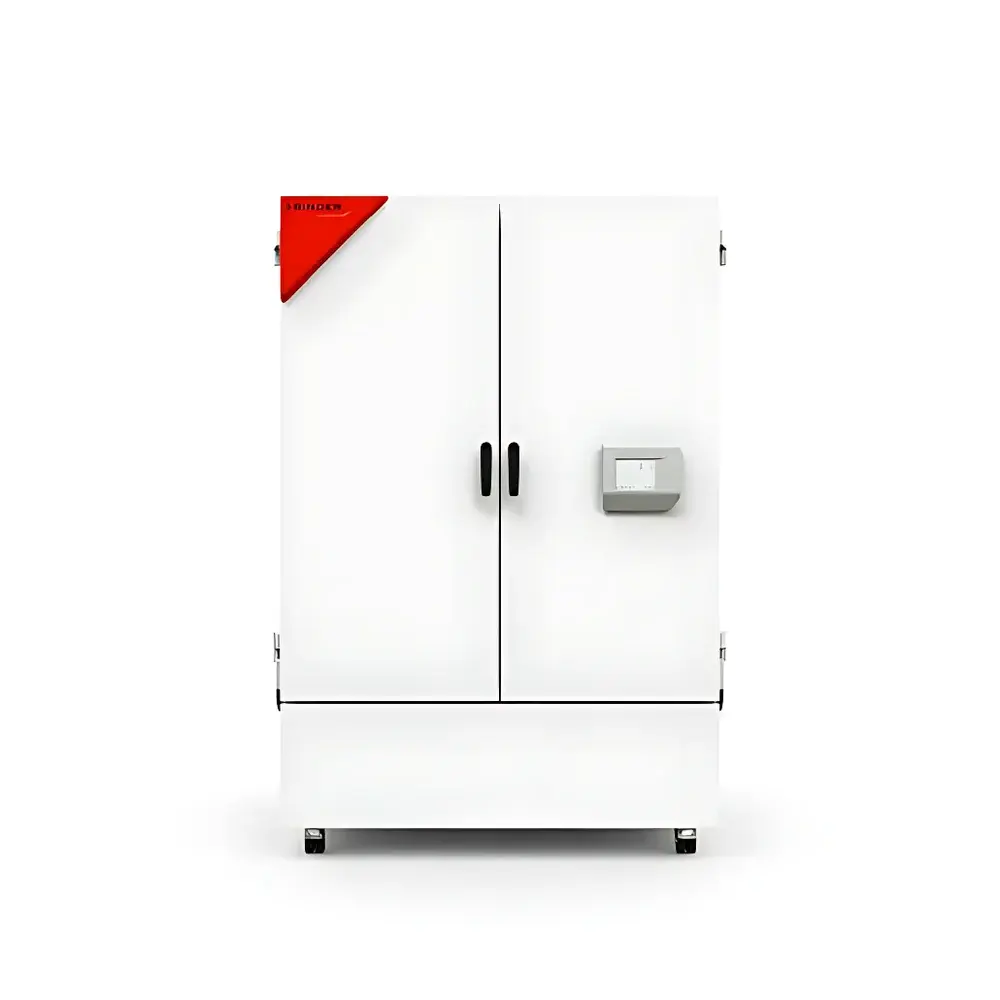
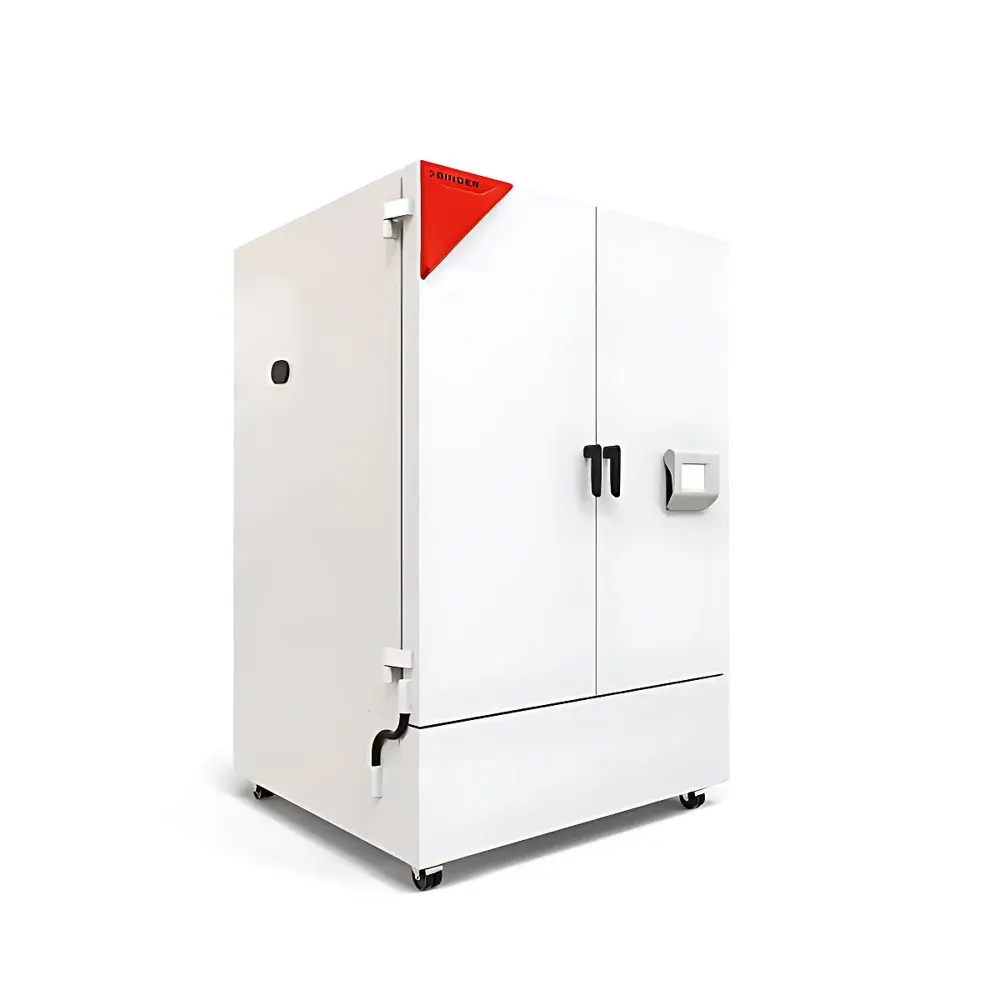
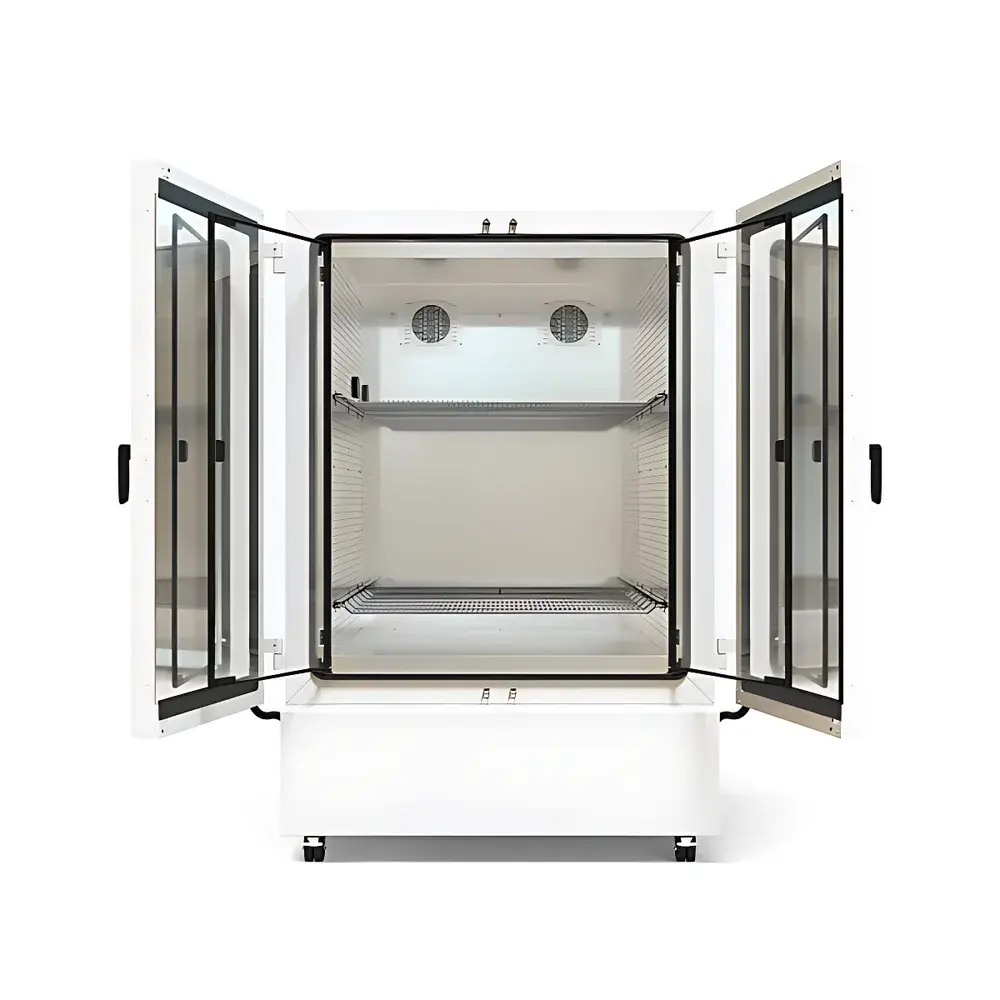
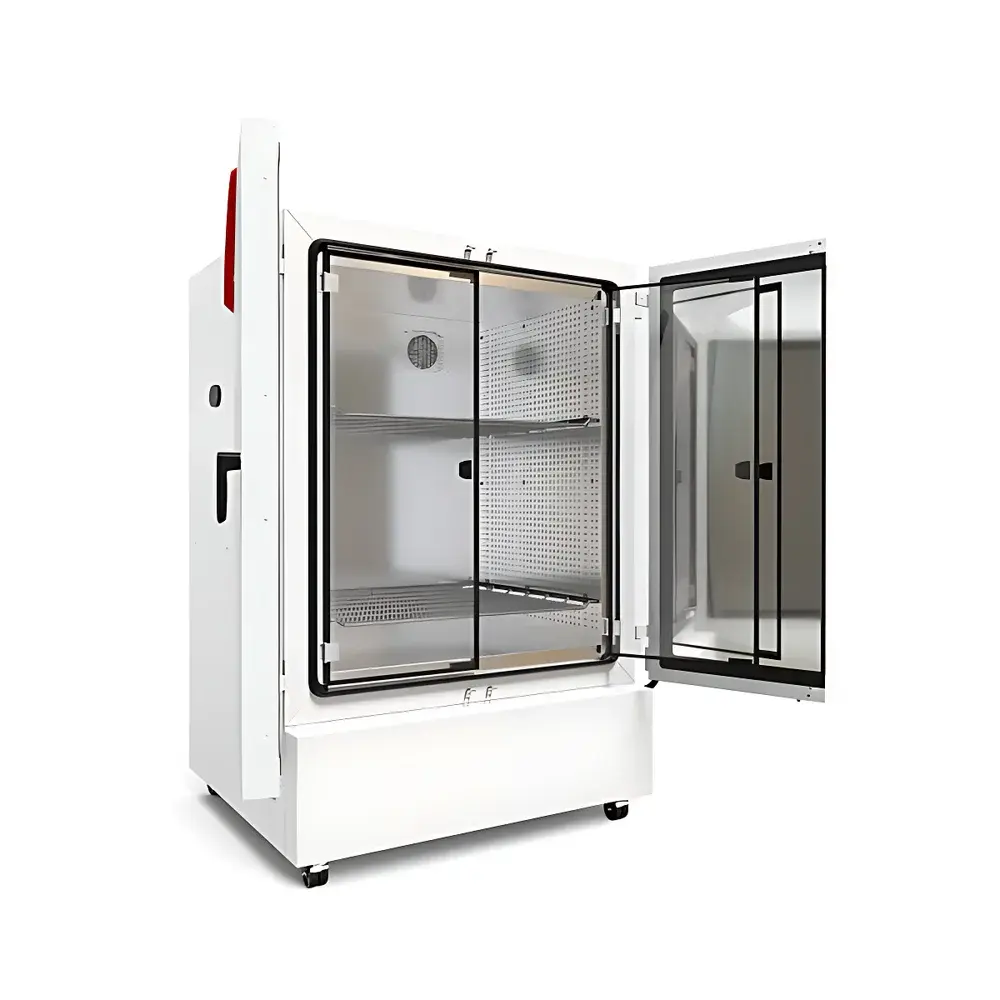
BINDER KBF 1060 Temperature and Humidity Controlled Chamber
| Brand | BINDER |
|---|---|
| Origin | Germany |
| Manufacturer | BINDER GmbH |
| Type | Upright Environmental Test Chamber |
| Condensation Method | Water-Cooled |
| Temperature Range | 0 °C to +70 °C |
| Humidity Range | 10 % RH to 80 % RH |
| Temperature Uniformity | ±0.1 °C |
| Humidity Uniformity | ±1.5 % RH |
| Interior Dimensions (W×D×H) | 1011 mm × 1250 mm × 847 mm |
| Refrigerant | R-600a |
Overview
The BINDER KBF 1060 is a high-precision, upright temperature and humidity controlled chamber engineered for long-term stability testing in compliance with International Council for Harmonisation (ICH) guidelines—specifically Q1A(R2), Q1B, Q5C, and Q5D. It operates on a dual-control principle combining active refrigeration via an inverter-driven compressor system and precise steam-based humidification, enabling stable, reproducible environmental conditions across its full operational range. The chamber’s core architecture integrates BINDER’s proprietary APT.line™ preheating technology, which ensures uniform thermal distribution by heating the outer jacket prior to chamber air circulation—minimizing thermal gradients even under full load. This design is critical for pharmaceutical stability studies where spatial consistency directly impacts degradation kinetics and shelf-life predictions. Constructed with a double-walled HIT-insulated housing and a fully welded stainless steel interior (AISI 304), the KBF 1060 meets stringent requirements for corrosion resistance, cleanability, and long-term operational integrity in GMP-compliant environments.
Key Features
- APT.line™ preheating technology delivering ≤ ±0.1 °C temperature uniformity and ≤ ±1.5 % RH humidity uniformity across the entire 1.07 m³ working volume (1011 × 1250 × 847 mm)
- Inverter-controlled refrigeration system using eco-friendly R-600a refrigerant, reducing energy consumption by up to 40% versus previous-generation units
- Capacitive humidity sensor coupled with rapid-response steam humidification for accurate, drift-resistant RH control between 10–80 % RH
- Water-cooled condenser optimized for continuous operation in ambient temperatures up to +35 °C; compatible with standard laboratory cooling water supply systems
- Stainless steel inner chamber with electropolished finish and safety glass inner door coated with metal oxide for UV transparency and condensation resistance
- Intuitive 7-inch color touchscreen controller with real-time, multi-segment programming, optical/audible alarms, and status-indicating red triangle icon per DIN EN 61000-6-4
- Dual swivel casters with locking front wheels for secure positioning; large-diameter access port (Ø80 mm) fitted with silicone plug for cable routing and sensor integration
Sample Compatibility & Compliance
The KBF 1060 supports diverse sample configurations—including stacked trays, open petri dishes, sealed vials, and blister-packed tablets—without compromising climatic homogeneity. Its stainless steel interior and smooth, crevice-free surfaces comply with ISO 14644-1 Class 7 cleanroom maintenance protocols and facilitate routine cleaning validation per EU GMP Annex 1. The unit conforms to DIN 12880 Class 3.3 for independent temperature safety cutoff, featuring redundant monitoring and optical/sound alarm activation. All control logic and data logging meet FDA 21 CFR Part 11 requirements when used with APT-COM™ software, supporting electronic signatures, audit trails, and role-based access control. Documentation packages include IQ/OQ protocols aligned with ASTM E2500 and ICH Q5C Annex 1.
Software & Data Management
Data acquisition and remote supervision are enabled via integrated Ethernet and USB interfaces. Internal measurement values—including chamber temperature, relative humidity, setpoint deviations, and alarm events—are stored in open CSV format for traceability and third-party LIMS integration. BINDER’s APT-COM™ Basic software provides real-time monitoring, automated report generation (PDF/Excel), and configurable email/SNMP alerts. For advanced workflow automation, optional modules support 21 CFR Part 11-compliant electronic records, including user authentication logs, change history, and digital signature capture. All firmware updates are delivered via encrypted HTTPS channels and validated through SHA-256 checksum verification.
Applications
The KBF 1060 is routinely deployed in pharmaceutical QC/QA laboratories for ICH Q1-compliant accelerated stability studies (e.g., 40 °C / 75 % RH), long-term storage condition testing (25 °C / 60 % RH), and intermediate condition assessments. It also serves biotechnology applications such as cell culture matrix aging, excipient compatibility screening, and lyophilized product reconstitution stability. In academic research, it supports polymer degradation kinetics, seed germination trials under controlled hygrothermal stress, and material science investigations of moisture-induced phase transitions. Optional photostability light modules (IEC 60601-2-57 compliant) enable concurrent light exposure per ICH Q1B, while plant growth LED arrays support controlled-environment phenotyping studies.
FAQ
What ICH guidelines does the KBF 1060 support?
It is validated for ICH Q1A(R2), Q1B, Q5C, and Q5D, with documented performance across all required temperature/humidity combinations and spatial uniformity thresholds.
Is the chamber suitable for GMP-regulated environments?
Yes—its stainless steel construction, validated control algorithms, and APT-COM™ software with 21 CFR Part 11 functionality support full GMP audit readiness.
Can humidity be maintained below 10 % RH?
No—the specified operational humidity range is 10–80 % RH; sub-10 % RH requires desiccant-based or nitrogen-purged systems.
Does the unit support external probe inputs for product temperature monitoring?
Yes—via the standard 4-channel analog input interface (0–10 V / 4–20 mA), compatible with PT100, thermocouple, or digital probes.
What maintenance intervals are recommended for the water-cooled condenser?
Cooling water quality must meet VDI 2047 Sheet 2 specifications; annual inspection of heat exchanger fouling and pH stabilization is advised.



