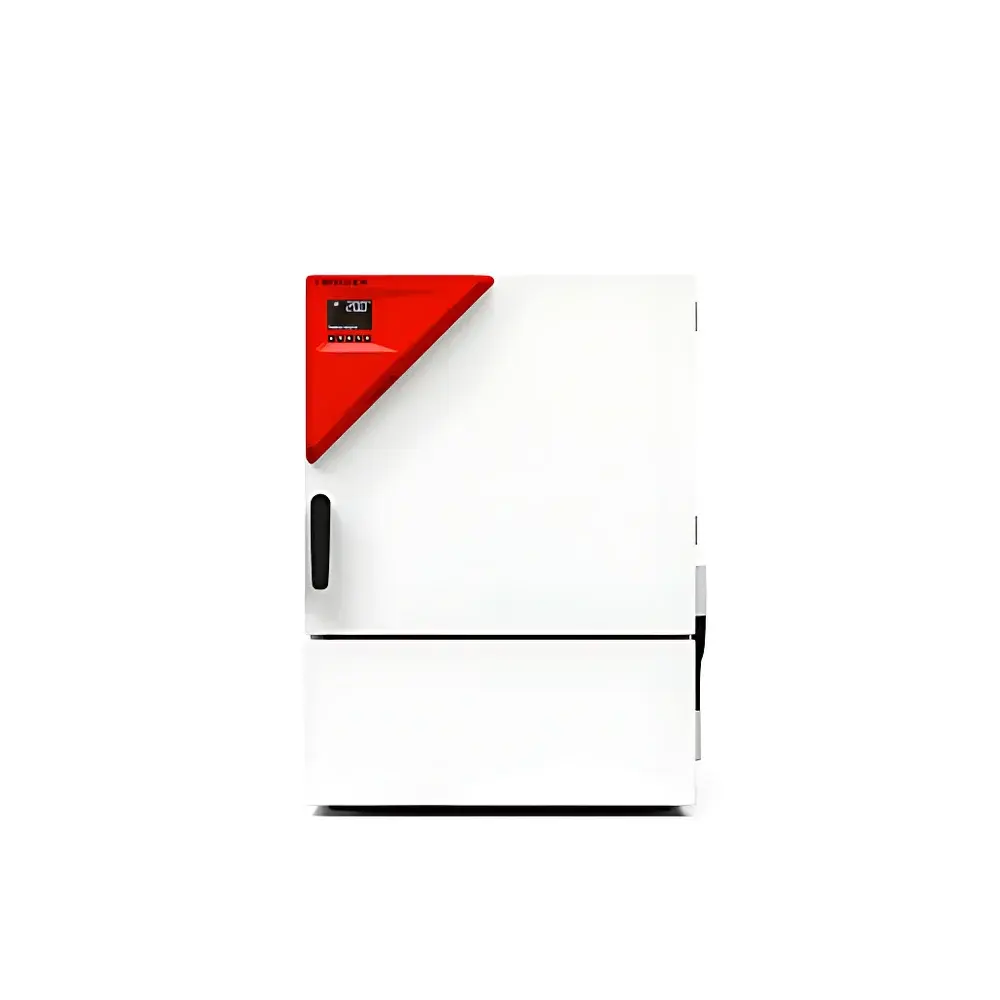
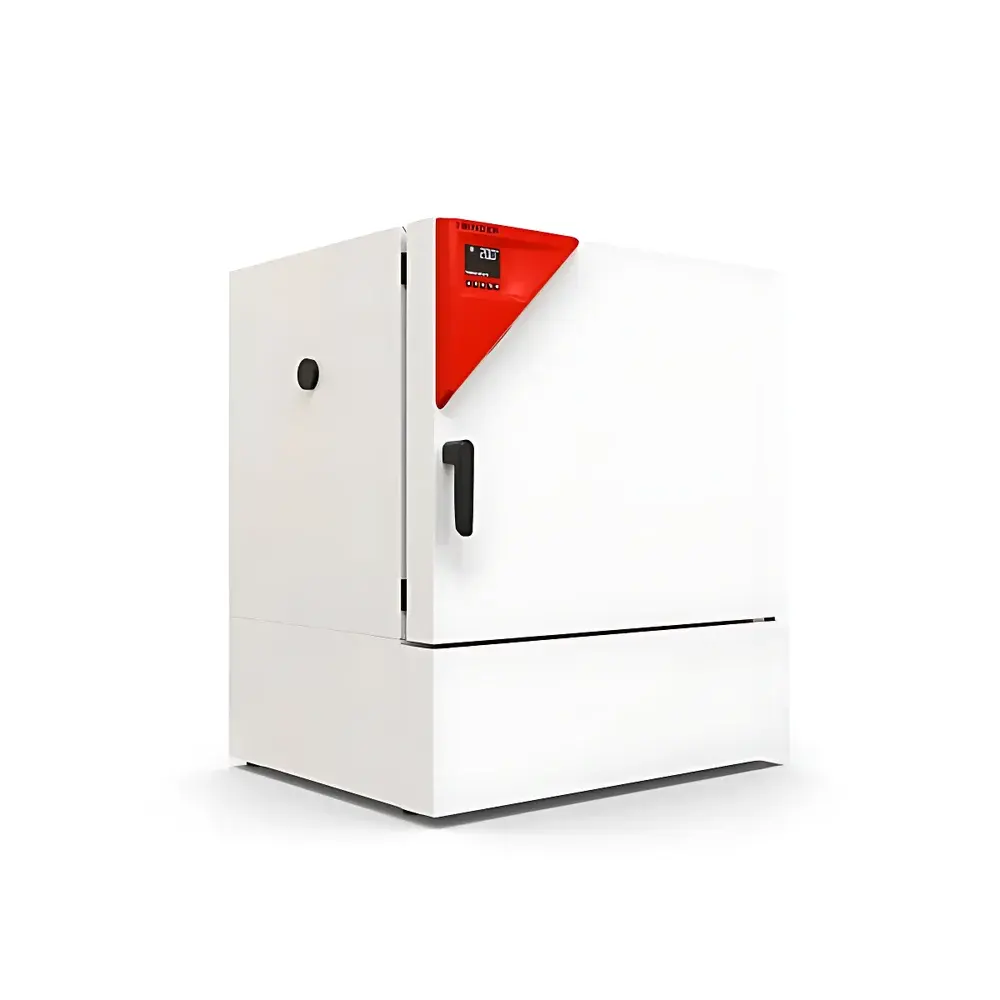
BINDER KB PRO 130 Low Temperature Incubator
| Brand | BINDER |
|---|---|
| Origin | Germany |
| Manufacturer | BINDER GmbH |
| Type | Imported |
| Model | KB PRO 130 |
| Cooling Method | Compressor-based refrigeration |
| Heating Method | Water-jacketed heating |
| Temperature Range | −20 °C to +100 °C |
| Temperature Stability | ±0.1 K |
| Temperature Uniformity | ±0.2 K (at 37 °C) |
| Chamber Volume | 127 L |
| External Dimensions (W × H × D) | 900 mm × 1005 mm × 710 mm |
Overview
The BINDER KB PRO 130 is a precision-engineered low-temperature incubator designed for demanding life science applications requiring stable, wide-range thermal control from −20 °C to +100 °C. Built upon BINDER’s proprietary APT.line™ preheating chamber technology, the unit ensures rapid temperature equilibration and exceptional long-term stability—critical for sensitive cell culture, cryobiology, enzyme kinetics, and stability testing protocols. Unlike conventional air-jacketed or forced-convection incubators, the KB PRO 130 employs a dual-mode thermal architecture: water-jacketed heating for uniform, vibration-free warmth and a high-efficiency variable-speed compressor system for precise, energy-optimized cooling. Its stainless-steel inner chamber (AISI 304), HIT-insulated outer casing, and optically coated safety glass inner door collectively deliver mechanical robustness, corrosion resistance, and condensation-free visibility—essential attributes for GLP-compliant laboratories and ISO 17025-accredited facilities.
Key Features
- APT.line™ preheating chamber technology enabling uniform heat distribution and minimized thermal gradients across the entire 127 L working volume
- Variable-frequency compressor refrigeration system using environmentally compliant R-290 refrigerant, reducing energy consumption by up to 30% compared to fixed-speed alternatives
- Water-jacketed heating circuit providing stable, ripple-free thermal input with no airflow-induced sample disturbance
- Touchscreen controller with real-time, multi-segment programmability and ergonomic height adjustment (standard on KB PRO 470+, optional retrofit for KB PRO 130)
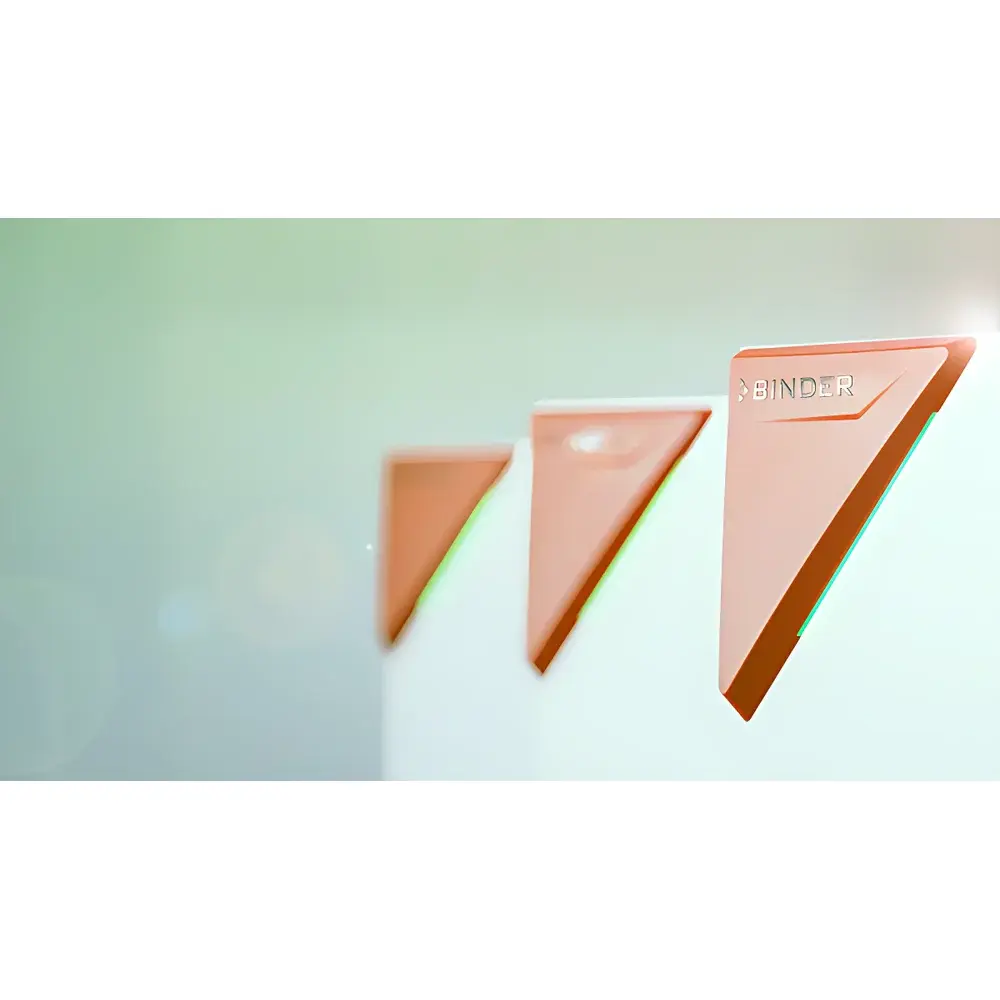
- Red triangular status indicator with integrated optical and acoustic alarm signaling—compliant with DIN 12880 Class 3.3 independent temperature safety monitoring
- Two telescopic stainless-steel shelves with smooth-glide rails; large-diameter access port (Ø60 mm) fitted with silicone plug for external probe integration or gas line routing
- Integrated data logger with USB export capability (CSV format); Ethernet interface for networked device management via BINDER APT-COM™ Basic software
- Optional upgrade paths: ICH Q1B-compliant LED light module (for photostability testing per ICH guidelines) and plant-growth-optimized LED spectrum module (available for KB PRO 260 and above)
Sample Compatibility & Compliance
The KB PRO 130 accommodates standard laboratory vessels—including Petri dishes, multiwell plates, flasks (up to 2 L), and cryovial racks—without compromising thermal homogeneity. Its stainless-steel interior and seamless chamber corners support rigorous cleaning and sterilization protocols (e.g., VHP or 70% ethanol wipe-down). The unit complies with key international standards including DIN EN 61000-6-2 (EMC immunity), DIN EN 61000-6-3 (EMC emission), and DIN 12880:2015-05 (incubator safety classification). Its independent Class 3.3 temperature safety device satisfies regulatory expectations for critical biological storage, aligning with FDA 21 CFR Part 11 requirements when used with APT-COM™ software-enabled audit trails. All firmware and controller logic are validated under BINDER’s internal GLP-aligned design control procedures.
Software & Data Management
BINDER APT-COM™ Basic software provides local and remote configuration, real-time parameter visualization, and automated data export in open CSV format—ensuring full traceability without vendor lock-in. The built-in internal logger records temperature at user-defined intervals (1–60 min) for up to 30 days, with time-stamped entries and event markers (e.g., door openings, alarm triggers). Ethernet connectivity enables integration into centralized lab infrastructure via TCP/IP, supporting SNMP monitoring and Syslog forwarding for enterprise-level IT oversight. Optional APT-COM™ Professional unlocks advanced features including multi-device scheduling, electronic signature workflows, and 21 CFR Part 11-compliant user access controls with role-based permissions and immutable audit logs.
Applications
- Low-temperature cell culture of cold-adapted mammalian or insect lines (e.g., CHO-K1 at 30 °C, Sf9 at 27 °C)
- Long-term stability studies per ICH Q5C (protein therapeutics) and Q1A(R3) (drug substances), particularly under accelerated conditions (e.g., 40 °C/75% RH simulated via external humidifier coupling)
- Cryopreservation workflow staging—controlled-rate thawing protocols between −20 °C and +4 °C
- Enzyme activity profiling across broad thermal ranges, including psychrophilic and thermophilic isoforms
- Material compatibility testing of packaging components under cyclic thermal stress
- Pre-incubation conditioning for MALDI-TOF sample preparation and PCR master mix equilibration
FAQ
What is the maximum ambient temperature rating for continuous operation?
The KB PRO 130 is rated for uninterrupted use at ambient temperatures up to 30 °C (86 °F) with relative humidity ≤70% non-condensing.
Can the unit be stacked with other KB PRO models?
Yes—the KB PRO 130 is a benchtop model and supports vertical stacking using BINDER’s certified stack adapter kit (Order No. A-2000-0001), provided structural load limits and ventilation clearances are observed.
Is the water jacket filled with deionized water or glycol solution?
The water jacket requires only deionized or distilled water; glycol is not recommended as it may impair thermal conductivity and accelerate corrosion of the stainless-steel jacket cavity.
Does the unit support external CO₂ or O₂ control integration?
No—the KB PRO 130 is a temperature-only incubator. For gas-controlled environments, consider the BINDER CB series CO₂ incubators or custom-engineered hybrid systems via BINDER Engineering Services.
How frequently does the internal data logger require calibration verification?
Per BINDER’s maintenance recommendation, sensor verification should occur annually using NIST-traceable reference probes; full recalibration is advised every 24 months or after any physical impact or firmware update.