
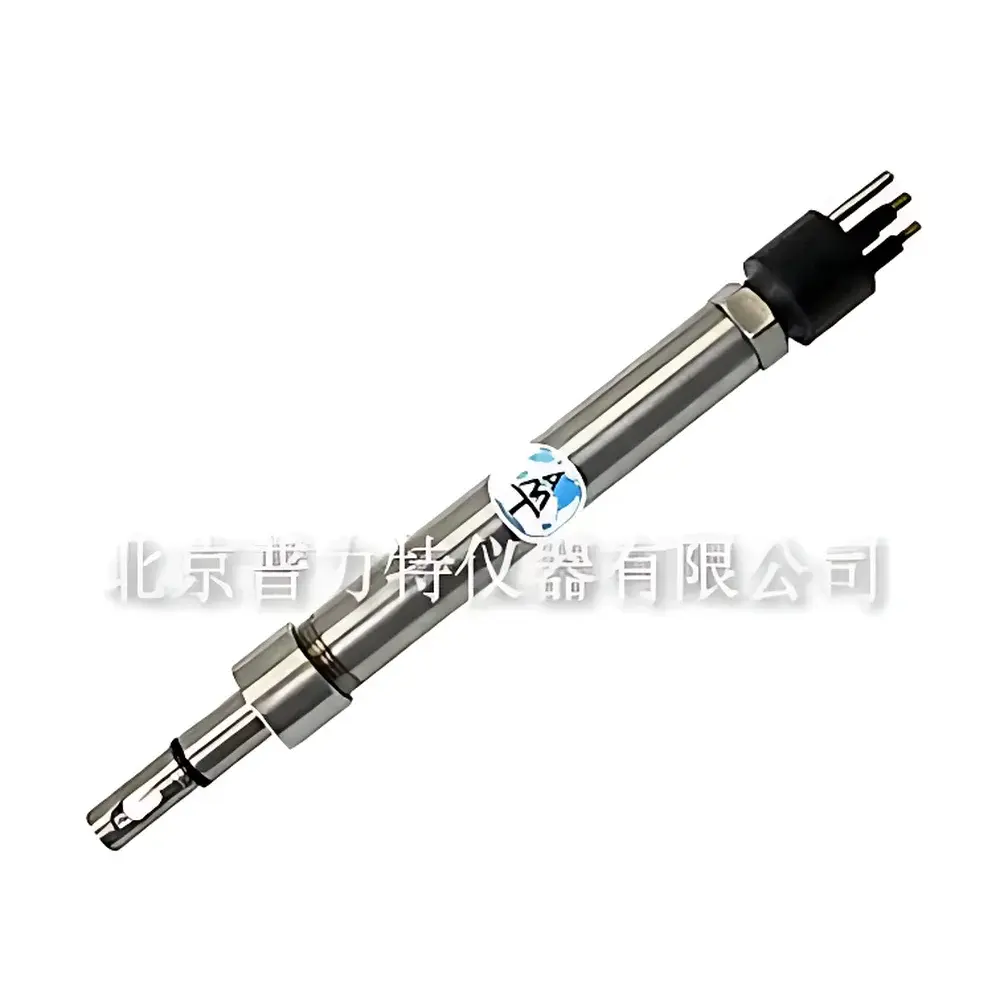
AMT-H2O2 Electrochemical Amperometric Hydrogen Peroxide Sensor
| Origin | Germany |
|---|---|
| Manufacturer Type | Authorized Distributor |
| Origin Category | Imported |
| Model | AMT-H2O2 |
| Pricing | Available Upon Request |
Overview
The AMT-H2O2 Electrochemical Amperometric Hydrogen Peroxide Sensor is a submersible, field-deployable analytical instrument engineered for the selective, real-time quantification of dissolved hydrogen peroxide (H₂O₂) in aqueous environments. It operates on the principle of amperometric electrochemistry—specifically, the diffusion-controlled oxidation of H₂O₂ at a noble-metal working electrode (typically platinum or gold) under a fixed applied potential. Dissolved H₂O₂ molecules permeate through a gas-permeable, hydrophobic membrane (e.g., polytetrafluoroethylene), enter the electrolyte-filled sensor chamber, and undergo a stoichiometric redox reaction at the electrode surface. The resulting faradaic current is linearly proportional to the partial pressure (and thus concentration) of H₂O₂ in the sample matrix. Integrated temperature sensing enables automatic thermal compensation of both membrane permeability and electrode kinetics, ensuring stable calibration across operational ranges from 0 °C to 40 °C. Designed for continuous or spot monitoring, the sensor delivers trace-level sensitivity with minimal interference from turbidity, color, pH shifts (within 4–9), or common oxidants such as chlorine or ozone—provided they do not cross the membrane or react with the internal electrolyte.
Key Features
- Sub-second response time: t90% < 2 seconds—enabling dynamic process monitoring and rapid event detection in disinfection control or advanced oxidation processes (AOPs).
- High selectivity and immunity to optical interferences: No reliance on optical path length; unaffected by suspended solids, colored organics, or UV-absorbing compounds.
- Modular sensor head design: Field-replaceable sensing element allows maintenance without full unit replacement—reducing lifecycle cost and downtime.
- Embedded signal conditioning: Onboard electronics perform analog-to-digital conversion, temperature compensation, and linearization using factory-calibrated slope and offset parameters stored in non-volatile memory.
- Ruggedized titanium alloy housing (Grade 5 Ti-6Al-4V): Corrosion-resistant, pressure-rated to 100 m water column (1 MPa), suitable for deep-water deployment in reservoirs, pipelines, or marine outfalls.
- Flexible integration: Analog 0–3 VDC output compatible with standard SCADA, PLC, and data loggers; optional RS-485 Modbus RTU interface available upon request.
Sample Compatibility & Compliance
The AMT-H2O2 sensor is validated for use in potable water, wastewater effluents, industrial process streams, and clean-in-place (CIP) rinse solutions. It complies with ISO 7888 (water quality—determination of hydrogen peroxide) methodology principles and supports GLP-compliant data acquisition when paired with audit-trail-enabled logging systems. While not certified to IEC 61508 or SIL standards as a standalone safety device, its reliability profile meets EN 14181 requirements for automated water quality monitoring systems. Calibration traceability follows NIST-traceable H₂O₂ reference standards (e.g., potassium permanganate titration or spectrophotometric verification at 240 nm). Routine verification is recommended every 7–14 days in high-fouling applications; drift remains within ±2% of reading over 30-day intervals under controlled laboratory conditions.
Software & Data Management
No proprietary software is required for basic operation—the sensor outputs a calibrated analog voltage directly interpretable as % w/w H₂O₂ (0.02–10%). However, AMT provides optional configuration utilities (Windows/macOS) for firmware updates, zero/span calibration, temperature coefficient adjustment, and diagnostic logging. All configuration changes are timestamped and logged locally. When integrated into compliant data acquisition platforms supporting FDA 21 CFR Part 11, the system can enforce electronic signatures, audit trails, and role-based access control for calibration records and alarm thresholds. Raw sensor output may be archived in CSV or SQLite formats for trend analysis, statistical process control (SPC), or integration with LIMS environments.
Applications
- Real-time monitoring of H₂O₂ residuals in municipal drinking water disinfection—particularly where chlorine alternatives are mandated.
- In-line control of H₂O₂ dosing in pharmaceutical-grade purified water (PW) and water-for-injection (WFI) systems.
- Verification of peroxide-based sterilization efficacy in biotech cleanrooms and aseptic filling lines.
- Environmental surveillance of H₂O₂ release in remediation sites employing Fenton or photo-Fenton oxidation.
- Research applications in electrochemical kinetics, catalytic decomposition studies, and biofilm inhibition assays.
FAQ
What is the recommended calibration frequency?
For regulatory compliance and optimal accuracy, perform two-point calibration (zero and span) every 7 days in high-conductivity or organic-rich matrices; extend to 14 days in low-fouling, filtered potable water.
Can the sensor be used in seawater?
Yes—the titanium housing and PTFE membrane provide resistance to chloride-induced corrosion; however, long-term exposure (>30 days) may require more frequent membrane cleaning due to biofouling.
Is temperature compensation automatic?
Yes—integrated Pt1000 thermistor continuously measures sample temperature and applies a polynomial correction algorithm stored in sensor firmware.
Does the sensor require periodic electrolyte refilling?
No—the unit employs a sealed, gelified electrolyte system with no user-serviceable fluid compartments.
What certifications does the sensor hold?
CE marked per EMC Directive 2014/30/EU and RoHS 2011/65/EU; IP68 ingress protection rated; ATEX/IECEx certification is not included but can be supported via external barrier integration.
Related Products







