
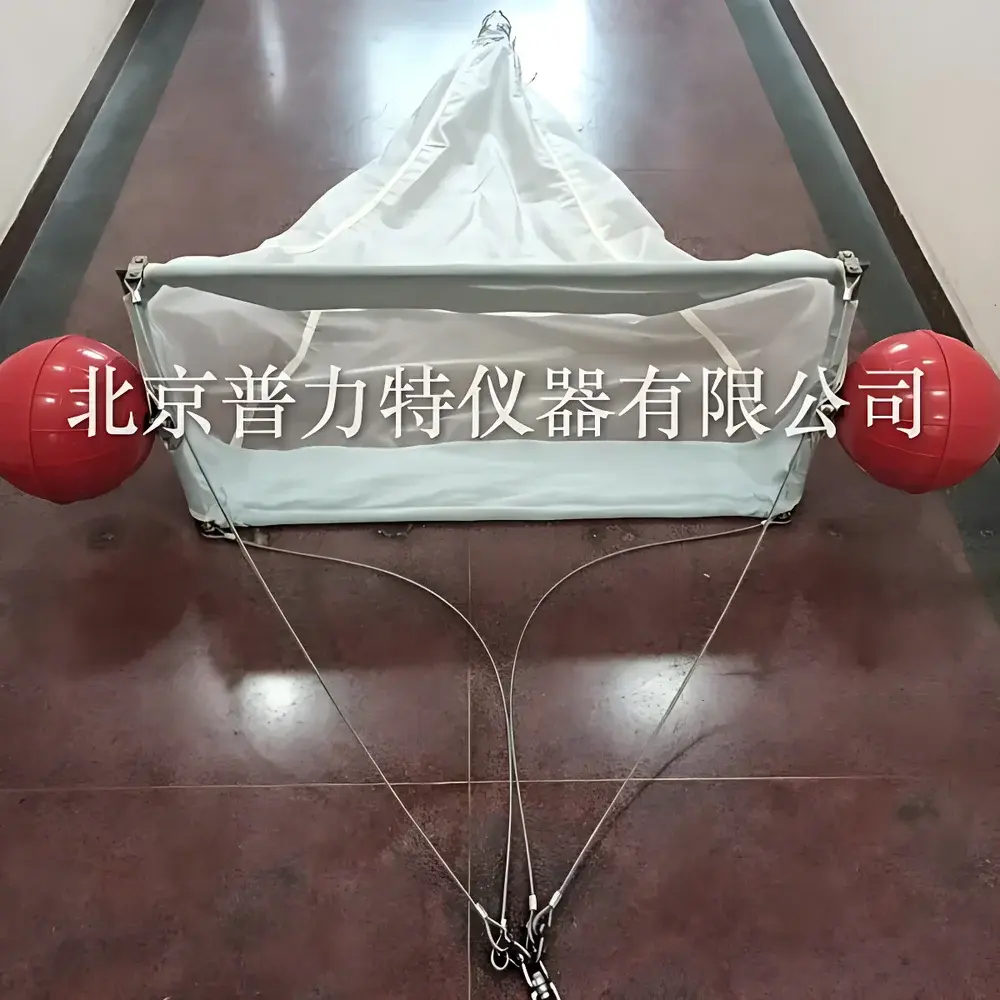
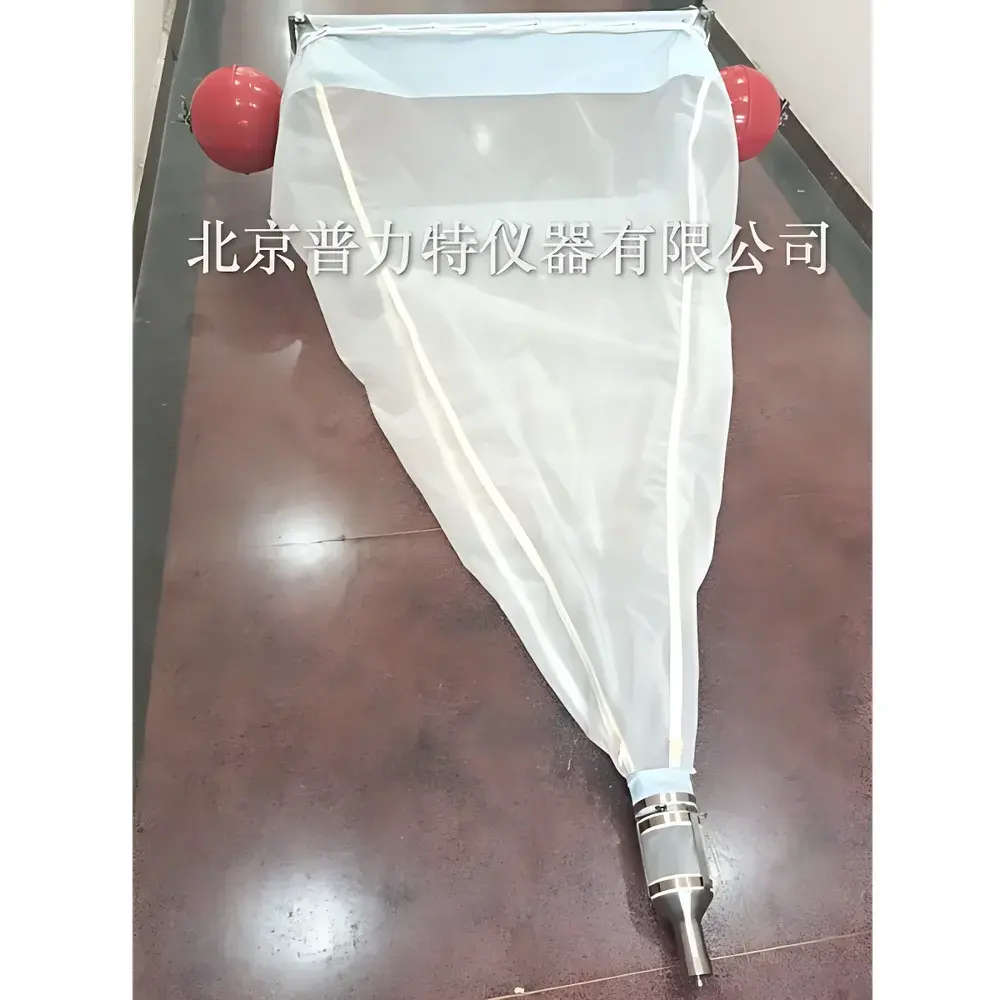
Purity Pred Microplastic Sampling Net MPN
| Brand | Purity |
|---|---|
| Origin | Beijing, China |
| Manufacturer Type | Authorized Distributor |
| Country of Origin | China |
| Model | MPN |
| Instrument Type | Manual Trawl Sampler |
| Sampling Method | Surface Towed Net Sampling |
| Net Opening Dimensions | 1.0 m × 0.5 m or 1.2 m × 0.6 m |
| Net Length | 2.0 m |
| Mesh Aperture | 150 µm |
| Frame Material | 316 Stainless Steel |
| Stabilizing Wings | Adjustable vertical position, detachable, integrated buoyancy modules |
| Customization | Available for alternative mesh sizes and net dimensions |
Overview
The Purity Pred Microplastic Sampling Net MPN is a manually deployed, surface-towed trawl system engineered for standardized collection of microplastic particles from the upper water column in marine, estuarine, and freshwater environments. Designed in functional alignment with the internationally recognized Manta trawl configuration, the MPN net operates on the principle of horizontal towing—where forward vessel motion generates flow through the net aperture, enabling size-fractionated retention of suspended particulates ≥150 µm. Its hydrodynamic stability is maintained via dual adjustable stabilizing wings equipped with integrated buoyancy elements, allowing precise control over sampling depth (typically 0–30 cm below surface) without requiring ballast weights or complex deployment rigs. When wings are removed, the net transitions to a neutrally buoyant configuration suitable for subsurface planktonic sampling—demonstrating dual-purpose utility within environmental monitoring workflows.
Key Features
- Stabilizing wing assembly with vertically adjustable mounting brackets and removable buoyant modules—enabling real-time depth calibration and rapid reconfiguration between surface microplastic and subsurface plankton sampling modes.
- Robust 316 stainless steel bottom frame ensuring corrosion resistance in saline, brackish, and freshwater matrices over extended field deployments.
- Consistent 150 µm monofilament nylon mesh (equivalent to ISO 565:2018 R40/3 series), validated for quantitative recovery of polyethylene, polypropylene, PET, and acrylic fragments in compliance with NOAA and OSPAR microplastic monitoring protocols.
- Two standard net aperture configurations: 1.0 m × 0.5 m (low-drag option for small vessels) and 1.2 m × 0.6 m (higher volumetric throughput for larger survey platforms).
- Modular design supports factory customization—including alternate mesh apertures (e.g., 50 µm, 300 µm), extended net lengths (up to 3.5 m), and reinforced towing hardware for high-current applications.
Sample Compatibility & Compliance
The MPN net is compatible with all standard research vessels, kayaks, and rigid-hull inflatable boats (RIBs) equipped with stern-mounted tow points. It collects representative volume-integrated samples suitable for downstream Fourier-transform infrared (FTIR) spectroscopy, Raman microscopy, pyrolysis-GC/MS, and Nile Red staining quantification. The 150 µm mesh aperture meets the minimum resolution threshold specified in ASTM D7977-21 (Standard Guide for Microplastic Sampling in Aquatic Environments) and aligns with the EU Marine Strategy Framework Directive (MSFD) Technical Subgroup on Microplastics methodology. All structural components comply with ISO 9001-certified manufacturing practices; 316 stainless steel frame conforms to ASTM A240/A240M for marine-grade corrosion resistance.
Software & Data Management
As a passive mechanical sampler, the MPN net does not incorporate embedded electronics or onboard data logging. However, it integrates seamlessly into digital field data capture ecosystems via companion protocols. Users are advised to record critical metadata—including GPS coordinates, tow speed (recommended 1.5–2.5 knots), duration, wind speed, sea state (Beaufort scale), and surface temperature—using standardized templates compliant with the Global Microplastics Initiative (GMI) data schema. Optional integration with mobile apps such as Ocean Sampling Toolkit (OST) or QField enables structured offline entry and automatic geotagging. All collected samples must be stored in pre-combusted glass containers and logged in laboratory information management systems (LIMS) supporting GLP audit trails per ISO/IEC 17025:2017 requirements.
Applications
- Baseline microplastic concentration mapping in coastal zones, river plumes, and harbor entrances.
- Time-series monitoring at long-term observatory sites (e.g., LTER networks) to assess seasonal and interannual trends.
- Source tracking studies near wastewater outfalls, marinas, and plastic manufacturing clusters.
- Cross-platform validation of automated in-situ sensors (e.g., holographic imaging systems, laser-induced fluorescence detectors).
- Training and method standardization for national environmental agencies implementing harmonized microplastic assessment frameworks under UNEP’s Global Partnership on Marine Litter.
FAQ
What is the recommended towing speed for optimal microplastic recovery?
Towing speed should be maintained between 1.5 and 2.5 knots to ensure laminar flow through the net while minimizing particle resuspension and mesh clogging. Speeds exceeding 3.0 knots may cause turbulent bypass and underestimation of abundance.
Can the MPN net be used in high-turbidity or estuarine environments?
Yes—its 316 stainless steel frame and abrasion-resistant monofilament mesh maintain structural integrity in silty, saline, or organically enriched waters. Pre-rinse with deionized water post-deployment to prevent salt crystallization in mesh interstices.
Is the 150 µm mesh compliant with international microplastic reporting standards?
Yes—the 150 µm aperture satisfies the lower detection limit for “microplastic” as defined by ISO/IEC 21955:2022 and is the default specification adopted by the Joint Research Centre (JRC) of the European Commission for harmonized monitoring.
How is depth control achieved without electronic sensors?
Depth is mechanically regulated via vertical adjustment of the buoyant stabilizing wings relative to the net mouth plane. Calibration is verified using surface-following GPS-tracked depth loggers mounted adjacent to the net during initial deployment trials.
Does Purity Pred provide method validation documentation?
Upon request, certified test reports—including mesh aperture verification (via optical micrometry per ISO 4783-1), frame tensile strength testing (ASTM E8), and recovery efficiency data against reference microbead suspensions—are available to support regulatory submissions and QA/QC audits.







