
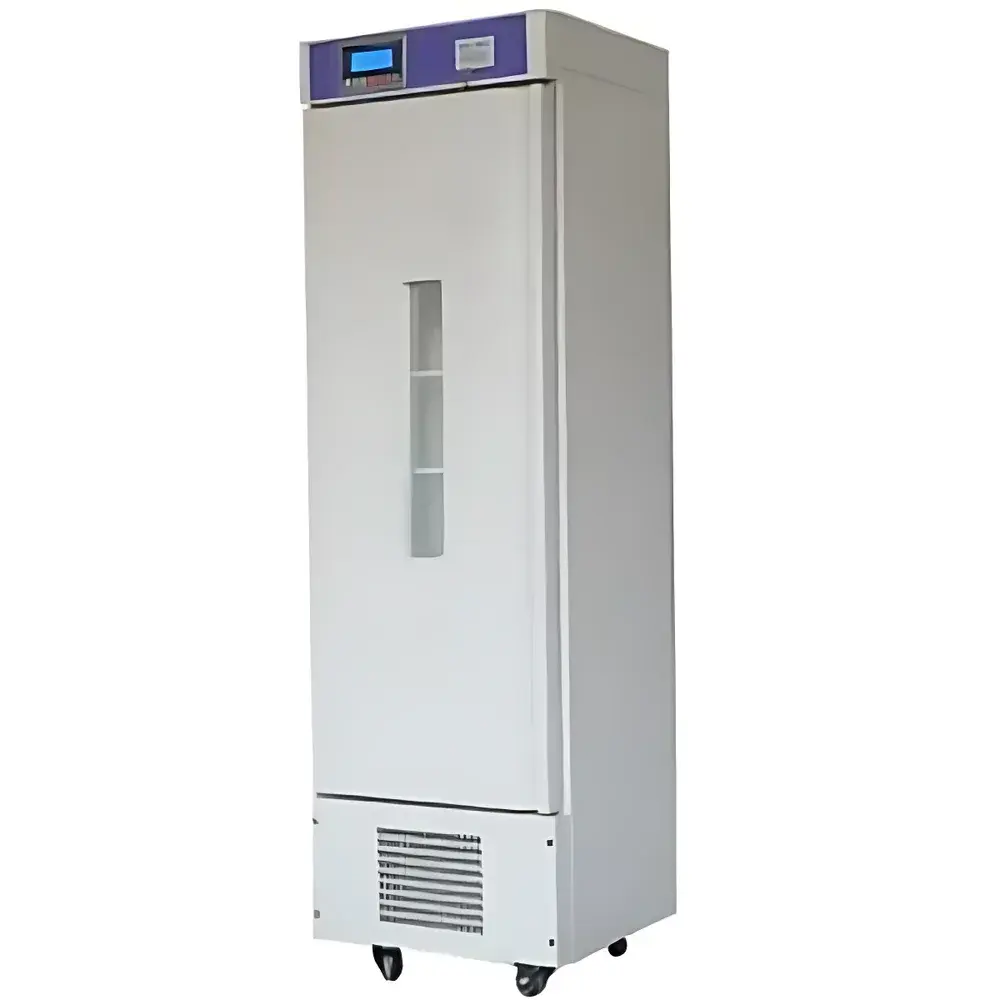
ZiQi SPX-80 Biochemical Incubator
| Brand | ZiQi |
|---|---|
| Origin | Shanghai, China |
| Manufacturer | ZiQi Experimental Equipment Co., Ltd. |
| Cooling Method | Compressor-based (R134a refrigerant) |
| Air Circulation | Forced convection |
| Temperature Range | 0–60 °C |
| Temperature Resolution | 0.1 °C |
| Temperature Fluctuation | ±0.5 °C |
| Temperature Uniformity | ±1.0 °C |
| Capacity | 80 L |
| External Dimensions | 590 × 590 × 1200 mm |
| Power Supply | AC 220 V, 50 Hz |
| Input Power | 350 W |
| Operating Ambient Temperature | +5 to +30 °C |
| Interior Material | Mirror-finish stainless steel |
| Standard Shelving | 1 adjustable shelf |
| Door Configuration | Single door |
Overview
The ZiQi SPX-80 Biochemical Incubator is a precision-engineered, microprocessor-controlled environmental chamber designed for stable, long-term temperature maintenance in life science laboratories. It operates on the principle of active thermal regulation via a high-efficiency hermetic compressor system paired with forced-air circulation—ensuring uniform heat distribution and minimal thermal gradients across the working chamber. The unit utilizes environmentally compliant R134a refrigerant and features a robust mirror-finish stainless-steel interior with rounded corners to facilitate cleaning and prevent microbial retention. Engineered for continuous operation under GLP-aligned workflows, the SPX-80 delivers traceable temperature control within a broad operational range (0–60 °C), making it suitable for BOD incubation, microbial culture, enzyme activity assays, seed germination studies, and stability testing of biological reagents.
Key Features
- Mirror-polished 304 stainless-steel inner chamber with seamless, semi-circular corner design for easy decontamination and reduced contamination risk.
- Microprocessor-based PID temperature controller with LED digital display, offering real-time monitoring of setpoint, actual temperature, elapsed time, and alarm status.
- Automatic fan speed modulation to maintain consistent airflow without inducing excessive evaporation from culture vessels or agar plates.
- Dual-stage overtemperature protection: primary electronic limit control and optional independent mechanical cutoff circuit—compliant with IEC 61000-4-2 for safety-critical lab environments.
- Configurable data logging interface: RS485 port supports Modbus RTU protocol for integration into centralized lab monitoring systems; optional thermal printer output for hard-copy audit trails.
- Energy-optimized compressor system with low-noise operation (<52 dB[A] at 1 m), validated for uninterrupted 24/7 duty cycles in shared core facilities.
- One standard adjustable stainless-steel shelf included; additional shelves available as accessories (load capacity: 15 kg per shelf).
Sample Compatibility & Compliance
The SPX-80 accommodates standard microbiological formats including Petri dishes (up to 150 mm diameter), test tubes (16 × 150 mm), Erlenmeyer flasks (up to 1 L), and multi-well plates (6–96-well). Its chamber geometry allows unobstructed stacking of stacked culture racks and compatibility with humidity trays (optional accessory). The incubator meets key international performance benchmarks for biochemical incubation, including ISO 13408-1 (aseptic processing), ASTM E1752 (standard guide for incubator performance verification), and USP (general requirements for pharmaceutical incubators). While not certified for Class II biosafety applications, its sealed construction and smooth interior surfaces support routine disinfection protocols using 70% ethanol, hydrogen peroxide vapor, or quaternary ammonium compounds.
Software & Data Management
The embedded firmware supports event-driven logging of temperature deviations, power interruptions, and alarm activations—with non-volatile memory preserving up to 30 days of timestamped records (1-minute intervals). Optional PC software (ZiQi LabLink v3.2) enables remote parameter configuration, real-time graphing, CSV export, and generation of IQ/OQ-ready validation reports. Audit trail functionality complies with FDA 21 CFR Part 11 requirements when used with user-authenticated login and electronic signature modules. Data integrity is preserved via cyclic redundancy check (CRC-16) on all stored entries and write-protection during power loss.
Applications
- Biochemical Oxygen Demand (BOD5) testing per APHA Standard Methods 5210B and ISO 5815-1.
- Cultivation and maintenance of mesophilic bacteria (e.g., E. coli, Bacillus subtilis), yeasts, and molds under standardized conditions (e.g., ISO 21528-2, EN ISO 6887-1).
- Plant tissue culture and seed viability assays requiring precise thermoperiod control.
- Enzyme kinetics studies where thermal stability directly impacts catalytic rate constants.
- Stability assessment of diagnostic reagents, vaccines, and monoclonal antibodies per ICH Q5C guidelines.
- Environmental monitoring labs performing coliform enumeration and water quality compliance testing (e.g., EPA Method 1603).
FAQ
What is the maximum ambient temperature for reliable operation?
The SPX-80 is rated for continuous use in ambient environments between +5 °C and +30 °C. Operation above +30 °C may reduce cooling efficiency and extend temperature stabilization time.
Can the incubator be calibrated internally?
Yes—the unit supports two-point calibration via service mode using a NIST-traceable reference thermometer (±0.1 °C accuracy required). Calibration offsets are stored in EEPROM and retained after power cycling.
Is humidity control available as an option?
No—humidity regulation is not integrated. However, users may place open water pans inside the chamber to elevate relative humidity passively (typically achieving 70–85% RH at 37 °C).
Does the SPX-80 meet GMP documentation requirements?
With optional RS485 connectivity and LabLink software, full electronic records—including operator ID, parameter changes, alarms, and calibration logs—can be generated to satisfy ALCOA+ data integrity principles for GMP-regulated environments.
What maintenance is recommended for long-term reliability?
Biannual inspection of condenser coil cleanliness, annual verification of temperature uniformity (per ASTM E1752), and replacement of door gasket every 36 months or if compression force drops below 1.2 N/mm are advised. Compressor oil analysis is recommended after 10,000 operating hours.
Related Products




