
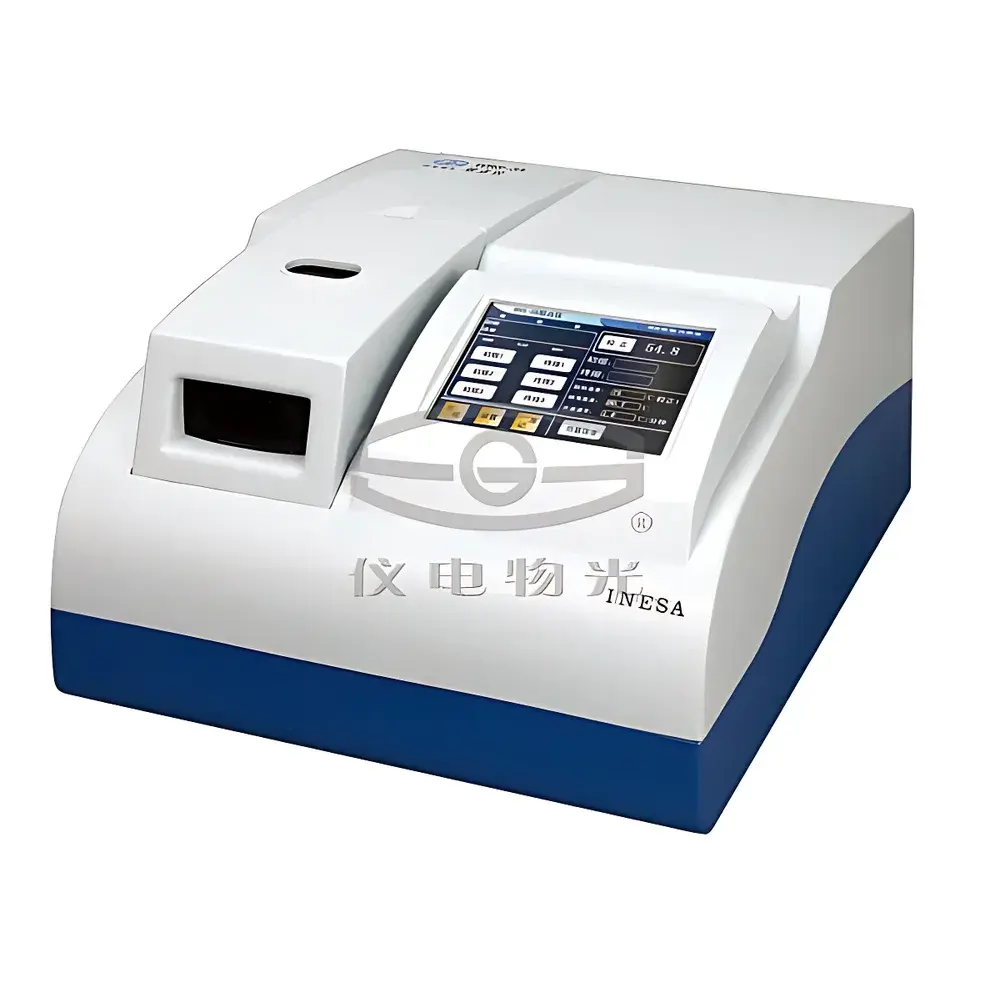
YDWG WRS-3A Triple-Sample Digital Melting Point Apparatus
| Brand | YDWG |
|---|---|
| Origin | Shanghai, China |
| Model | WRS-3A (Triple-Sample Configuration) |
| Temperature Range | Ambient to 360 °C |
| Heating Rate | 0.1–10.0 °C/min (continuously adjustable) |
| Temperature Repeatability | ±0.3 °C at 1.0 °C/min |
| Temperature Accuracy | ±0.5 °C ≤200 °C |
| Capillary Dimensions | OD 1.4 mm, ID 1.0 mm, Length 90 mm |
| Sample Capacity | 3 independent capillaries |
| Temperature Resolution | 0.1 °C |
| Display | 5.6-inch color TFT touchscreen |
| Data Storage | 100 measurement records |
| Interface | USB port and RS-232 serial interface |
| Power Supply | 220 V ±10%, 50 Hz ±1 Hz |
| Net Weight | 6 kg |
| Dimensions | 390 × 320 × 220 mm |
Overview
The YDWG WRS-3A Triple-Sample Digital Melting Point Apparatus is a precision thermal analysis instrument engineered for reliable, reproducible determination of solid-phase transition temperatures in organic and pharmaceutical compounds. It operates on the classical capillary tube method—where a crystalline sample is packed into a standardized glass capillary and heated under controlled conditions while optical observation or photometric detection monitors the onset and completion of melting. The WRS-3A integrates dual-mode measurement capability: real-time visual assessment via built-in magnified optics and automated photodetection using a high-sensitivity photodiode array. This hybrid design ensures accurate melt point identification across diverse sample types—including highly pigmented, opaque, or low-contrast substances where conventional photometric systems may fail. Its triple-sample configuration enables parallel analysis of three independent specimens under identical thermal profiles, significantly improving throughput in quality control laboratories without compromising inter-sample comparability.
Key Features
- Dual-Mode Measurement Architecture: Seamlessly switch between manual visual inspection and automatic photometric detection—ensuring robustness for both routine QC screening and method development involving challenging samples.
- PID-Controlled Thermal System: Delivers stable, linear heating with programmable ramp rates from 0.1 to 10.0 °C/min; temperature stability maintained within ±0.1 °C during plateau phases.
- Triple-Sample Simultaneous Analysis: Three independently loaded capillaries are heated uniformly in a single thermal block, minimizing inter-run variability and accelerating batch testing.
- High-Resolution Touch Interface: 5.6-inch full-color TFT LCD with intuitive icon-driven navigation supports parameter entry, real-time curve visualization, and on-device data review.
- Traceable Calibration Framework: Supports multi-point calibration using certified reference standards (e.g., USP/EP reference materials), with logged calibration events stored alongside measurement data.
- Digital Data Integrity: All measurements include timestamp, operator ID (if configured), heating rate, observed onset/completion points, and raw photometric signal traces.
Sample Compatibility & Compliance
The WRS-3A accommodates standard ASTM D1565-22 and ISO 6383-1 compliant capillaries (1.0 mm internal diameter, 1.4 mm outer diameter, 90 mm length) with recommended sample fill height of 3 mm. It is validated for use with APIs, excipients, polymers, fine chemicals, and natural product isolates. The instrument meets general requirements for GLP-compliant environments when paired with appropriate SOPs and audit-trail-enabled software extensions. While not inherently 21 CFR Part 11 compliant out-of-the-box, its USB and RS-232 interfaces support integration with validated LIMS or ELN platforms that enforce electronic signature, change control, and retention policies. Regulatory documentation—including factory calibration certificates and traceable uncertainty statements—is provided upon request.
Software & Data Management
Raw measurement data—including temperature vs. time profiles, photometric intensity curves, and user-defined metadata—are stored locally in non-volatile memory (100 entries capacity). Data export is supported via USB mass storage mode (FAT32 formatted drives) or RS-232 ASCII transmission to external PCs. Optional PC software (YDWG MP-Link v3.x) provides advanced reporting, statistical trend analysis (e.g., RSD calculation across replicates), and PDF certificate generation compliant with ISO/IEC 17025 documentation requirements. All stored records retain full audit trail attributes: creation timestamp, modification history, and operator identifier if enabled via login protocol.
Applications
- Pharmaceutical QC release testing per USP <741> and EP 2.2.17
- Purity assessment of synthetic intermediates and final active ingredients
- Polymorph screening and thermal stability evaluation during formulation development
- Educational laboratory instruction in physical chemistry and medicinal chemistry curricula
- Raw material verification in fine chemical and agrochemical manufacturing
- Forensic identification of unknown crystalline substances
FAQ
What capillary dimensions are required for optimal performance?
Standard capillaries with 1.0 mm inner diameter, 1.4 mm outer diameter, and 90 mm length are specified. Fill height must be 3 mm for consistent heat transfer and optical path geometry.
Can the WRS-3A be used for decomposition point determination?
While primarily designed for sharp-melting crystalline solids, it may detect gross decomposition events accompanied by discoloration or gas evolution—but is not calibrated for decomposition kinetics or TGA-style weight-loss correlation.
Is multi-point calibration traceable to NIST standards?
Yes—calibration can be performed using NIST-traceable reference materials (e.g., indium, caffeine, phenacetin); calibration logs include material lot numbers and certified values.
Does the instrument support GMP-compliant electronic signatures?
The standalone unit does not implement 21 CFR Part 11 controls; however, exported data may be imported into validated third-party systems supporting electronic signatures and audit trails.
How is temperature uniformity ensured across all three sample positions?
The aluminum heating block features precision-machined capillary wells with thermal symmetry verified during factory qualification; inter-position deviation is <±0.2 °C at 150 °C under steady-state conditions.



