
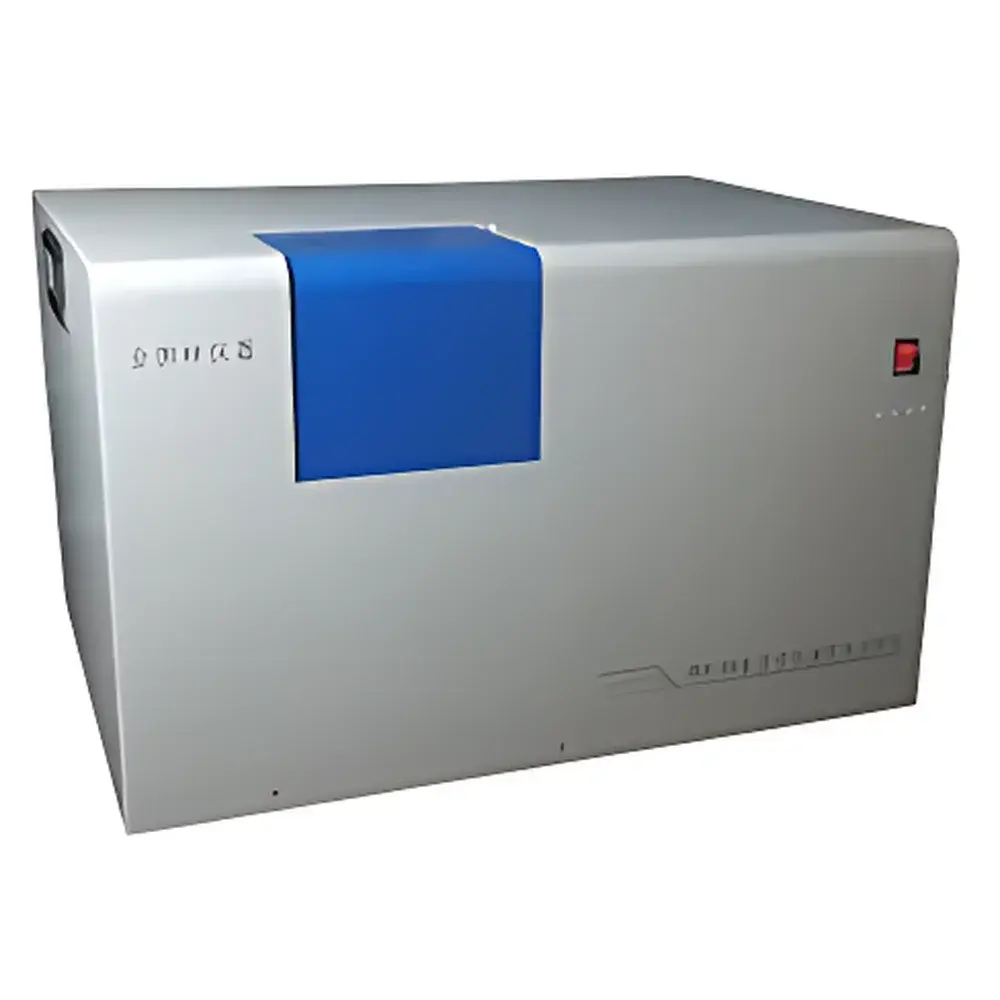
JHX-2D Petrofluorometric Quantitative Analyzer
| Brand | JHX |
|---|---|
| Origin | Beijing, China |
| Manufacturer Type | Authorized Distributor |
| Country of Manufacture | China |
| Model | JHX-2D |
| Pricing | Available Upon Request |
Overview
The JHX-2D Petrofluorometric Quantitative Analyzer is an automated, benchtop fluorescence spectrophotometric system engineered for precise hydrocarbon quantification in petroleum exploration and production workflows. It operates on the principle of excitation-emission matrix (EEM) fluorescence spectroscopy—where crude oil and hydrocarbon extracts are excited across a defined UV–visible wavelength range (typically 200–400 nm), and resultant emission spectra (300–650 nm) are acquired and deconvoluted using multivariate calibration models. Unlike conventional single-wavelength fluorimeters, the JHX-2D captures two-dimensional fluorescence intensity maps (excitation vs. emission), enabling differentiation of saturates, aromatics, resins, and asphaltenes (SARA fractions) without solvent-based separation. Designed for routine geochemical screening of drill cuttings, core extracts, mud logging fluids, and formation fluid samples, it delivers quantitative total hydrocarbon concentration (THC), aromatic hydrocarbon index (AHI), and oil-source correlation parameters with high reproducibility under controlled laboratory conditions.
Key Features
- Fully automated sample handling: robotic autosampler accommodates standard 10 mL or 20 mL vials; supports unattended operation for up to 96 samples per batch.
- Integrated fluidic module: performs auto-dilution (1:2 to 1:1000 dilution ratios), background subtraction via solvent blank referencing, and sequential rinsing with non-polar solvents (e.g., n-hexane, cyclohexane) between analyses.
- Self-calibrating optical path: dual-monochromator design with holographic grating ensures spectral resolution ≤ 5 nm FWHM and wavelength accuracy ±0.5 nm.
- Automated curve switching: preloaded calibration libraries for multiple crude types (e.g., paraffinic, naphthenic, mixed-base) allow real-time selection of optimal excitation–emission regression models.
- Onboard waste management: sealed, pressure-regulated废液 recovery reservoir with level sensing and leak detection—eliminates manual solvent handling and reduces exposure risk to n-hexane.
- Compliance-ready data architecture: audit-trail enabled logging of all instrument events, user actions, calibration history, and raw EEM datasets in timestamped .csv and .fcs formats.
Sample Compatibility & Compliance
The JHX-2D accepts liquid-phase hydrocarbon extracts prepared via Soxhlet or ultrasonic extraction from rock cuttings, cores, or sediment samples. Compatible matrices include n-hexane, dichloromethane, and toluene extracts (up to 5% w/v total dissolved solids). Solid samples must be pre-extracted per ASTM D5291 or ISO 16257 protocols prior to analysis. The system complies with general laboratory safety standards for Class I flammable solvent handling (NFPA 30), and its firmware supports GLP-compliant operation through user-access control, electronic signatures, and 21 CFR Part 11–compatible data integrity features when paired with validated LIMS integration.
Software & Data Management
The proprietary JHX-FluoSuite v4.x software provides full instrument control, EEM visualization, peak deconvolution (using parallel factor analysis – PARAFAC), and quantitative reporting aligned with industry-standard petrophysical interpretation frameworks. Raw spectral data are stored with embedded metadata (sample ID, operator, date/time, instrument configuration). Export options include ASCII (.csv), HDF5 (.h5), and vendor-neutral JCAMP-DX format. Remote monitoring and secure data upload to corporate servers or cloud-based geochemical databases are supported via TLS 1.2–encrypted HTTP(S) endpoints. Software validation documentation (IQ/OQ/PQ templates) and electronic record retention policies are provided for regulated environments.
Applications
- Real-time hydrocarbon screening during wireline logging and LWD/MWD operations via rapid extract analysis.
- Source rock evaluation: determination of kerogen type (I–IV), thermal maturity (Tmax proxy), and hydrocarbon generation potential.
- Mud logging support: distinguishing drilling fluid contamination from formation hydrocarbons using fluorescence fingerprinting.
- Reservoir continuity assessment through cross-well fluorescence correlation of extracted oils.
- Environmental forensics: identification and quantification of petroleum hydrocarbons in soil and groundwater samples per EPA Method 418.1.
FAQ
What excitation and emission wavelength ranges does the JHX-2D support?
Standard configuration covers 200–400 nm excitation and 300–650 nm emission; extended-range optics (200–800 nm) are available as optional hardware upgrade.
Is n-hexane the only solvent compatible with the auto-dilution and cleaning modules?
The system is optimized for n-hexane but supports other low-polarity solvents including cyclohexane, iso-octane, and petroleum ether—provided viscosity and vapor pressure fall within specified fluidic operating limits.
Can the JHX-2D be integrated into an existing LIMS or ELN platform?
Yes—via RESTful API and ASTM E1467-compliant interface specifications; custom middleware development support is included with enterprise deployment contracts.
Does the instrument require external cooling or compressed air?
No—fully self-contained thermoelectric cooling for the PMT detector and internal air filtration ensure stable operation at ambient lab temperatures (15–30 °C) without auxiliary utilities.
How frequently must the calibration curves be revalidated?
Per recommended practice, primary calibration standards should be verified daily; full multi-point calibration is required after any optical alignment adjustment, lamp replacement, or every 200 operational hours—whichever occurs first.






