
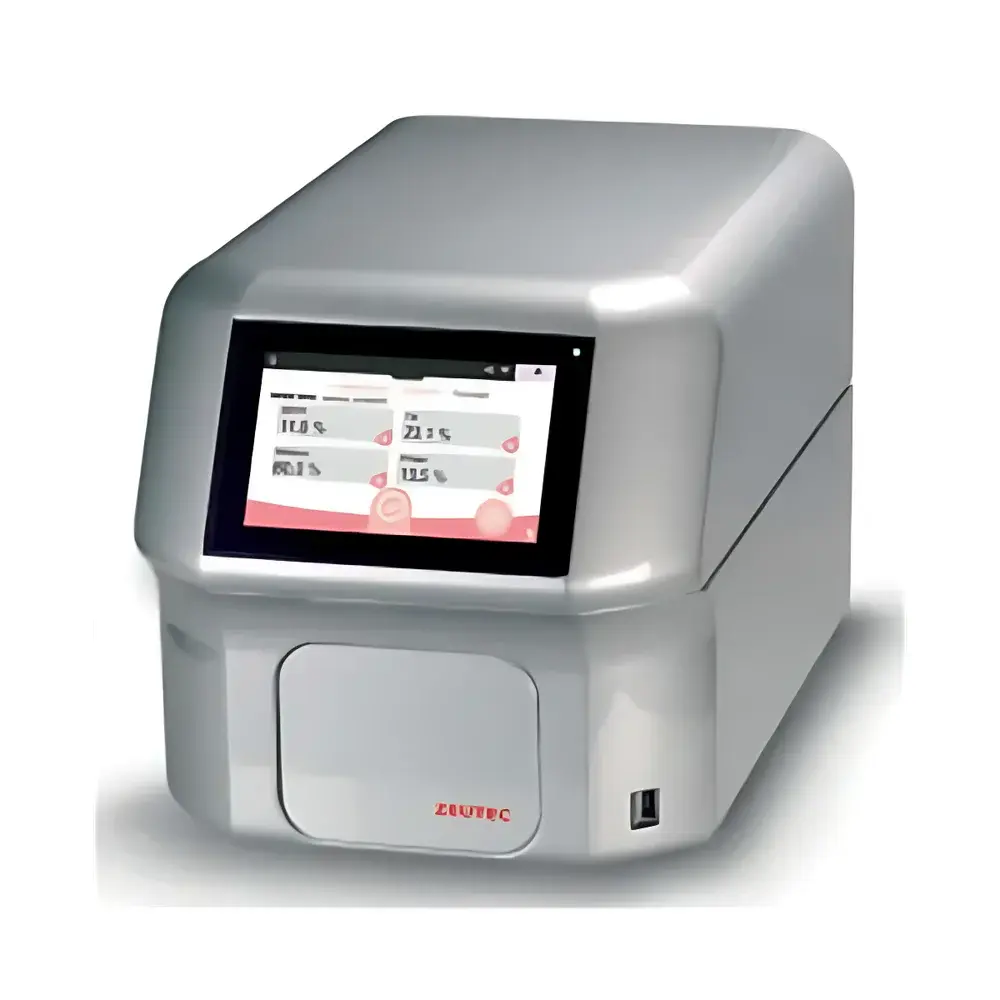
JHX SpectraAlyzer MEAT Near-Infrared (NIR) Multi-Component Meat Analyzer
| Brand | JHX |
|---|---|
| Origin | Germany |
| Model | MEAT |
| Measurement Principle | Reflectance Near-Infrared Spectroscopy (NIRS) |
| Analysis Time | ≤45 s per sample |
| Parameters Measured | Moisture, Fat, Protein, Collagen (BEFFE), Ash |
| Sample Types | Raw meat, cured sausages & hams, cooked sausages, wet pet food |
| Sample Preparation | None required |
| Compliance | Designed for ISO 17025-compliant QC labs and GMP-aligned production environments |
| Interface | Touchscreen GUI with embedded calibration management |
Overview
The JHX SpectraAlyzer MEAT is a dedicated near-infrared (NIR) reflectance spectrometer engineered for rapid, non-destructive, multi-parameter compositional analysis of meat-based materials. Operating on the principle of diffuse reflectance NIR spectroscopy in the 900–2500 nm range, it quantifies moisture, fat, protein, collagen (expressed as BEFFE—bovine elastin-free fiber equivalent), and ash content simultaneously—without chemical reagents, grinding, drying, or solvent extraction. Its optical architecture employs a stabilized tungsten-halogen light source, high-resolution grating spectrometer, and temperature-compensated InGaAs detector array to ensure spectral stability across ambient fluctuations. Designed specifically for integration into meat processing lines—from slaughterhouse deboning stations to sausage formulation and pet food extrusion lines—the instrument delivers laboratory-grade accuracy in an industrial-grade enclosure rated IP54 for dust and splash resistance.
Key Features
- Zero-sample-prep operation: Direct measurement of intact, heterogeneous samples—including chilled raw cuts, vacuum-packed cured products, and viscous wet pet food slurries.
- Embedded chemometric models: Factory-calibrated using >12,000 reference samples analyzed via AOAC-approved wet chemistry methods (AOAC 986.15, 991.36, 992.15); models are locked and traceable to NIST-traceable standards.
- Ruggedized optical path: Dual-beam referencing with real-time background correction eliminates drift from ambient lighting, vibration, or thermal expansion of optical components.
- Production-floor interface: 10.1″ capacitive touchscreen with glove-compatible UI; intuitive workflow navigation optimized for operators with minimal spectroscopy training.
- Thermal resilience: Active thermal stabilization maintains spectrometer core temperature within ±0.5°C across 5–40°C ambient range—critical for consistent performance in chill rooms and hot production halls.
- Self-diagnostic firmware: Automated wavelength validation, signal-to-noise ratio monitoring, and lamp intensity tracking generate daily system health reports compliant with GLP audit requirements.
Sample Compatibility & Compliance
The SpectraAlyzer MEAT supports a defined matrix of meat-derived substrates validated under ISO 12099:2017 (Animal feeding stuffs—Guidelines for the application of near infrared spectroscopy) and aligned with EU Regulation (EC) No 882/2004 on official controls. Validated sample forms include: raw beef/pork/poultry cuts (≥50 g, surface area ≥20 cm²), sliced cured ham (3–10 mm thickness), emulsified cooked sausages (unpacked, ambient or refrigerated), and homogenized wet pet food (viscosity <5,000 mPa·s). All calibrations undergo annual revalidation per ISO/IEC 17025:2017 Clause 7.7.2. The system logs full audit trails—including operator ID, timestamp, sample ID, spectral acquisition parameters, and calibration version—for FDA 21 CFR Part 11 compliance when deployed with optional networked data archiving.
Software & Data Management
The embedded SpectraControl v4.2 software provides full method lifecycle management: calibration development (PLS regression), model validation (RMSEP, R², bias analysis), user-defined limit setting (e.g., fat % tolerance bands), and batch-level statistical process control (SPC) charting (X-bar/R charts per ISO 7870-2). Data export supports CSV, ASTM E1382-compliant .jdx, and LIMS-integrated XML formats. Optional cloud synchronization enables centralized calibration repository management across multi-site facilities, with role-based access control (RBAC) and encrypted TLS 1.3 transmission. All spectral raw data and processed results are stored locally on a tamper-evident SSD with write-once-read-many (WORM) capability for regulatory retention.
Applications
- Raw material verification: Instant assessment of incoming carcass trimmings or boneless cuts against supplier specifications—reducing rejection rates and enabling real-time fat trimming decisions.
- In-line formulation control: Monitoring fat:protein ratios during sausage batter mixing to maintain target emulsion stability and cooking yield.
- Batch release testing: Final QA sign-off for cooked sausages prior to packaging—replacing off-line Soxhlet and Kjeldahl assays that require 4+ hours.
- Pet food quality assurance: Tracking collagen degradation during thermal processing of wet diets to ensure functional texture and digestibility profiles.
- Regulatory documentation: Generating auditable reports for BRCGS Food Issue 9 Section 4.9.4 (analytical method validation) and IFS Food v7.1 Clause 4.10.2 (instrument qualification).
FAQ
Does the SpectraAlyzer MEAT require periodic recalibration using reference standards?
Yes—annual recalibration using certified reference materials (CRMs) traceable to NIST SRM 1849a (animal tissue) is recommended. Field validation with 5–10 routine production samples per shift satisfies daily performance checks per ISO 8556.
Can the instrument analyze frozen meat samples?
No—frost formation and ice crystal interference invalidate NIR spectra. Samples must be thawed to 2–8°C and surface-condensation removed prior to measurement.
Is method transfer possible between different SpectraAlyzer MEAT units?
Yes—calibration files are portable across instruments of the same hardware revision. Transfer requires spectral alignment verification using a common set of 10 validation samples per ISO 12099 Annex C.
What cybersecurity measures are implemented in the embedded OS?
The device runs a hardened Linux kernel (Yocto Project LTS) with disabled unused ports, automatic security patching (quarterly), and FIPS 140-2 validated cryptographic modules for data-at-rest encryption.




