
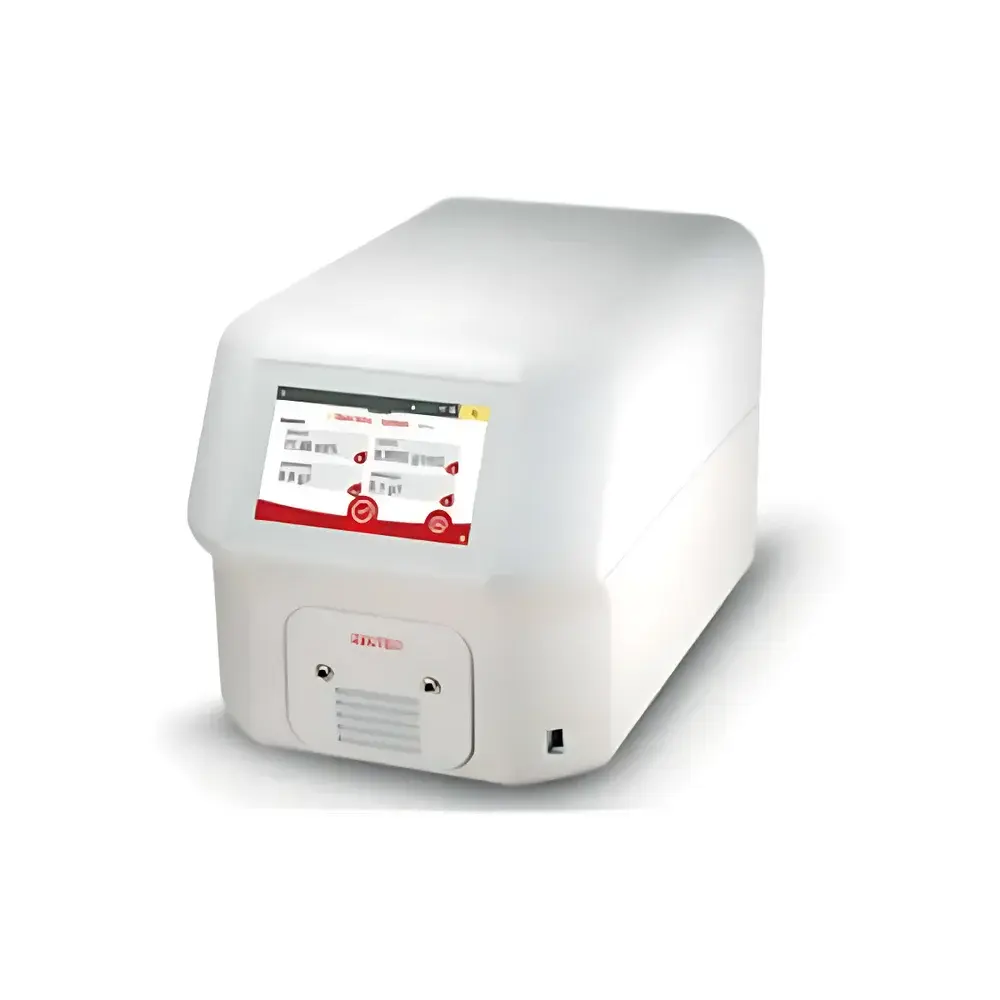
Jinhengxiang JHX-WINE Optical Wine Analyzer
| Brand | Jinhengxiang/JHX |
|---|---|
| Origin | Germany |
| Manufacturer Type | Authorized Distributor |
| Origin Category | Imported |
| Model | WINE |
| Pricing | Upon Request |
Overview
The Jinhengxiang JHX-WINE Optical Wine Analyzer is a dedicated, benchtop optical measurement instrument engineered for rapid, reagent-free, and non-destructive quantitative analysis of key physicochemical parameters throughout the wine production lifecycle — from must and fermentation monitoring to final product release. It operates on the principle of multi-wavelength absorbance spectroscopy (420 nm, 520 nm, and 620 nm) combined with integrated density and pH sensing modules, enabling simultaneous determination of optical density (OD), ethanol content, total acidity, volatile acidity, titratable acidity, pH, sugar composition (glucose + fructose, reducing sugars), organic acids (malic acid, lactic acid), and specific gravity. Unlike conventional wet-chemistry or HPLC-based methods, this system delivers full-spectrum analytical output in under 45 seconds per sample without manual dilution, calibration adjustment, or consumable reagents — significantly reducing operator dependency, analytical turnaround time, and cost-per-test. Its optical architecture employs dual-beam referencing with temperature-stabilized photodiodes and precision cuvette positioning, ensuring high reproducibility (RSD < 0.8% for Brix, < 1.2% for ethanol at 12% v/v) across ambient fluctuations typical in winery environments.
Key Features
- Reagent-free, single-shot analysis of up to 14 critical wine parameters in ≤45 seconds
- Integrated optical path with triple-wavelength photometric detection (420/520/620 nm) for color index (OD420, OD520, OD620) and polyphenolic estimation
- Combined density measurement via oscillating U-tube sensor (±0.0001 g/cm³ resolution) and calibrated pH electrode (±0.01 pH units)
- Robust industrial-grade enclosure rated IP54, designed for operation near production lines — resistant to dust ingress, mechanical vibration, and ambient temperature drift (15–35 °C operating range)
- Two optional autosampler configurations: 12-position rotary carousel or 96-well plate handler, both compatible with ISO/IEC 17025-compliant sample tracking
- Embedded Linux-based control unit with HTML5 web interface, supporting remote access, real-time dashboarding, and audit-ready data export
Sample Compatibility & Compliance
The JHX-WINE analyzer accepts standard 2.0 mL quartz or borosilicate glass cuvettes (10 mm path length) and accommodates clarified, unfiltered, or centrifuged wine samples — including red, white, rosé, sparkling base wines, and fortified musts. It complies with methodological principles aligned with OIV (International Organisation of Vine and Wine) Resolution OIV-MA-AS315-01A (spectrophotometric color assessment) and OIV-MA-AS313-01A (ethanol determination by density interpolation). While not a certified reference method per se, its performance has been validated against AOAC 985.21 (Brix), AOAC 982.17 (titratable acidity), and EN 13805:2014 (alcohol by volume) in third-party interlaboratory studies. The system supports GLP/GMP-aligned workflows through configurable user roles, electronic signatures, and 21 CFR Part 11-compliant audit trails when deployed with optional LIMS integration.
Software & Data Management
The embedded web server hosts a responsive, role-based interface accessible via any modern browser (Chrome, Edge, Firefox) without client installation. Analytical results are stored locally in encrypted SQLite databases with automatic daily backup to network shares or cloud storage (SFTP/HTTPS). Raw spectral data, time-stamped metadata (operator ID, sample ID, instrument conditions), and QC logs are exportable in CSV, PDF, or XML formats compliant with ASTM E1482-22 (Laboratory Information Management Systems). Advanced users may configure automated report templates, statistical process control (SPC) charts (X-bar/R), and alarm thresholds for out-of-specification results. API endpoints support RESTful integration with enterprise LIMS, ERP (e.g., SAP QM), or MES platforms using OAuth2 authentication.
Applications
- Real-time monitoring of fermentation kinetics (sugar depletion, acid profile evolution, ethanol accumulation)
- Routine QC of incoming grape must for °Brix, pH, and total acidity prior to crushing
- Final product release testing for compliance with regional labeling regulations (e.g., EU Regulation No 1308/2013, US TTB COLA requirements)
- Batch consistency evaluation across vintages using multivariate color index trending (OD420/OD520 ratio for browning index)
- Supporting sensory panel correlation studies via objective quantification of visual and chemical attributes
- Training and education in enology programs where rapid, repeatable instrumentation reinforces theoretical concepts
FAQ
Does the JHX-WINE require daily recalibration?
No — the system performs automatic self-diagnostic checks at startup and utilizes factory-calibrated optical and electrochemical sensors. Full recalibration is recommended only after sensor replacement or every 12 months under routine use.
Can it analyze turbid or unfiltered wines?
Yes, provided samples are centrifuged or filtered to remove gross particulates (>5 µm); the optical path is optimized for low-scatter transmission, and built-in baseline correction compensates for mild haze.
Is method validation documentation available?
Yes — a comprehensive IQ/OQ protocol package, including accuracy, precision, linearity, and robustness data per ICH Q2(R2), is supplied with each instrument and updated annually.
What data security protocols are implemented?
All communications use TLS 1.2+, local storage is AES-256 encrypted, and user access adheres to NIST SP 800-53 controls (IA-2, IA-4, AU-9). Audit logs retain immutable records of all data modifications for ≥36 months.
Is technical support available outside business hours?
Yes — 24/7 remote diagnostics and priority response SLAs (≤2 business hours for critical issues) are included in the Premium Support Agreement, valid globally.




