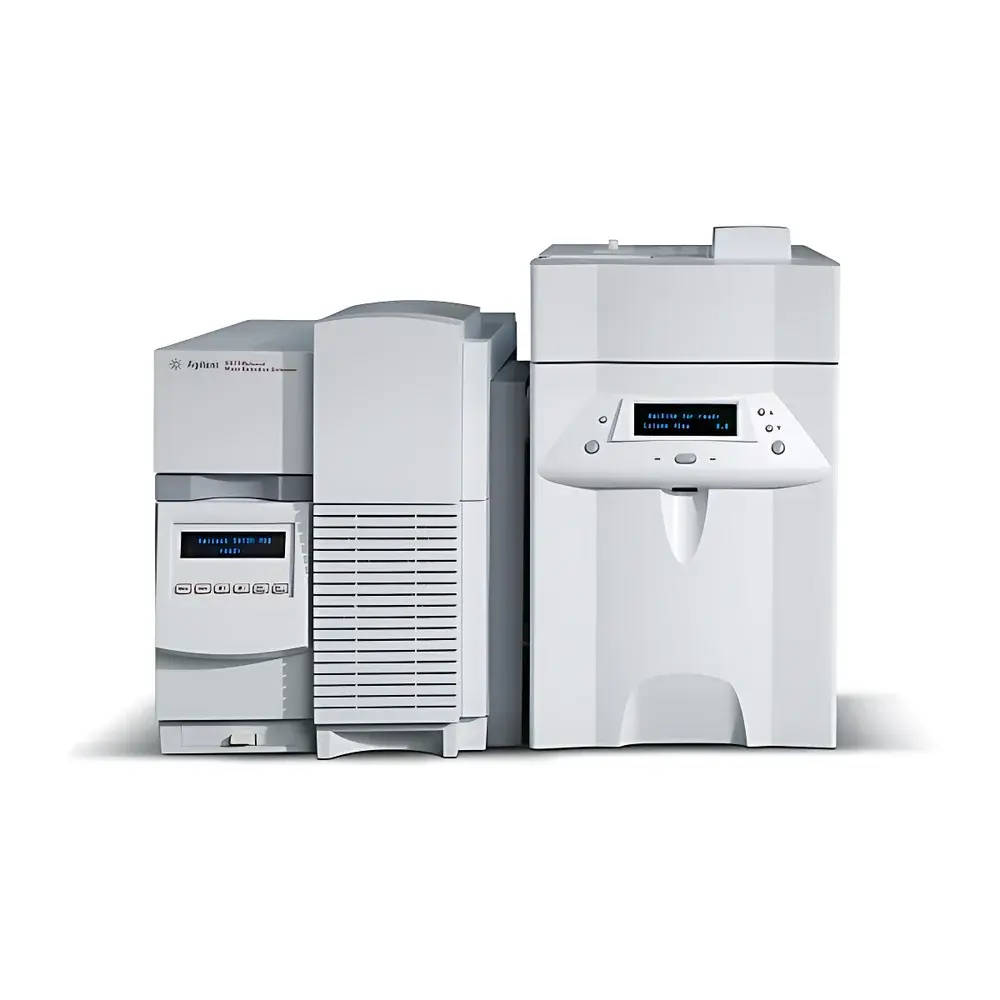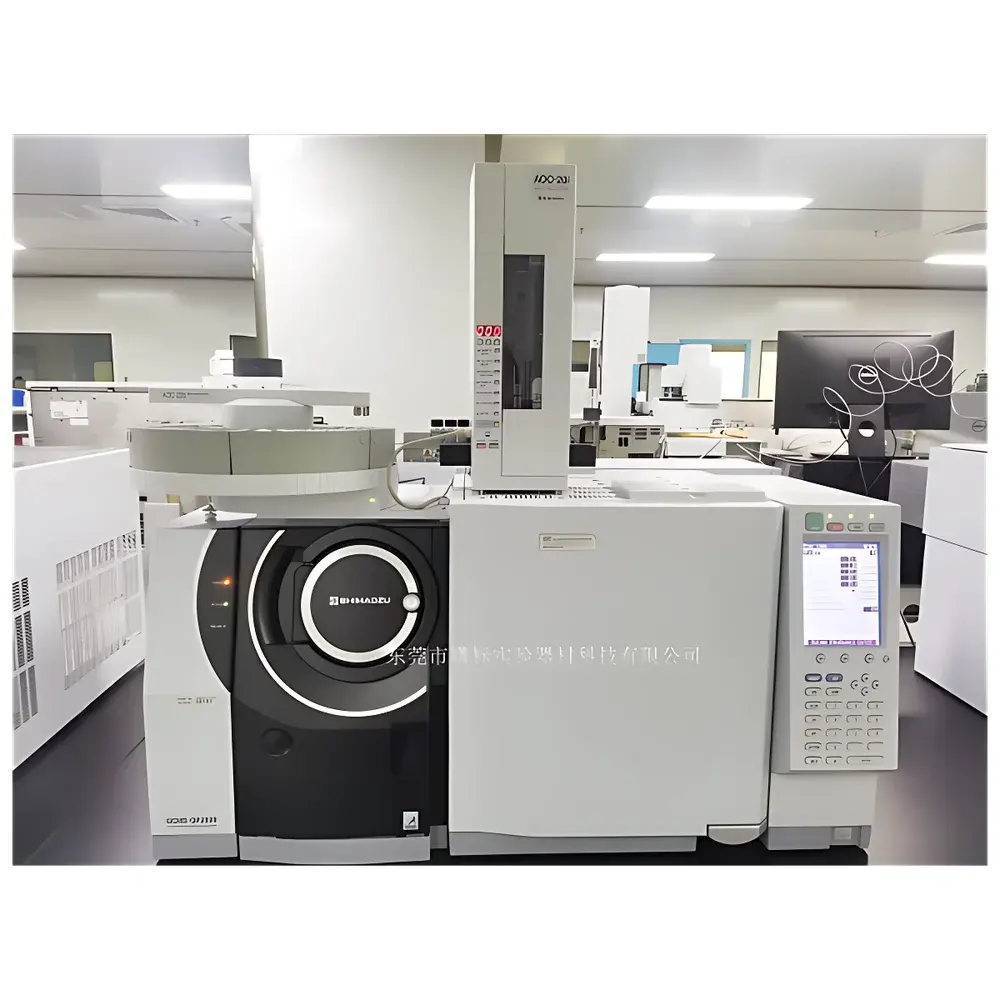
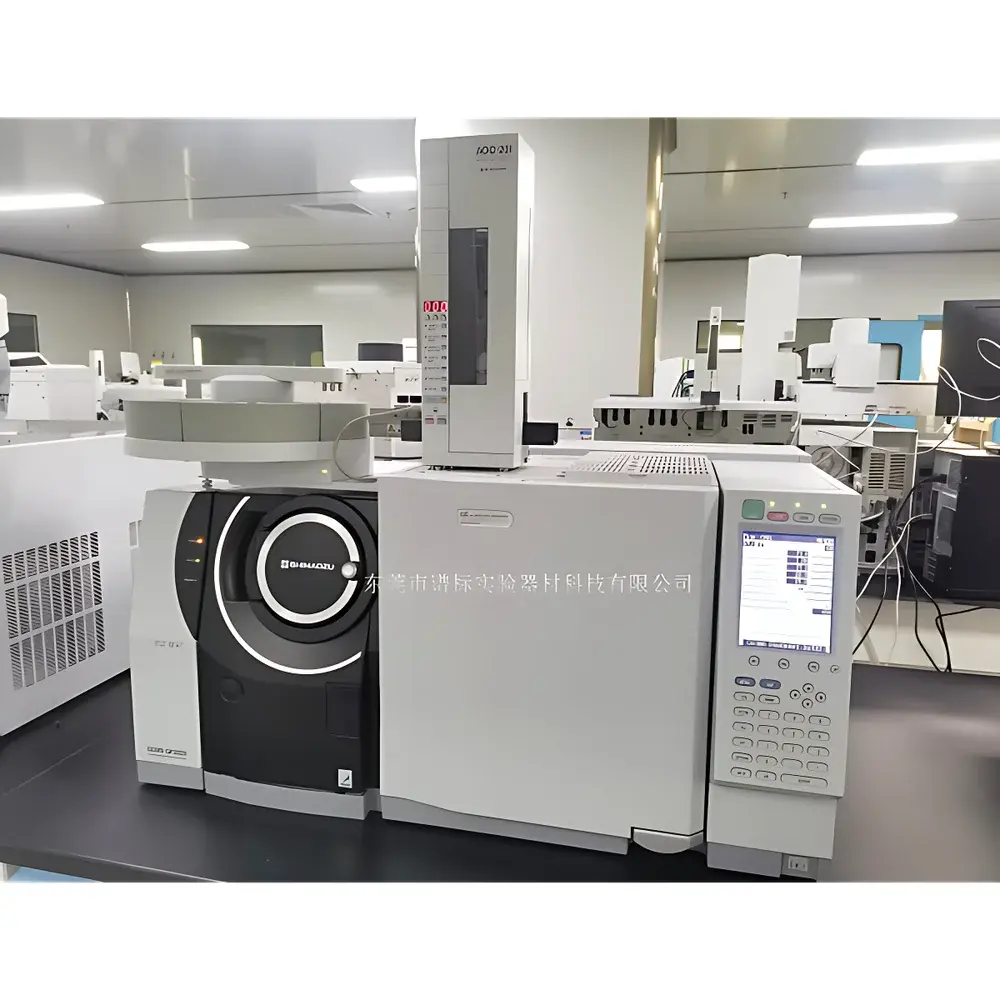
Shimadzu GCMS-QP2020 Gas Chromatography Mass Spectrometry System
| Brand | Shimadzu |
|---|---|
| Origin | Japan |
| Instrument Type | Single Quadrupole GC-MS |
| Vacuum System | Dual-stage differential pumping (ion source + quadrupole separately evacuated) |
| Ionization Modes | Electron Ionization (EI) and Chemical Ionization (CI) with Quick-CI switching |
| Carrier Gases Supported | Helium, Hydrogen, Nitrogen |
| Software Platform | GCMS Insight (integrated GCMSsolution + LabSolutions Insight) |
| Scan Speed | Up to 20,000 u/sec with ASSP™ (Advanced Scanning Speed Protocol) |
| Key Hardware | High-capacity turbo-molecular pump, shielded high-brightness ion source, temperature-compensated electronic flow control (AFC), constant linear velocity (CLV) mode |
Overview
The Shimadzu GCMS-QP2020 is a single-quadrupole gas chromatography mass spectrometry (GC-MS) system engineered for high-sensitivity, high-reproducibility trace analysis in regulated and research laboratory environments. It operates on the fundamental principle of coupling capillary gas chromatographic separation with electron ionization (EI) or chemical ionization (CI) mass spectrometric detection, followed by quadrupole mass filtering and electron multiplier-based ion detection. The system employs a dual-stage differential vacuum architecture—where the ion source and quadrupole mass analyzer are independently evacuated—ensuring optimal ion transmission efficiency and spectral stability across diverse carrier gas conditions (He, H₂, N₂). This design eliminates vacuum-related compromises in sensitivity or resolution when switching between gases, a critical requirement for method transfer, cost optimization (e.g., H₂ substitution), and regulatory flexibility. The GCMS-QP2020 builds upon the analytical legacy of the QP2010 Ultra platform while integrating hardware enhancements—including a next-generation high-capacity turbo-molecular pump—and software-defined workflows that support both targeted quantitation and untargeted screening with robust data integrity.
Key Features
- High-efficiency differential vacuum system: Independent evacuation of ion source and quadrupole enables stable operation under He, H₂, or N₂ carrier gas without recalibration or performance degradation.
- Quick-CI functionality: Seamless, tool-free switching between EI and CI ionization modes within a single run sequence—enabling molecular ion confirmation without physical ion source replacement or downtime.
- Shielded high-brightness ion source: Incorporates thermal and electrostatic shielding to suppress active surface formation, delivering long-term signal stability and reduced background noise during extended analyses.
- Advanced Scanning Speed Protocol (ASSP™): Dynamically adjusts quadrupole DC/RF voltages during high-speed scanning (>10,000 u/sec), maintaining ion transmission efficiency and minimizing sensitivity loss across the full mass range.
- Temperature-compensated Electronic Flow Control (AFC): Ensures retention time reproducibility <0.02 min over multi-day sequences; supports Constant Linear Velocity (CLV) mode for consistent chromatographic resolution across temperature gradients.
- Integrated Smart SIM method generation: Automatically derives optimal selected-ion monitoring (SIM) parameters—including dwell times and ion groups—based on retention index alignment and peak width profiles, reducing method development time by >70% for multi-analyte panels.
Sample Compatibility & Compliance
The GCMS-QP2020 accommodates standard 0.25–0.53 mm ID fused-silica capillary columns (up to 60 m length) and supports direct injection, split/splitless, PTV, and cold-on-column (COC) inlet configurations. It is routinely deployed for volatile and semi-volatile organic compound (VOC/SVOC) analysis in environmental matrices (water, soil, air), food safety testing (pesticides, mycotoxins, off-flavors), clinical toxicology (drugs of abuse, metabolites), and polymer additive screening. The system complies with instrumental requirements outlined in ASTM D5845, ISO 17025 (when operated under documented SOPs), USP , and EU Commission Regulation (EU) No 2021/2093 for pesticide residue analysis. Data acquisition and processing workflows support audit trail generation, electronic signatures, and user-access controls aligned with FDA 21 CFR Part 11 readiness—particularly when deployed with LabSolutions Insight in validated laboratory information management system (LIMS) environments.
Software & Data Management
GCMS Insight integrates two core software modules: GCMSsolution for instrument control, acquisition, and basic processing; and LabSolutions Insight for advanced multivariate data review, QC assessment, and regulatory reporting. LabSolutions Insight provides synchronized visualization of quantitative results, chromatograms, and calibration curves across all samples in a batch. It features automated pass/fail flagging against user-defined specification limits, five-color-coded result annotation (e.g., green = compliant, red = OOS), and real-time reintegration feedback upon manual peak editing. The software maintains full audit trail records—including parameter changes, integration edits, and report exports—with timestamps and operator IDs. All raw data (.qgd files) and processed results (.csv/.pdf) are stored in a structured, non-proprietary folder hierarchy compatible with third-party data archiving systems and long-term digital preservation protocols.
Applications
The GCMS-QP2020 serves as a foundational platform for laboratories requiring flexible, high-throughput GC-MS capability across multiple disciplines. Its compatibility with hyphenated techniques—including TD-GCMS (thermal desorption), Py-Screener (pyrolysis), MDGC/GCMS (multi-dimensional GC), and GC×GC-qMS (comprehensive two-dimensional GC)—enables expansion into complex mixture analysis (e.g., petrochemical fingerprinting, flavor profiling, microplastic identification). In environmental labs, it supports EPA Method 8270D-compliant SVOC analysis and EU Water Framework Directive priority substance monitoring. In food testing, its retention index–based library matching and Smart SIM quantitation meet China’s GB 23200 series standards for pesticide multiresidue methods. For pharmaceutical QC, it fulfills ICH Q2(R2) guidance for specificity and robustness in residual solvent analysis per USP .
FAQ
Is the GCMS-QP2020 compliant with 21 CFR Part 11?
Yes—when configured with LabSolutions Insight under a validated IT environment (including domain authentication, role-based access, and enabled audit trail logging), the system meets technical requirements for electronic records and signatures.
Can hydrogen be used safely as a carrier gas on this instrument?
Yes—the differential vacuum architecture and leak-tight GC manifold are certified for H₂ operation at pressures up to 100 kPa; optional H₂ sensor integration is available for enhanced safety monitoring.
What database formats does GCMS Insight support for library searching?
NIST MS Search (with .msl libraries), Wiley Registry, and custom-built retention index–referenced libraries compliant with ASTM E2937 and ISO 11843-2.
Does the system support scheduled maintenance alerts and usage tracking?
Yes—GCMSsolution logs consumable usage (filament hours, detector gain cycles, pump oil life), triggers configurable notifications, and exports maintenance history reports in CSV format.
Is remote diagnostics supported?
Yes—Shimadzu Remote Support (SRS) protocol enables secure, encrypted technician-assisted troubleshooting via TLS 1.2–secured connection, subject to customer network policy approval.
Related Products