
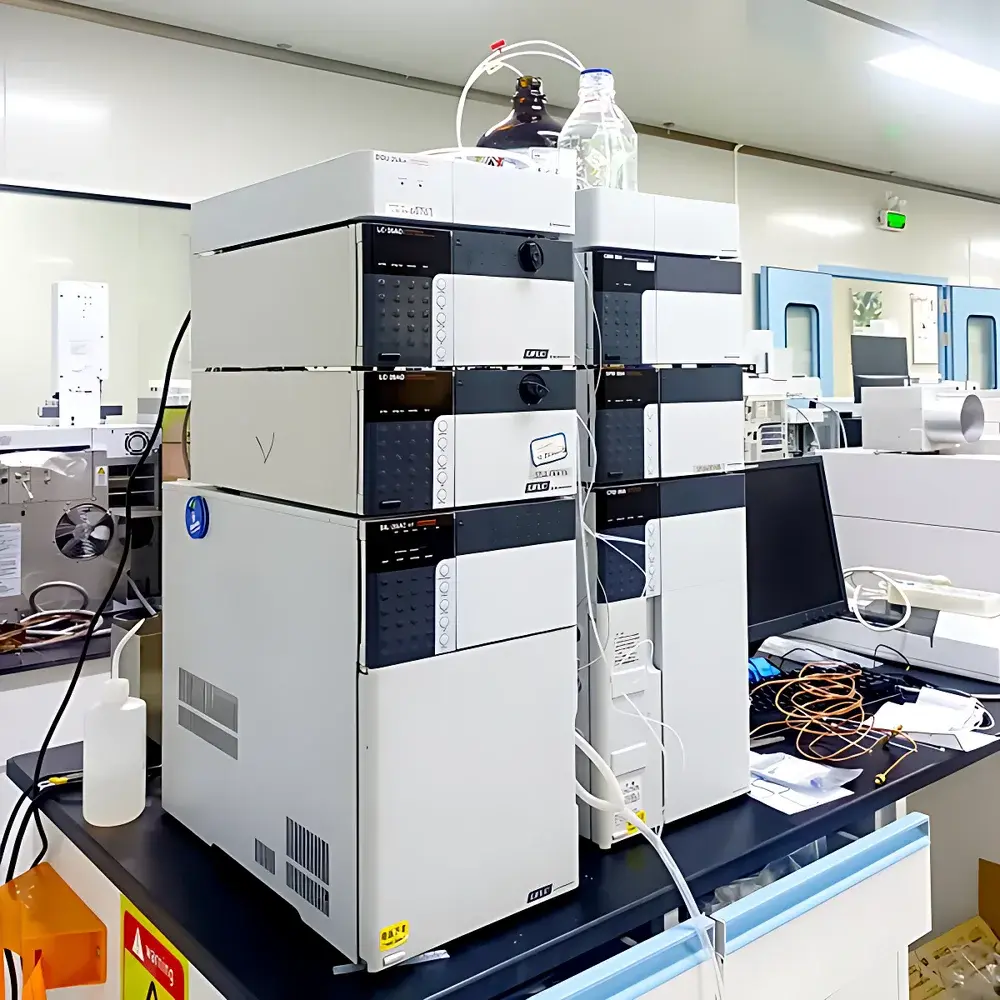
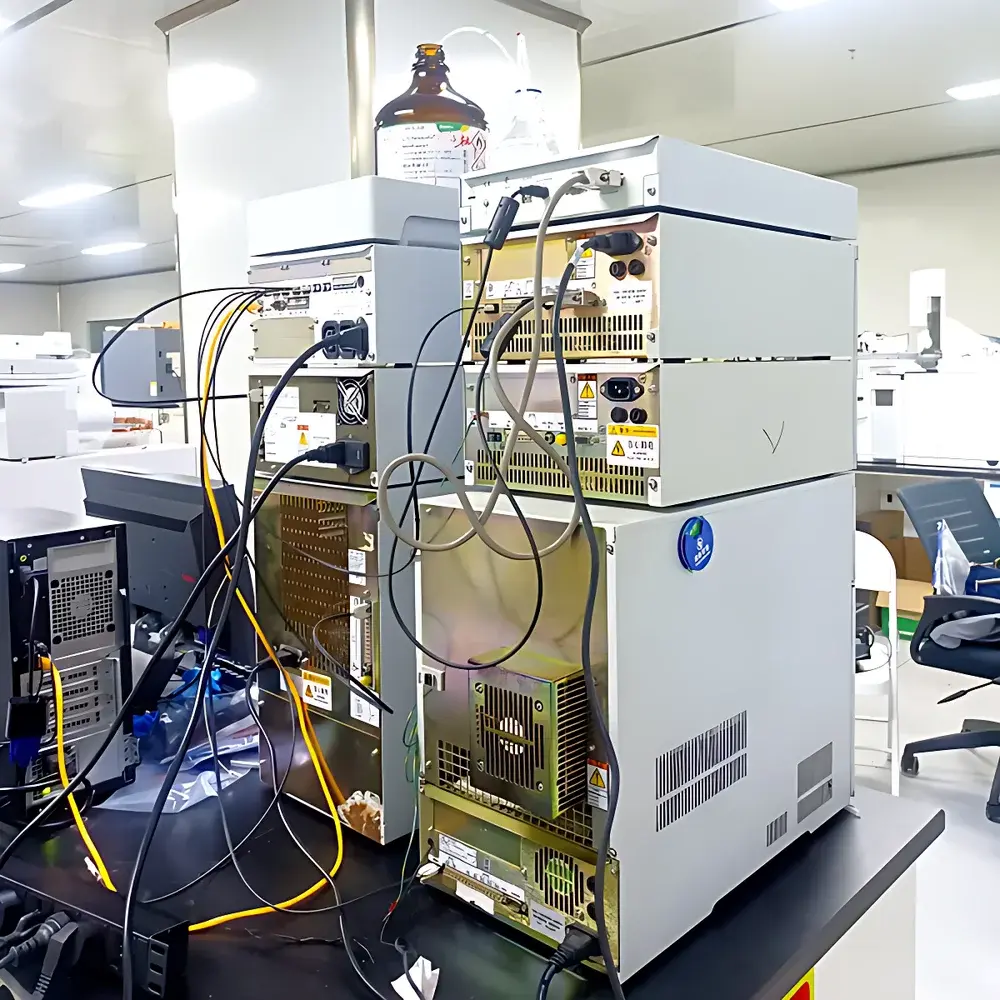
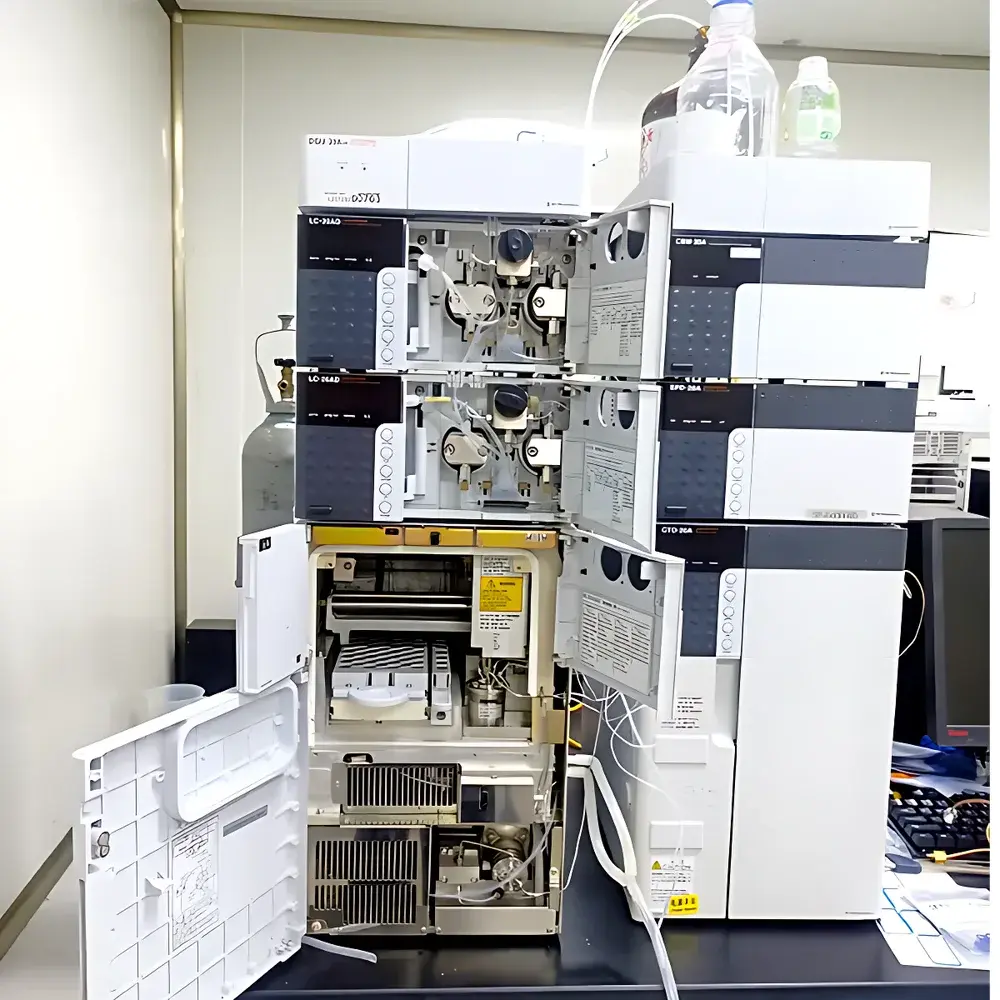
Shimadzu LC-20AD Parallel Dual-Piston HPLC Solvent Delivery Pump
| Brand | Shimadzu |
|---|---|
| Origin | Japan |
| Pump Type | High-Pressure Isocratic/Gradient Capable |
| Maximum Pressure | 40 MPa |
| Flow Rate Range | 0.0001–10.0000 mL/min |
| Flow Precision | ≤0.06% RSD |
| Piston Volume | 10 µL |
| Gradient Capability | Binary or Ternary (with additional modules) |
| Compliance | Designed for ISO/IEC 17025, USP <621>, and FDA 21 CFR Part 11–ready system integration |
Overview
The Shimadzu LC-20AD is a high-performance parallel dual-piston solvent delivery pump engineered for precision liquid chromatography applications. As a core module of the Shimadzu LC-20A series HPLC platform, it operates on positive displacement principle using two synchronized 10 µL pistons to deliver continuous, pulse-free mobile phase flow under high backpressure conditions—up to 40 MPa (5800 psi). This architecture ensures exceptional stability across wide flow ranges (0.0001–10.0000 mL/min), making it suitable for conventional reversed-phase, normal-phase, and HILIC separations—including those employing sub-2 µm particle columns and high-viscosity solvents. Unlike serial or single-piston designs, the parallel configuration enables real-time active compensation during refill strokes, minimizing baseline ripple and enhancing retention time reproducibility. The LC-20AD is not a standalone chromatograph but a modular, rack-mountable pump unit intended for integration into fully configured LC systems with detectors (e.g., SPD-20A), autosamplers (SIL-20A), column ovens (CTO-20A), degassers (DGU-20A), and system controllers (CBM-20A).
Key Features
- Parallel dual-piston mechanism with 10 µL piston volume for low-pulse, high-stability flow delivery
- Maximum operating pressure of 40 MPa—compatible with UHPLC-capable columns and high-efficiency packing materials
- Ultra-wide flow range: 0.0001–10.0000 mL/min with flow accuracy ≤0.06% RSD (measured per ASTM D7091 and ISO 13877)
- Integrated gradient capability: supports binary or ternary high-pressure mixing when paired with optional solvent selection valves and proportioning modules
- Real-time flow calibration and pressure monitoring via embedded sensors and digital feedback control
- Rack-mountable design compliant with standard 19-inch laboratory instrumentation enclosures
- RS-232 and Ethernet interfaces for bidirectional communication with CBM-20A controller and LCsolution software
Sample Compatibility & Compliance
The LC-20AD itself does not directly interface with samples; rather, it delivers precisely metered mobile phase to support separation integrity across diverse analyte classes—including small-molecule pharmaceuticals, peptides, organic acids, and polar metabolites. Its pressure and flow stability are validated for use with silica-based, polymer-coated, and hybrid stationary phases ranging from 1.7 µm to 5 µm particle sizes. System-level compliance is achieved when integrated within a full LC-20A configuration meeting GLP/GMP operational requirements: pressure and flow logs are timestamped and audit-trail enabled in LCsolution software (v1.25+), supporting 21 CFR Part 11 electronic signature and data integrity protocols. All wetted parts (piston seals, check valves, inlet/outlet tubing) are chemically resistant to common HPLC solvents including acetonitrile, methanol, THF, and aqueous buffers (pH 1.5–10.0).
Software & Data Management
The LC-20AD operates exclusively under Shimadzu’s LCsolution chromatography data system (CDS), which provides method-driven pump control, real-time pressure/flow diagnostics, and event-triggered sequence execution. Through the CBM-20A controller, all pump parameters—including flow rate, gradient profile, purge cycles, and leak detection thresholds—are programmable via graphical workflow editors. Raw flow and pressure data are acquired at 100 Hz and stored with metadata (user ID, method name, instrument ID, timestamp) in secure .lcd format files. Audit trails record all parameter changes, method modifications, and maintenance events—including piston seal replacement alerts based on cumulative stroke count. Export options include CSV, PDF, and XML for LIMS integration and regulatory submission packages.
Applications
- Pharmaceutical QC testing per USP monographs requiring isocratic or linear gradient elution
- Stability-indicating assays where retention time robustness must meet ICH Q2(R2) precision criteria
- Method development for complex natural product extracts requiring fine-grained flow optimization
- Preparative-scale fraction collection when coupled with flow-switching valves and fraction collectors
- LC-MS interface support—low-flow compatibility enables direct coupling to nano-ESI sources without splitting
- Environmental analysis of pesticides and PAHs per EPA Method 8330B, where baseline stability over 60-min gradients is critical
FAQ
Is the LC-20AD compatible with third-party CDS platforms such as Chromeleon or Empower?
No. The LC-20AD requires Shimadzu’s proprietary LCsolution software and CBM-20A controller for full functionality, including gradient programming, diagnostic logging, and firmware updates.
Can the LC-20AD operate independently without other LC-20A modules?
Yes—it can be used as a standalone isocratic pump with manual solvent selection, but gradient operation, autosampling, detection, and temperature control require integration with SIL-20A, SPD-20A, CTO-20A, and CBM-20A modules.
What maintenance intervals are recommended for piston seals and check valves?
Shimadzu recommends seal replacement every 3,000–5,000 hours of operation under typical aqueous/organic conditions; valve service is advised annually or after 10,000 gradient cycles, per maintenance log tracking in LCsolution.
Does the LC-20AD support low-dispersion microfluidic connections?
Yes—its outlet port features a 1/16″ stainless-steel union compatible with 0.005″–0.020″ ID PEEK and fused-silica capillaries, enabling sub-10 µL system dwell volume configurations when paired with low-volume mixers and detectors.
How is flow accuracy verified during IQ/OQ qualification?
Per ASTM D7091, verification uses gravimetric measurement of delivered solvent mass over time at three flow points (0.2, 1.0, and 5.0 mL/min) across five consecutive runs, with acceptance criteria of ±0.5% deviation and ≤0.1% RSD.




