
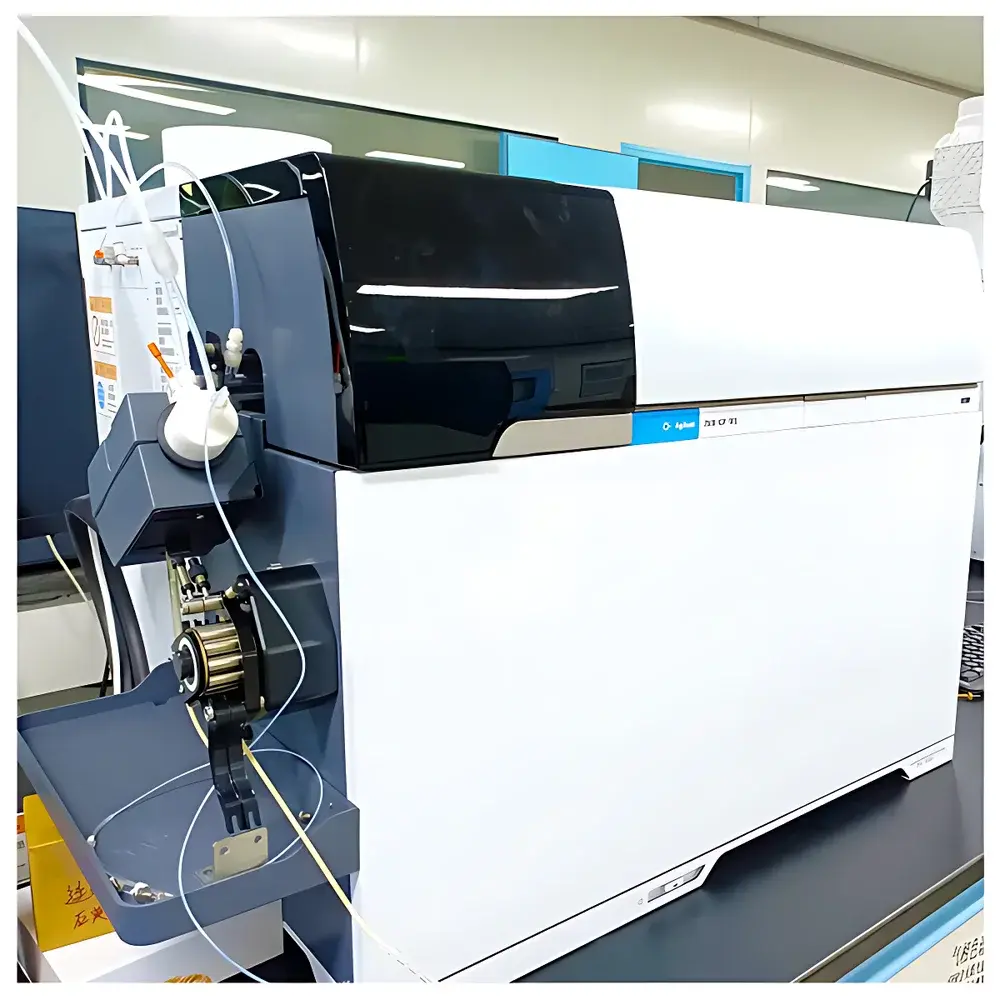
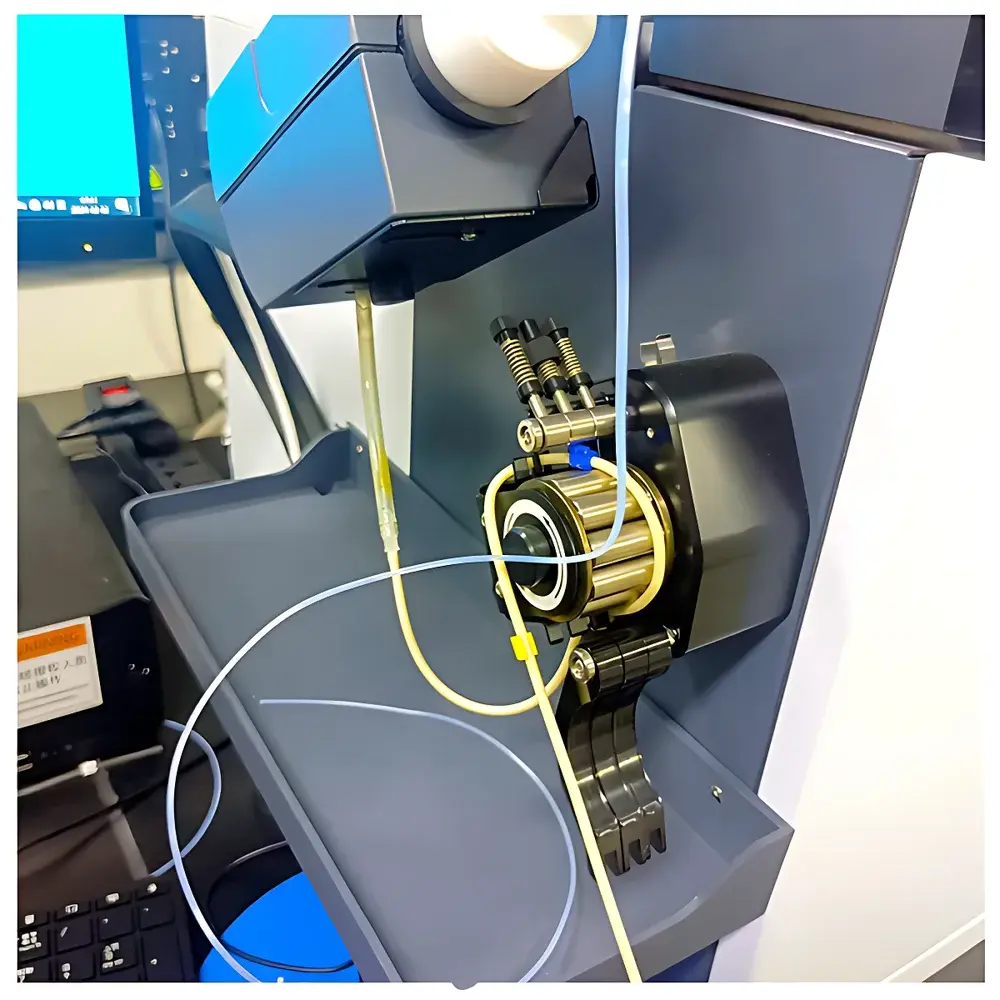
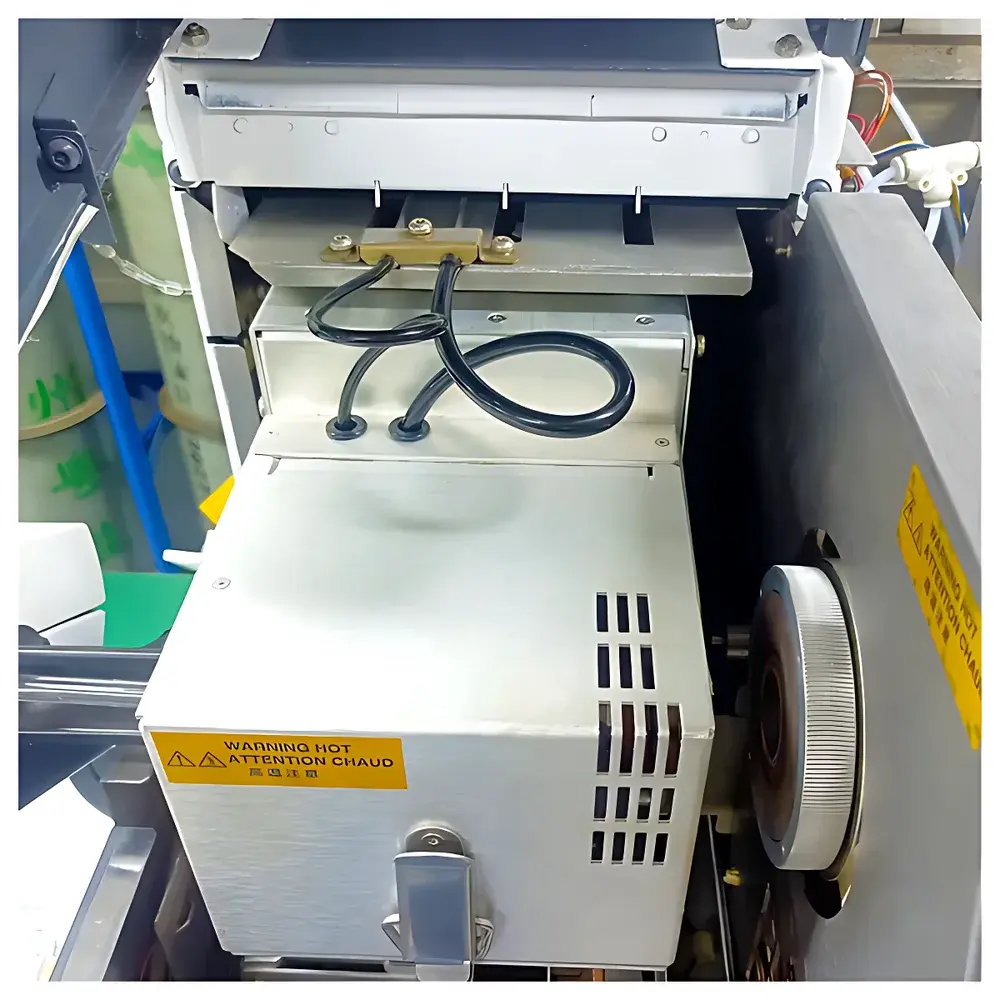
Agilent 7900 ICP-MS
| Brand | Agilent Technologies |
|---|---|
| Origin | Malaysia |
| Manufacturer Type | Authorized Distributor |
| Origin Category | Imported |
| Model | 7900 |
| Instrument Type | Quadrupole Mass Spectrometer |
| Application Environment | Laboratory |
| Mass Range (amu) | 10–280 |
| Unit Mass Resolution (amu) | 1 |
| Detection Limit (ng·L⁻¹) | 10 |
| Sensitivity (Mcps / mg·L⁻¹) | 10 |
| Short-Term Stability (RSD %) | 10 |
| Long-Term Stability (RSD %) | 5 |
Overview
The Agilent 7900 ICP-MS is a high-performance, single-quadrupole inductively coupled plasma mass spectrometer engineered for precision trace-element analysis across demanding laboratory environments. It operates on the fundamental principle of inductively coupled plasma ionization followed by mass separation via a radiofrequency-driven quadrupole mass filter and detection using a dual-mode (analog/digital) electron multiplier. Liquid samples are nebulized into fine aerosols, transported into an argon-based atmospheric-pressure plasma (~7,000–10,000 K), where complete desolvation, atomization, and ionization occur. Resulting elemental ions are extracted through a vacuum interface, focused by off-axis ion optics, and optionally subjected to collisional damping in a helium-filled collision cell to suppress polyatomic interferences (e.g., 40Ar16O+ on 56Fe+). The quadrupole mass analyzer transmits ions of a selected m/z with unit mass resolution (Δm/m = 1 amu), enabling unambiguous isotopic identification and quantification.
Key Features
- Ultra-high matrix tolerance enabled by a stable low-CeO/Ce plasma and Ultra-High Matrix Introduction (UHMI) system—capable of handling samples with up to 25% total dissolved solids (TDS)
- Helium collision mode optimized for robust interference removal without significant sensitivity loss, supporting accurate analysis of challenging matrices (e.g., seawater, brines, biological digests)
- Off-axis ion optics delivering enhanced signal-to-noise ratio across the full mass range (10–280 amu), contributing to sub-ppt detection limits (10 ng·L⁻¹ typical for key isotopes)
- Wide dynamic range detector enabling simultaneous quantification of major (percent-level) and trace (ppt-level) elements within a single acquisition
- Fast dwell time capability down to 0.1 ms—critical for transient signal analysis including single-particle ICP-MS (spICP-MS), laser ablation ICP-MS (LA-ICP-MS), and single-cell ICP-MS
- Modular architecture with standardized interfaces for seamless integration with HPLC, GC, CE, and FFF systems—supporting hyphenated speciation analysis under unified MassHunter software control
Sample Compatibility & Compliance
The Agilent 7900 ICP-MS accommodates liquid samples introduced via standard pneumatic nebulizers or specialized systems (e.g., microflow, desolvating, or high-solids nebulizers). Solid samples may be analyzed following acid digestion or direct introduction via laser ablation. Gaseous standards and calibration solutions comply with ISO/IEC 17025 requirements for certified reference materials (CRMs). The instrument supports audit-trail-enabled operation per FDA 21 CFR Part 11 when configured with compliant MassHunter software settings and networked user authentication. Method validation protocols align with ASTM D5673 (water), EPA Method 6020B (waste), and USP / (elemental impurities in pharmaceuticals).
Software & Data Management
Controlled by Agilent MassHunter Workstation Software (version B.09.00 or later), the 7900 integrates method development, acquisition, quantitation, and reporting into a single environment. The MassHunter Method Wizard automates optimization of plasma conditions, lens voltages, and collision gas flow based on sample type and analyte list. Data files adhere to mzML open format standards, ensuring long-term archival integrity and third-party software compatibility. Batch processing supports GLP-compliant workflows with electronic signatures, version-controlled methods, and full audit trail logging—including parameter changes, calibration events, and QC result reviews. Raw data retention policies can be aligned with internal SOPs or regulatory retention mandates (e.g., 20 years for pharmaceutical submissions).
Applications
- Environmental monitoring: Quantification of heavy metals (As, Cd, Pb, Hg) and rare earth elements (REEs) in drinking water, wastewater, soil extracts, and airborne particulates
- Geochemical research: Isotopic ratio measurements (e.g., Sr, Nd, Hf, U–Pb) for provenance studies and geochronology
- Pharmaceutical quality control: Elemental impurity screening per ICH Q3D guidelines, including catalyst residue analysis (Pd, Pt, Rh) in APIs
- Nanomaterial characterization: Size distribution and particle number concentration of metal-based nanoparticles via spICP-MS
- Clinical and nutritional research: Multi-element profiling in serum, urine, and tissue digests for biomarker discovery and exposure assessment
- Semiconductor manufacturing: Ultrapure chemical certification (e.g., HF, HNO₃, NH₄OH) at sub-part-per-trillion contamination levels
FAQ
What is the mass range and resolution specification of the Agilent 7900 ICP-MS?
The instrument provides a mass range from 10 to 280 amu with unit mass resolution (1 amu full width at half maximum), suitable for routine isotopic analysis of all stable elements and many radioactive isotopes.
Does the 7900 support hyphenated techniques such as HPLC-ICP-MS?
Yes—it features native synchronization with Agilent HPLC systems and supports automated valve switching, gradient control, and time-resolved data acquisition for elemental speciation analysis.
Can the 7900 analyze high-TDS samples without dilution?
With the optional UHMI kit and optimized plasma conditions, samples containing up to 25% total dissolved solids can be introduced directly, minimizing dilution-related errors and improving detection power.
How does the helium collision cell improve analytical accuracy?
Helium gas induces kinetic energy discrimination, reducing polyatomic interferences (e.g., ArCl⁺ on 35Cl⁺, ArO⁺ on 56Fe⁺) while preserving >70% of analyte ion transmission for most elements.
Is the 7900 compliant with regulatory data integrity requirements?
When deployed with MassHunter’s 21 CFR Part 11 configuration package—including role-based access, electronic signatures, and immutable audit trails—the system meets GLP/GMP and regulatory submission requirements.



