
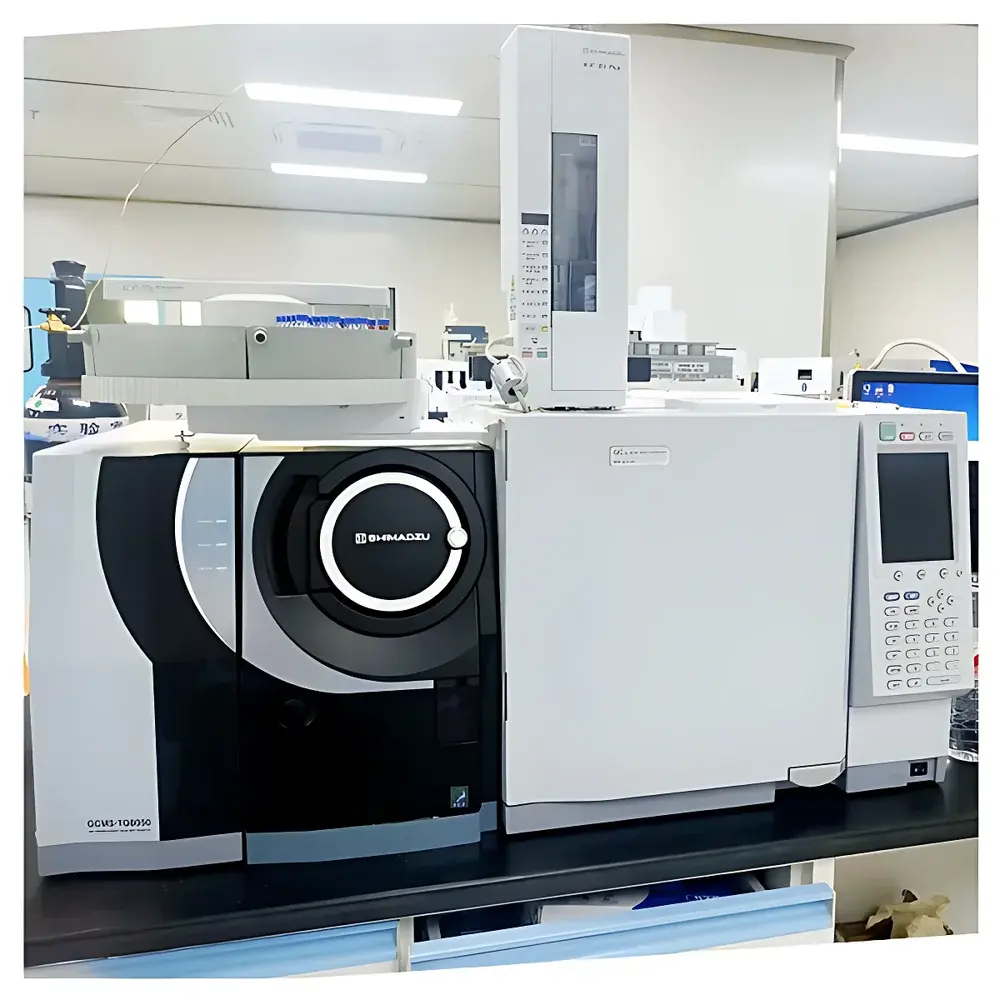
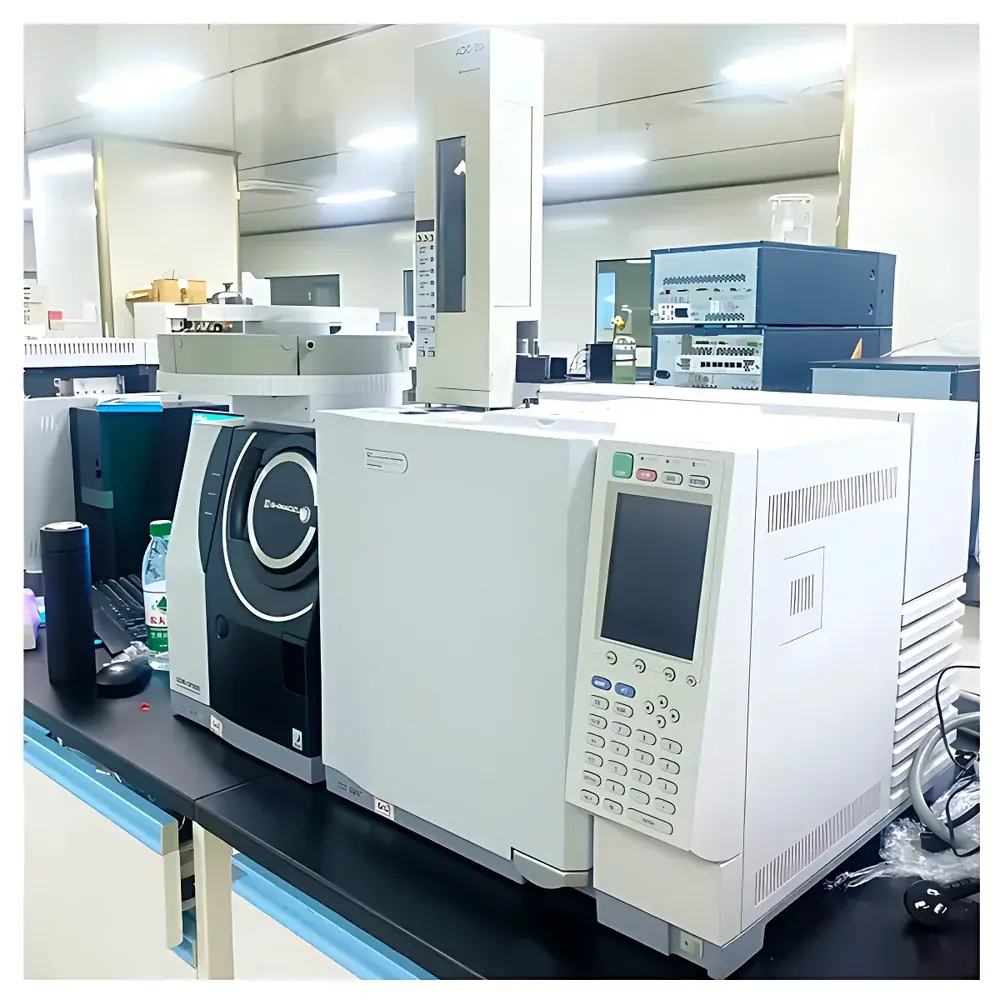
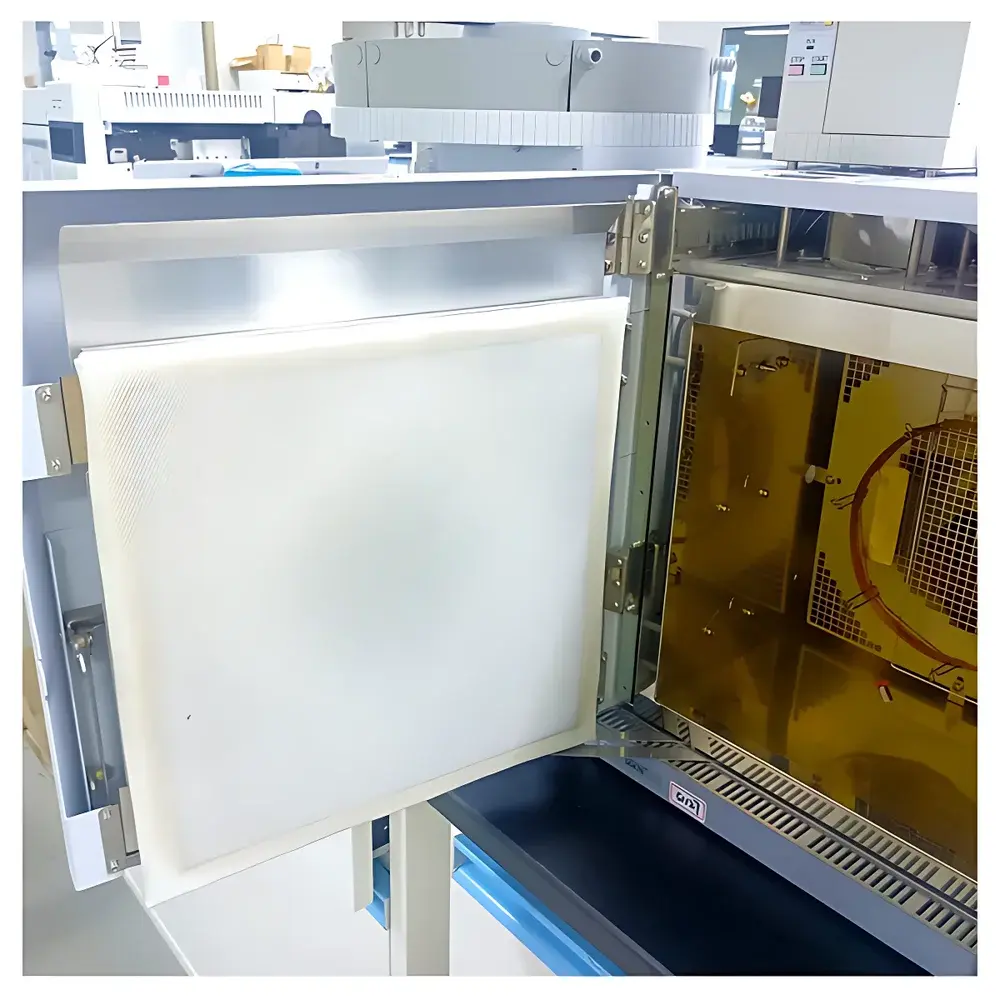
Shimadzu GCMS-TQ8050 Triple Quadrupole Gas Chromatography Mass Spectrometer
| Brand | Shimadzu |
|---|---|
| Origin | Japan |
| Model | GCMS-TQ8050 |
| Instrument Type | Triple Quadrupole Mass Spectrometer |
| GC Configuration | Conventional Gas Chromatography Interface |
| Mass Range | 10–1000 m/z |
| Resolution (FWHM) | ≥1000 (at m/z 502) |
| Sensitivity (S/N) | ≥300 (for 1 pg OFN, MRM mode) |
| Scan Speed | 15,000 Da/sec |
| Mass Accuracy | ±0.1 Da (calibrated) |
| Oven Ramp Rate | Up to 125 °C/min |
| Detector | High-Durability Electron Multiplier (EM) |
| Pressure Control Precision | ±0.001 psi (electronic pneumatic control) |
Overview
The Shimadzu GCMS-TQ8050 is a high-performance triple quadrupole gas chromatography mass spectrometer engineered for ultra-trace quantitative analysis in regulated and research-intensive laboratories. Operating on the principle of tandem mass spectrometry (MS/MS) via collision-induced dissociation (CID) in Q1–q2–Q3 configuration, the system delivers exceptional selectivity and specificity by isolating precursor ions in Q1, fragmenting them in the pressurized collision cell (q2), and detecting characteristic product ions in Q3. This architecture enables robust quantification of low-abundance analytes in complex matrices—such as food extracts, environmental water/sediment digests, biological fluids, and polymer leachates—where co-eluting interferences would otherwise compromise single-quadrupole or time-of-flight platforms. The instrument integrates a high-efficiency electron ionization (EI) source with patented high-luminosity anti-contamination design, coupled with dual-inlet turbomolecular pumping (240 L/s + 120 L/s) to sustain <5×10⁻⁷ Pa base pressure during extended acquisition. Its vacuum architecture, combined with optimized ion optics and off-axis detector geometry, ensures high transmission efficiency across wide dynamic ranges without sacrificing reproducibility.
Key Features
- Triple quadrupole mass analyzer with independently controlled RF/DC voltages for precise precursor/product ion selection and high-duty-cycle MRM transitions
- High-luminosity ion source featuring heated transfer line (up to 350 °C), adjustable electron energy (10–100 eV), and active filament current regulation for long-term stability
- Dual-stage differential pumping system with oil-free scroll backing pump (3-year maintenance interval) and two high-capacity turbomolecular pumps for rapid vacuum recovery and sustained low-background operation
- UFsweeper™ fast scanning technology enabling simultaneous acquisition of up to 1,000 MRM transitions per second while maintaining dwell times ≥5 ms
- Smart MRM™ automated method development: auto-optimizes collision energies (CE), declustering potentials (DP), and retention time windows based on compound class and database-matched spectral libraries
- Enhanced signal-to-noise ratio achieved through triple noise reduction—source shielding, pulse-counting EM with adaptive gain control, and real-time baseline subtraction in LabSolutions Insight
Sample Compatibility & Compliance
The GCMS-TQ8050 supports broad sample compatibility across volatile and semi-volatile organic compounds (VOCs/SVOCs), including pesticides (e.g., organophosphates, neonicotinoids), persistent organic pollutants (POPs) such as dioxins and PCBs, pharmaceutical metabolites, endocrine disruptors (e.g., bisphenols, phthalates), and forensic toxicants (e.g., benzodiazepines, synthetic cannabinoids). It complies with international analytical standards including EPA Methods 1613/8270/8321, ISO 17025:2017 requirements for method validation, and EU Regulation (EC) No 396/2005 for pesticide residue testing. Full audit trail, electronic signatures, and data integrity controls conform to FDA 21 CFR Part 11 and GLP/GMP guidelines when operated with validated LabSolutions Insight workflows.
Software & Data Management
LabSolutions Insight serves as the integrated acquisition and quantitation platform, supporting multi-batch processing, automatic calibration curve generation (linear/log-linear with 1/x² weighting), and internal standard normalization. Its Smart Database contains >12,000 pre-validated MRM methods—including CAS numbers, retention indices on common columns (DB-5ms, Rtx-5Sil MS), optimal CE/DP values, and isotopically labeled internal standards (e.g., ¹³C-labeled atrazine, d₁₂-PCB 153). All raw data are stored in vendor-neutral ANDI/NetCDF format. Audit logs record user actions, parameter changes, and instrument status timestamps; data export supports CSV, PDF, and XML for LIMS integration. Method validation reports include precision (RSD ≤8% at LOQ), accuracy (85–115%), linearity (r² ≥0.995), and matrix effect assessment per ICH M10.
Applications
- Food safety: Multi-residue screening of >500 pesticides in fruits, vegetables, and infant formula per EU SANTE/11312/2021 guidelines
- Environmental monitoring: Quantification of dioxin-like compounds at sub-pg/g levels in soil and sediment using isotope dilution (IDMS)
- Clinical research: Targeted metabolomics of acylcarnitines, bile acids, and oxylipins in plasma/urine under CLIA-compliant protocols
- Pharmaceutical development: Impurity profiling and genotoxic nitrosamine detection (e.g., NDMA) in APIs at ≤0.1 ppm
- Forensic toxicology: Confirmatory analysis of drugs of abuse in hair and blood with NIST SRM traceability
FAQ
What is the typical limit of quantitation (LOQ) for polychlorinated dibenzo-p-dioxins (PCDDs) using GCMS-TQ8050?
LOQs range from 0.05–0.2 pg on-column for 2,3,7,8-substituted congeners when using ¹³C-labeled internal standards and 10 µL splitless injection.
Does the system support both EI and CI ionization modes?
Yes—electron ionization (EI) is standard; chemical ionization (CI) with methane or ammonia reagent gas is available as an optional source module.
Can LabSolutions Insight generate compliance-ready validation reports?
Yes—it includes built-in templates aligned with ICH Q2(R2), USP , and ISO/IEC 17025 for accuracy, precision, specificity, linearity, range, LOD/LOQ, and robustness assessments.
Is remote monitoring and diagnostic capability supported?
The instrument supports SNMP-based network health monitoring, email alerts for vacuum anomalies or filament failure, and secure remote access via TLS-encrypted VNC for troubleshooting.
What column dimensions and carrier gas flow rates are recommended for optimal UFsweeper™ performance?
0.25 mm ID × 15–30 m DB-5ms columns with helium flow at 1.0–1.2 mL/min provide optimal balance between resolution, peak capacity, and scan speed for multi-analyte MRM assays.
Related Products





