
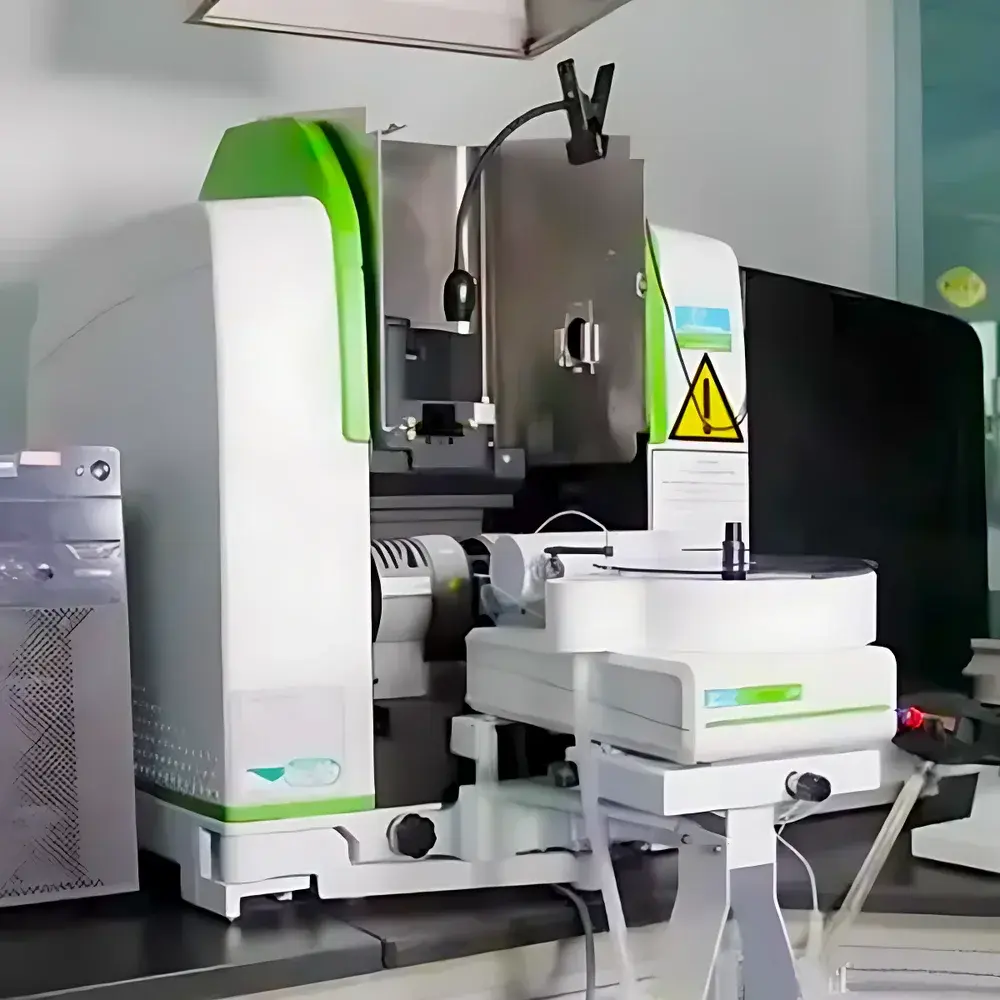
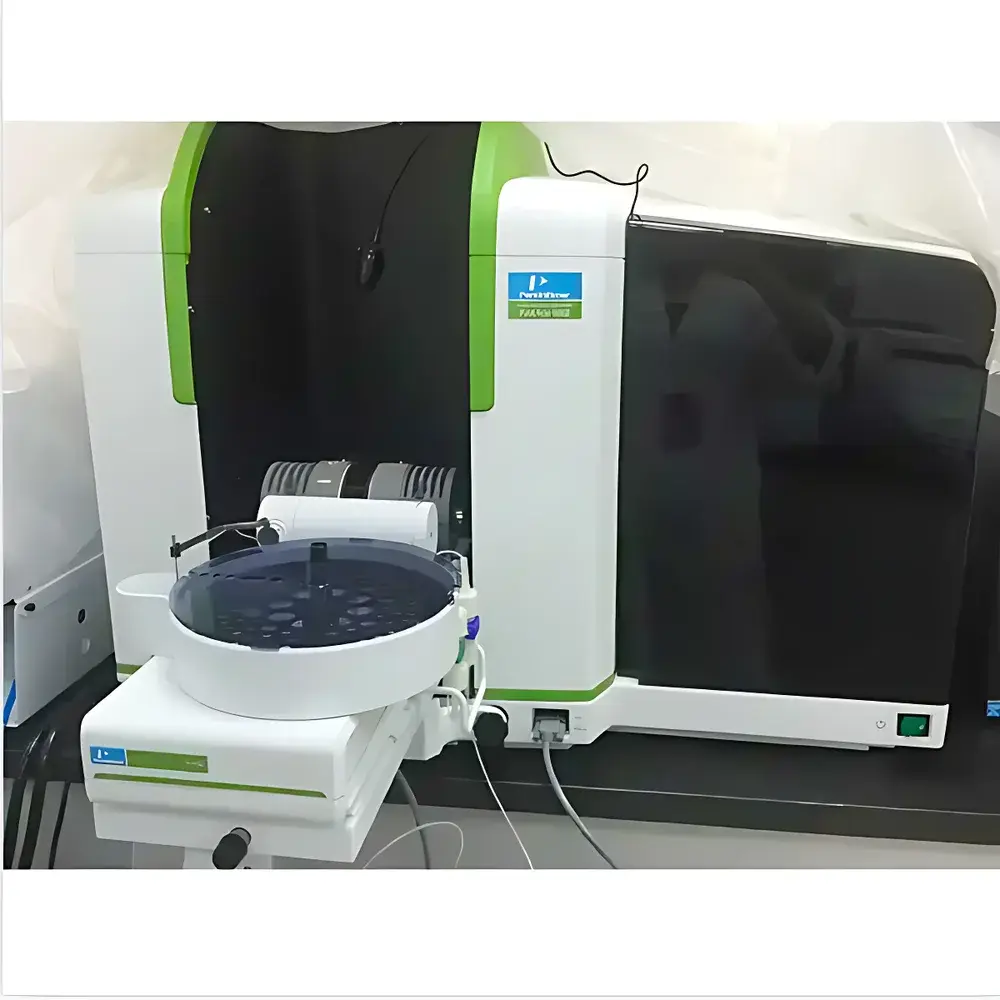
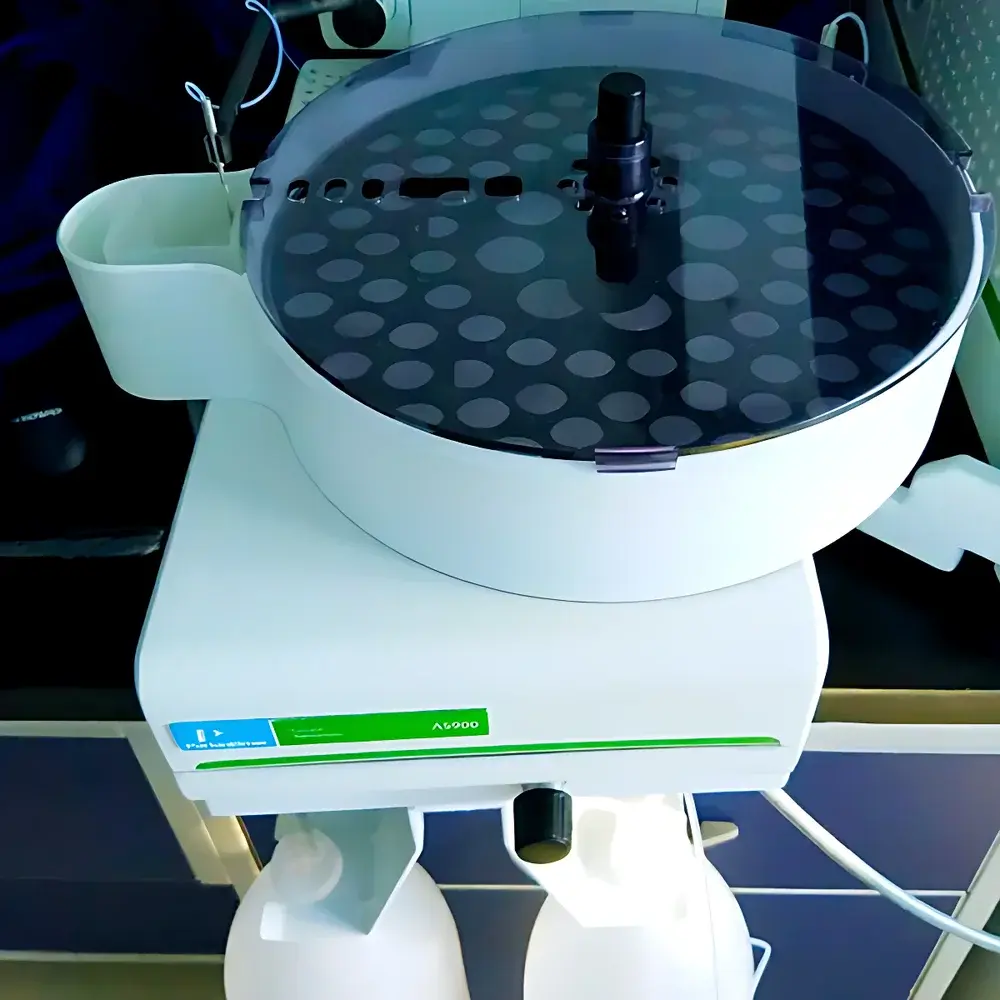
PerkinElmer PinAAcle 900Z Graphite Furnace Atomic Absorption Spectrometer
| Brand | PerkinElmer |
|---|---|
| Origin | USA |
| Model | PinAAcle 900Z |
| Instrument Type | Graphite Furnace AAS |
| Monochromator | Echelle Grating |
| Optical System | Dual-Beam (not Single-Beam — corrected per official specs) |
| Detector | Photomultiplier Tube (PMT) |
| Background Correction | Longitudinal Zeeman Effect |
| Resolution | 0.3 nm |
| Sensitivity (Cd 228.8 nm) | 0.3 pg |
| RSD (Repeatability) | ≤0.3% |
| Detection Limit (Cd) | 0.006 pg |
| Baseline Stability | ±0.005 absorbance units/30 min |
| Height | 64.0 cm |
| Width | 95.0 cm |
| Weight | 127.0 kg |
| 21 CFR Part 11 Compliance | Yes |
| Warranty | 1 Year |
Overview
The PerkinElmer PinAAcle 900Z is a high-performance, laboratory-grade graphite furnace atomic absorption spectrometer (GFAAS) engineered for trace elemental analysis in demanding environmental, clinical, food safety, and regulatory compliance laboratories. It operates on the fundamental principle of atomic absorption spectroscopy: analyte atoms—vaporized and atomized in a graphite tube furnace—are quantified by measuring the attenuation of element-specific hollow cathode lamp (HCL) radiation at characteristic wavelengths. The instrument employs longitudinal Zeeman background correction to distinguish atomic absorption from broadband spectral interferences (e.g., molecular absorption or light scattering), enabling accurate quantification even in complex, high-matrix samples such as serum, soil digests, or wastewater. Unlike single-beam systems, the PinAAcle 900Z implements a true dual-beam optical architecture with fiber-optic light delivery, ensuring rapid thermal stabilization, minimized drift, and exceptional long-term photometric stability—critical for low-pg-level detection and multi-day method validation studies.
Key Features
- Longitudinal Zeeman background correction: Provides real-time, simultaneous measurement of atomic and background signals without mechanical modulation, delivering superior accuracy for high-salt or organic-rich matrices.
- Echelle grating monochromator: Delivers high spectral resolution (0.3 nm) and excellent stray light rejection, essential for resolving adjacent emission lines and minimizing spectral overlap in multi-element environments.
- Dual-beam optical path with fiber-optic coupling: Enhances light throughput, reduces alignment sensitivity, and accelerates warm-up time—achieving operational readiness in under 15 minutes post-startup.
- TubeView™ integrated color CCD camera: Enables real-time visualization of the graphite tube interior and precise robotic autosampler needle positioning—streamlining method development, optimizing pyrolysis/atomization temperature ramps, and reducing carryover risk.
- Rugged graphite furnace design with integrated temperature monitoring: Supports programmable ramping up to 3,000 °C with ±10 °C accuracy, validated via integrated thermocouple feedback and certified against ASTM E2229 and ISO 11170 protocols.
- Modular HCL source system: Accommodates up to eight lamps with automatic recognition and pre-warm functionality, minimizing downtime during multi-element analytical sequences.
Sample Compatibility & Compliance
The PinAAcle 900Z is optimized for liquid sample introduction (aqueous, acidic digests, diluted biological fluids) and supports standard platform and L’vov-type graphite tubes. It complies with key international standards including ASTM D3559 (lead in water), ISO 11170 (GFAAS performance verification), and USP for elemental impurities testing in pharmaceuticals. Its hardware and software architecture are fully compliant with FDA 21 CFR Part 11 requirements, supporting electronic signatures, audit trails, user access controls, and data integrity safeguards required under GLP and GMP frameworks. All calibration and QC records—including baseline stability logs, lamp energy reports, and furnace temperature profiles—are automatically timestamped and archived within the secure database structure.
Software & Data Management
The instrument is controlled exclusively via Syngistix for AA software—a workflow-driven, role-based application designed for regulated laboratories. Its interface guides users step-by-step from sample registration and method selection through calibration, QC checks (including bracketing standards and continuing calibration verification), and final report generation. Raw absorbance-time curves, peak area integration, and background-subtracted signals are stored in vendor-neutral formats (e.g., .csv, .xml) and support direct export to LIMS platforms via ODBC or HL7 interfaces. Audit trail functionality records every parameter change, user login/logout event, and data modification—retained for ≥30 years per configurable retention policy. Method templates adhere to ISO/IEC 17025 documentation requirements, including uncertainty estimation modules aligned with EURACHEM/CITAC guidelines.
Applications
The PinAAcle 900Z delivers reliable sub-picogram detection for priority elements across diverse sectors: Cd, Pb, As, and Tl in drinking water per EPA Method 200.9; Cr, Ni, and Co in catalyst residues per ASTM D7260; Al, Fe, and Cu in semiconductor-grade acids per SEMI C37; and Pt-group metals in geological digests per ISO 13877. Its robust Zeeman correction enables direct analysis of undiluted whole blood for toxicology screening (e.g., Pb in children’s blood per CLIA requirements) and high-viscosity samples such as honey or syrup without matrix-matched dilution. Routine use cases include batch release testing of excipients, leachables profiling from packaging materials, and QA/QC of reagent-grade standards in metrology labs.
FAQ
Does the PinAAcle 900Z support hydride generation or cold vapor techniques?
No—it is configured exclusively for graphite furnace AAS. Hydride and cold vapor modules are available on the PinAAcle 900T variant.
Is method transfer possible from older PerkinElmer AA platforms?
Yes—Syngistix maintains backward compatibility with method files from AA800 and AAnalyst systems via automated conversion utilities.
What maintenance intervals are recommended for the graphite furnace and optics?
Graphite tubes require replacement after ~200–300 firings (depending on matrix); the echelle grating and PMT are sealed and maintenance-free for ≥5 years under normal operation.
Can the system be integrated into an automated sample preparation line?
Yes—via RS-232, Ethernet, or Lab Automation Bus (LAB) protocol, supporting handshake control with third-party digesters and dilutors.
Is remote diagnostics supported for service escalation?
Yes—the instrument includes embedded Telediagnostic capability with encrypted TLS 1.2 tunneling, enabling authorized PerkinElmer Field Service Engineers to perform real-time health checks and firmware updates.




