
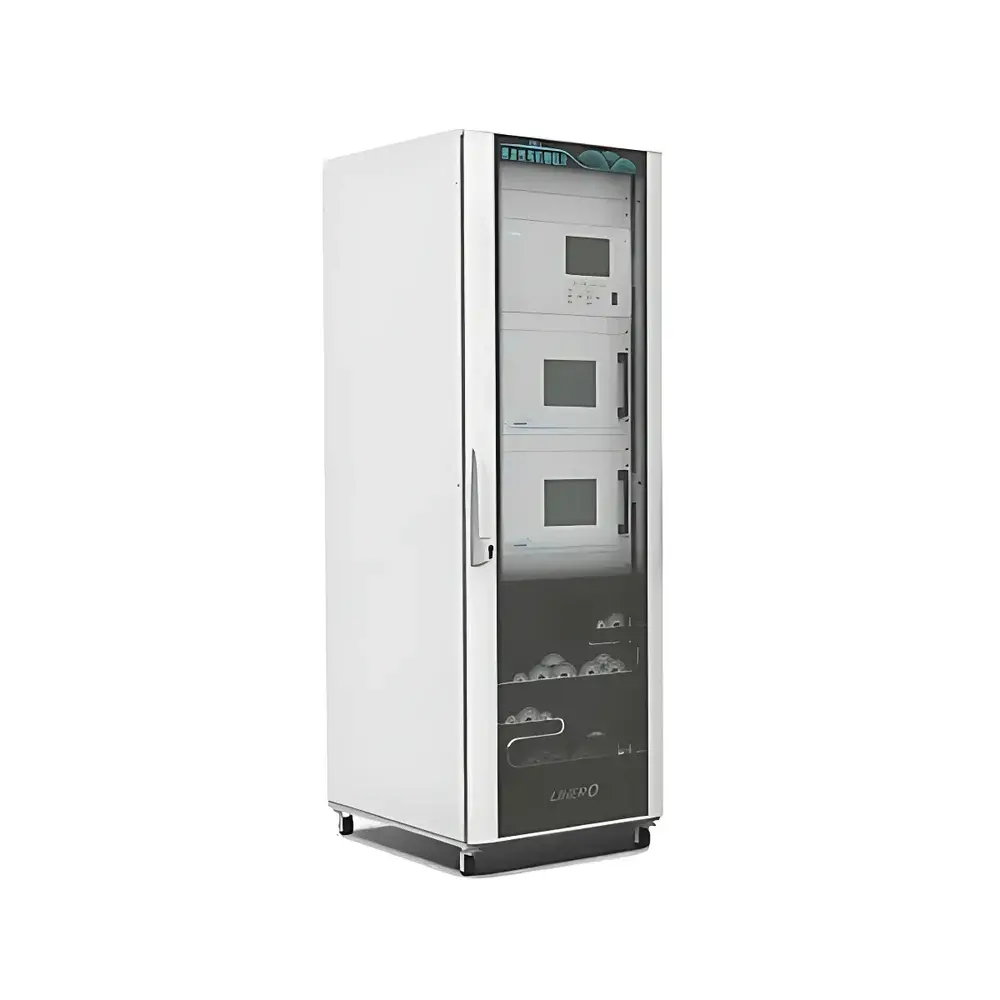
Lihero LFGGC-2013 Integrated Photochemical Speciation System
| Brand | Lihero |
|---|---|
| Origin | Hunan, China |
| Model | LFGGC-2013 (Integrated Configuration) |
| Detection Principle | Gas Chromatography with Flame Ionization Detection (GC-FID) and Optional Dual-Channel GC-MS Support |
| Target Analytes | Non-Methane Hydrocarbons (NMHC), Photochemical Air Pollutants (PAMs), Oxygenated Volatile Organic Compounds (OVOCs), Halogenated Hydrocarbons |
| Automation Level | Fully Automated Sampling, Cryogenic Trapping, Thermal Desorption, and Chromatographic Analysis |
| Flow Control | Mass Flow Controller (MFC) with Adjustable Sampling Volume and Trap Duration |
| Data Traceability | Full Chromatogram Archiving per Measurement Cycle |
| System Logging | Real-time Instrument Status Monitoring and Comprehensive Event Logging |
| Compliance Framework | Designed for alignment with EPA TO-14A/TO-15, ISO 16017-1, and China HJ 644–2013 & HJ 759–2015 Standards |
Overview
The Lihero LFGGC-2013 Integrated Photochemical Speciation System is a purpose-built, laboratory-grade gas chromatography platform engineered for high-temporal-resolution speciation of reactive volatile organic compounds (VOCs) in ambient air. It operates on the fundamental principle of cryogenically assisted preconcentration followed by capillary gas chromatographic separation and sensitive detection—primarily via flame ionization detection (FID), with optional dual-channel configuration supporting simultaneous FID and mass spectrometric (GC-MS) analysis. The system is explicitly designed to quantify key photochemical precursors including non-methane hydrocarbons (NMHC), ozone-forming potential compounds (PAMs), oxygenated VOCs (OVOCs) such as aldehydes and ketones, and halogenated species (e.g., chloromethanes, bromoform). Its architecture supports time-resolved monitoring at sub-hour intervals (e.g., 30–60 min cycle time), enabling robust characterization of diurnal VOC reactivity patterns and source apportionment inputs for photochemical modeling.
Key Features
- Fully automated, unattended operation encompassing real-time ambient air sampling, programmable cryotrapping at −30 °C to −40 °C, rapid thermal desorption (>30 °C/s ramp rate), and GC separation on dual-column configurations (e.g., DB-1/DB-624 or equivalent polar/non-polar pairs).
- Integrated mass flow controller (MFC) with ±1% full-scale accuracy ensures precise regulation of sampling flow (typically 50–500 mL/min), enabling traceable quantification of analyte mass loading and compliance with volumetric reporting requirements (e.g., µg/m³ @ 25 °C, 101.3 kPa).
- Comprehensive data provenance: every analytical run generates a timestamped, immutable chromatogram file stored locally and optionally synchronized to secure network storage—supporting full audit trails required under GLP and environmental monitoring QA/QC protocols.
- Embedded instrument health monitoring continuously logs detector response, column head pressure, trap temperature stability, carrier gas purity alerts, and valve actuation cycles—facilitating predictive maintenance and long-term performance validation.
- Modular hardware design allows scalable configuration: base system supports NMHC/PAMs analysis; optional add-ons include OVOC-specific cold trap optimization, halocarbon-selective columns, and parallel GC-MS channel for structural confirmation and low-abundance compound identification.
Sample Compatibility & Compliance
The LFGGC-2013 accepts uncompressed ambient air samples collected directly from standard inlet manifolds (e.g., ¼″ OD stainless steel or electropolished PFA tubing). It accommodates variable humidity conditions (up to 90% RH) via integrated moisture management—either Nafion-based drying or selective water trapping—without compromising recovery of polar OVOCs. All calibration procedures follow multipoint external standard methodology traceable to NIST-certified gas standards (e.g., Scott-Marrin NMHC Mix, Restek TO-15 PAMS Mix). The system meets technical specifications outlined in China’s HJ 644–2013 (Determination of VOCs in Ambient Air—Adsorption Thermal Desorption–Gas Chromatography Method) and HJ 759–2015 (Ambient Air—Determination of VOCs by Canister Sampling–GC/MS), and its operational logic aligns with U.S. EPA Methods TO-14A (Trace-Level VOCs) and TO-15 (Air Toxics), as well as ISO 16017-1:2000 (Indoor Air—Sampling and Analysis of Volatile Organic Compounds).
Software & Data Management
The proprietary Lihero SpeciView™ software provides unified control of hardware modules, real-time chromatogram visualization, peak integration using adaptive baseline algorithms, and automated compound identification via retention index matching against embedded spectral libraries (NIST MS Search + custom PAMs/OVOCs library). Raw data files adhere to ASTM E1947-compliant formats (.CDF or .dx) and support export to common environmental databases (e.g., EPA AQS, China MEP’s National Air Quality Monitoring Platform). Audit trail functionality records all user actions—including method edits, integration parameter adjustments, and manual peak reprocessing—with digital signatures and timestamps compliant with FDA 21 CFR Part 11 requirements for electronic records and signatures. Data archiving supports ≥12 months of continuous operation without manual intervention.
Applications
- Ozone precursor apportionment in urban and regional airsheds, supporting development of VOC reactivity-weighted emission inventories.
- Evaluation of VOC speciation profiles near industrial clusters, landfills, petrochemical facilities, and solvent-use sites for regulatory compliance and risk assessment.
- Long-term trend analysis of OVOCs (e.g., formaldehyde, acetaldehyde) as indicators of secondary organic aerosol (SOA) formation potential.
- Method validation and intercomparison studies within national ambient air monitoring networks requiring speciated VOC data at sub-ppbv sensitivity levels.
- Support for photochemical box modeling (e.g., SAPRC, MCM) through generation of time-resolved, compound-specific concentration matrices.
FAQ
What detection limits does the LFGGC-2013 achieve for typical PAMs compounds?
Typical method detection limits (MDLs) range from 0.02 to 0.08 ppbv for C2–C10 alkanes, alkenes, and aromatics under standard 30-min sampling and −35 °C trapping conditions.
Can the system be integrated into an existing air quality monitoring station?
Yes—the system features Modbus TCP and RS-485 interfaces for seamless integration with SCADA platforms and central data acquisition systems; power and compressed air requirements are specified in the I/O manual.
Is remote diagnostics and firmware update supported?
Remote access is enabled via TLS-secured SSH and VNC protocols; over-the-air firmware updates require authenticated user credentials and SHA-256 signature verification.
How is calibration maintained across extended unattended deployments?
An integrated auto-calibration module supports periodic zero/span checks using certified gas cylinders; drift correction algorithms apply linear retention time and response factor normalization based on internal standards (e.g., deuterated toluene, bromochloromethane).
Does the system comply with data integrity requirements for regulatory reporting?
Yes—full 21 CFR Part 11 compliance is implemented via role-based access control, electronic signatures, immutable audit logs, and encrypted database backups meeting ISO/IEC 27001-aligned security policies.
Related Products







