
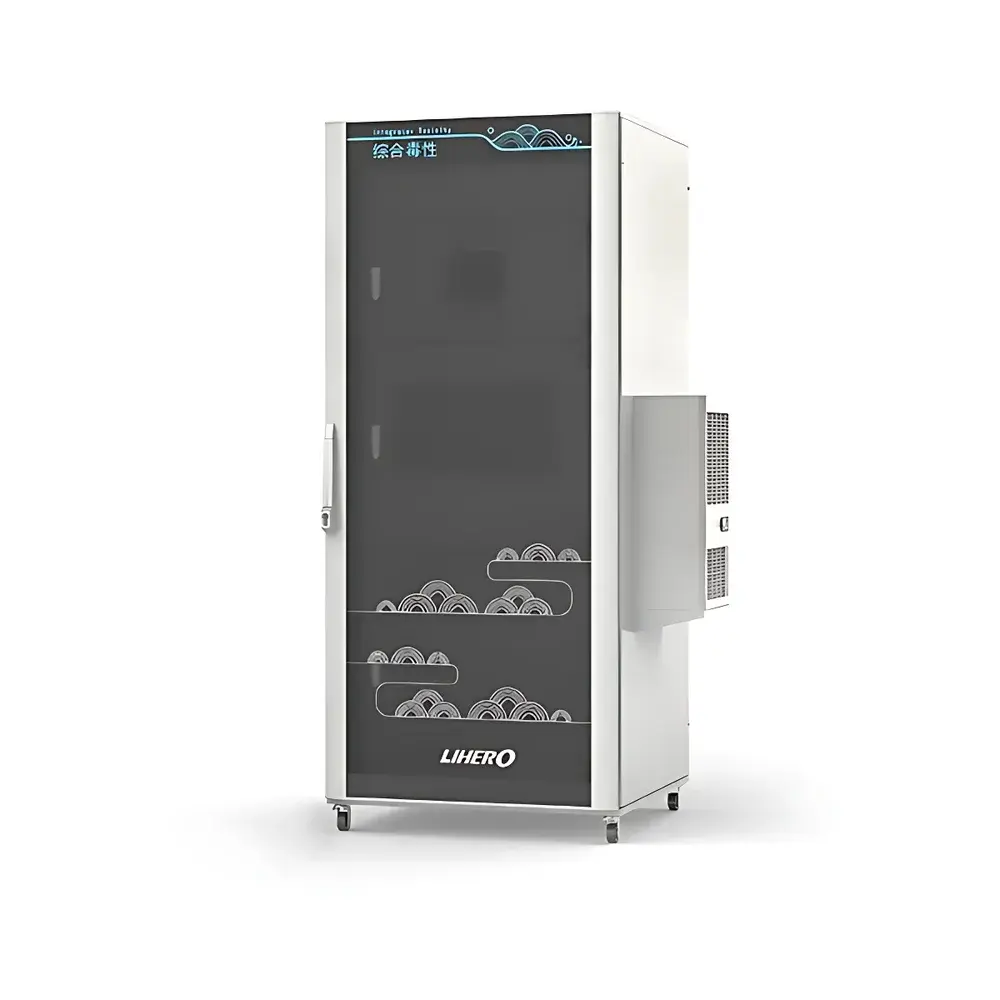
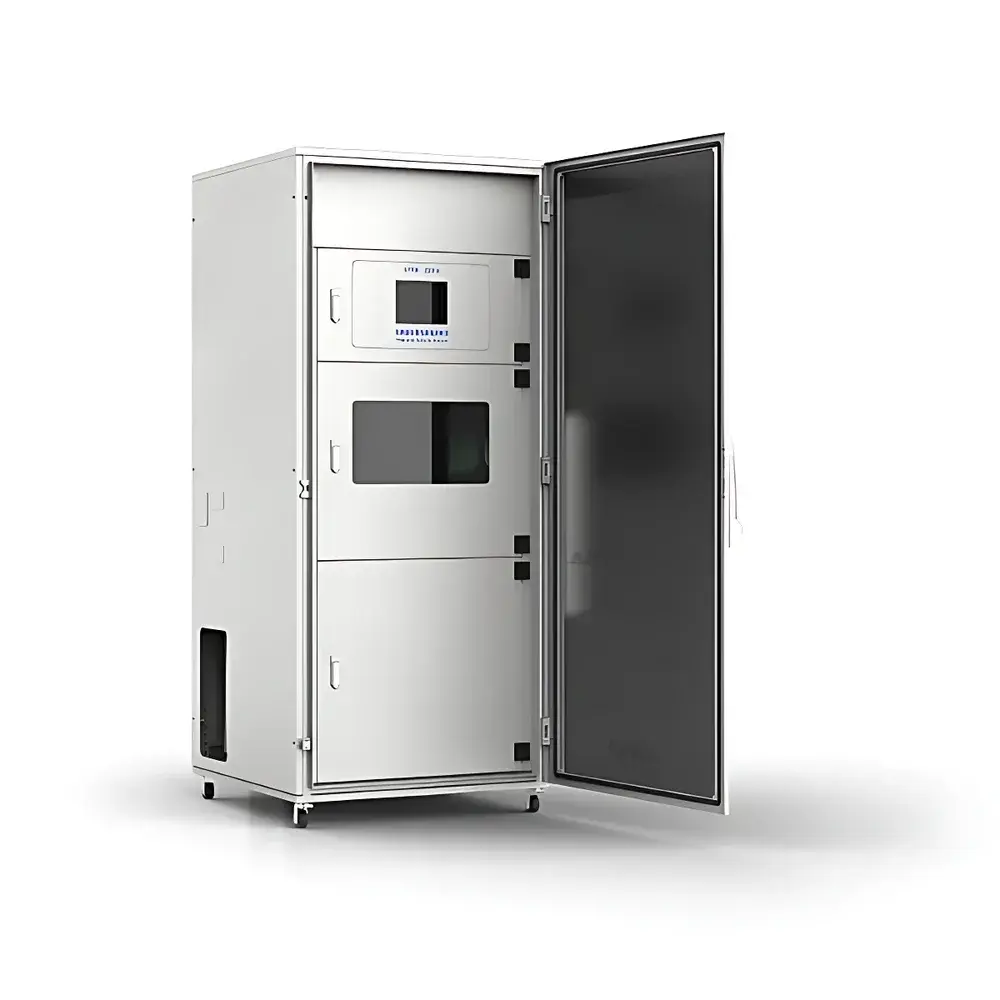
Lihero LFTOX-Z2010 Online Water Comprehensive Toxicity Analyzer
| Brand | Lihero |
|---|---|
| Model | LFTOX-Z2010 |
| Type | Online Toxicity Analyzer |
| Biological Indicator | *Aliivibrio fischeri* (formerly *Vibrio fischeri*), *Vibrio qinghaiensis*, or *Photobacterium phosphoreum* |
| Measurement Principle | Bioluminescence Inhibition Assay |
| Detection Mode | Automatic Sampling → Cell Exposure → Luminescence Quantification → Toxicity Calculation |
| Test Modes | Positive Control / Negative Control / Sample Testing |
| Operational Temperature Range | 15–25 °C (ambient-controlled chamber) |
| Reagent Stability | Lyophilized bacteria stable at ≤−20 °C for ≥6 months |
| Response Time | <15 min (typical EC50 determination) |
| Toxicant Coverage | Broad-spectrum response to >5,000 organic and inorganic toxicants including heavy metals, pesticides, phenols, PAHs, and endocrine disruptors |
| Compliance | Designed to support ISO 11348-3, ASTM D5660, and DIN 38412-L34 protocols |
Overview
The Lihero LFTOX-Z2010 Online Water Comprehensive Toxicity Analyzer is an automated, real-time biological early-warning system engineered for continuous assessment of acute aquatic toxicity in source water, drinking water distribution networks, wastewater effluents, and industrial discharge streams. It operates on the internationally standardized bioluminescence inhibition principle: living, metabolically active luminescent bacteria—*Aliivibrio fischeri*, *Vibrio qinghaiensis*, or *Photobacterium phosphoreum*—emit visible light as a byproduct of cellular respiration. Upon exposure to toxic compounds, metabolic activity declines proportionally, resulting in measurable reduction in photon emission. The instrument quantifies this inhibition (expressed as % luminescence loss relative to control) and calculates effective concentration values (e.g., EC20, EC50) using calibrated dose–response curves. Unlike physicochemical sensors that target specific analytes, the LFTOX-Z2010 delivers holistic, functional toxicity data—detecting unknown, synergistic, or non-target contaminants that evade conventional chemical screening.
Key Features
- True online operation with fully automated sampling, bacterial reconstitution, exposure, luminescence detection, and data reporting—no manual intervention required during scheduled monitoring cycles.
- Triple-test mode architecture: simultaneous positive control (standard toxicant), negative control (toxicant-free buffer), and sample testing ensures analytical validity and instrument performance verification per run.
- Pre-lyophilized, strain-optimized bacterial cultures supplied in sterile vials; stable for ≥6 months at ≤−20 °C; reconstitution yields immediately usable suspension—no culturing, subculturing, or growth-phase synchronization needed.
- Integrated temperature-regulated reaction chamber maintains optimal 15–25 °C range for reproducible biokinetic response, minimizing thermal drift in luminescence output.
- User-configurable test frequency (e.g., hourly, 2-hour, 4-hour, or event-triggered), exposure duration (5–30 min), and reporting interval (raw RLU, % inhibition, ECx, or alarm status).
- Ruggedized industrial enclosure (IP65-rated) suitable for unattended deployment in pump stations, water treatment plants, and environmental monitoring kiosks.
Sample Compatibility & Compliance
The LFTOX-Z2010 accepts raw, filtered (≤0.45 µm), or clarified aqueous samples—including surface water, groundwater, treated drinking water, municipal wastewater, and industrial process water. Turbidity up to 100 NTU and residual chlorine ≤0.1 mg/L are accommodated via integrated quenching modules. The system supports method validation per ISO 11348-3 (water quality—determination of the inhibitory effect of water samples on the light emission of *Vibrio fischeri*), ASTM D5660 (standard test method for measuring toxicity using *Vibrio fischeri*), and DIN 38412-L34. Data logs include full audit trail metadata (operator ID, timestamp, calibration status, control pass/fail flags), enabling alignment with GLP and GMP documentation requirements where applicable.
Software & Data Management
The embedded firmware and companion desktop/web application provide secure, role-based access to instrument configuration, historical toxicity trends, alarm thresholds (customizable % inhibition or EC50 limits), and exportable CSV/PDF reports compliant with laboratory information management systems (LIMS). All measurement events—including control validation outcomes—are time-stamped and digitally signed. Optional integration with SCADA platforms via Modbus TCP or OPC UA enables centralized telemetry and automated incident escalation (e.g., SMS/email alerts upon EC50 < 100% dilution). Raw luminescence data (relative light units, RLU) and processed toxicity indices are retained for ≥12 months onboard, with remote backup capability.
Applications
- Early-warning monitoring at drinking water intakes to detect accidental or intentional contamination events before chemical analysis confirms identity.
- Performance verification of wastewater treatment processes—correlating toxicity reduction across unit operations (e.g., coagulation, activated sludge, ozonation, UV disinfection).
- Compliance support for indirect dischargers subject to local pretreatment ordinances requiring whole-effluent toxicity (WET) testing.
- Research applications in ecotoxicology labs evaluating mixture toxicity, bioavailability modulation, or detoxification kinetics.
- Integration into multi-parameter water quality monitoring networks—fused with pH, conductivity, turbidity, DOC, and metal sensor outputs for multivariate anomaly detection.
FAQ
What bacterial species are supported, and how is strain selection determined?
The system is validated for use with *Aliivibrio fischeri* (ATCC 49387 or equivalent), *Vibrio qinghaiensis* Q67, and *Photobacterium phosphoreum* T33. Strain selection is based on regulatory context, regional standard method alignment, and matrix-specific sensitivity profiles—users configure the assay parameters accordingly.
Can the analyzer distinguish between types of toxicants (e.g., heavy metals vs. organophosphates)?
No. As a functional bioassay, it reports integrated acute toxicity only. Compound identification requires complementary techniques (e.g., ICP-MS, GC-MS). However, differential response kinetics or inhibitor-specific recovery assays may be deployed experimentally to infer mechanism classes.
Is the system compatible with existing SCADA or LIMS infrastructure?
Yes. Native Modbus TCP and OPC UA server interfaces enable seamless bidirectional communication. Predefined data tags include toxicity index, control validity flag, instrument status, and maintenance alerts.
How often must the bacterial reagent be replaced?
Each lyophilized vial supports ≥30 test cycles under standard operating conditions. Reagent replacement frequency depends on configured test interval and is tracked automatically in the software with low-reagent warnings.
Does the system meet regulatory requirements for WET testing under the U.S. EPA or EU Water Framework Directive?
While not a certified reference method itself, the LFTOX-Z2010 implements the core bioluminescence inhibition protocol specified in EPA Method 100.2 and EU Standard EN ISO 11348-3, and is widely accepted as a screening tool for rapid toxicity assessment in regulatory decision trees.
Related Products







