
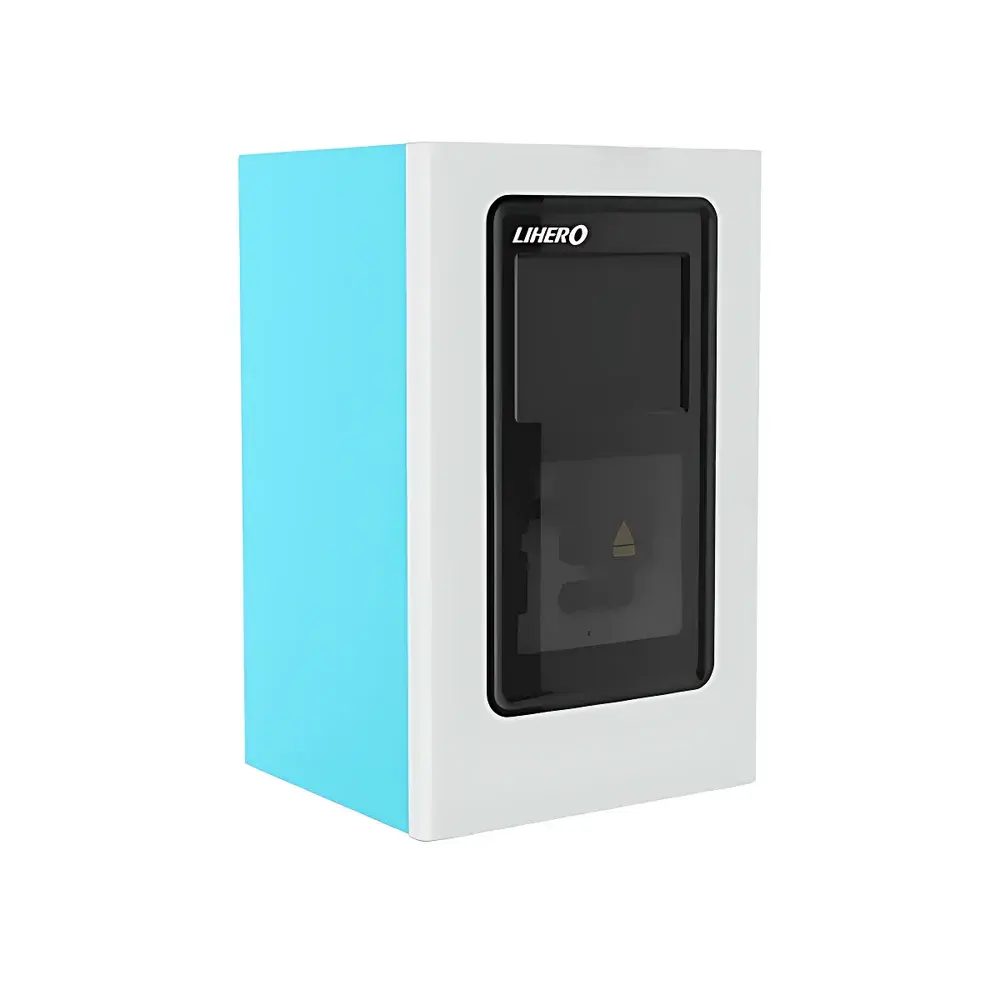
Lihero LFWGC-2012 Online VOCs Water Analyzer
| Brand | Lihero |
|---|---|
| Origin | Hunan, China |
| Model | LFWGC-2012 |
| Instrument Type | Online Water Quality Analyzer for Volatile Organic Compounds (VOCs) |
| Detection Principle | Gas Chromatography with Purge-and-Trap Preconcentration |
| Detectors | FID (Field-Deployable Flame Ionization Detector), ECD |
| Target Analytes | >30 VOCs including halogenated hydrocarbons, BTEX, aldehydes |
| Sample Volume | 10 mL per analysis |
| Calibration | Integrated Automated Calibration Module |
| Compliance | Designed to meet GB 3838–2002 (China Surface Water Environmental Quality Standards), EPA Method 524.2 & 8260D equivalency |
| Remote Control | Yes |
| Data Logging | Full Process Audit Trail with Event Timestamping |
Overview
The Lihero LFWGC-2012 Online VOCs Water Analyzer is a fully automated, laboratory-grade gas chromatographic system engineered for continuous, unattended monitoring of volatile organic compounds (VOCs) in surface water, groundwater, and treated effluent streams. It implements a validated purge-and-trap (P&T) preconcentration methodology coupled with high-resolution capillary gas chromatography (GC) separation and dual-detector capability—primarily flame ionization detection (FID) and electron capture detection (ECD)—to deliver robust qualitative identification and quantitative measurement of over 30 regulated VOCs. The system adheres to fundamental principles outlined in EPA Methods 524.2 (for drinking water) and 8260D (for wastewater), while its analytical performance—particularly sub-ppb-level detection limits and linear dynamic range spanning three orders of magnitude—meets or exceeds the requirements specified in China’s GB 3838–2002 Surface Water Environmental Quality Standards. Its design prioritizes operational stability in field-deployed environments, minimizing manual intervention without compromising data integrity or regulatory traceability.
Key Features
- Integrated field-deployable FID detector, independently developed and optimized for aqueous VOC analysis with low baseline drift and high carbon-response linearity
- Single-injection multi-component analysis: simultaneous qualitative identification of ≥20 VOCs per run, enabled by retention time indexing and spectral library matching
- Low sample consumption: only 10 mL of raw water required per analysis cycle, reducing reagent usage and waste generation
- Onboard automated calibration system featuring multi-point standard delivery, valve actuation verification, and response factor tracking—fully compliant with GLP audit requirements
- Modular detector architecture supporting interchangeable GC detectors (FID, ECD, PID) without hardware modification, enabling method flexibility and future-proofing
- User-configurable method parameters—including purge time, trap desorption temperature, oven ramp profile, and detector settings—accessible via embedded HMI or remote interface
- Comprehensive fault diagnostics with real-time alarm generation (e.g., low carrier gas pressure, trap breakthrough, detector saturation) and timestamped event logging
Sample Compatibility & Compliance
The LFWGC-2012 accepts untreated or filtered (≤0.45 µm) liquid water samples across pH 5–9 and turbidity ≤10 NTU. It accommodates variable matrix complexity, including humic-rich surface waters and low-conductivity groundwater. All analytical procedures are aligned with internationally recognized validation frameworks: calibration curves demonstrate R² ≥ 0.999 over concentration ranges from 0.05–50 µg/L; method detection limits (MDLs) are verified per EPA Guidance for Determining LOD/LOQ and routinely achieve 0.01–0.05 µg/L for key analytes such as chloroform, benzene, and trichloroethylene. The system supports 21 CFR Part 11–compliant electronic signatures and audit trails when integrated with validated LIMS platforms, fulfilling GMP and environmental lab accreditation requirements (e.g., CNAS-CL01, ISO/IEC 17025).
Software & Data Management
Control and data acquisition are managed through Lihero’s proprietary GC-Analyzer Suite v3.2—a Windows-based application supporting method development, sequence scheduling, peak integration (with deconvolution-assisted co-elution resolution), and automated report generation. Raw chromatograms, calibration logs, maintenance records, and alarm histories are stored in encrypted SQLite databases with daily backup export options (CSV, PDF, XML). Role-based user access control (administrator, analyst, viewer) ensures data governance, while OPC UA and Modbus TCP protocols enable seamless integration into SCADA and central EMS platforms. All data timestamps are synchronized to NTP servers, and system-generated QC flags (e.g., retention time shift >0.15 min, area RSD >5% across replicates) trigger automatic review workflows.
Applications
- Real-time compliance monitoring at municipal drinking water intake points and distribution reservoirs
- Long-term trend analysis of VOC contamination plumes in groundwater remediation sites
- Effluent discharge verification for petrochemical, pharmaceutical, and electronics manufacturing facilities
- Emergency response deployment following chemical spills or pipeline ruptures affecting aquatic systems
- Research-grade VOC speciation studies requiring high temporal resolution (analysis cycle: ≤35 minutes)
FAQ
What sample preparation is required prior to analysis?
No off-line pretreatment is needed; the system performs inline filtration (optional 0.45 µm cartridge), degassing, and pH stabilization if configured. Samples must be refrigerated (4 °C) and analyzed within 48 hours of collection per EPA guidance.
Can the instrument operate unattended for extended periods?
Yes—designed for 30-day autonomous operation with scheduled auto-calibration, self-diagnostic checks, and remote firmware updates. Standard configuration includes 72-hour onboard consumables (purge gas, standards, trap cartridges).
Is third-party detector integration supported?
The GC chassis provides standardized electrical, pneumatic, and communication interfaces (RS-485, 24 VDC), enabling qualified integration of non-Lihero FID/ECD modules meeting IEC 61000-6-2 EMC and ATEX Zone 2 safety specifications.
How is data integrity ensured during power interruption?
Non-volatile memory retains all method parameters, calibration history, and last 72 hours of chromatographic data. UPS-compatible design maintains critical functions (trap cooling, column oven hold) for up to 15 minutes during outage.
Does the system support regulatory reporting formats?
Yes—preconfigured templates comply with China’s MEP Form 202 (Water Monitoring Report), US EPA Form 3350-1, and EU WFD Annex V reporting structures, with digital signature and PDF/A-2 archival export.







