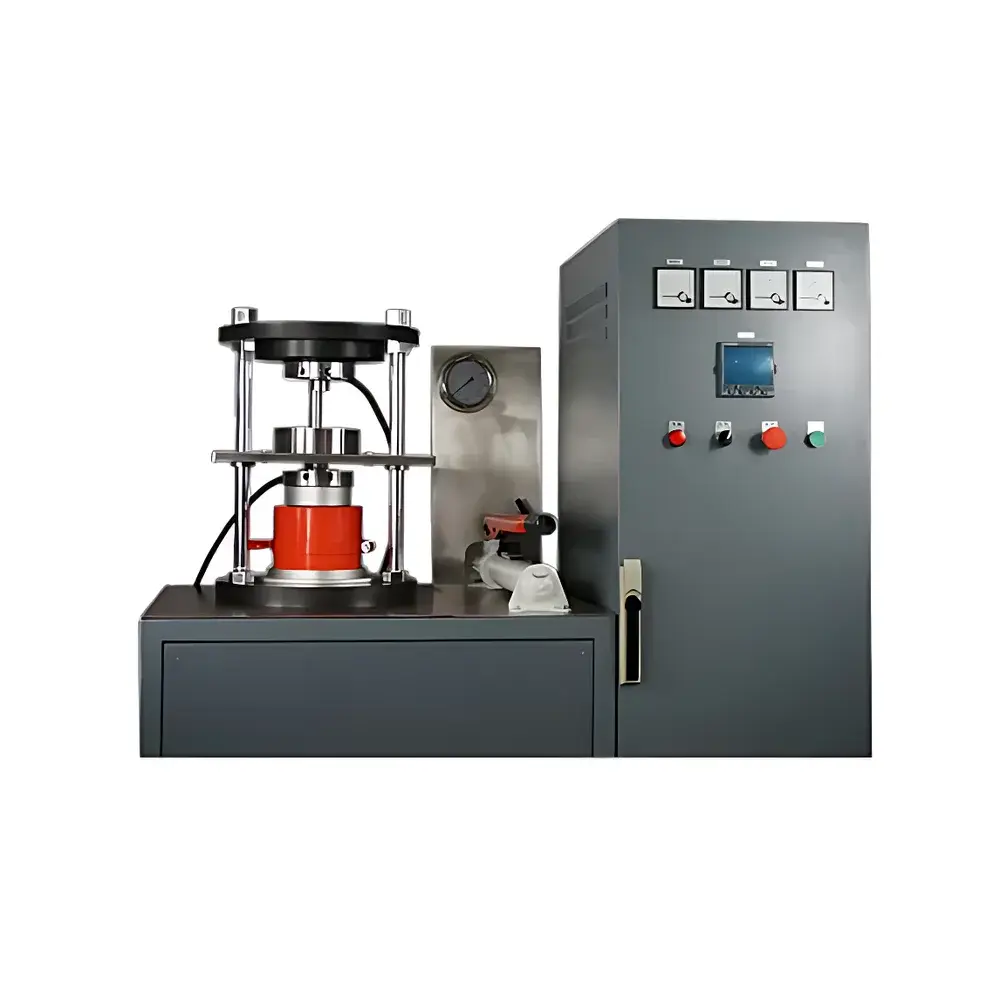
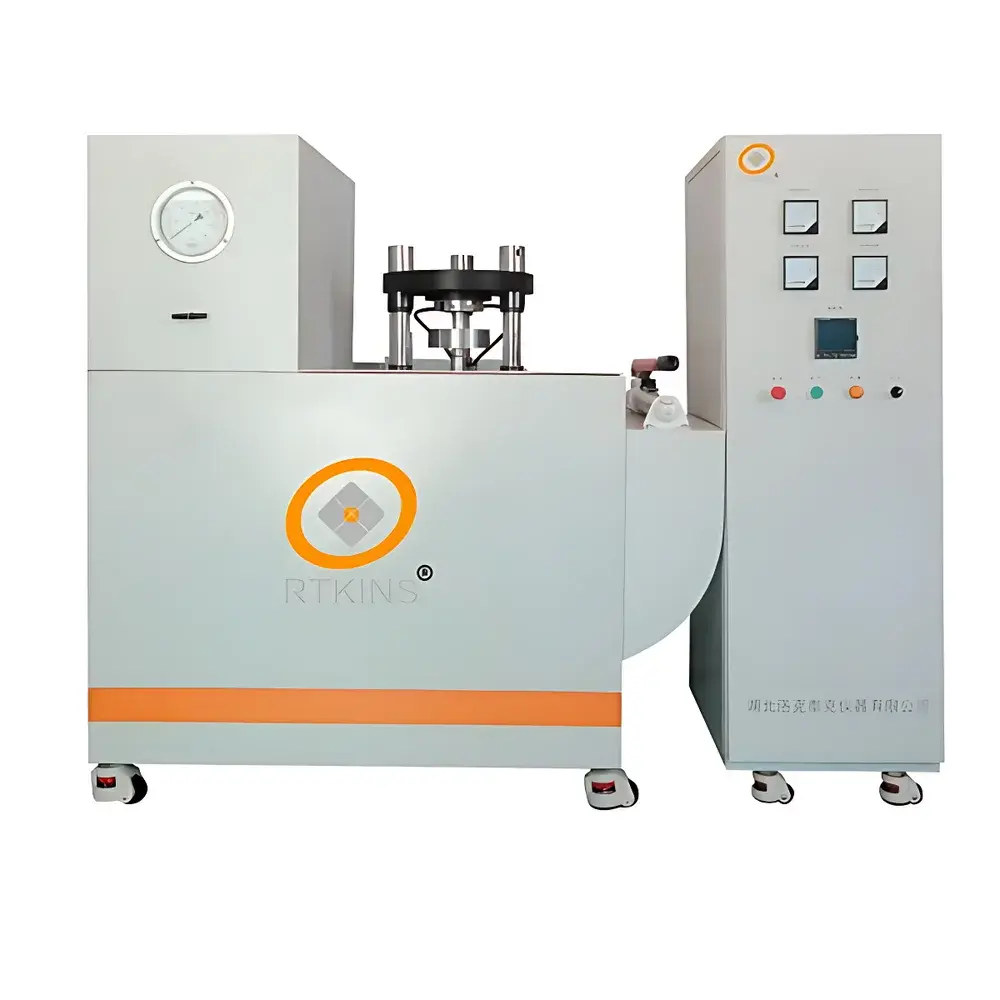
Rocktek RTK1000 Walker/Kawai-Type Multi-Anvil High-Pressure High-Temperature Press
| Brand | Rocktek |
|---|---|
| Origin | Hubei, China |
| Manufacturer Type | Authorized Distributor |
| Country of Origin | China |
| Model | RTK1000 |
| Pressure Control Accuracy | ±10 PSI |
| Max Sample Pressure | >20 GPa |
| Max Sample Temperature | >2000 °C |
| Temperature Accuracy | ±1 °C |
| Control Architecture | PLC-Based Closed-Loop Servo System with Ethernet Communication |
| Programmable Segments | 9-Step Pressure-Time Profile |
| Drive Mechanism | Dual-Mode — Hydraulic (Low-Pressure Rapid Stroke) + Precision Servo Motor (High-Pressure Fine Regulation) |
Overview
The Rocktek RTK1000 is a laboratory-scale Walker- or Kawai-type multi-anvil high-pressure high-temperature (HPHT) press engineered for reproducible synthesis and in-situ property characterization of materials under extreme thermodynamic conditions. It operates on the principle of stress amplification via stacked tungsten carbide anvils and octahedral or cubic pressure media, enabling generation of quasi-hydrostatic pressures exceeding 20 GPa while maintaining sample temperatures above 2000 °C. Unlike conventional hydraulic-only presses, the RTK1000 employs a hybrid actuation architecture: a robust hydraulic system delivers rapid initial loading at low-to-moderate pressures (<5 GPa), while a high-resolution servo motor—integrated into the final compression stage—assumes precise closed-loop regulation in the high-pressure regime. This dual-mode design eliminates hydraulic pulsation, suppresses mechanical vibration, and ensures pressure stability within ±10 PSI across extended dwell periods—critical for crystal growth, phase transition studies, and diamond anvil cell (DAC) calibration validation.
Key Features
- Hybrid drive system: Hydraulic pre-loading for fast stroke velocity + servo-motor fine control for sub-PSI pressure resolution in the GPa range
- PLC-based real-time control architecture with Ethernet interface for remote monitoring and integration into lab automation networks
- 9-segment programmable pressure–time profile capability, supporting ramp-hold-relax sequences with independent setpoint definition per segment
- Closed-loop pressure regulation using calibrated pressure transducers, servo drivers, and feedback-controlled motor torque modulation
- Acoustically optimized mechanical design: <45 dB(A) operational noise level—compatible with shared academic and industrial metrology laboratories
- Modular anvil assembly compatible with standard Walker (6–8) and Kawai (6–12) configurations; supports interchangeable pressure media (e.g., NaCl, MgO, borosilicate glass)
- Low-maintenance architecture with no hydraulic oil leakage risk in the high-pressure zone; service intervals exceed 5,000 operating hours
Sample Compatibility & Compliance
The RTK1000 accommodates cylindrical sample assemblies up to Ø12 mm × 15 mm (standard octahedral setup) or Ø8 mm × 10 mm (compact Kawai geometry), compatible with common insulating and heating media including LaCrO₃, graphite, and ZrO₂. Temperature is measured via W5%Re–W26%Re thermocouples embedded in the pressure medium, traceable to NIST standards. Pressure calibration follows ISO 17025-compliant procedures using ruby fluorescence (R₁ line shift) and/or X-ray diffraction lattice strain methods. The system meets mechanical safety requirements per EN 61000-6-2 (immunity) and EN 61000-6-4 (emission), and its control software architecture supports audit trails and electronic signatures aligned with GLP and FDA 21 CFR Part 11 readiness when deployed with validated IT infrastructure.
Software & Data Management
The embedded HMI and optional PC-based Rocktek Control Suite provide synchronized logging of pressure (PSI/kbar), temperature (°C), time (ms), and actuator position (µm) at user-selectable sampling rates up to 100 Hz. All data are timestamped with UTC synchronization and stored in HDF5 format—enabling direct import into Python (h5py), MATLAB, or Igor Pro for post-acquisition analysis. The system supports CSV export with metadata headers compliant with FAIR data principles. Firmware updates are delivered via secure HTTPS; configuration backups and restore functions ensure full system reproducibility across instrument deployments.
Applications
- Synthesis of superhard materials (e.g., cubic boron nitride, wurtzite BN, rhenium diboride)
- Phase diagram mapping of geophysically relevant systems (MgSiO₃, FeO–Fe₂O₃, SiO₂ polymorphs) under lower-mantle conditions
- In-situ high-energy synchrotron XRD and XANES experiments requiring stable pressure–temperature trajectories
- Calibration and cross-validation of diamond anvil cell (DAC) pressure scales
- Thermoelectric property measurement (Seebeck coefficient, resistivity) under controlled HPHT conditions
- Development and qualification of ultra-refractory ceramics for aerospace thermal protection systems
FAQ
What anvil configurations does the RTK1000 support?
The system is mechanically configurable for both Walker-type (6–8 anvil) and Kawai-type (6–12 anvil) geometries, with standardized load frame interfaces and interchangeable pressure media holders.
Is remote operation possible?
Yes—via Ethernet-connected PLC with Modbus TCP or OPC UA protocol support; third-party SCADA and LabVIEW integration is documented in the technical manual.
How is pressure calibrated during operation?
In-situ calibration uses ruby fluorescence spectroscopy (R₁ line shift vs. pressure) or ex-situ lattice parameter refinement from synchrotron XRD data, both traceable to internationally accepted pressure scales (Dewaele et al., JAP 2004; Akahama & Kawamura, PRB 2004).
Does the system comply with ISO/IEC 17025 requirements for accredited labs?
While the instrument itself is not certified, its measurement chain—including transducer calibration certificates, documented uncertainty budgets, and software audit trail capabilities—supports compliance when implemented within an ISO/IEC 17025-accredited quality management system.
What maintenance is required for long-term stability?
Annual verification of pressure transducer linearity and thermocouple EMF output; biennial inspection of anvil alignment and hydraulic seal integrity. No routine oil changes or servo motor servicing are specified under normal operating conditions.