
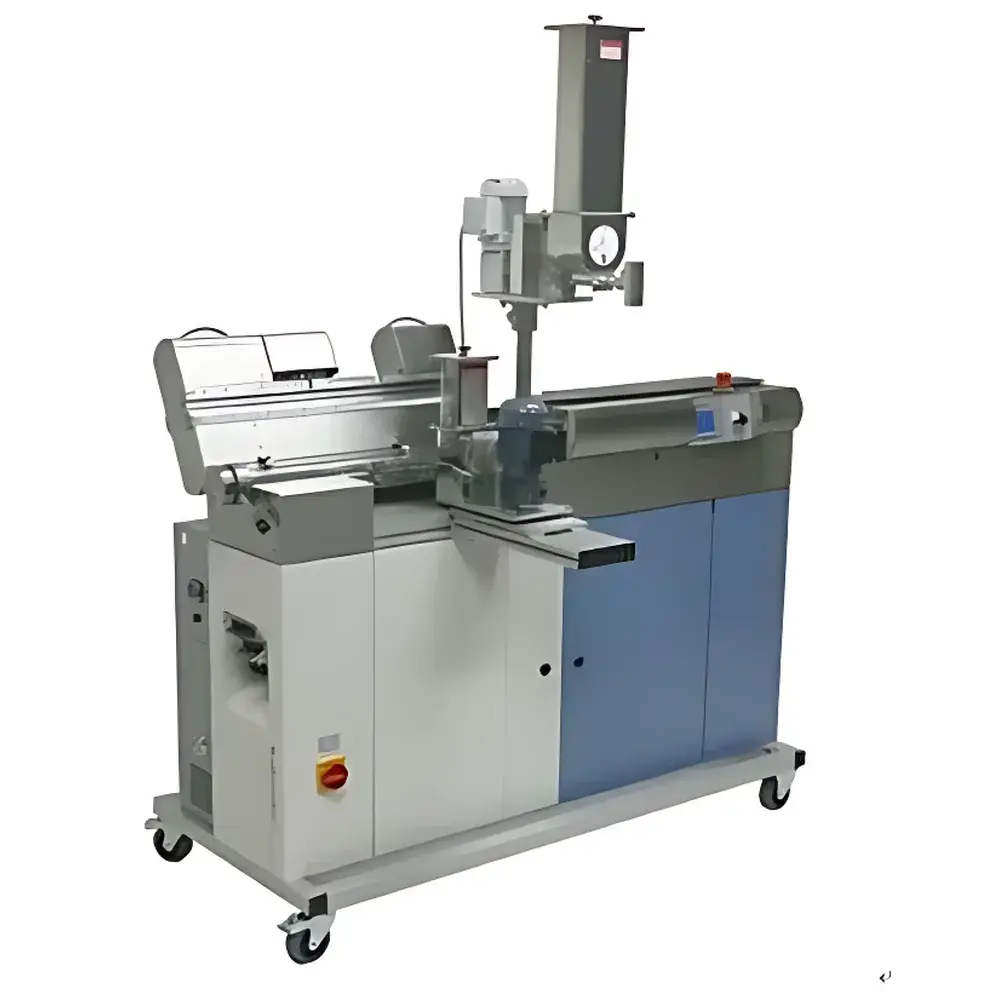
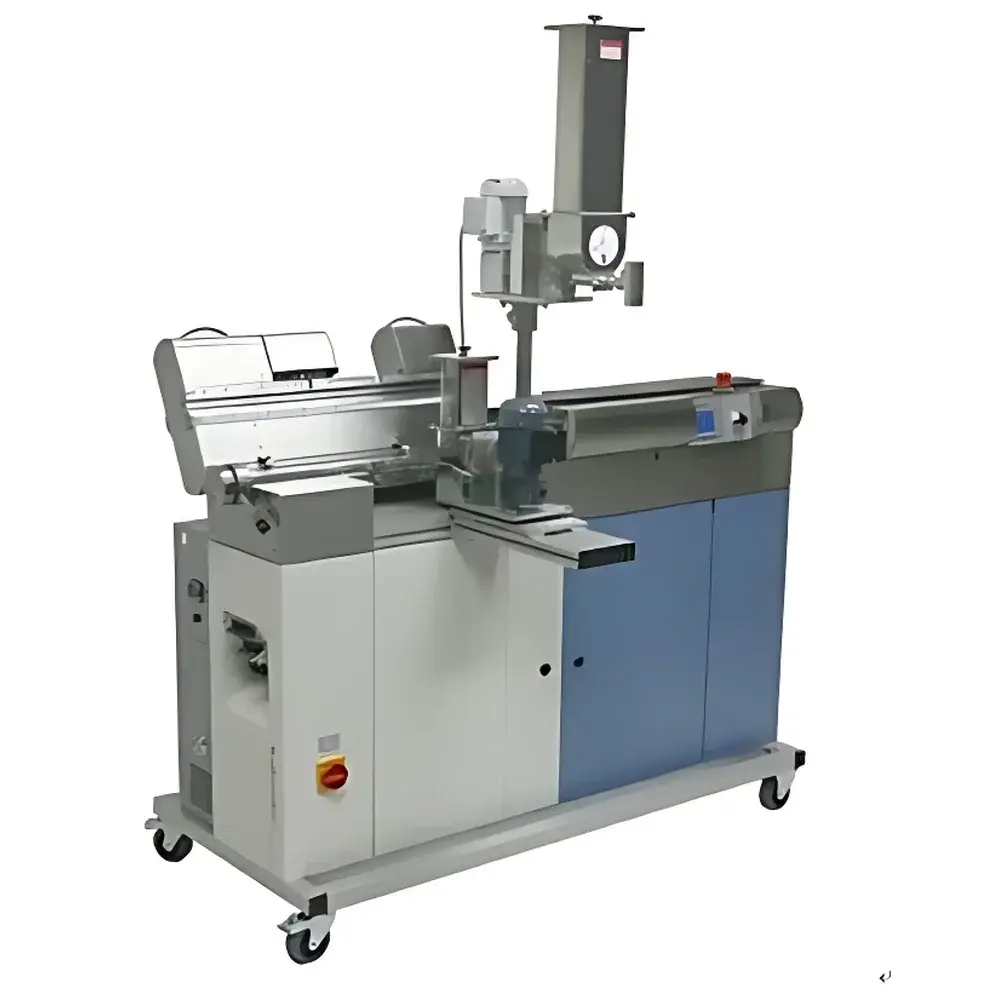
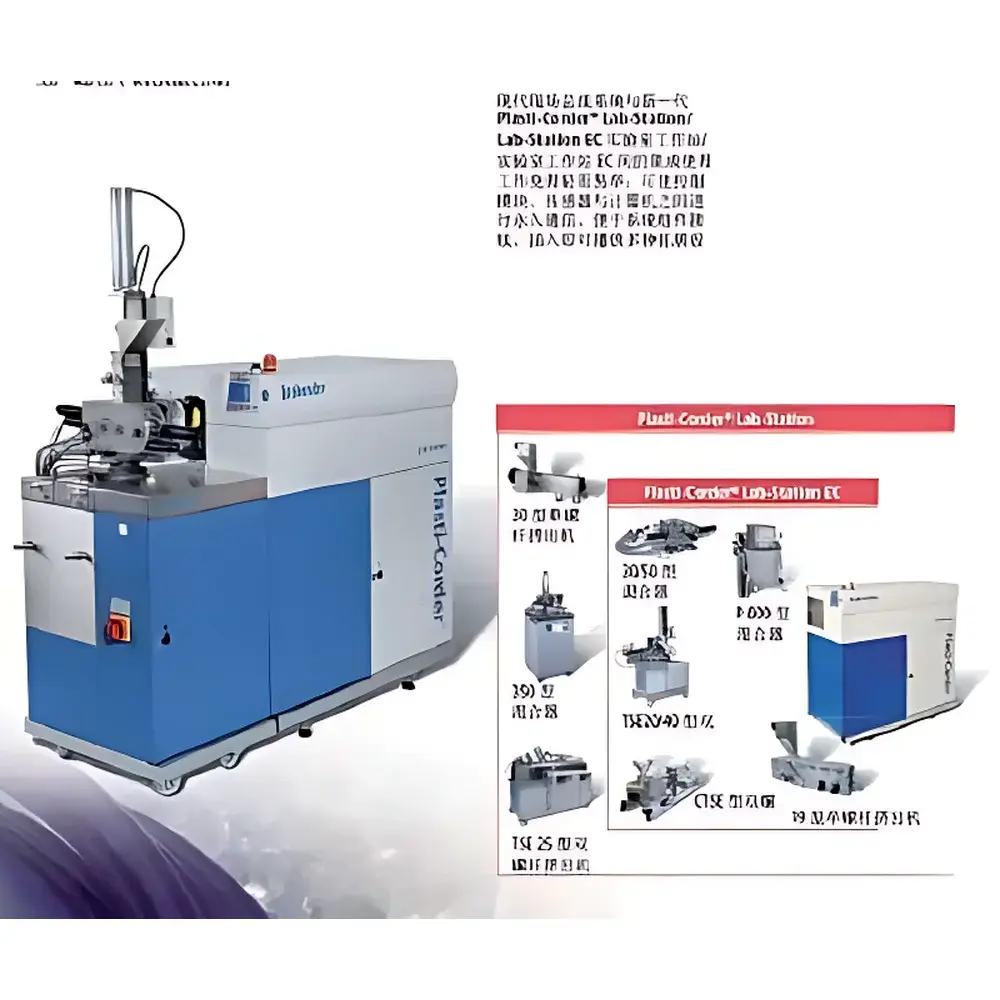
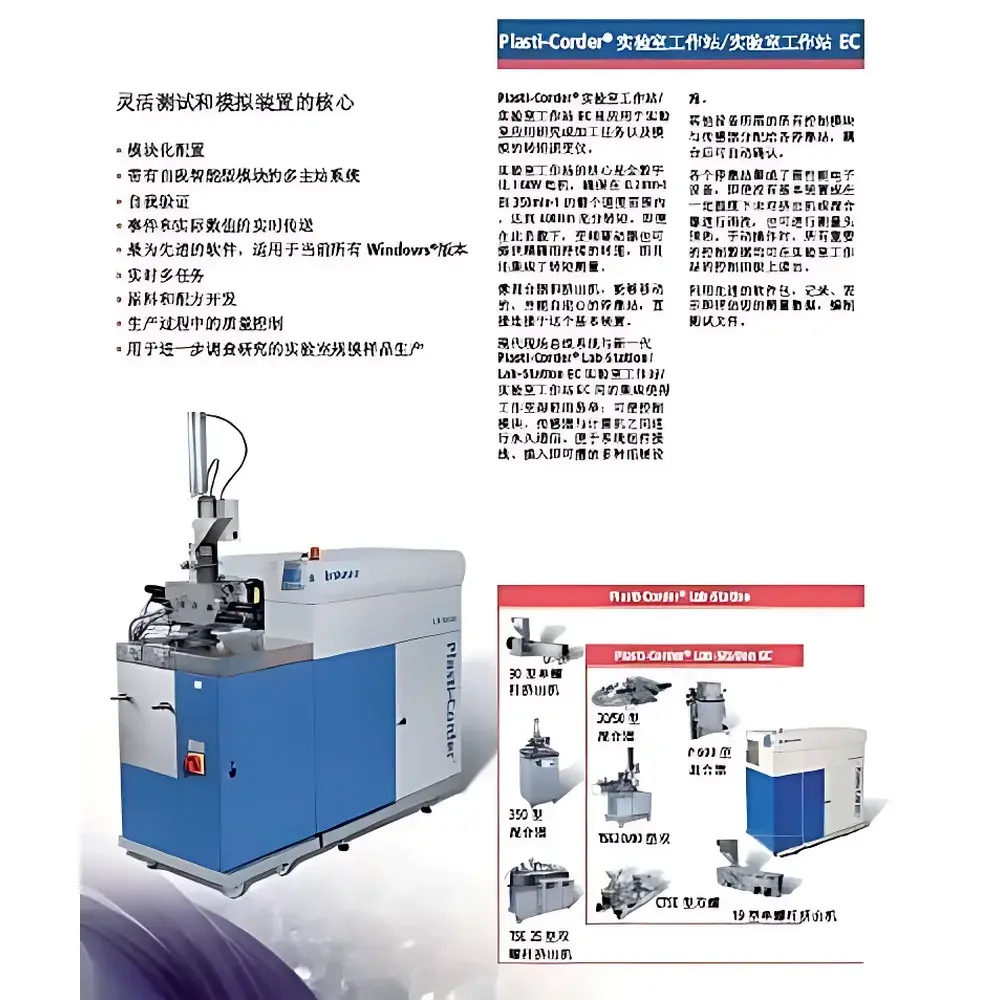
Brabender Plasti-Corder® Lab-Station EC Torque Rheometer Workstation
| Brand | Brabender |
|---|---|
| Origin | Germany |
| Model | Plasti-Corder® Lab-Station EC |
| Motor Power | 16 kW |
| Torque Range | 0–400 N·m |
| Torque Accuracy | ±0.15% FS |
| Speed Range | 0.2–350 rpm |
| Speed Accuracy | ±0.2% (closed-loop control) |
| Temperature Control Zones | 8–12 |
| Max Heating Temp | 500 °C |
| Mixer Type | W50EHT |
| Mixer Volume | ~55 cm³ |
| Mixer Torque Range | 0–200 N·m |
| Extruder | Single-screw, L/D = 19/25, Max Pressure: 700 bar, Max Temp: 450 °C, Max Torque: 150 N·m |
| Die Options | Round (Φ2.0 / 3.0 / 4.0 mm), Slit (100 × 0–1.5 mm adjustable) |
Overview
The Brabender Plasti-Corder® Lab-Station EC is a high-performance, modular torque rheometer workstation engineered for precise simulation and quantitative analysis of polymer processing behavior under realistic shear, thermal, and mechanical conditions. Operating on the principle of controlled rotational torque measurement in Couette-type flow fields, it quantifies material resistance to deformation by measuring the real-time torque required to rotate intermeshing or counter-rotating elements—such as twin rotors in a mixing chamber or a screw within a barrel—against the viscoelastic resistance of thermoplastic, thermosetting, or elastomeric melts. Unlike capillary or rotational viscometers limited to steady-state shear, the Lab-Station EC captures transient rheological responses—including melt fracture onset, thermal degradation kinetics, crosslinking evolution, and filler dispersion dynamics—across programmable temperature ramps, shear rate profiles, and residence time distributions. Its fully digital 16 kW drive system delivers stable, closed-loop-controlled rotation from 0.2 to 350 rpm, sustaining up to 400 N·m torque across the full speed range—enabling reproducible evaluation of both low-viscosity resins and highly filled, abrasive compounds. Designed and manufactured in Germany, the system meets stringent DIN EN ISO 9001 quality management requirements and conforms to CE machinery safety directives (2006/42/EC).
Key Features
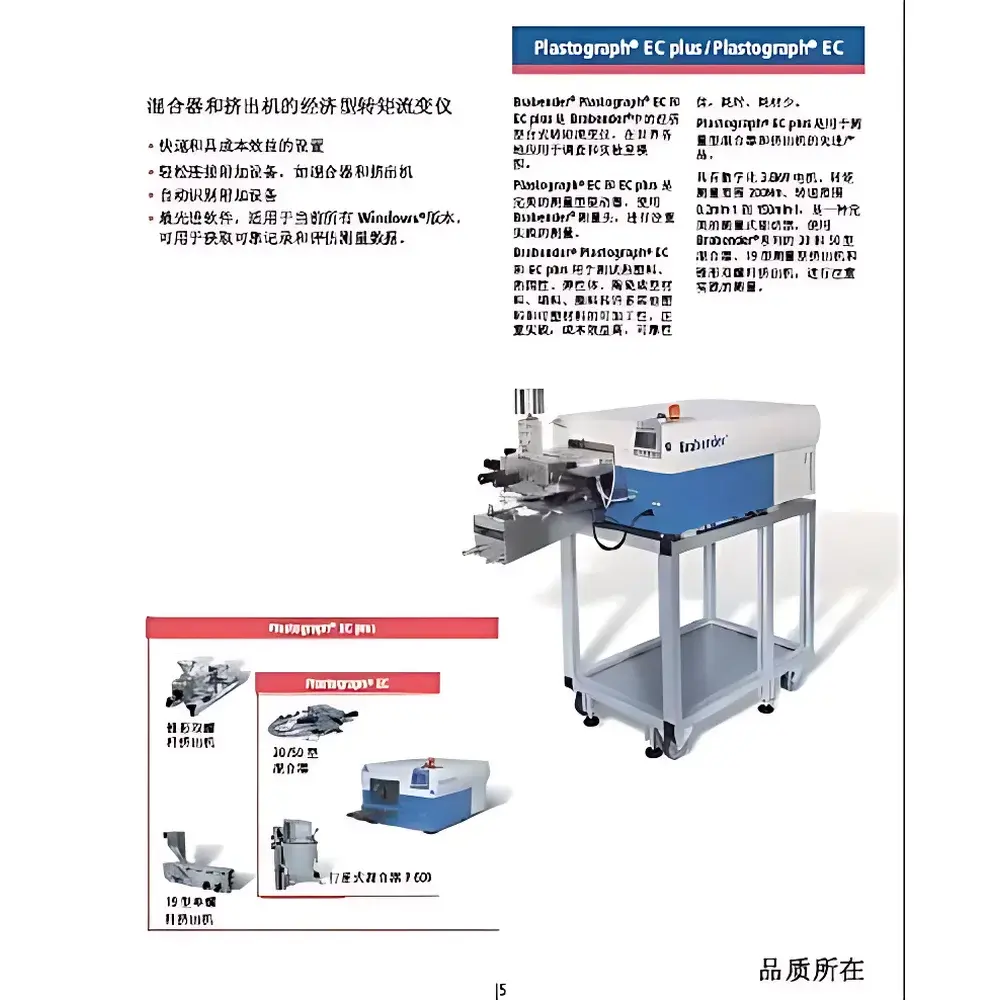
- Modular architecture with interchangeable processing units: W50EHT mixing chamber, single-screw extruder (L/D = 19/25), and optional twin-screw or specialized downstream modules (e.g., pelletizer, film casting line)
- Integrated fieldbus communication (PROFINET or EtherCAT) enabling plug-and-play connectivity between control modules, temperature sensors, pressure transducers, and host PC
- Dedicated docking stations with embedded electronics—allowing preheating of sensor heads independent of main unit operation and enabling calibration verification without system shutdown
- Multi-zone temperature control (8–12 independently regulated zones) with PID tuning and ramp/soak programming; heating capability up to 500 °C in mixer, 450 °C in extruder barrel
- Real-time data acquisition at ≥100 Hz sampling rate, synchronized across torque, speed, temperature, pressure, and motor current channels
- Self-validating operational sequence: automatic recognition of attached modules, configuration validation, and diagnostic reporting prior to test initiation
Sample Compatibility & Compliance
The Lab-Station EC accommodates a broad spectrum of polymeric materials—including polyolefins, engineering thermoplastics (PA, PBT, PC), thermoplastic elastomers (TPEs), reactive systems (epoxy, PU prepolymers), and filled composites (glass fiber, carbon black, nanoclays). Its robust construction supports abrasive formulations and high-temperature stabilizer packages without performance drift. The system complies with ISO 6721 (Plastics — Determination of dynamic mechanical properties), ASTM D3835 (Standard Test Method for Determination of Melt Flow Rates of Thermoplastics Using Extrusion Plastometers), and supports GLP/GMP-aligned workflows through audit-trail-enabled software logging (21 CFR Part 11 compliant when deployed with validated IT infrastructure). All thermal and mechanical interfaces are traceably calibrated per ISO/IEC 17025-accredited procedures.
Software & Data Management
The proprietary PlastiCorder® Software Suite (v8.x, Windows 10/11 compatible) provides real-time multichannel visualization, automated test sequencing, and post-processing tools for rheological parameter derivation—including apparent viscosity vs. shear rate, power law index (n), consistency coefficient (K), activation energy (Ea) via Arrhenius modeling, and time–temperature superposition (TTS) master curve generation. Data export supports CSV, XML, and HDF5 formats for integration with MATLAB®, Python (SciPy/Pandas), or LIMS platforms. Each test file embeds full metadata: instrument ID, operator, environmental conditions, calibration status, and digital signature. Version-controlled script libraries enable standardized method deployment across global R&D sites, supporting technology transfer from lab-scale formulation development to pilot-line scale-up.
Applications
- Formulation optimization: Screening plasticizers, stabilizers, flame retardants, and compatibilizers under shear-thermal stress
- Process simulation: Replicating compounding, extrusion, injection molding, and blow molding cycles to predict melt homogeneity, die swell, and thermal history effects
- Stability assessment: Quantifying onset temperature of thermal degradation (via torque inflection), oxidative induction time (OIT), and shear-induced chain scission
- Quality control: Batch-to-batch consistency monitoring of polymer melts using normalized torque curves and energy consumption profiles
- Academic research: Fundamental studies on structure–property–processing relationships in polymer nanocomposites, biopolymers, and recyclate blends
FAQ
What distinguishes torque rheometry from capillary or rotational rheometry?
Torque rheometry applies controlled mechanical work directly to bulk material in geometrically constrained processing geometries—capturing combined thermal, shear, and residence time effects that cannot be isolated in idealized flow devices.
Can the Lab-Station EC operate under inert atmosphere or vacuum conditions?
Yes—optional gas purge ports and vacuum-rated sealing kits are available for W50EHT and extruder modules to prevent oxidation during high-temperature testing of sensitive resins.
Is third-party software integration supported?
The system provides OPC UA server functionality and documented API endpoints for bidirectional communication with MES, SCADA, or custom Python-based analysis pipelines.
How is calibration traceability maintained?
All torque and temperature transducers are supplied with individual calibration certificates traceable to PTB (Physikalisch-Technische Bundesanstalt) standards, updated annually per internal SOP.
What training and support resources are provided?
Brabender offers on-site commissioning, application-specific workshops (e.g., “Rheology for Compound Development”), and remote diagnostics via secure VNC—backed by ISO 9001-certified technical support centers in Europe, North America, and Asia.



