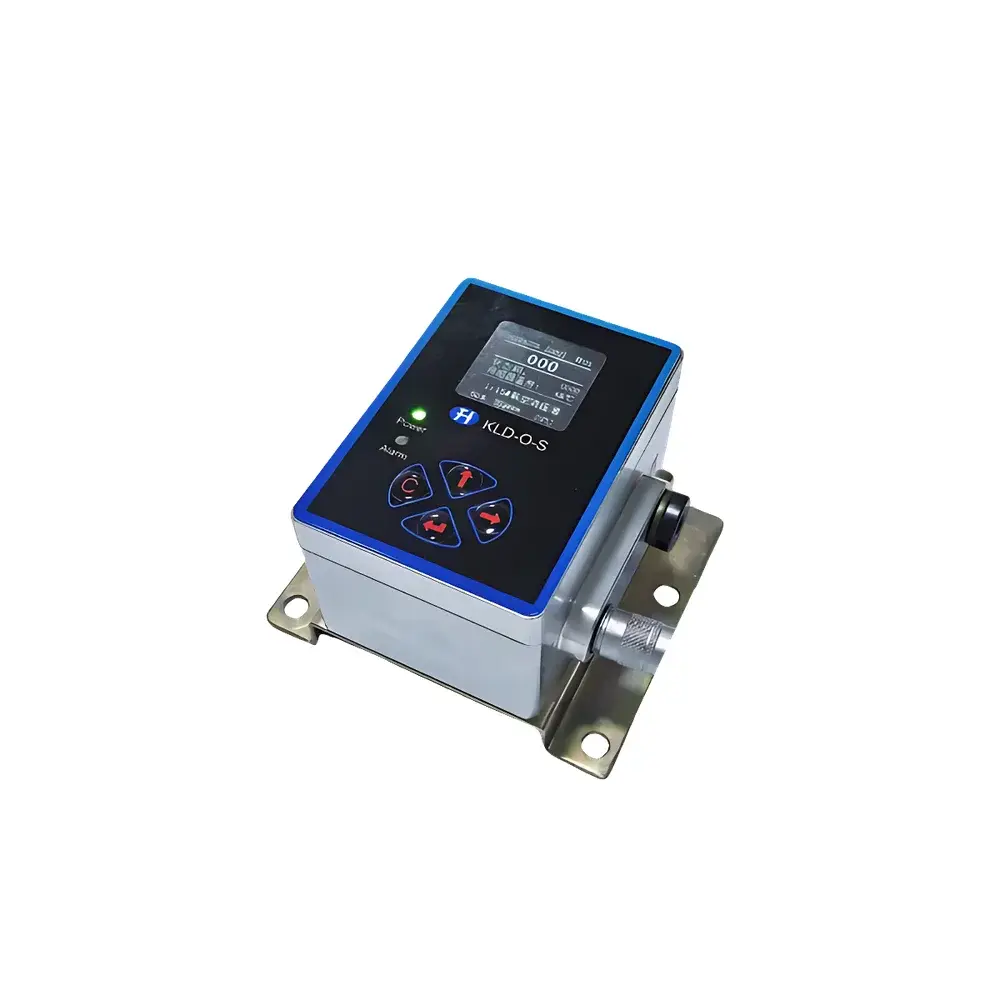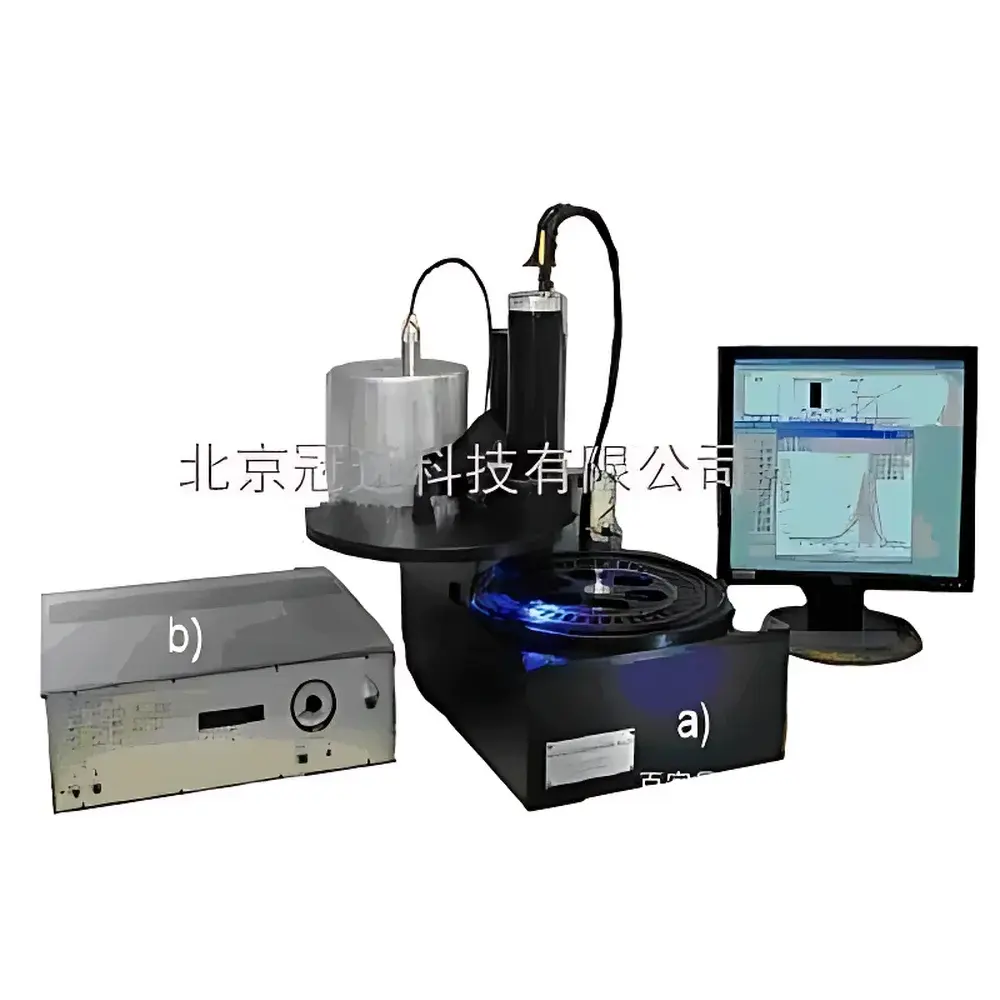
TLD 8800 Thermoluminescence Reader
| Origin | Beijing, China |
|---|---|
| Manufacturer Type | Authorized Distributor |
| Origin Category | Domestic (China-made) |
| Model | TLD 8800 |
| Price | USD 140 (approx. based on ¥1000 at 1:7.14 exchange rate) |
Overview
The TLD 8800 Thermoluminescence Reader is a dedicated instrumentation platform designed for quantitative thermoluminescence (TL) signal detection in archaeological and geological dosimetry applications. It operates on the fundamental principle that crystalline materials—such as quartz and feldspar in ceramics or sediments—accumulate trapped electrons over time when exposed to natural ionizing radiation (e.g., from uranium, thorium, and potassium isotopes in surrounding soil). Upon controlled laboratory heating, these trapped charges are released as visible photons; the intensity of the emitted light (thermoluminescence glow curve) is proportional to the accumulated radiation dose, enabling estimation of the time elapsed since the last thermal resetting event (e.g., firing of pottery or sediment exposure to sunlight). While widely applied in low-temperature-fired ceramics (1200 °C), where anomalous fading, thermal quenching, and complex trap kinetics significantly compromise dose–age linearity and reproducibility. This instrument supports standardized TL readout protocols per ISO/IEC 17025-accredited laboratories but does not constitute a standalone age-determination system without rigorous environmental dose-rate modeling and independent validation.
Key Features
- Heated planchet system with programmable temperature ramp (room temperature to 500 °C, ±1 °C stability)
- Photomultiplier tube (PMT) detector optimized for blue–UV emission (320–480 nm) typical of alkali halide and quartz TL signals
- Digital glow-curve acquisition with 1024-channel resolution and real-time background subtraction
- Integrated alpha/beta source holder for laboratory dose calibration (e.g., 90Sr/90Y)
- USB interface compliant with Windows-based TL analysis software (e.g., TL Analyst, Risø TL/OSL Workbench)
- Robust mechanical architecture suitable for routine use in university archaeometry labs and cultural heritage conservation units
Sample Compatibility & Compliance
The TLD 8800 accepts standard 5 mm diameter ceramic discs (typically extracted from vessel walls via micro-drilling) and mineral separates (quartz/feldspar etched from sediments). It is compatible with IAEA TRS-461 and ASTM D7284-18 guidelines for TL sample preparation and measurement hygiene. However, it is explicitly not certified for regulatory compliance under FDA 21 CFR Part 11 or GLP/GMP frameworks, as TL dating remains a research-grade analytical method—not a forensic or legal-age certification tool. For high-fired porcelain (e.g., Ming or Qing dynasty imperial wares), published inter-laboratory studies (e.g., GRL 2019; Archaeometry 2021) demonstrate systematic underestimation of age due to incomplete zeroing of deep traps during kiln firing. Users must therefore apply strict contextual constraints: only samples with documented low-temperature firing history (<900 °C), known burial environment (dose-rate profile confirmed by gamma spectrometry), and absence of post-depositional reheating events are suitable for TL interpretation.
Software & Data Management
The TLD 8800 interfaces with open-source and commercial TL analysis packages supporting peak deconvolution, kinetic parameter fitting (E, s), and additive dose (AD) or regenerative dose (RD) protocols. Raw glow curves are stored in ASCII or binary formats with embedded metadata (sample ID, heating rate, PMT gain, ambient temperature). Audit trails—including operator login, calibration date, and instrument configuration—are maintained externally via lab information management systems (LIMS). While the device itself does not generate audit-ready electronic records, its output conforms to ISO/IEC 17025 clause 7.5.2 requirements for data integrity when integrated into accredited workflows.
Applications
- Chronometric dating of low-fired earthenware and stoneware (Neolithic to Medieval periods)
- Verification of excavation stratigraphy through TL dating of buried sediments
- Dosimetric screening of irradiated artifacts for authenticity assessment (in conjunction with ESR and XRF)
- Teaching and method development in archaeological science curricula
- Research into TL trap structure and fading behavior in alumino-silicate lattices
FAQ
Can the TLD 8800 provide definitive authentication of high-fired Chinese porcelain?
No. Due to unresolved kinetic anomalies in high-temperature ceramic matrices, TL results for porcelain fired above 1100 °C must be treated as non-conclusive and supplemented with complementary techniques (e.g., micro-XRF provenance analysis, SEM-EDS glaze phase mapping, or optically stimulated luminescence of associated sediments).
Is the TLD 8800 compliant with ISO/IEC 17025 for accredited dating services?
The instrument meets hardware performance criteria outlined in ISO/IEC 17025 Annex A3 for TL readers, but full accreditation requires documented uncertainty budgets, inter-laboratory comparison participation, and traceable calibration against NIST SRM 2135c.
What documentation must accompany TL reports for museum or auction house submission?
Reports must include full glow-curve plots, dose–response curves, environmental dose-rate derivation methodology, and explicit caveats regarding burial context, reheating risk, and porcelain firing temperature assumptions.