
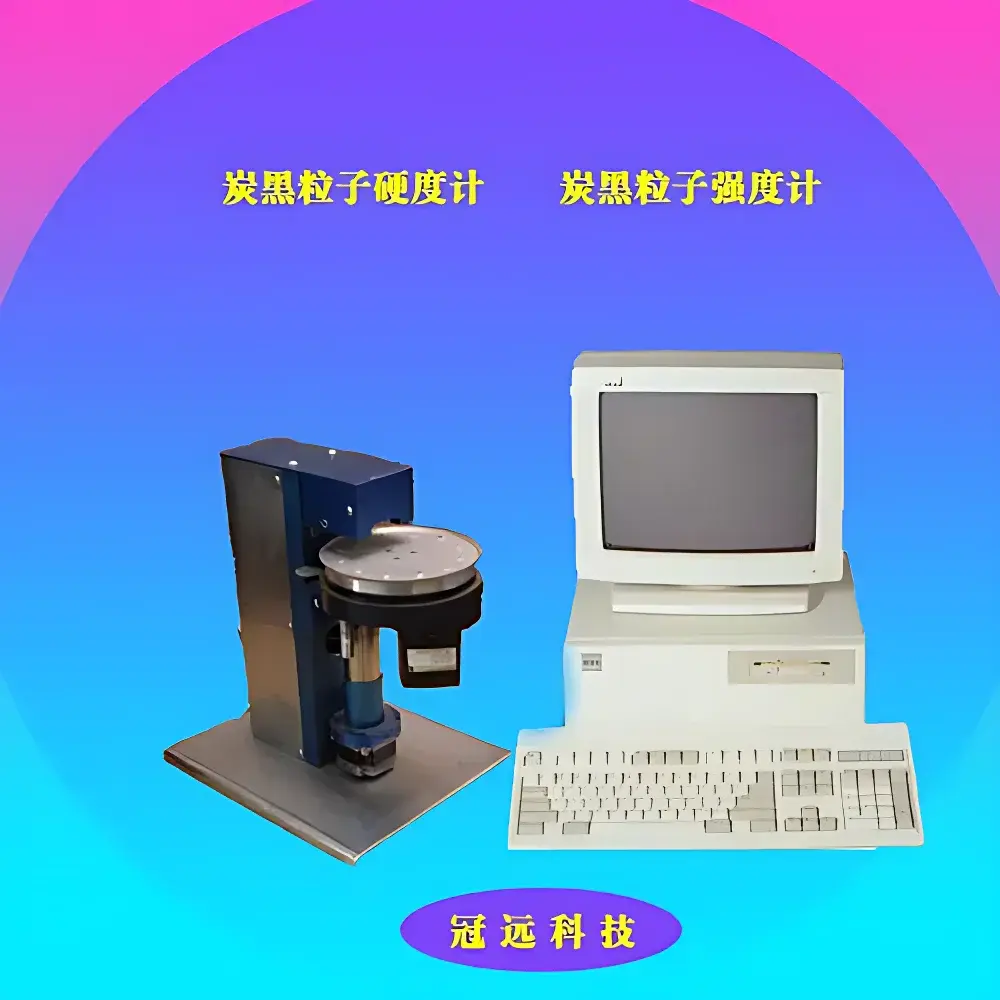
IPHTA Carbon Black Particle Hardness Tester for Rubber Testing
| Origin | USA |
|---|---|
| Manufacturer Type | Authorized Distributor |
| Origin Category | Imported |
| Model | IPHTA |
| Price Range | USD 14,000 – 28,000 |
| Instrument Type | Brinell Hardness Tester |
Overview
The IPHTA Carbon Black Particle Hardness Tester is a specialized Brinell-type hardness measurement system engineered for quantitative mechanical characterization of rubber compounds containing carbon black fillers. Unlike conventional Shore or durometer testers, this instrument applies standardized static indentation under controlled load–dwell–recovery cycles to assess the localized resistance of vulcanized rubber matrices to plastic deformation—directly correlating with filler dispersion homogeneity, crosslink density, and reinforcement efficiency of carbon black particles. Designed in accordance with ASTM D1415 (Rubber Property—Hardness by International Hardness Tester) and ISO 48-4 (Rubber—Determination of Hardness—Part 4: Indentation Hardness by Brinell Method), the IPHTA system delivers repeatable, traceable hardness values expressed in HBW (Brinell Hardness Number), enabling direct comparison across compound development batches and production lots.
Key Features
- Brinell-based indentation geometry using a tungsten carbide ball indenter (10 mm diameter) with calibrated loads ranging from 500 kgf to 3000 kgf, optimized for low-modulus elastomeric samples.
- Integrated high-resolution load cell (±0.2% FS accuracy) and digital depth transducer (0.1 µm resolution) for simultaneous force–displacement acquisition during indentation.
- Automated test sequence control including preload application, main load dwell (10–30 s configurable), and elastic recovery measurement—ensuring compliance with ASTM D2240 and ISO 7619-1 preconditions.
- Rigid cast-iron frame with vibration-damping base, designed to eliminate environmental interference during low-force indentation on soft rubber substrates.
- Modular sample stage accommodating irregular geometries (e.g., rubber pads, O-rings, extruded profiles) up to 150 mm in height and 200 mm in diameter.
Sample Compatibility & Compliance
The IPHTA tester supports testing of cured rubber specimens containing N110–N990 grade carbon black, including but not limited to EPDM, SBR, NR, and CR compounds used in automotive suspension bushings, engine mounts, sealing gaskets, and tire treads. All test procedures conform to GLP-aligned documentation requirements, with audit trails supporting FDA 21 CFR Part 11 compliance when paired with optional software validation packages. Calibration certificates are traceable to NIST SRM 2821 (Brinell Hardness Standards) and include uncertainty budgets per ISO/IEC 17025.
Software & Data Management
The embedded firmware includes a Windows-compatible PC interface with real-time load–depth curve visualization, automatic HBW calculation per ISO 6506-1, and statistical reporting (mean, SD, CV%, min/max) across up to 99 test locations per sample. Export formats include CSV, PDF test reports with digital signatures, and XML for LIMS integration. Optional IQ/OQ/PQ documentation kits support GMP-compliant installation and operational qualification in regulated manufacturing environments.
Applications
- Quality control of carbon black–reinforced rubber pads used in 13° wheel impact testing rigs—where pad hardness directly influences energy absorption and damping behavior.
- Correlation studies between carbon black surface area (CTAB), aggregate structure, and bulk hardness to optimize filler–polymer interaction.
- Batch-to-batch consistency verification for sealing elements (e.g., refrigerator door gaskets, fuel hose couplings) where hardness deviation >3 HBW indicates cure inconsistency or filler segregation.
- Accelerated aging studies tracking hardness drift after thermal/ozone exposure, supporting ISO 1431-1 and ASTM D1149 protocols.
- Raw material qualification of incoming carbon black lots via hardness mapping of masterbatch test slabs.
FAQ
Is the IPHTA compatible with Shore A or IRHD hardness correlation?
Yes—built-in conversion tables reference ASTM D2240 Annex A and ISO 48-2 for empirical Shore A ↔ HBW mapping; however, direct Brinell measurement remains the primary reported value for regulatory submissions.
Can it test uncured rubber compounds?
No—only fully vulcanized, dimensionally stable rubber specimens are suitable; green strength and scorch behavior require Mooney viscometry or oscillatory rheometry.
What maintenance intervals are recommended?
Annual calibration of load cell and depth sensor is required; indenter ball inspection every 500 tests per ISO 6506-2; no consumables beyond standard calibration standards.
Does it meet automotive OEM specifications such as GMW14872 or Ford CETP 00.00-L-467?
Yes—the default test protocol (1000 kgf / 10 s dwell) satisfies hardness verification clauses in both specifications for elastomeric isolators and mounting components.
Is third-party certification available for ISO 17025 accreditation?
Yes—factory-certified calibration reports with expanded uncertainty (k=2) and traceability statements are provided; on-site witness calibration services available upon request.



