
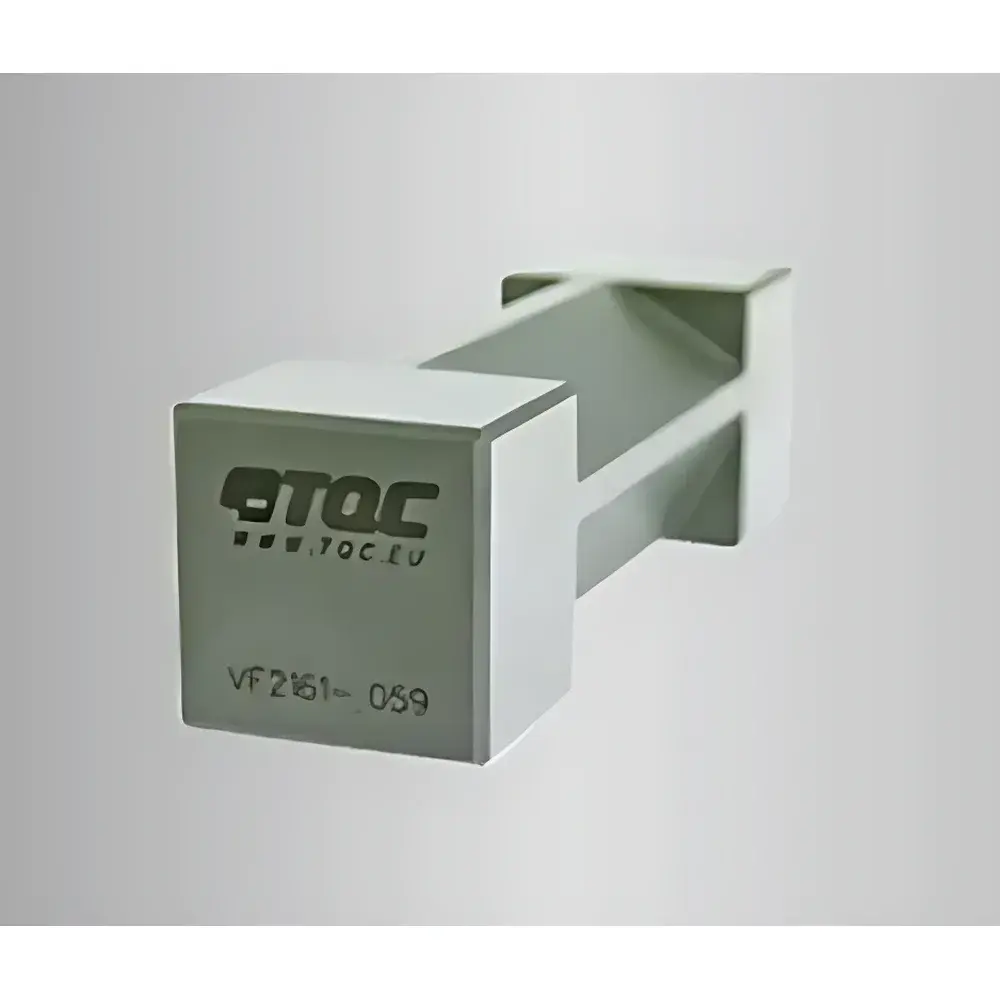
TQC Prism-Shaped Bird-Edge Applicator
| Brand | TQC |
|---|---|
| Origin | Netherlands |
| Model | Prism-Shaped Bird-Edge Applicator |
| Compliance | ASTM D 3022, ASTM D 823 |
| Coating Width Options | 50 mm (2 in), 75 mm (3 in), 100 mm (4 in) |
| Number of Application Edges | 4 |
| Material | High-Grade Stainless Steel (AISI 316 or equivalent) |
| Chemical Resistance | Resistant to acidic and alkaline solvents, coatings, and cleaning agents |
Overview
The TQC Prism-Shaped Bird-Edge Applicator is a precision-engineered laboratory tool designed for standardized, reproducible wet-film thickness application in coating evaluation and quality control. Unlike conventional draw-down bars or wire-wound applicators, this device operates on the principle of controlled edge-shear deposition: its four precisely ground, prism-shaped stainless steel edges define discrete gap heights between substrate and applicator, enabling consistent transfer of liquid or paste-like coatings onto flat, rigid surfaces. It is not a rheometer or viscometer per se, but a critical peripheral for rheological and physical property testing workflows—particularly when correlating viscosity, thixotropy, or leveling behavior with final dry-film uniformity. Its geometry ensures minimal shear distortion during draw-down, preserving the native structure of shear-sensitive formulations such as waterborne acrylics, UV-curable resins, or high-solids industrial enamels.
Key Features
- Four distinct, parallel applicator edges machined to tight dimensional tolerances—each delivering a predetermined wet-film thickness without recalibration or adjustment.
- Multiple standard coating widths available: 50 mm (2 in), 75 mm (3 in), and 100 mm (4 in)—compatible with common test panels (e.g., Leneta charts, glass slides, cold-rolled steel coupons) and integrated into automated draw-down systems.
- Constructed from high-grade austenitic stainless steel (equivalent to AISI 316), offering superior corrosion resistance against aggressive organic solvents, acidic etchants, alkaline strippers, and amine-based curing agents commonly used in industrial paint and ink formulation.
- Non-porous, non-absorptive surface eliminates solvent absorption or residue carryover—ensuring measurement integrity across sequential tests and reducing cross-contamination risk in regulated environments.
- Calibration-free operation: Thickness output is determined solely by mechanical geometry, eliminating dependency on operator technique or environmental variables such as humidity or draw speed (within standard ISO 2808/ASTM D823 recommended ranges).
Sample Compatibility & Compliance
The applicator is validated for use with liquid coatings—including solvent-borne, water-reducible, high-solids, and radiation-curable systems—as well as pastes, adhesives, and functional slurries where uniform film formation is critical to downstream analysis (e.g., gloss, haze, adhesion, or cross-hatch testing). It complies fully with ASTM D 3022 (“Standard Practice for Preparation of Paint Films for Testing”) and ASTM D 823 (“Standard Practices for Producing Films of Uniform Thickness of Paint, Varnish, and Related Products on Test Panels”), and supports alignment with ISO 2808:2019 (“Paints and varnishes — Determination of film thickness”). Its design meets GLP-compliant documentation requirements when used within validated QC protocols, and its material composition satisfies FDA-relevant extractables criteria for coatings intended for indirect food contact applications.
Software & Data Management
While the TQC Prism-Shaped Bird-Edge Applicator is a passive mechanical tool and requires no embedded firmware or connectivity, it integrates seamlessly into digital QA/QC ecosystems. When paired with automated draw-down stages (e.g., BYK Automatic Film Applicator or Elcometer 456 systems), its fixed-edge geometry enables traceable, repeatable input parameters for LIMS or ELN platforms. Thickness values assigned to each edge are programmable metadata fields—supporting 21 CFR Part 11–compliant audit trails when linked to instrument control software. Calibration records, usage logs, and material compatibility matrices can be maintained in accordance with ISO/IEC 17025:2017 clause 6.4.10 (equipment verification) and ASTM E2500-13 (verification of analytical instrumentation).
Applications
- Routine QC testing of architectural, automotive, and coil coatings for batch-to-batch consistency in wet-film build.
- Research-scale formulation development—evaluating how rheological modifiers (e.g., fumed silica, associative thickeners) affect leveling and sag resistance under defined film thickness conditions.
- Accelerated weathering and corrosion testing, where precise initial film thickness directly influences time-to-failure metrics in salt-spray (ASTM B117) or QUV exposure (ASTM G154).
- Adhesion testing per ASTM D3359 (cross-hatch) or ISO 2409, where inconsistent film thickness introduces variability in failure mode interpretation.
- Reference standardization in inter-laboratory round robins conducted under ISO/IEC 17043 guidelines.
FAQ
Is the TQC Prism-Shaped Bird-Edge Applicator compatible with automated film applicators?
Yes—it is dimensionally engineered to interface with industry-standard motorized draw-down stages that accept modular applicator heads.
Can it be used for high-viscosity epoxy primers (>50,000 mPa·s)?
Yes, provided the formulation exhibits sufficient flow at application shear rates; however, pre-wetting or temperature conditioning may be required to ensure complete edge filling.
Does TQC provide NIST-traceable thickness certification for each unit?
No—thickness is defined by mechanical geometry and verified per ISO 17025-accredited dimensional metrology during manufacturing; users perform in-house verification using optical profilometry or micrometer-based gap measurement.
How should the applicator be cleaned between samples?
Rinse immediately with compatible solvent (e.g., xylene for solvent-borne systems, isopropanol for water-based), followed by lint-free wipe; avoid abrasive pads or ultrasonic cleaning to preserve edge integrity.
Is there a recommended maximum draw speed to maintain film uniformity?
Per ASTM D823, speeds between 5–20 cm/s are typical; optimal speed depends on coating rheology and must be established during method validation.
Related Products



